




How to season a cast iron skillet
For home cooks with a new or dull cast iron pan who want a durable natural non-stick surface.
IJR · Sep 26, 2026 · 2 min read
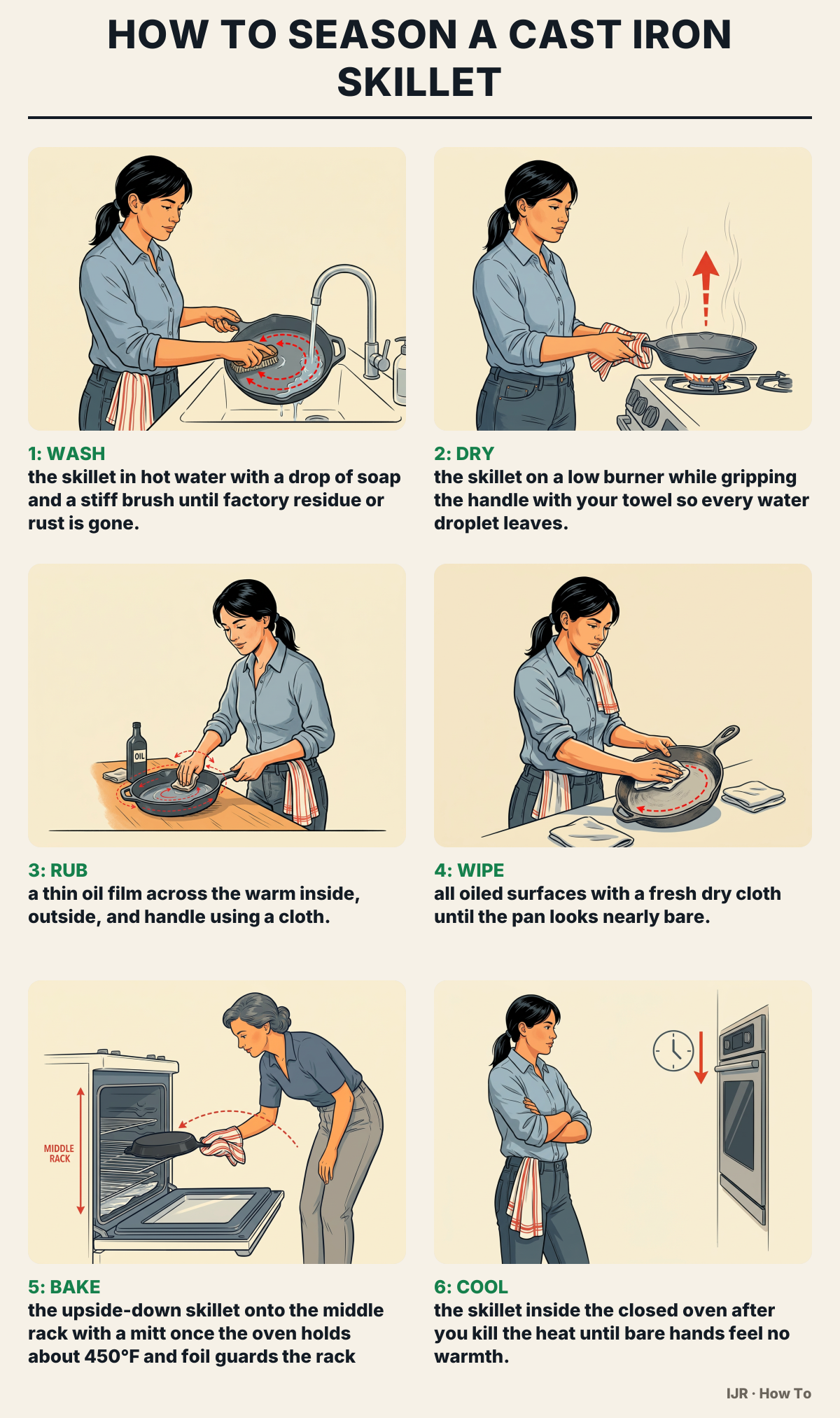
Oil heated past its smoke point breaks down and reforms as a hard layer bonded to the iron. That layer keeps food from sticking and blocks rust.
Before you start: cast iron skillet, dish soap, stiff brush, clean lint-free cloths, high-smoke-point oil such as canola or vegetable, oven, and foil.
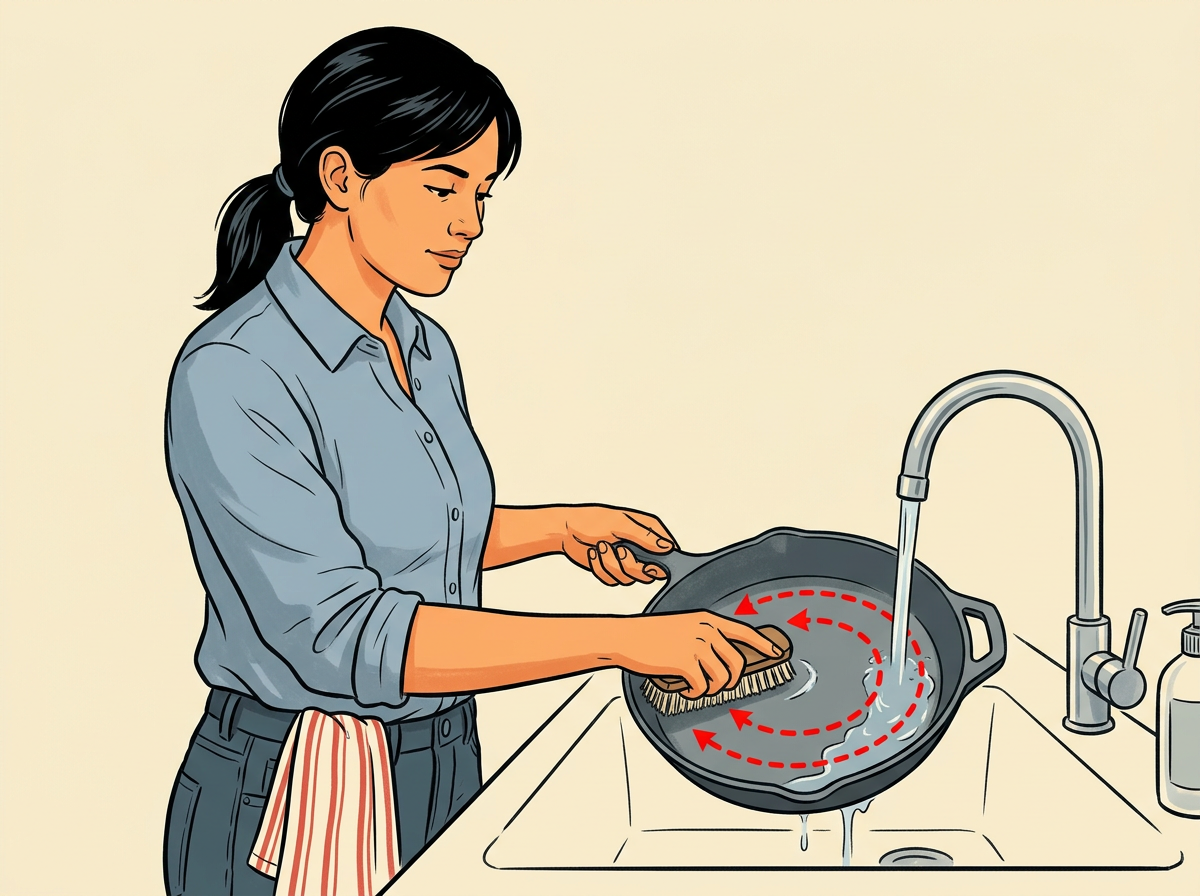
Rinse until the water runs clear with no suds. The iron shows an even matte finish and zero greasy shine; hit any leftover film with the brush at once.
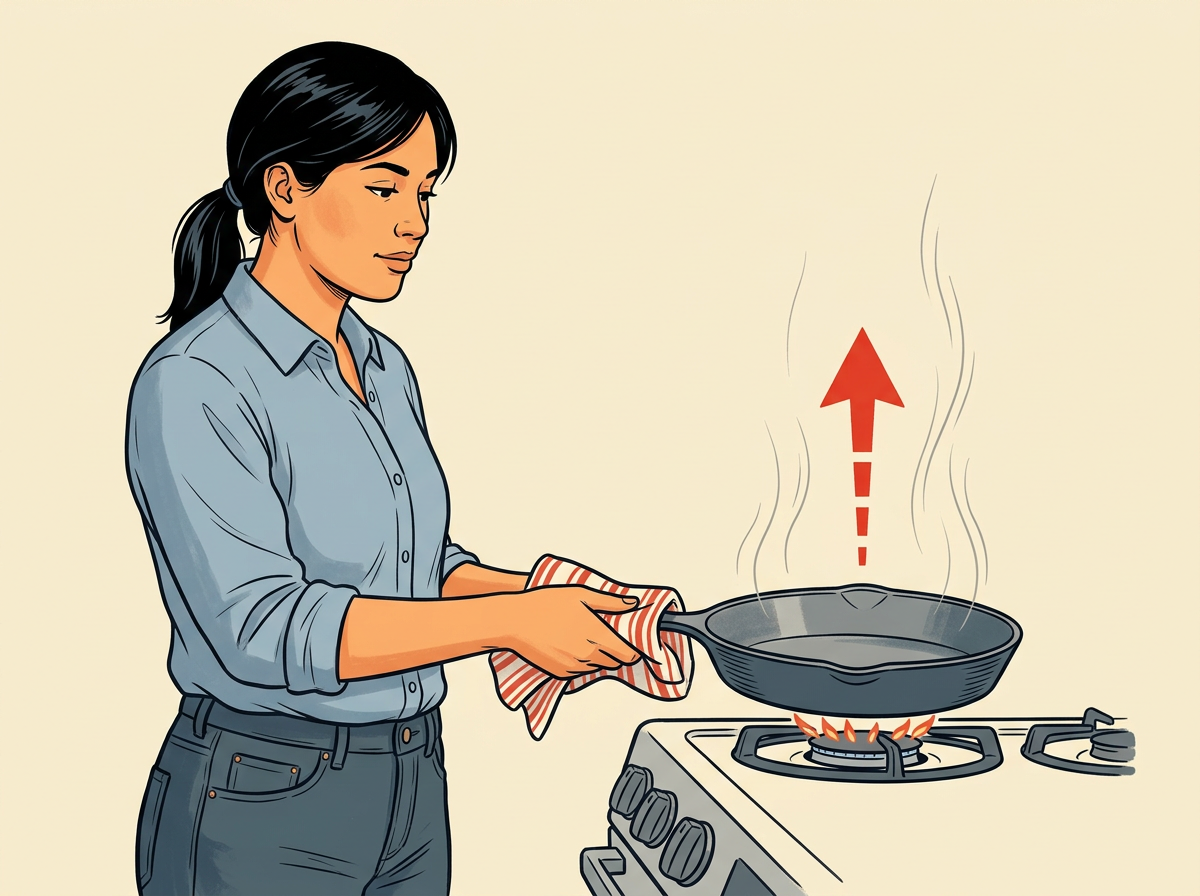
Stay until steam ceases and the surface holds no beads. A wiped cloth picks up zero moisture and the pan is hot-dry; then switch the burner off.
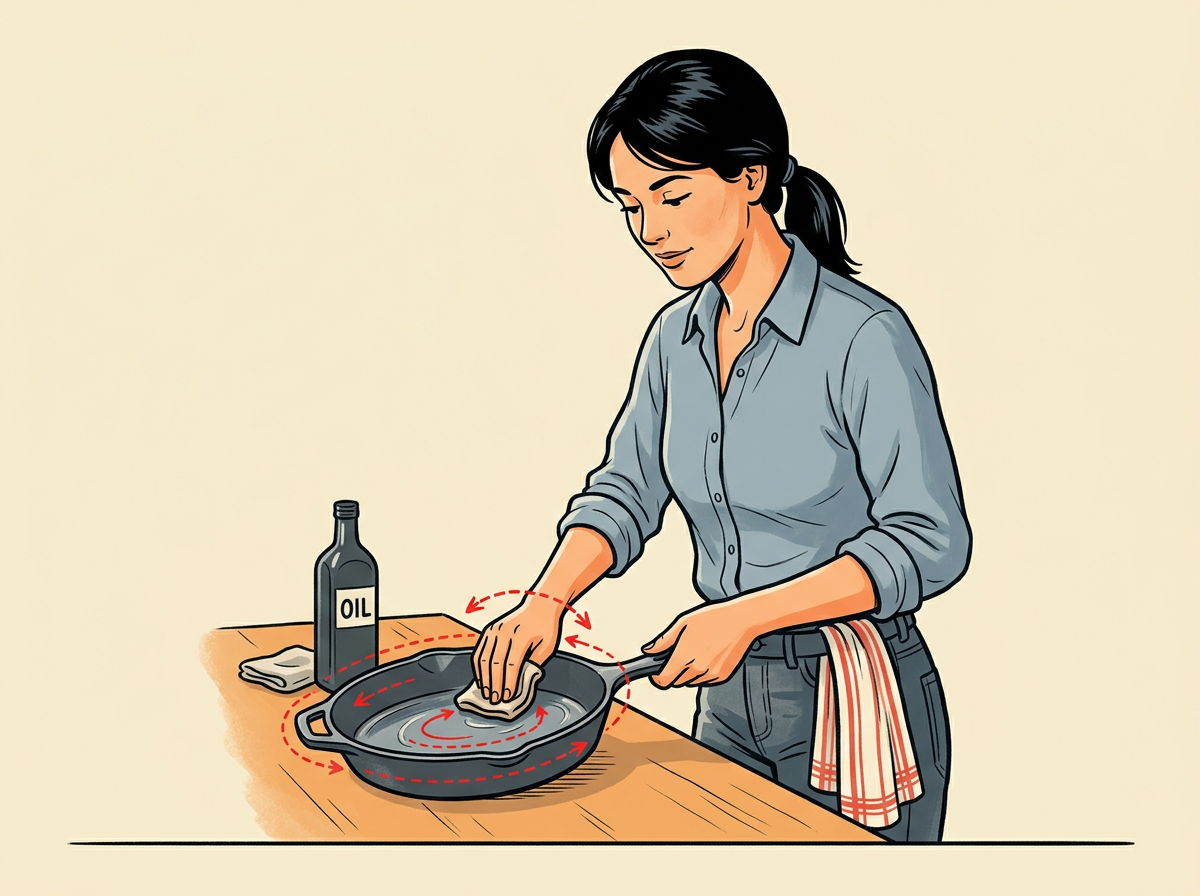
Start with roughly half a teaspoon on a typical 10-inch pan—add only if yours is larger. The metal takes a light even sheen with no corner pools; thick spots stay tacky later.
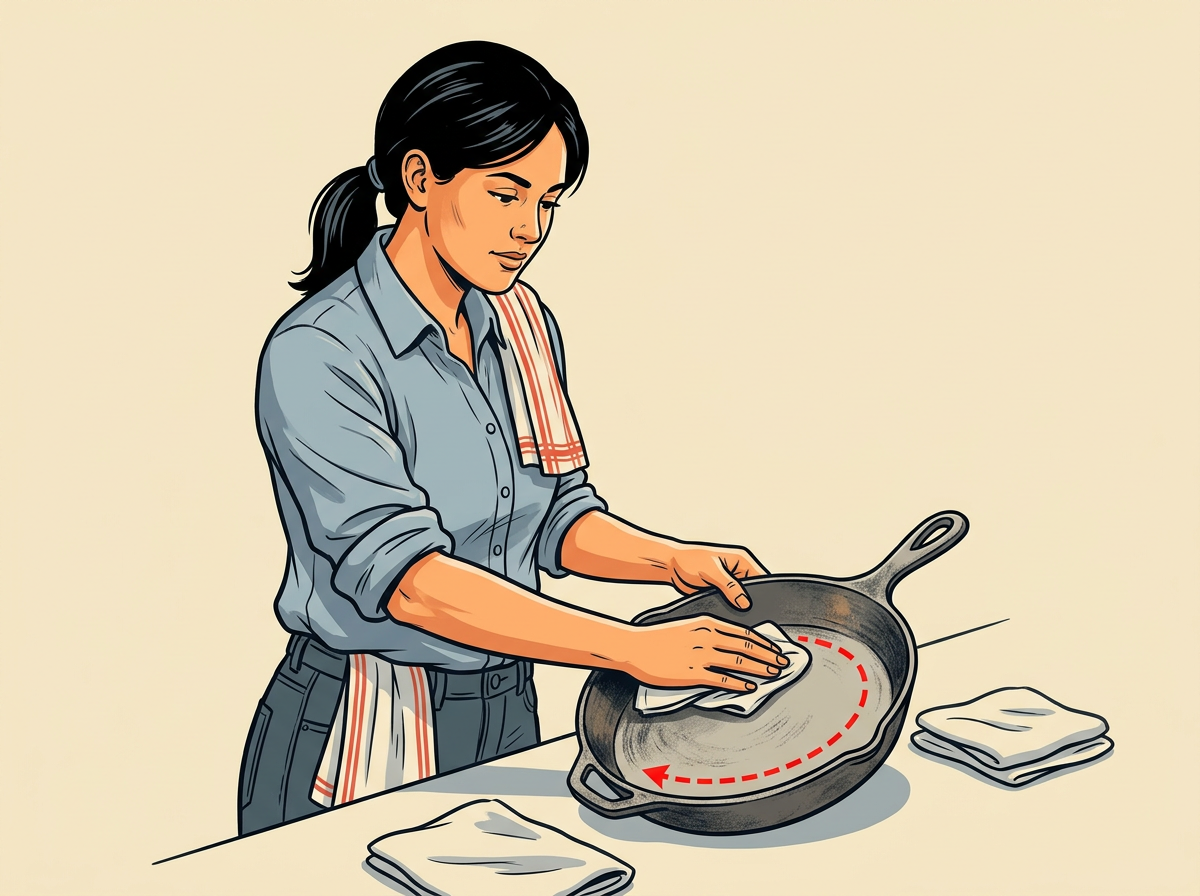
Buff in firm overlapping strokes. The last pass of cloth comes away almost clean and the surface reads dull-satin, not wet; that is the clear pass.
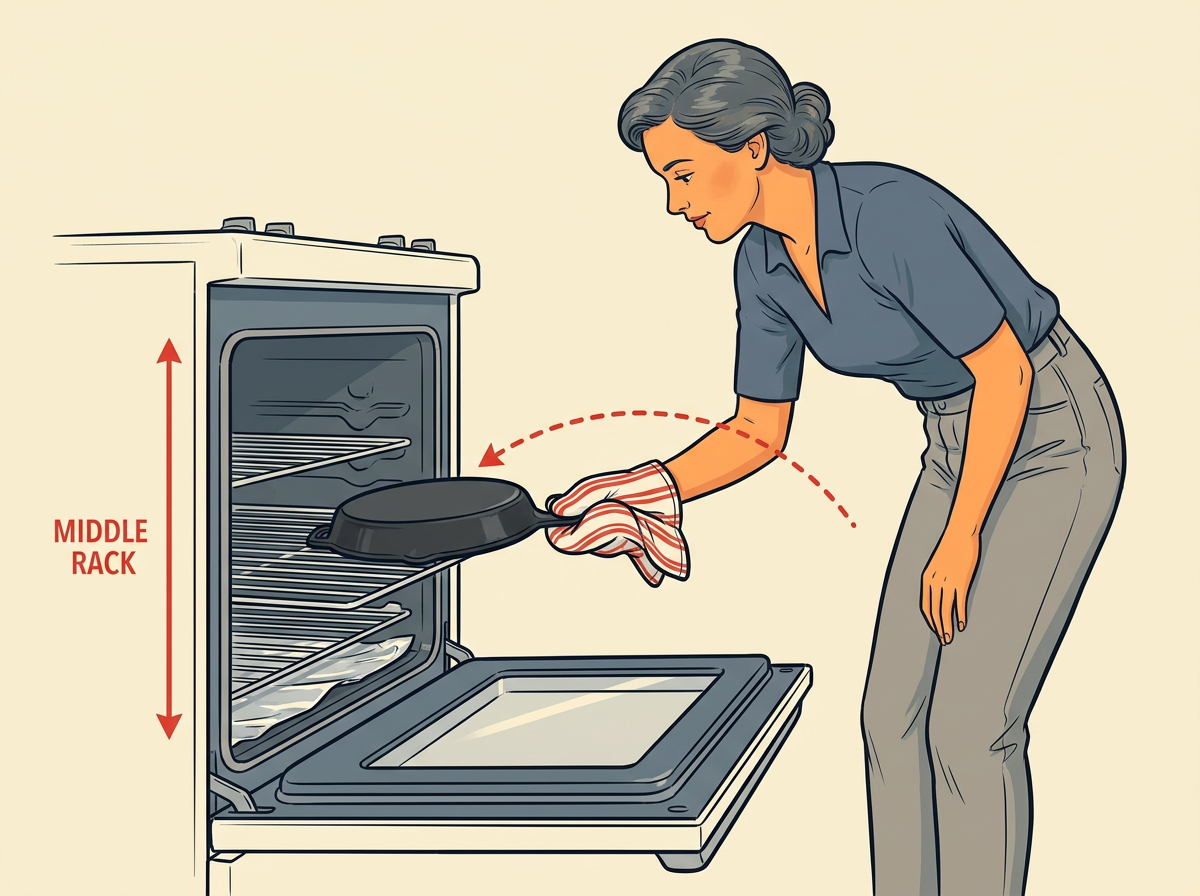
Shut the door for a full hour. The surface turns a uniform dark hard gloss with no soft patches; stay near your oil’s smoke point because oven and oil values differ.
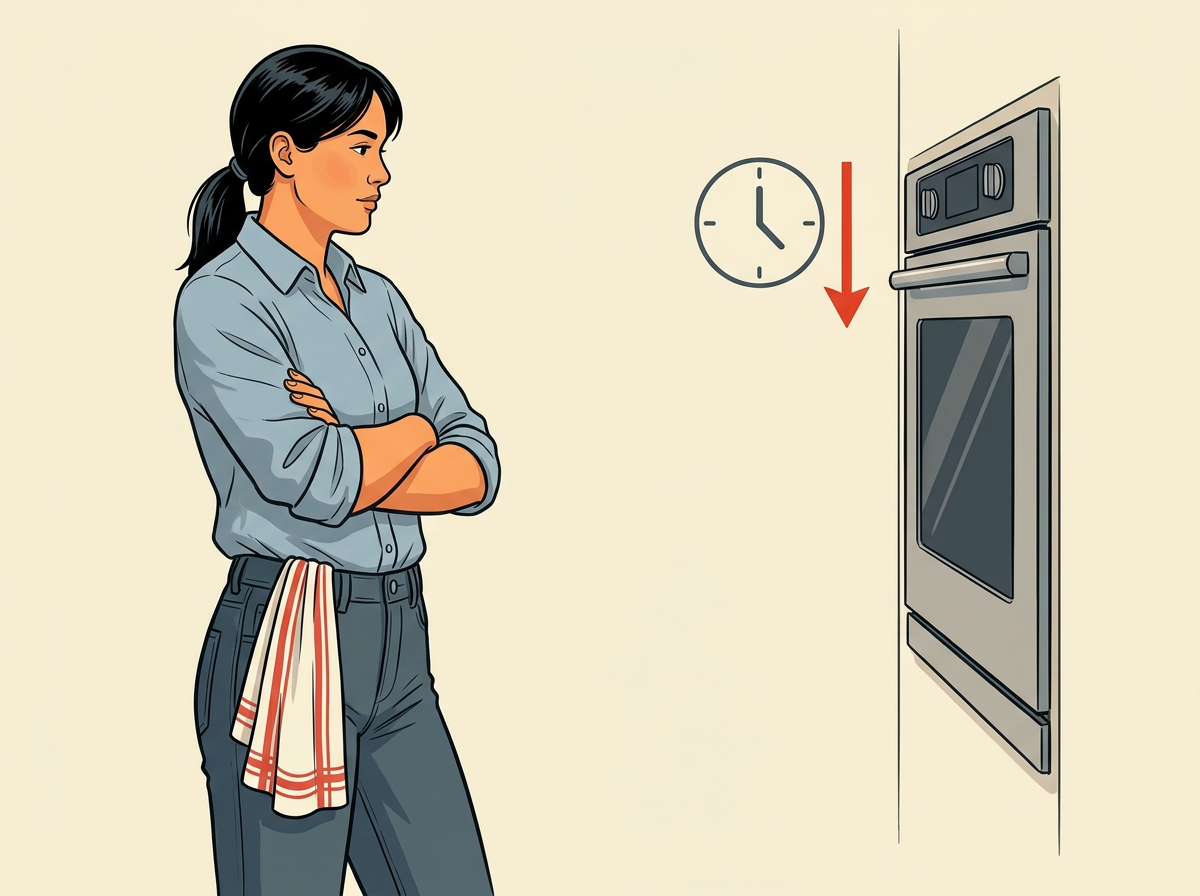
Do not rush the drop to room temperature. The handle sits fully neutral when tested bare; earlier movement can shock the iron or the new layer.
The most common mistake
Too much oil left on the metal bakes into a sticky soft film. Wipe until the pan is nearly dry before it goes in the oven.