




How to make scrambled eggs
For anyone new to the stove who wants soft, creamy eggs instead of dry rubbery ones.
IJR · Sep 26, 2026 · 2 min read
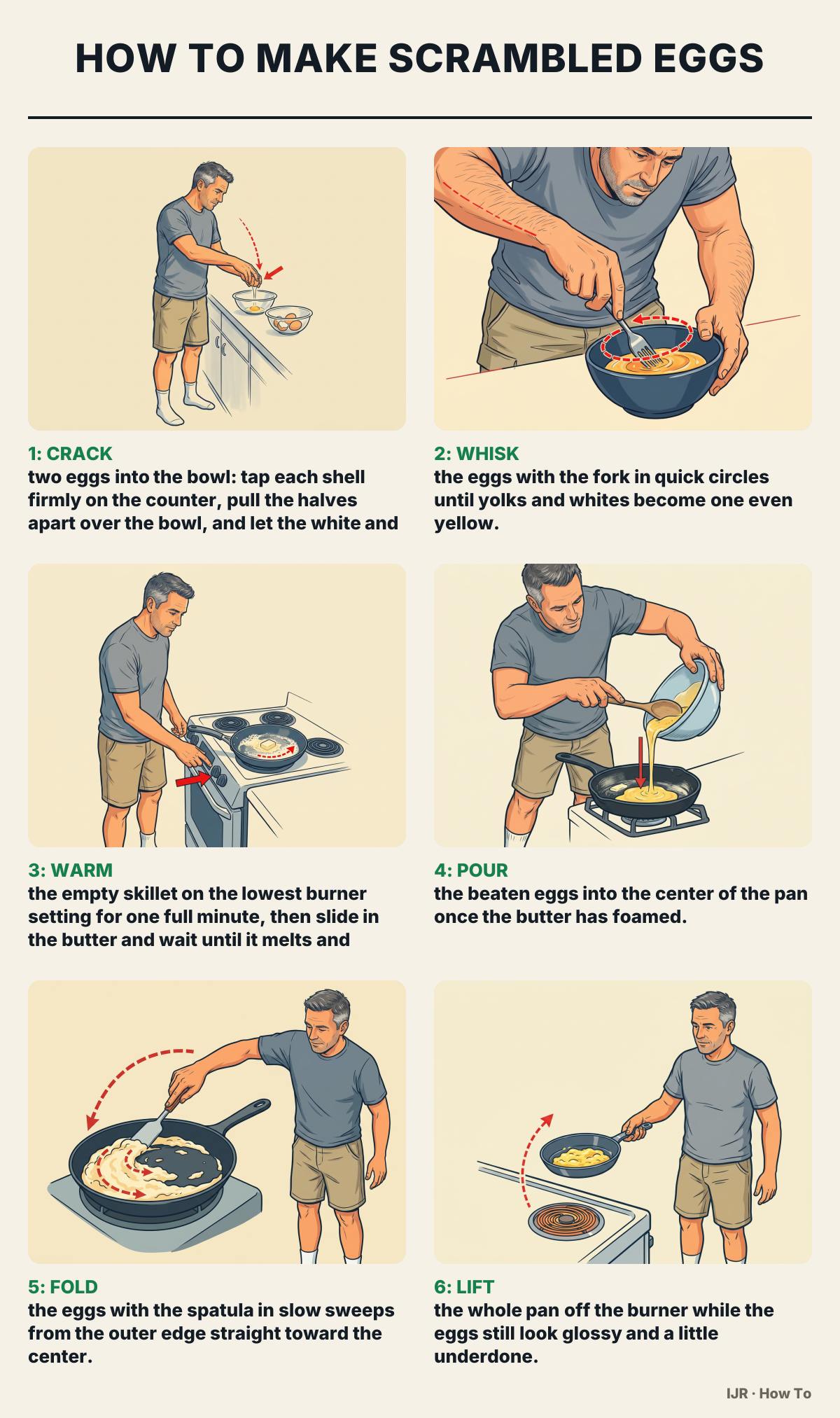
Low heat and steady gentle folding keep the egg proteins from seizing into tough curds. You get moist scrambled eggs that stay tender on the plate.
Gather: two eggs per person, a small nonstick skillet, a flexible spatula, a mixing bowl, a fork, a pat of butter about the size of a walnut, and a pinch of salt.
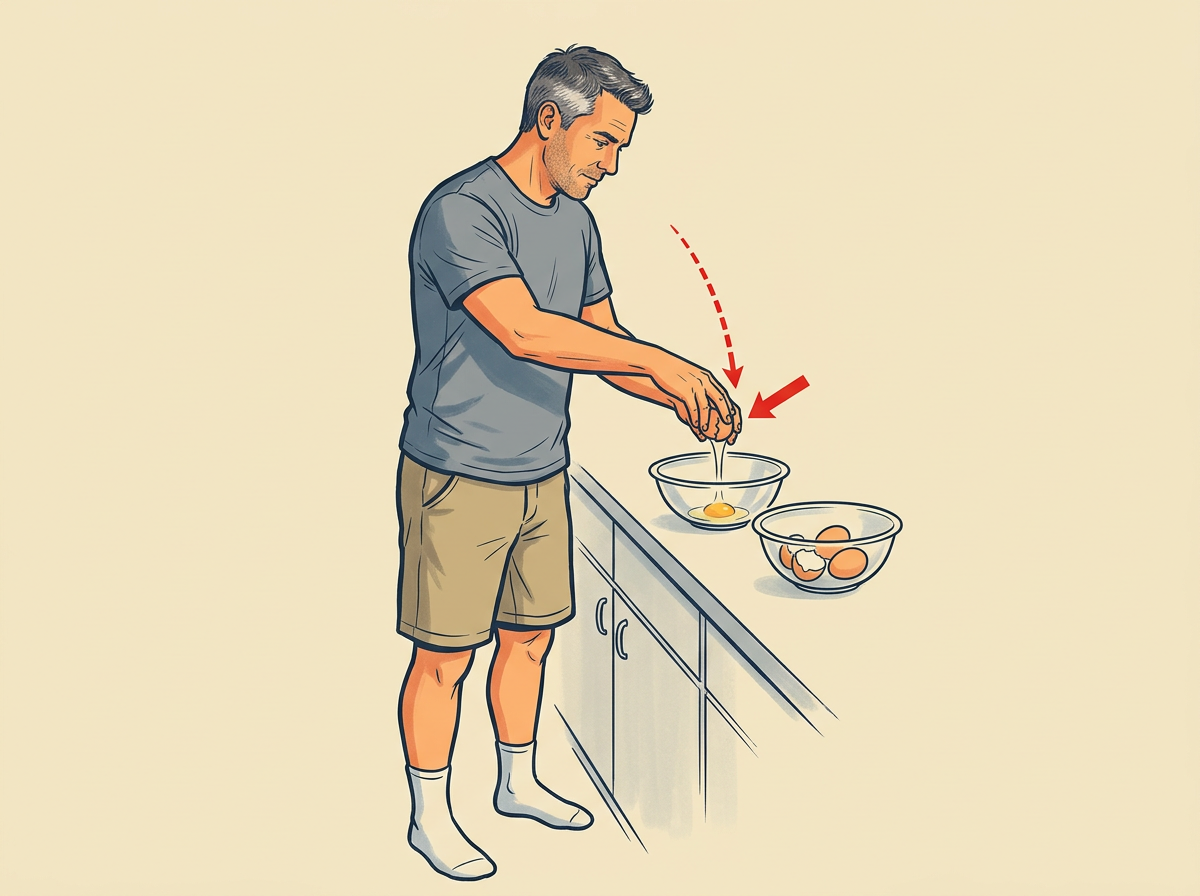
Scan the bowl for clear whites, intact yolks, and zero shell shards. If a bit of shell falls in, lift it out with one empty half-shell before you mix.
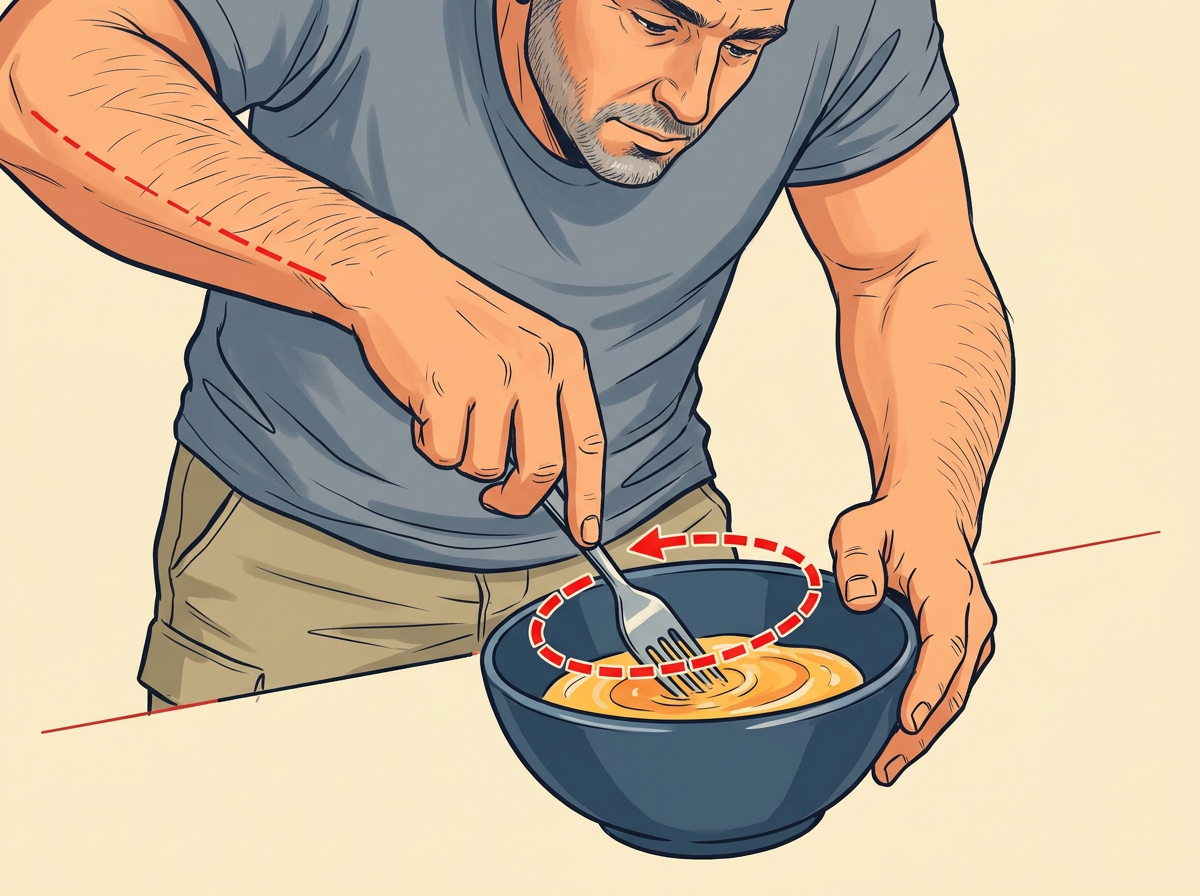
Stop when the liquid is uniform and lightly frothy with no clear streaks left. Pale ribbons mean keep whisking another ten seconds.
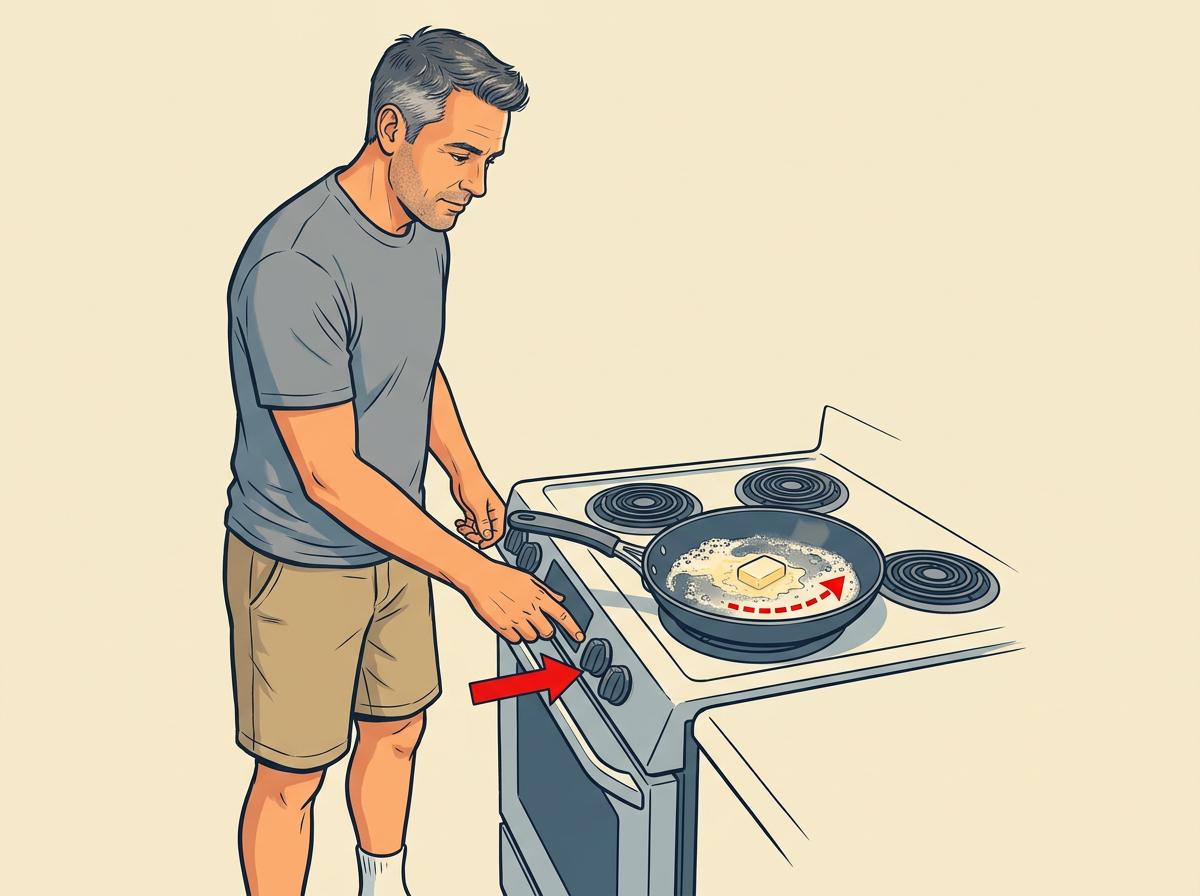
Butter should turn liquid and foam while staying pale yellow. If it browns or smokes, lift the pan off the burner at once and restart with fresh butter on a cooler setting.
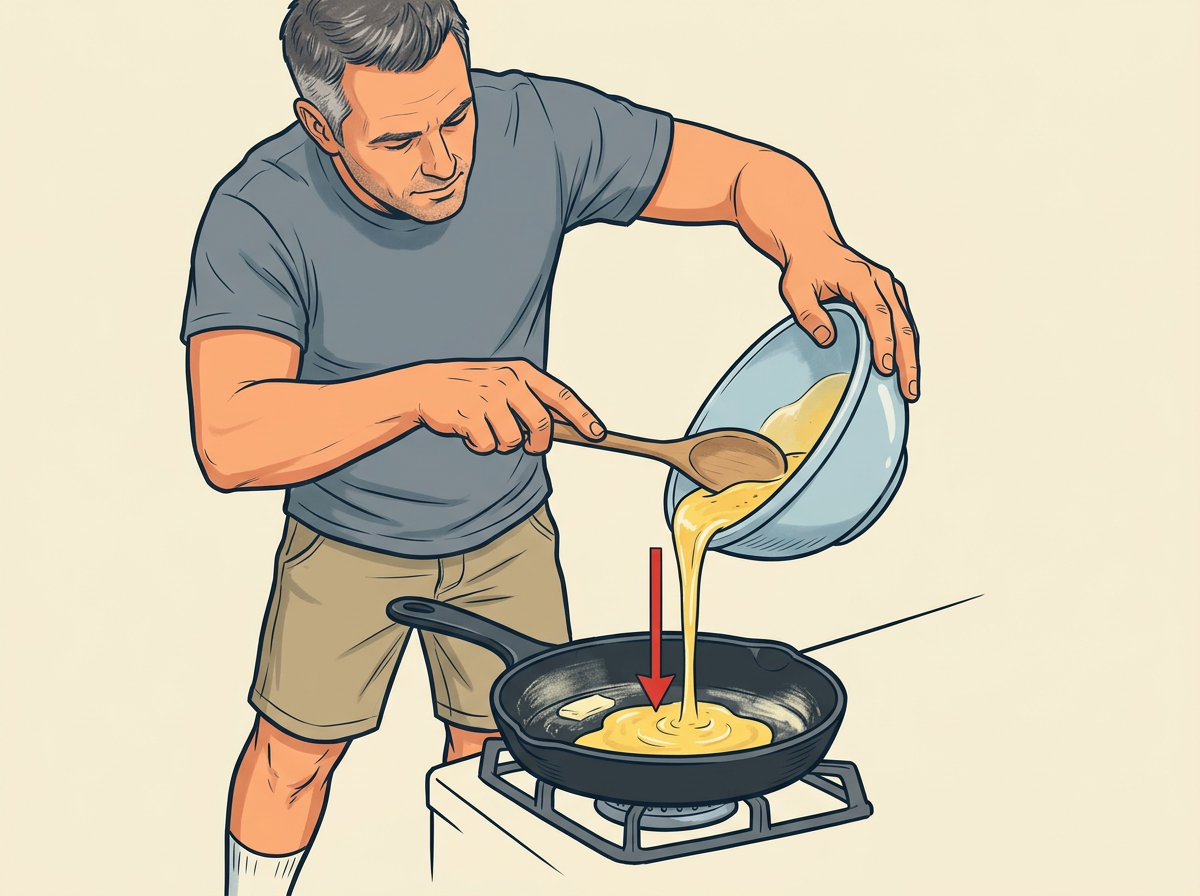
Eggs should spread thin and the rim should start to set within about twenty seconds. If the pool stays fully liquid past half a minute, nudge the heat up one notch only.
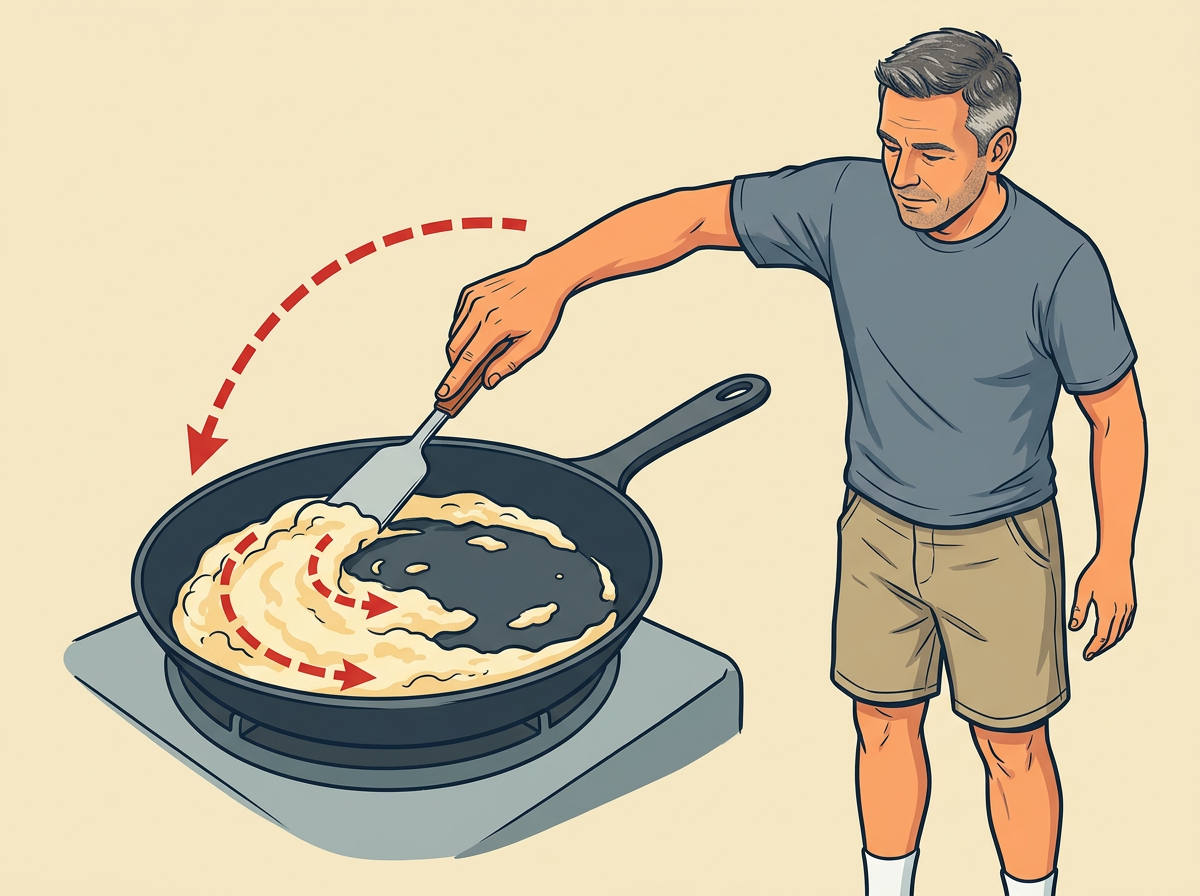
Soft curds should form and leave shiny wet trails behind each pass. Big dry lumps mean the heat is too high or you paused too long between folds.
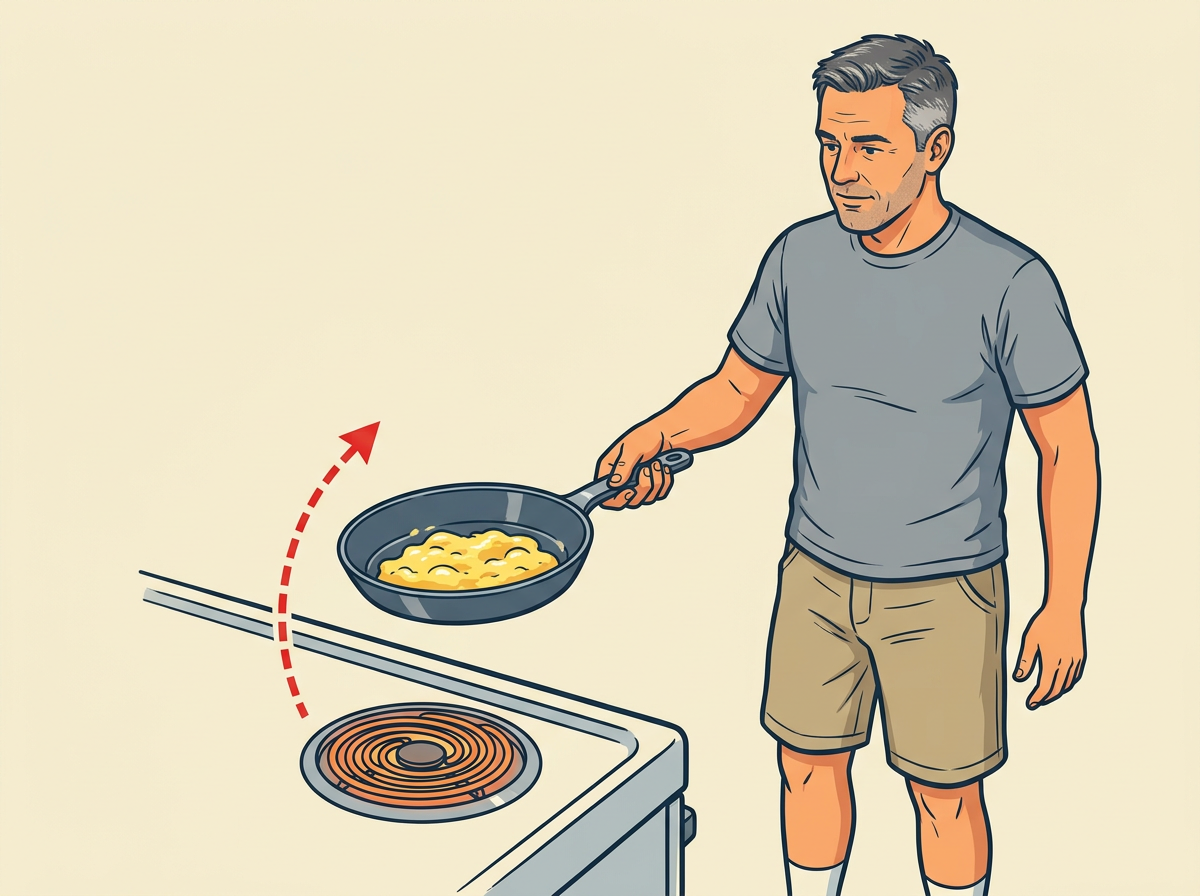
Carryover heat finishes them on the plate in under a minute. Fully dry eggs in the pan will turn rubbery by the first bite.
The most common mistake
Cranking the burner high makes the proteins seize into dry rubber. Keep the flame low and fold without walking away until you lift the pan.