




Pentagon Ignored Warnings Before Drone Strike Killed Six Service Members
Army Maj. Stephen Ramsbottom claims leaders ignored warnings about base safety in Kuwait before an Iranian drone killed six US service members in March 2026.
Trending Newsfeed Staff Writer · Nov 16, 2026 · 3 min read
Six American service members died when an Iranian drone hit a base in Kuwait on March 1, 2026. A whistleblower claims military leaders knew the base was not safe but did nothing to fix it. Army Maj. Stephen Ramsbottom sent a formal complaint to Congress on Friday saying officials ignored his warnings. He survived the attack that took the lives of Capt. Cody Khork, Sgt. 1st Class Noah Tietjens, and four others.
For the Army Reserve’s 103rd Sustainment Command, Ramsbottom was deputy chief of operations. He told CBS News’ “60 Minutes” that the base had defenses against cars but not planes. Among the specific shortages detailed in the complaint is “no physician, no fixed aid station, and only one ambulance.”
Leaders Dismissed Safety Concerns
Ramsbottom said he tried to alert his superiors about the danger before the strike. He brought the issue to Maj. Gen. John Hinson, who handles logistics for US Central Command. “I brought it up twice in various meetings, basically saying, ‘Hey, I don’t see how we’re protected here,'” Ramsbottom told reporters, according to the New York Post. Hinson reportedly replied, “We don’t have to worry about protection.”
The base had asked for a system to stop drones, but it never arrived. Ramsbottom claimed the Pentagon said they would try to send one, yet it never showed up at Shuaiba. “It never arrived at Shuaiba,” he claimed. “And we don’t know if it was ever even ordered or requested.” This gap in equipment left the troops vulnerable to the six drones launched by the Iranian Revolutionary Guard Corps.
Official Response Contradicts Reality
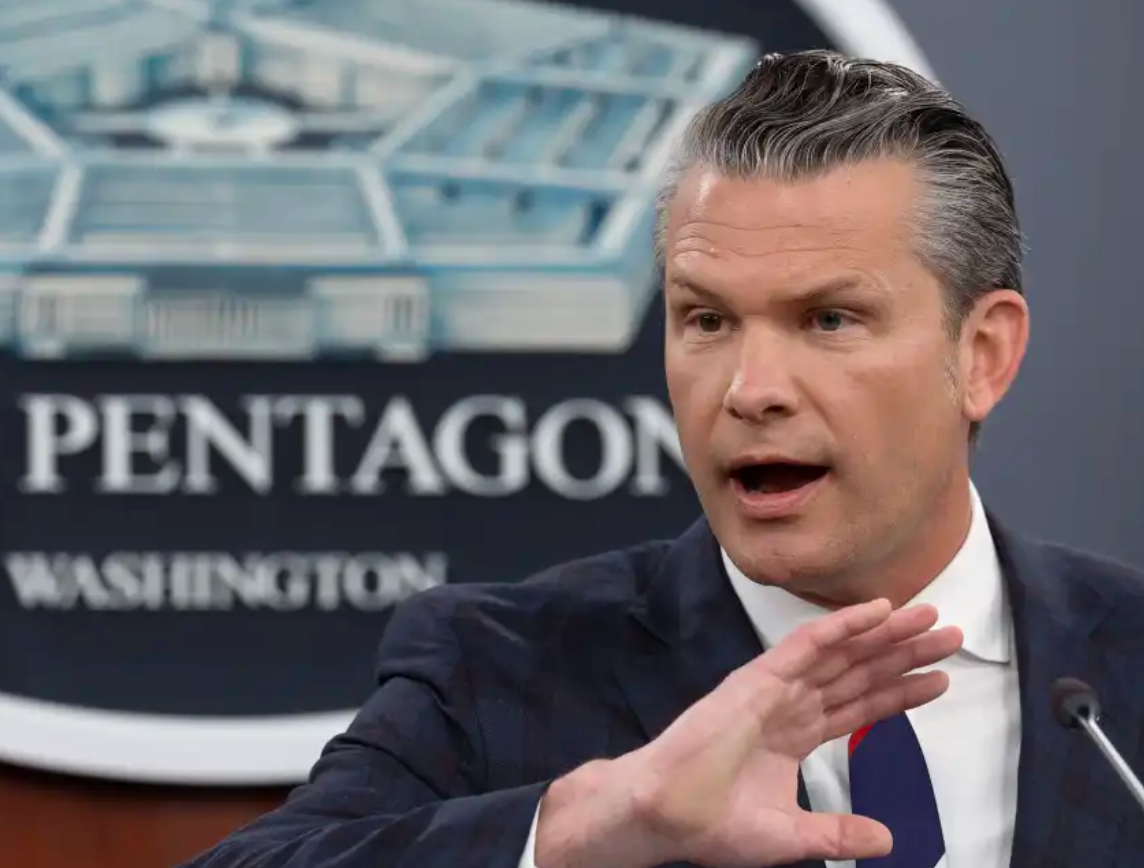
War Secretary Pete Hegseth told reporters the day after the attack that the base was safe. He claimed the facility was fortified and that the drone was an exception. “Every once in a while you might have one, unfortunately, we call it a squirter that makes its way through,” Hegseth said. He insisted the weapons were powerful but the site had protection. Ramsbottom’s complaint directly challenges this statement by detailing the lack of any aerial defense.
While these events unfolded in Kuwait, tensions rose elsewhere in the region. On Sunday, Bahrain stopped an Iranian drone assault, marking the second such interception within two days. The Iranian Revolutionary Guard Corps stated they targeted a radar system at the Al-Riffa helicopter base. “The U.S. air defense radar system at the Al-Riffa helicopter base in Bahrain was targeted by six drones belonging to the [Iranian Revolutionary Guard Corps] Aerospace Force,” the group said, according to the Washington Examiner. No injuries were reported in Bahrain.
Political Stance on Iran Talks
As peace negotiations between the United States and Iran remain deadlocked, the heightened aggression emerges. President Donald Trump said last week that he no longer wants a deal. “We don’t need a deal with Iran,” Trump said, adding that “those days have passed.” He directed Vice President JD Vance to stop engaging in peace talks and focus on domestic fraud instead.
Trump has threatened to escalate the conflict but has mostly used economic pressure. U.S. forces recently completed limited defensive strikes on islands in the Strait of Hormuz. The U.S. naval blockade of Iran remains intact and was expanded to target ground routes. Several allies, including Saudi Arabia and Jordan, condemned the Sunday attack on Bahrain. The conflict has kept inflation high, though the administration says the long-term goals outweigh the short-term costs.