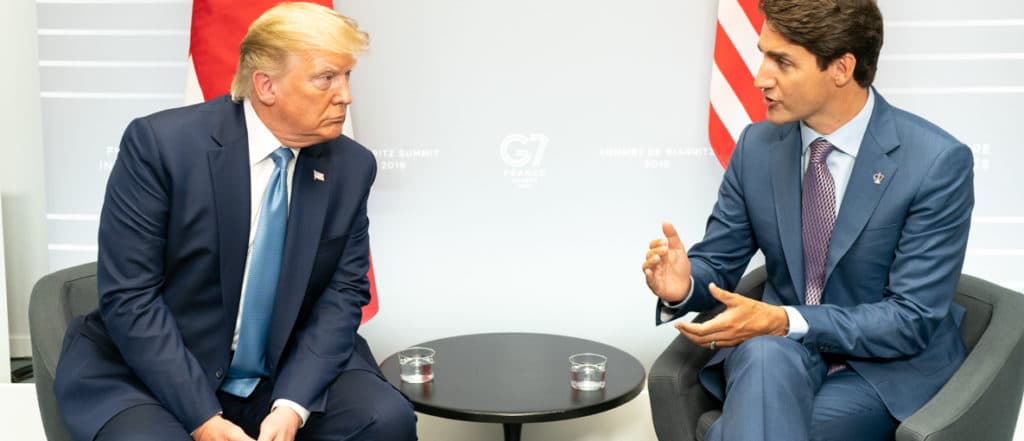

Canadian Prime Minister Justin Trudeau announced his plans to resign from office Monday in the wake of a public dispute with President-elect Donald Trump and plummeting popularity among even those in his own party.
The decision comes in the wake of Finance Minister Chrystia Freeland’s resignation, which was prompted in part by Trudeau’s spat with Trump over tariff policy. He ends his nine-year tenure as PM with a 33% approval rating, with citizens citing cost of living and immigration anxieties as top issues, according to an Ipsos poll taken in September.
The liberal prime minister clarified that he will remain in the top post until another leader is chosen.
“I intend to resign as Party leader, as Prime minister, after the party selects its next leader through a robust, nationwide, competitive process,” Trudeau said Monday. “Last night, I asked the president of the Liberal Party to begin that process.”
“This country deserves a real choice in the next election, and it has become clear to me, that if I’m having to fight internal battles, that I cannot be the best option in that election,” Trudeau said.
Trudeau faced calls for his resignation from over 40 members of parliament before his decision, according to the New York Post Dec. 17. Trudeau will remain prime minister in a caretaker capacity until a new leader is chosen.
Under the Canadian system, an election must be called by Oct. 20, according to Reuters. However, a vote of no confidence by parliament could trigger an election sooner.
Trudeau’s tenure has been rife with scandals, including revelations in 2019 of his use of blackface at a party in 2001 and allegations of judicial interference in 2019 where he allegedly instructed former Attorney General Jody Wilson-Raybould to snuff out a corruption charge against Quebec mega-contractor SNC-Lavalin.
The rival Conservative party is almost certainly set for a majority in parliament when the next election takes place, leading the liberals by a whopping 21 points, according to CBC news polling updated Dec. 16. Conservative Party leader Pierre Poilievre will likely take over as PM in place of Trudeau’s Liberal party replacement in the next election.
Among Canadian voters top concerns are living costs, housing affordability, health care, the economy and immigration, according to an Abacus Data poll taken June 20 to June 25.
The median home price in Canada increased by a staggering 227% from 2003 to 2023 while annual earnings only increased by 74.3%, according to an analysis by NerdWallet.
The immigration issue in Canada is also intimately tied to a housing shortage, as Poilievre explained to CBC in August, Canada “cannot grow the population at three times the rate of the housing stock, as Trudeau has been doing.”
Trudeau has also faced criticism for his extreme gun control laws during his tenure, with his government outlawing “assault weapons” in 2020 while continuously adding new firearms to the ban list, according to the NRA. He also passed a carbon tax which drew the ire of conservatives and the general populace, according to CBC News.
The now-exiting prime minister also shared “one regret” he’s had while in office.
“If I have one regret, particularly as we approach this election — well, probably many regrets that I will think of,” Trudeau said. “But I do wish we’d been able to change the way we elect our governments in this country so that people could simply choose a second choice, or a third choice on the same ballot.”
Trudeau’s office did not immediately respond to the Daily Caller News Foundation’s requests for comment.
Editor’s note: This article has been updated.
All content created by the Daily Caller News Foundation, an independent and nonpartisan newswire service, is available without charge to any legitimate news publisher that can provide a large audience. All republished articles must include our logo, our reporter’s byline and their DCNF affiliation. For any questions about our guidelines or partnering with us, please contact [email protected].