



Post-invasion Iraq
After the 11 September 2001 attacks, U.S. President George W. Bush began planning the overthrow of Saddam in what is now widely regarded as a false pretense. Saddam's Iraq was included in Bush's "axis of evil". The US Congress passed a joint resolution, which authorised the use of armed force against Iraq. In November 2002 the UN Security Council passed resolution 1441. On 20 March 2003, the US-led coalition invaded Iraq, as part of the global war on terror. Within weeks, coalition forces occupied much of Iraq, with the Iraqi Army adopting guerrilla tactics to confront coalition forces. Following the fall of Baghdad in the first week of April, Saddam's regime had completely lost control of Iraq. A statue of Saddam was toppled in Baghdad, symbolising the end of his rule. The US-created Coalition Provisional Authority introduced the current political system of the country.
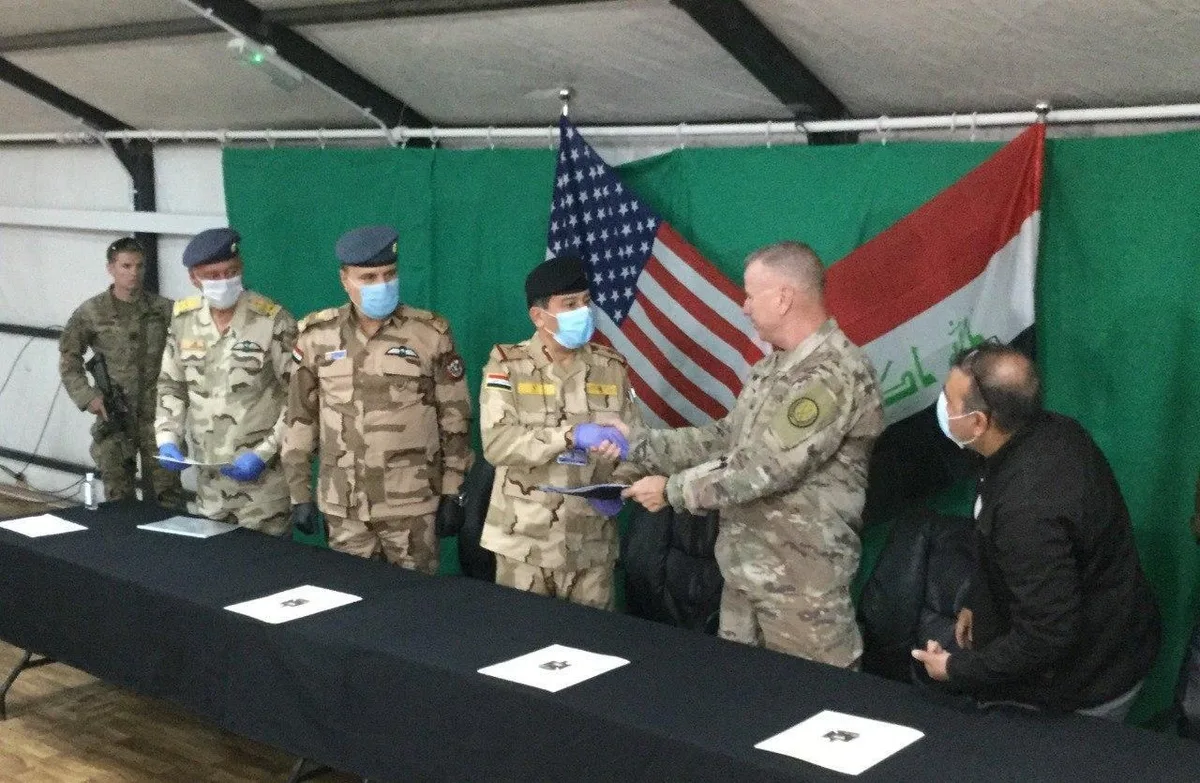
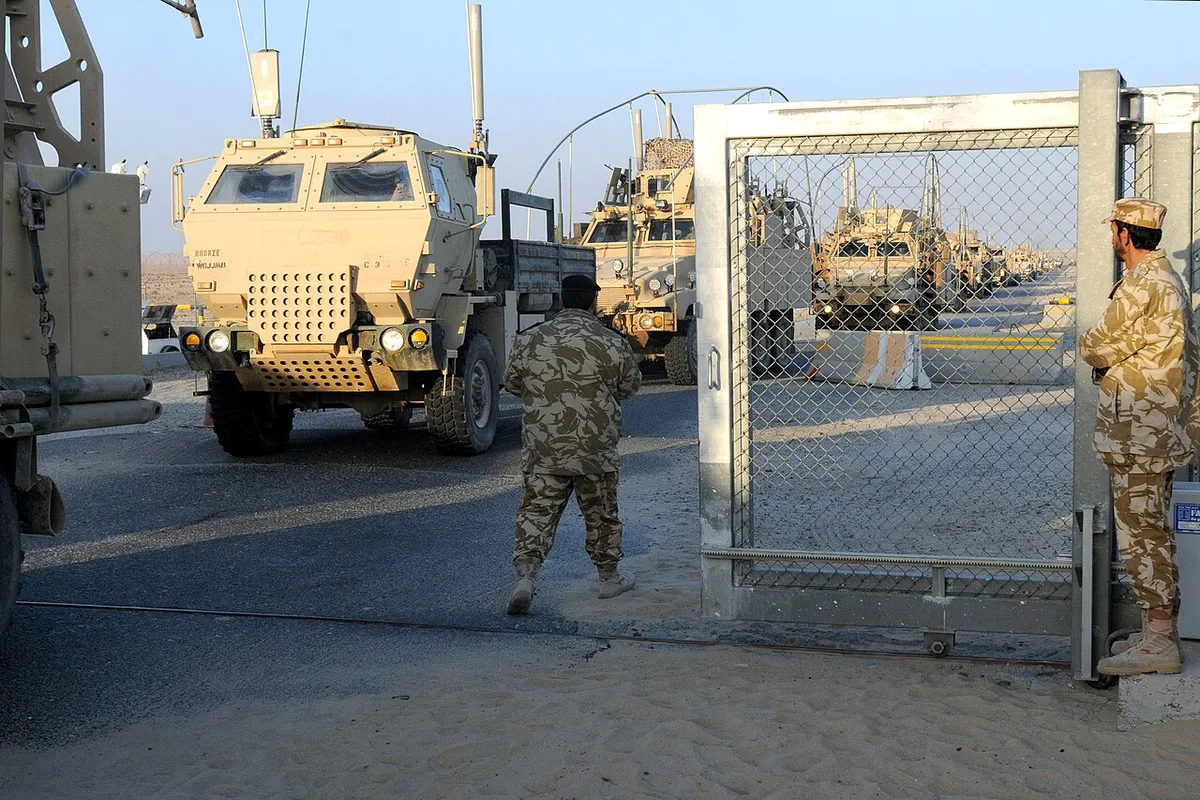
The Coalition Provisional Authority disbanded the Iraqi military and expelled Ba'athists from the new government. The insurgents fought against the coalition forces and the newly installed government. Saddam was captured and executed. The Shia–Sunni civil war took place from 2006 to 2008. The coalition forces were accused of war crimes such as the Abu Ghraib torture, the Fallujah massacre, the Mahmudiyah rape and killings and the Mukaradeeb wedding party massacre. Following the withdrawal of US troops in 2011, the occupation ceased and war ended. The war in Iraq has resulted in between 151,000 and 1.2 million Iraqis being killed.
The subsequent efforts to rebuild the country amidst sectarian violence was galvanised by continuing discontent over Nouri al-Maliki's government, which led to protests. In 2013, taking advantage of the ensuing chaos and popular discontent against the Iraqi government, Ba'athist and other Sunni militants (Al Qaida and ISIS) launched a number of attacks against the government during what is known as the Anbar campaign. What followed, was a large scale offensive by ISIS in Mosul, which marked the beginning of the rapid territorial expansion of the group, initiating full-scale war in Iraq. Sunni insurgents belonging to the Islamic State group seized control of large swathes of land including several major cities, like Tikrit, Fallujah and Mosul, creating hundreds of thousands of internally displaced persons amid reports of atrocities by ISIS fighters. An estimated 500,000 civilians fled from Mosul. Around 5,000 Yazidis were killed in the genocide by ISIS, as a part of the war. In June 2014, Iraq's leading Shii Grand Ayatollah, Ali al-Sistani issued a Fatwa calling on able-bodied men to join the Armed Forces to fight against ISIS. Even though the Fatwa specifically instructed Iraqis to join the official Armed Forces of the country (such as the Army or the Police), it nevertheless resulted in the creation of the Popular Mobilisation Forces. During that time, the government of Iraq, headed by Haider al-Abadi requested the international community to assist Iraq against ISIS, resulting in the creation of the American-led Coalition against ISIS. Meanwhile, in an attempt to counter US influence, Khomeinist anti-US militias prompted Iranian intervention, which resulted in the latter expanding its influence. The Iraqi armed forces, supported by the US-led coalition, as well as the Popular Mobilisation Forces, Peshmerga and other allied anti-ISIS militias then initiated a counter-offensive to retake and liberate ISIS-held territory. In December 2017, when ISIS had lost all its territory in Iraq, the government declared victory.
One of the main causes for popular discontent in Iraq is the lack of reliable electricity infrastructure and clean water. The electrical grid faces systemic pressures due to climate change, fuel shortages, and an increase in demand. Corruption remains endemic throughout Iraqi governance while the United States-endorsed sectarian political system has driven increased levels of violent terrorism and sectarian conflicts. Climate change is driving wide-scale droughts while water reserves are rapidly depleting. Nationwide protests erupted in Iraq in October 2019, demanding systemic reform, and the end of the party-based quota system as well as the disarmament of non-state militias and end to foreign interference. Despite heavy repression, hundreds of deaths, and widespread injuries, the movement remained united around calls for institutional reform and increased accountability. In 2020, the sitting prime minister Adil Abdul Mahdi resigned in the face of popular demand. He was succeeded by prime minister Mustafa al-Kadhimi, whose tenure coincided with the onset of the COVID-19 pandemic. The subsequent macroeconomic shock caused a severe decline in oil prices, critically impacting Iraq's oil-dependent economy. The country has been in a prolonged drought since 2020 and experienced its second-driest season in the past four decades in 2021. Water flows in the Tigris and Euphrates were down 30-40% in 2023. Half the country's farmland is at risk of desertification. Nearly 40% of Iraq "has been overtaken by blowing desert sands that claim tens of thousands of acres of arable land every year".
Since 2022, Iraq has experienced a period of relative political, security, and economic stabilisation. Government officials have cited increased regional diplomacy, improved international relations, and economic diversification initiatives such as the Iraq–Europe Development Road project as key indicators of recovery. In August 2023, the Iraq Development Fund was established whose purpose is to strengthen the private sector and finance projects of crucial social and environmental value. In 2024, Iraq experienced unprecedented rainfall that —according to the Ministry of Water Resources— boosted Iraq's strategic water reserves by 10%, significantly easing the drought crisis. In February 2025, the Iraq Development Fund had gained $7bn in foreign direct investments, and signed Memoranda of Understanding with a number of countries including the United Kingdom and Japan. In May 2025, Iraqi Ministry of Planning announced that the unemployment rate in Iraq had dropped from 17% in 2022 to 13% in 2025. A report published on 24 July 2025 and submitted to the United Nations Security Council, assessed that ISIS "is at its weakest" in Iraq since its emergence. In 2025, the UNDP announced that Iraq had reached a Human Development Index score of 0.712, surpassing the Arab states average. With reform and investment into the country's human capital, Iraq could reach the ranks of countries with 'very high human development' (HDI 0.800 and above) by 2035.