Republic of China (1945–present)
While Taiwan was under Japanese rule, the Republic of China was founded on mainland China on 1 January 1912 following the Xinhai Revolution of 1911. Central authority waxed and waned in response to warlordism (1915–28), Japanese invasion (1937–45), and the Chinese Civil War (1927–49), with central authority strongest during the Nanjing decade (1927–37), when most of China came under the control of the Kuomintang (KMT). During World War II, the 1943 Cairo Declaration specified that Formosa and the Pescadores be returned by Japan to the ROC; the terms were later repeated in the 1945 Potsdam Declaration that Japan agreed to carry out in its instrument of surrender. On 25 October 1945, Japan surrendered Taiwan to the ROC, and in the Treaty of San Francisco, Japan formally renounced their claims to the islands, though without specifying to whom they were surrendered. In 1952, Japan and the ROC signed a peace treaty.
The ROC appointed General Chen Yi garrison commander and administrator of Taiwan. While initially enthusiastic about the return of Chinese administration and the Three Principles of the People, Formosans grew increasingly dissatisfied about being excluded from higher positions, the postponement of local elections even after the enactment of a constitution on the mainland, the smuggling of valuables off the island, the expropriation of businesses into government-operated monopolies, and the hyperinflation of 1945–1949. The shooting of a civilian on 28 February 1947 triggered island-wide unrest, which was suppressed with military force in what is now called the February 28 incident. Mainstream estimates of the number killed range from 18,000 to 30,000. Chen was replaced by Wei Tao-ming, who made an effort to undo previous mismanagement by re-appointing a good proportion of islanders and re-privatizing businesses.
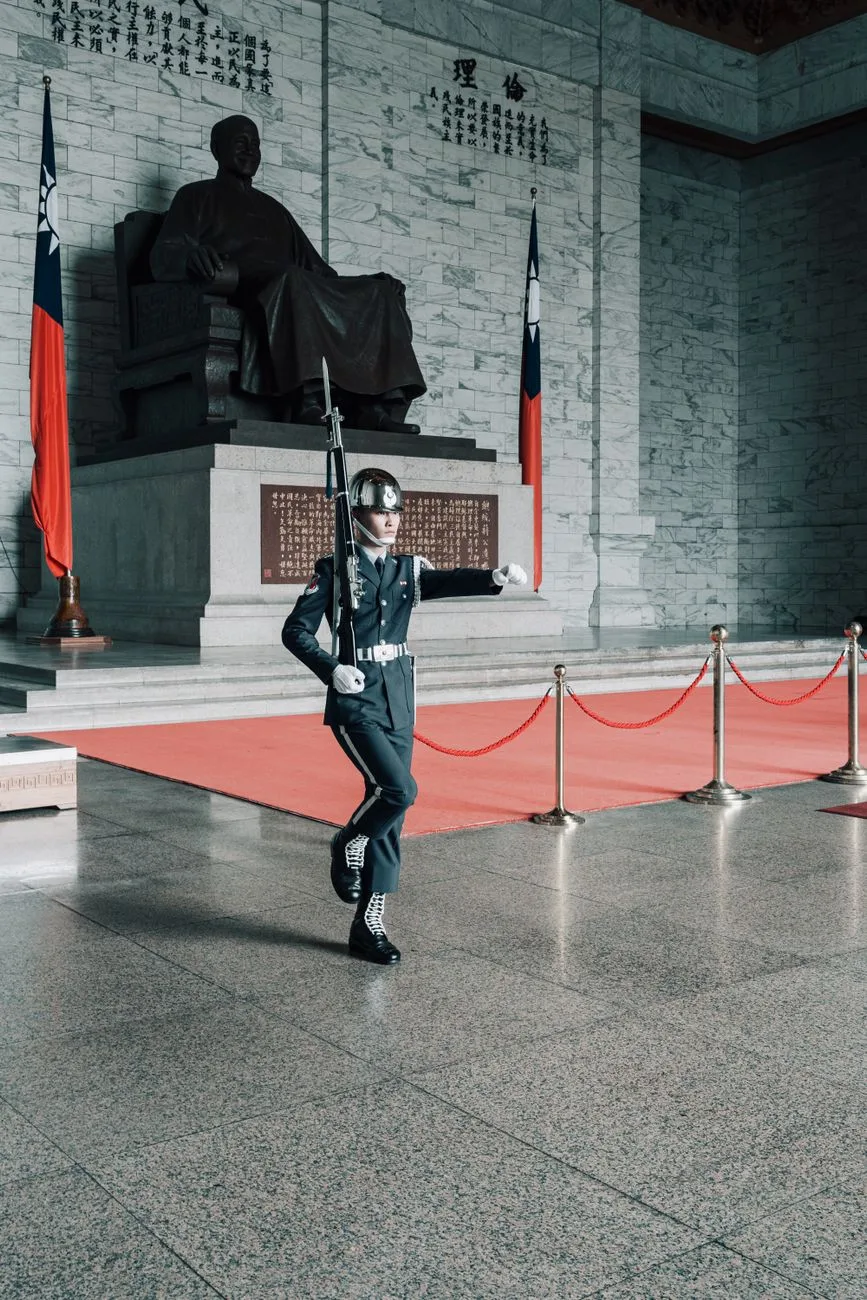
After the end of World War II, the Chinese Civil War resumed. A series of Chinese Communist offensives in 1949 led to the capture of its capital Nanjing on 23 April and the subsequent defeat of the Nationalists on the mainland. The Communists founded the People's Republic of China on 1 October. On 7 December 1949, Chiang Kai-shek evacuated his Nationalist government to Taiwan and made Taipei the temporary capital of the ROC. Some 2 million people, mainly soldiers, members of the ruling Kuomintang and intellectual and business elites, were evacuated to Taiwan, adding to the earlier population of approximately six million. These people and their descendants became known in Taiwan as waishengren (外省人). The ROC government took to Taipei many national treasures and much of China's gold and foreign currency reserves. Most of the gold was used to pay soldiers' salaries, with some used to issue the New Taiwan dollar, part of a price stabilization program to slow inflation in Taiwan.
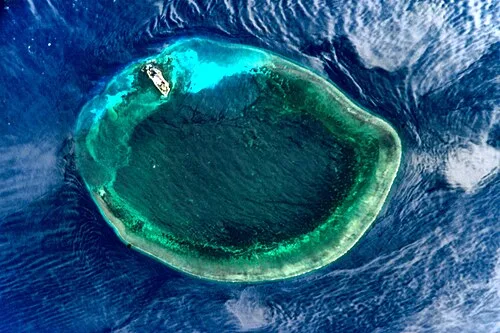
After losing control of mainland China in 1949, the ROC retained control of Taiwan and Penghu (Taiwan, ROC), parts of Fujian (Fujian, ROC)—specifically Kinmen, Wuqiu (now part of Kinmen) and the Matsu Islands and two major islands in the South China Sea. The ROC also briefly retained control of the entirety of Hainan, parts of Zhejiang (Chekiang)—specifically the Dachen Islands and Yijiangshan Islands—and portions of Tibet, Qinghai, Xinjiang and Yunnan. The Communists captured Hainan in 1950, captured the Dachen Islands and Yijiangshan Islands during the First Taiwan Strait Crisis in 1955 and defeated the ROC revolts in Northwest China in 1958. ROC forces entered Burma and Thailand in the 1950s and were defeated by Communists in 1961. Since losing control of mainland China, the Kuomintang continued to claim sovereignty over 'all of China', which it defined to include mainland China (including Tibet), Taiwan (including Penghu), Outer Mongolia, and other minor territories.
Martial law, declared on Taiwan in May 1949, continued to be in effect until 1987, and was used to suppress political opposition. During the White Terror, as the period is known, 140,000 people were imprisoned or executed for being perceived as anti-KMT or pro-Communist. Many citizens were arrested, tortured, imprisoned or executed for their real or perceived link to the Chinese Communist Party. Since these people were mainly from the intellectual and social elite, an entire generation of political and social leaders was destroyed.
Following the eruption of the Korean War, US President Harry S. Truman dispatched the United States Seventh Fleet into the Taiwan Strait to prevent hostilities between the ROC and the PRC. The United States also passed the Sino-American Mutual Defense Treaty and the Formosa Resolution of 1955, granting substantial foreign aid to the KMT regime between 1951 and 1965. The US foreign aid stabilized prices in Taiwan by 1952. The KMT government instituted many laws and land reforms that it had never effectively enacted on mainland China. Economic development was encouraged by American aid and programs such as the Joint Commission on Rural Reconstruction, which turned the agricultural sector into the basis for later growth. Under the combined stimulus of the land reform and the agricultural development programs, agricultural production increased at an average annual rate of 4 percent from 1952 to 1959. The government also implemented a policy of import substitution industrialization, attempting to produce imported goods domestically. The policy promoted the development of textile, food, and other labor-intensive industries.
As the Chinese Civil War continued, the government built up military fortifications throughout Taiwan. Veterans built the Central Cross-Island Highway through the Taroko Gorge in the 1950s. During the Second Taiwan Strait Crisis in 1958, Nike Hercules missiles were added to the formation of missile batteries throughout the island.
During the 1960s and 1970s, the ROC maintained an authoritarian, single-party government under the Kuomintang's Dang Guo system while its economy became industrialized and technology-oriented. This rapid economic growth, known as the Taiwan Miracle, occurred following a strategy of prioritizing agriculture, light industries, and heavy industries, in that order. Export-oriented industrialization was achieved by tax rebate for exports, removal of import restriction, moving from multiple exchange rate to single exchange rate system, and depreciation of the New Taiwan dollar. Infrastructure projects such as the Sun Yat-sen Freeway, Taoyuan International Airport, Taichung Harbor, and Jinshan Nuclear Power Plant were launched, while the rise of steel, petrochemical, and shipbuilding industries in southern Taiwan saw the transformation of Kaohsiung into a special municipality on par with Taipei. In the 1970s, Taiwan became the second fastest growing economy in Asia. Real growth in GDP averaged over 10 percent. In 1978, the combination of tax incentives and a cheap, well-trained labor force attracted investments of over $1.9 billion from overseas Chinese, the United States, and Japan. By 1980, foreign trade reached $39 billion per year and generated a surplus of $46.5 million. Along with Hong Kong, Singapore, and South Korea, Taiwan became known as one of the Four Asian Tigers.
Because of the Cold War, most Western nations and the United Nations regarded the ROC as the sole legitimate government of China until the 1970s. Eventually, especially after Taiwan's expulsion from the United Nations, most nations switched diplomatic recognition to the PRC. Until the 1970s, the ROC government was regarded by Western critics as undemocratic for upholding martial law, severely repressing any political opposition, and controlling the media. The KMT did not allow the creation of new parties and competitive democratic elections did not exist.
From the late 1970s to the 1990s, Taiwan underwent political and social reforms that transformed it into a democracy. Chiang Ching-kuo, Chiang Kai-shek's son, served as premier from 1972 and rose to the presidency in 1978. He sought to move more authority to "bensheng ren" (residents of Taiwan before Japan's surrender and their descendants). Pro-democracy activists Tangwai emerged as the opposition. In 1979, the Kaohsiung Incident took place in Kaohsiung on Human Rights Day. Although the protest was rapidly crushed by the authorities, it is considered as the main event that united Taiwan's opposition.
In 1984, Chiang Ching-kuo selected Lee Teng-hui as his vice-president. After the Democratic Progressive Party (DPP) was (illegally) founded as the first opposition party in Taiwan to counter the KMT in 1986, Chiang announced that he would allow the formation of new parties. On 15 July 1987, Chiang lifted martial law on the main island of Taiwan.
After Chiang Ching-kuo's death in 1988, Lee Teng-hui became the first president of the ROC born in Taiwan. Lee's administration oversaw a period of democratization in which the Temporary Provisions against the Communist Rebellion were abolished and the Additional Articles of the Constitution were introduced. Congressional representation was allocated to only the Taiwan Area, and Taiwan underwent a process of localization in which Taiwanese culture and history were promoted over a pan-China viewpoint while assimilationist policies were replaced with support for multiculturalism. In 1996, Lee was re-elected in the first direct presidential election. During Lee's administration, both he and his party were involved in corruption controversies that came to be known as "black gold" politics.
Chen Shui-bian of the DPP was elected as the first non-KMT president in 2000. However, Chen lacked legislative majority. The opposition KMT developed the Pan-Blue Coalition with other parties, mustering a slim majority over the DPP-led Pan-Green Coalition. Polarized politics emerged in Taiwan with the Pan-Blue preference for eventual Chinese unification, while the Pan-Green prefers Taiwanese independence.
Chen's reference to "One Country on Each Side" of the Taiwan Strait undercut cross-Strait relations in 2002. He pushed for the first national referendum on cross-Strait relations, and called for an end to the National Unification Council. State-run companies began dropping "China" references in their names and including "Taiwan". In 2008, referendums asked whether Taiwan should join the UN. This act alienated moderate constituents who supported the status quo, as well as those with cross-strait economic ties. It also created tension with the mainland and disagreements with the United States. Chen's administration was also dogged by public concerns over reduced economic growth, legislative gridlock, and corruption investigations.
The KMT's nominee Ma Ying-jeou won the 2008 presidential election on a platform of increased economic growth and better ties with the PRC under a policy of "mutual non-denial". Under Ma, Taiwan and China opened up direct flights and cargo shipments. The PRC government even made the atypical decision to not demand that Taiwan be barred from the annual World Health Assembly. Ma also made an official apology for the White Terror. However, closer economic ties with China raised concerns about its political consequences. In 2014, university students occupied the Legislative Yuan and prevented the ratification of the Cross-Strait Service Trade Agreement in what became known as the Sunflower Student Movement. The movement gave rise to youth-based third parties such as the New Power Party, and is viewed to have contributed to the DPP's victories in the 2016 presidential and legislative elections, the latter of which resulted in the first DPP legislative majority in Taiwanese history.
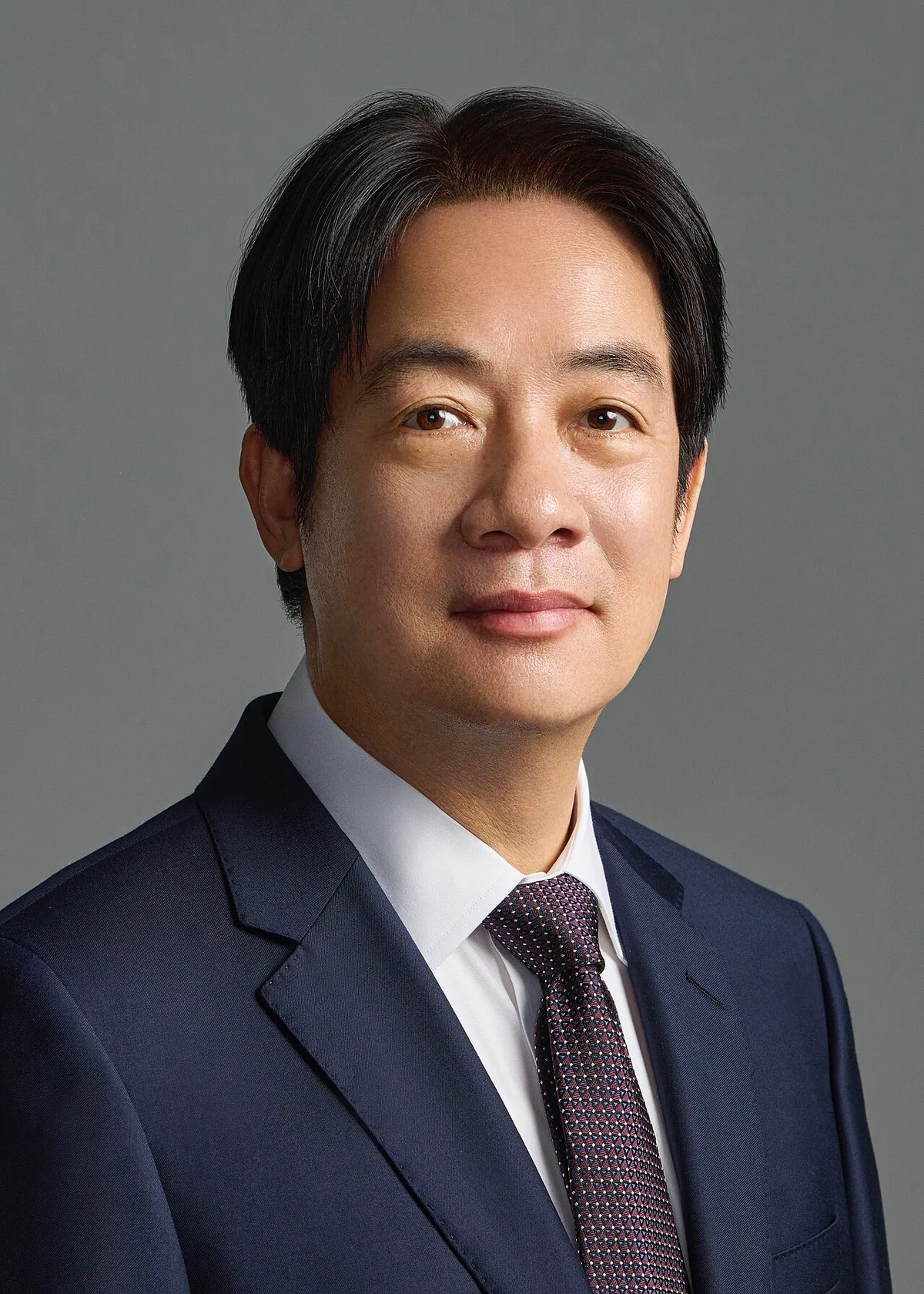
In January 2024, William Lai Ching-te of the ruling Democratic Progressive Party won Taiwan's presidential elections. However, no party won a majority in the simultaneous Taiwan's legislative election for the first time since 2004, meaning 51 seats for the Democratic Progressive Party (DPP), 52 seats for the Kuomintang (KMT), and the Taiwan People's Party (TPP) secured eight seats.