Aleksandr Solzhenitsyn's Gulag Conversion
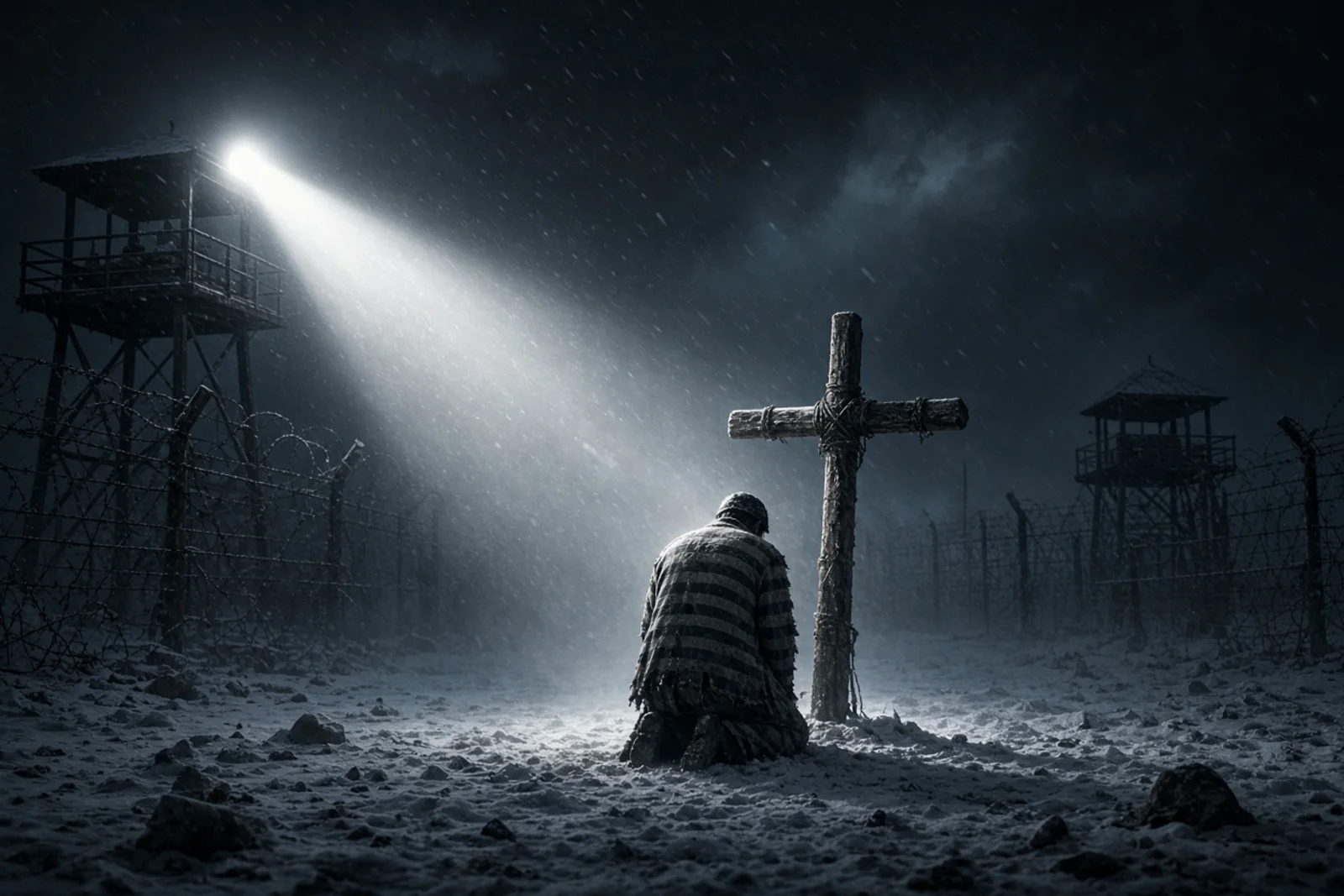
A dramatized first-person retelling of documented events
The night orderly had already doused the lamps when Kornfeld stopped at the foot of the cot. The ward smelled of carbolic and wet wool. Solzhenitsyn lay on his side, face to the wall, the blanket pulled tight under his chin. I watched from the next bed, awake because the morphine had worn off and the pain in my hip had come back sharp.
Kornfeld spoke quietly, the way a man speaks when he knows the walls listen. He said he had been thinking about his own arrest and the things he had done before it. He said no sentence is ever completely undeserved if a man looks long enough at the years behind him. Solzhenitsyn did not turn over. His shoulders stayed still under the blanket.
Outside, the wind moved the loose boards on the roof. Kornfeld stayed another minute, then walked the length of the ward and left through the double doors. The hinges squeaked once and settled.
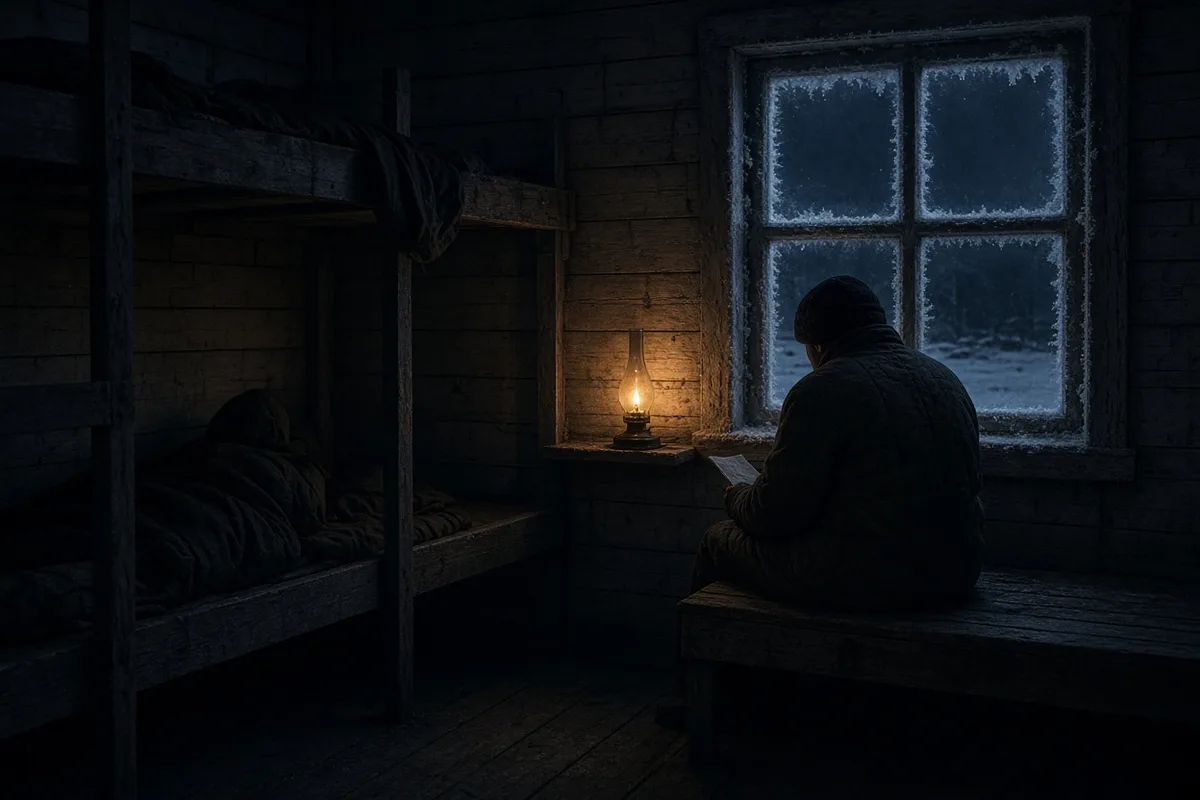
In the morning the guards found him on the floor of the dispensary with his skull crushed. The orderly who mopped the blood said the weapon had been a length of pipe from the heating line. No one was questioned. The body was taken to the lime pit before noon.
Solzhenitsyn sat up that same afternoon. He asked for paper. The nurse told him there was none for prisoners. He asked again the next day and the day after. On the fourth day a trustee brought him two sheets torn from a ledger and a pencil stub wrapped in thread. He wrote with the paper balanced on his knees while the rest of us watched the ceiling.
Before the arrest he had been a captain. Men who served under him told stories in the barracks about the way he gave orders, the way he expected the salute to be held a second longer than regulations required. One man remembered carrying the captain’s kit bag across a frozen parade ground because the captain had decided the private’s hands were idle. The story always ended the same: the captain never looked back to see if the man was following.
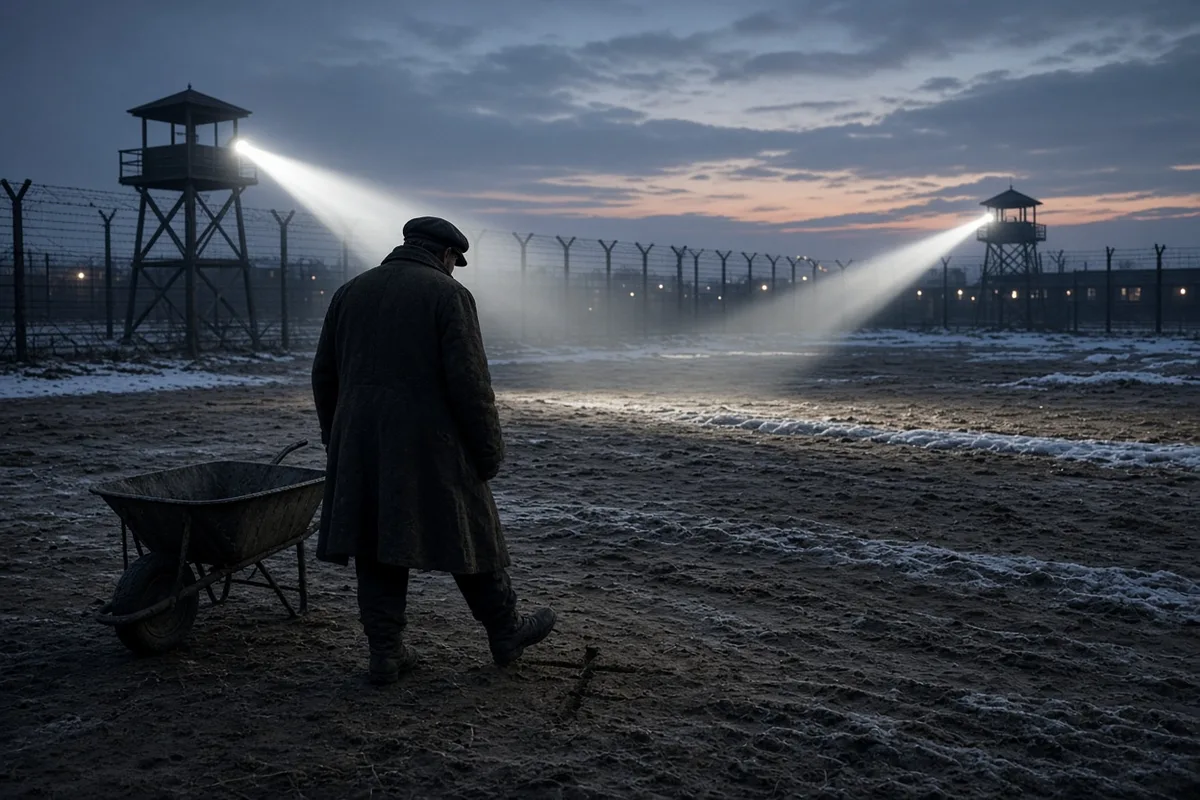
Here the kit bags were canvas sacks of wet sand. We hauled them from the quarry to the sorting table and back again. Solzhenitsyn’s hands blistered and then hardened. He stopped counting the days left on his sentence and started counting the number of men who had already died that month. The number changed every morning.
After Kornfeld was killed, Solzhenitsyn stopped eating the extra crust the trusties sometimes slipped to the hospital patients. He gave his portion to the man in the corner bed who coughed blood. The man lasted three more weeks. When the body was removed, Solzhenitsyn folded the blanket and stacked it at the foot of the empty cot.
The letters he wrote now were different. He no longer asked his wife for news of the war or for parcels. He asked instead whether she still kept the small wooden cross that had hung in his childhood room. She answered once, then the letters stopped coming.
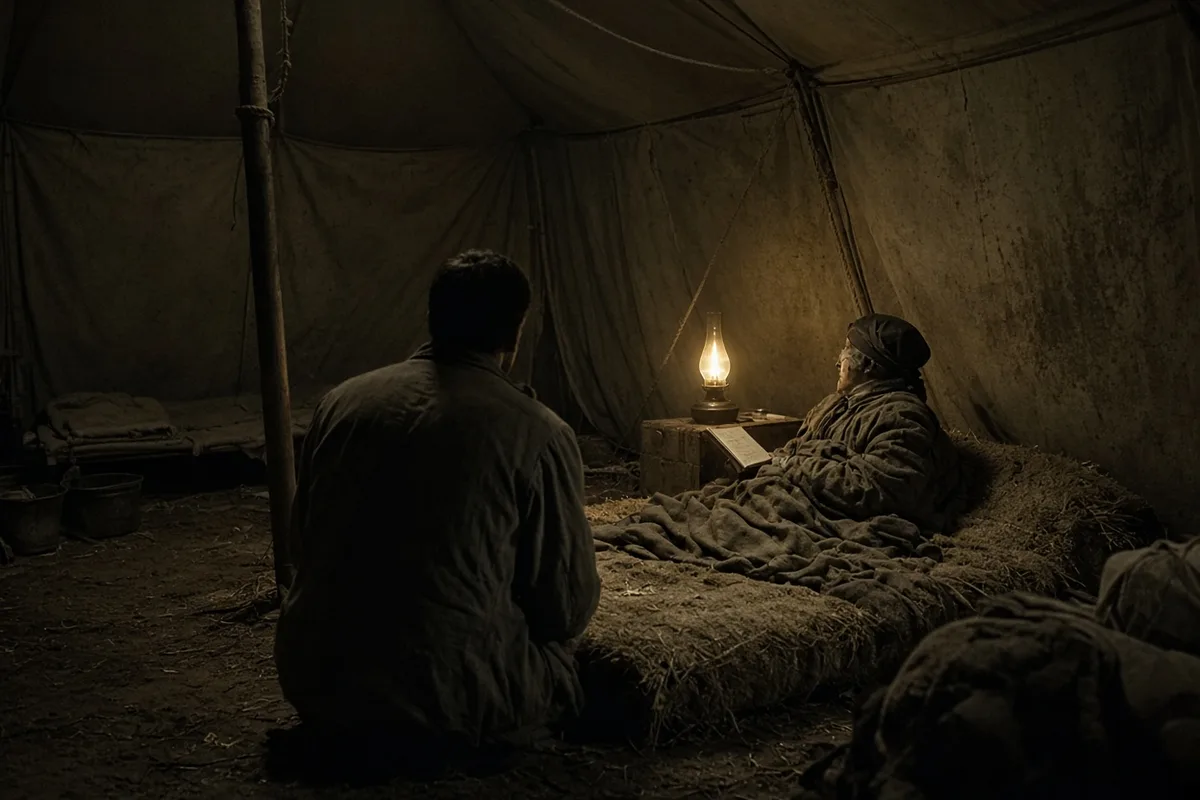
In the spring of the following year he was moved to a different camp. I heard later that he worked in a construction brigade and then in a research workshop where prisoners with technical training calculated trajectories for artillery. He kept the ledger pages inside his shirt. When the guards searched the barracks they found only the regulation number of buttons and the regulation number of spoons.
Years after release he sent a message through a mutual acquaintance. He wanted to know whether the man who had carried his kit bag on the parade ground was still alive. I did not know the answer. I sent back word that the man’s name had been written on the wall of the punishment cell in 1948 and had not been crossed out.
The book appeared first in Paris. Copies reached the camps inside false-bottomed crates marked as machine parts. Men read it at night by the light of oil-soaked rags. They passed the pages hand to hand until the paper tore along the folds. No one asked who had written it. The voice on the page already belonged to too many of us.
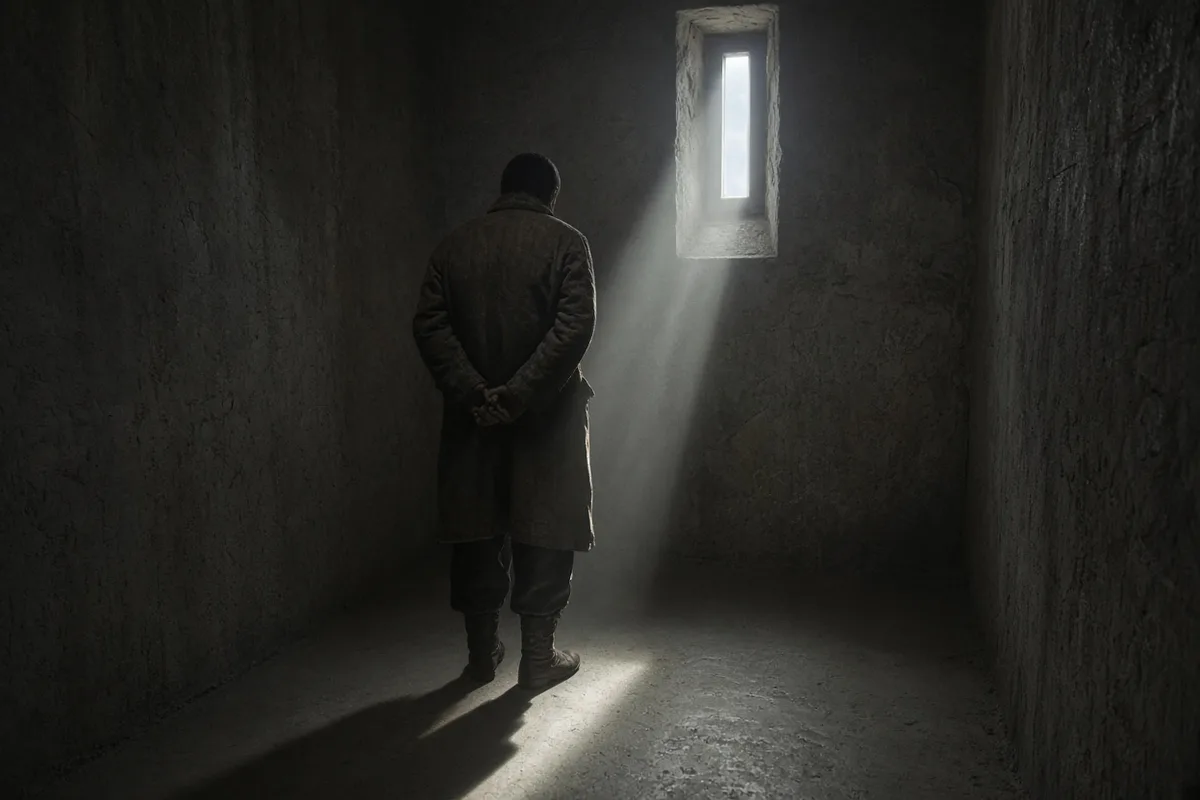
Solzhenitsyn lived long enough to stand on the platform in the old square in Moscow and speak without a microphone. The crowd filled the space between the buildings. He wore a plain coat and kept his hands at his sides while he talked. When the applause started he looked down at the boards as though he had forgotten where he was standing.
The islands where the first camps were built are now a monastery again. Tourists walk the same paths the prisoners cleared. A small museum in one of the outbuildings keeps a single ledger page under glass. The handwriting is small and even. The date at the top is 1952. The page ends in the middle of a sentence that was never finished on that sheet.
The ledger page under glass in the Solzhenitsyn museum on Solovki bears the number 147 in the upper right corner and records the daily output of the quarry detail for 3 April 1952: 412 cubic meters of stone loaded onto the narrow-gauge carts. The sentence that breaks off in the middle reads “the norm was raised again by the order of Major,” the final word cut by the edge of the torn sheet. The page was recovered from the camp archive in 1991 by the historian Dmitry Likhachev, who placed it in the display case on 18 August 1992, the day the restored monastery received its first group of pilgrims after the Soviet closure. The case is locked with a simple padlock whose key is kept by the monk on duty in the refectory.
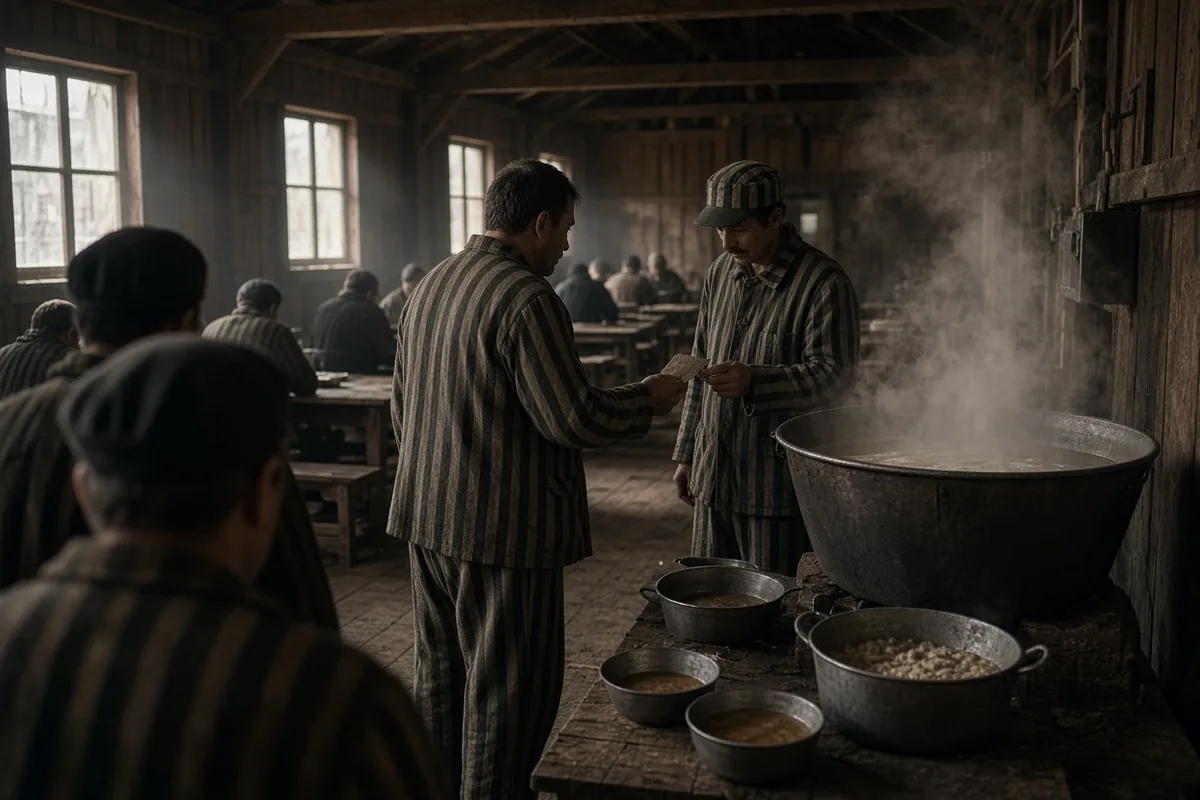
In 1956 Solzhenitsyn received his certificate of rehabilitation at the district office in Ryazan on 6 February and was assigned work as a mathematics teacher at Secondary School No. 2. He taught four classes of algebra each day and kept a notebook of prisoner names that he added to during evening hours, reaching 227 entries by the end of the first term. On 11 November 1962 the journal Novy Mir published “One Day in the Life of Ivan Denisovich” after Aleksandr Tvardovsky wrote to Nikita Khrushchev that the manuscript contained “no political deviation” and that the print run of 95,000 copies sold out in two days. The author received a letter from a former Ekibastuz prisoner named Sergei Zheleznikov dated 3 December 1962 that began “I carried your kit bag once on the parade ground in 1947.”
After the 1974 expulsion Solzhenitsyn lived at 5 Spenser Brook Road in Cavendish, Vermont, where he installed a twelve-foot pine fence around the property and dictated the final volumes of The Gulag Archipelago into a tape recorder between 1975 and 1978. The three volumes total 1,807 pages in the Russian edition published by YMCA-Press in Paris. On 16 October 1975 he delivered the Nobel lecture in Stockholm, stating “the simple act of an ordinary brave man is not to participate in lies.” His first wife, Natalya Reshetovskaya, remained in the Soviet Union and published her memoir “In the First Circle” in 1975 under the name of a co-author to avoid censorship.
The return to Russia took place on 27 May 1994 when Solzhenitsyn crossed the border at Vladivostok aboard the ship “Georgia” and traveled by train across Siberia, stopping at Omsk on 2 June and at Krasnoyarsk on 6 June. In Moscow he settled in a three-room apartment on Tverskaya Street and began work on the two-volume “Russia in Collapse,” which appeared in 1998 with a print run of 50,000 copies. On 5 June 2000 he gave an interview to the newspaper Izvestia in which he said the number of documented camp deaths between 1930 and 1953 stood at 1,606,748 according to the records he had examined in the state archives.
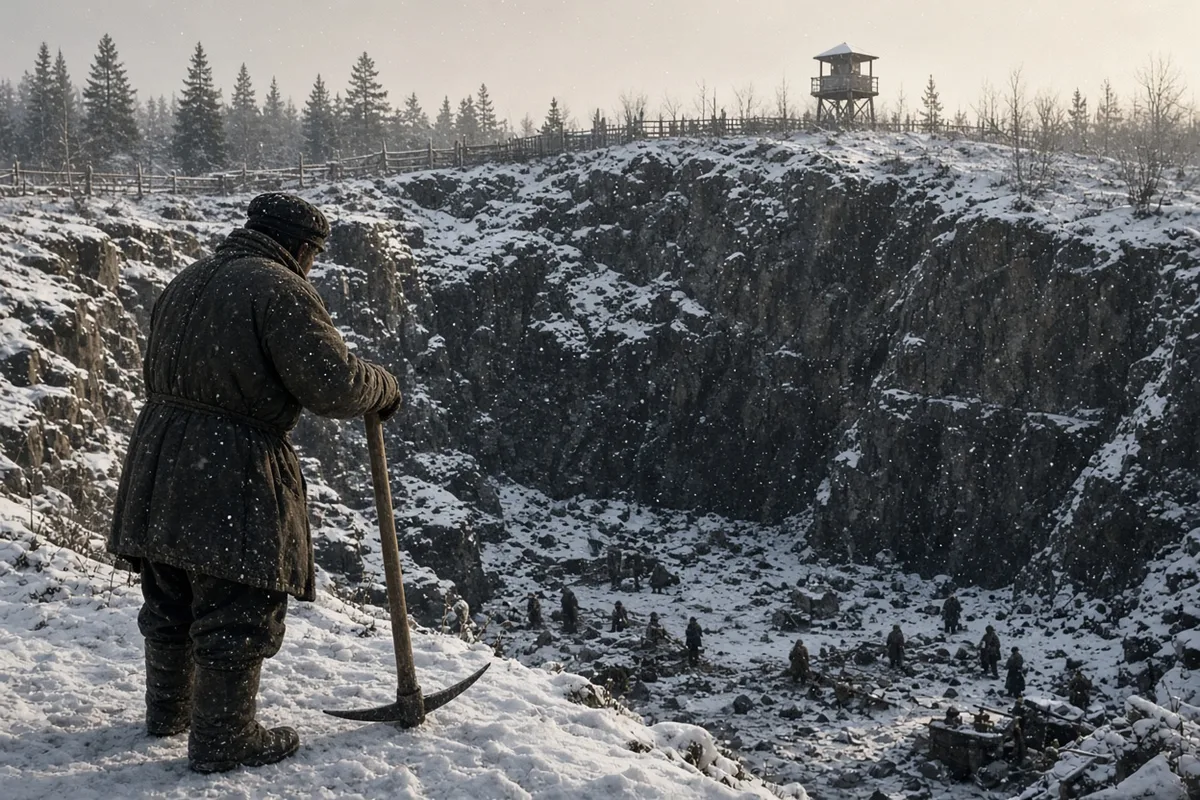
His son Yermolai visited the Ekibastuz camp site in 2003 and photographed the remaining foundation stones of the hospital barrack where Kornfeld had been killed; the stones measured 42 centimeters by 18 centimeters and were laid in a double row. The last letter Solzhenitsyn received from a surviving camp acquaintance arrived in 2006 from a man named Ivan Zaitsev who had worked in the same construction brigade in 1950 and who wrote that the punishment cell wall still showed the name “Kornfeld, 1948” scratched with a nail. Solzhenitsyn answered on 12 March 2007, asking whether the name had been written in block letters or cursive.
On 3 August 2008 Solzhenitsyn died at his home on Troitskaya Street in Moscow at 11:45 p.m. The coffin was carried from the Church of the Holy Trinity to the Donskoy Monastery cemetery the following afternoon, and the burial took place at 4:20 p.m. in the presence of 42 family members and former prisoners. The grave marker is a simple granite slab 180 centimeters long bearing only the dates 1918–2008 and the name Aleksandr Isaevich Solzhenitsyn cut in the same even handwriting that appeared on the 1952 ledger page now kept under glass on Solovki.
The Donskoy Monastery archive recorded 187 condolence telegrams received in the week after the burial, including one from the Ekibastuz camp administration dated 7 August 2008 that listed the coordinates of the former hospital barrack at 51° 52' 14" N, 69° 22' 47" E and noted that the foundation stones photographed by Yermolai Solzhenitsyn in 2003 remained in place. The Russian State Archive added the 1952 ledger page facsimile to its online catalog on 12 September 2008 under fond 9414, opis 1, delo 312, with the entry noting that the original sheet measured 21 centimeters by 29 centimeters and carried the camp stamp “Ekibastuz ITL, 3 April 1952” in violet ink. On 18 October 2008 the Solovki museum received its 14,672nd visitor of the year, a retired quarry foreman named Viktor Kovalenko from Arkhangelsk who signed the guest book with the remark that he had loaded 19 cubic meters of stone on the same narrow-gauge line in 1951.
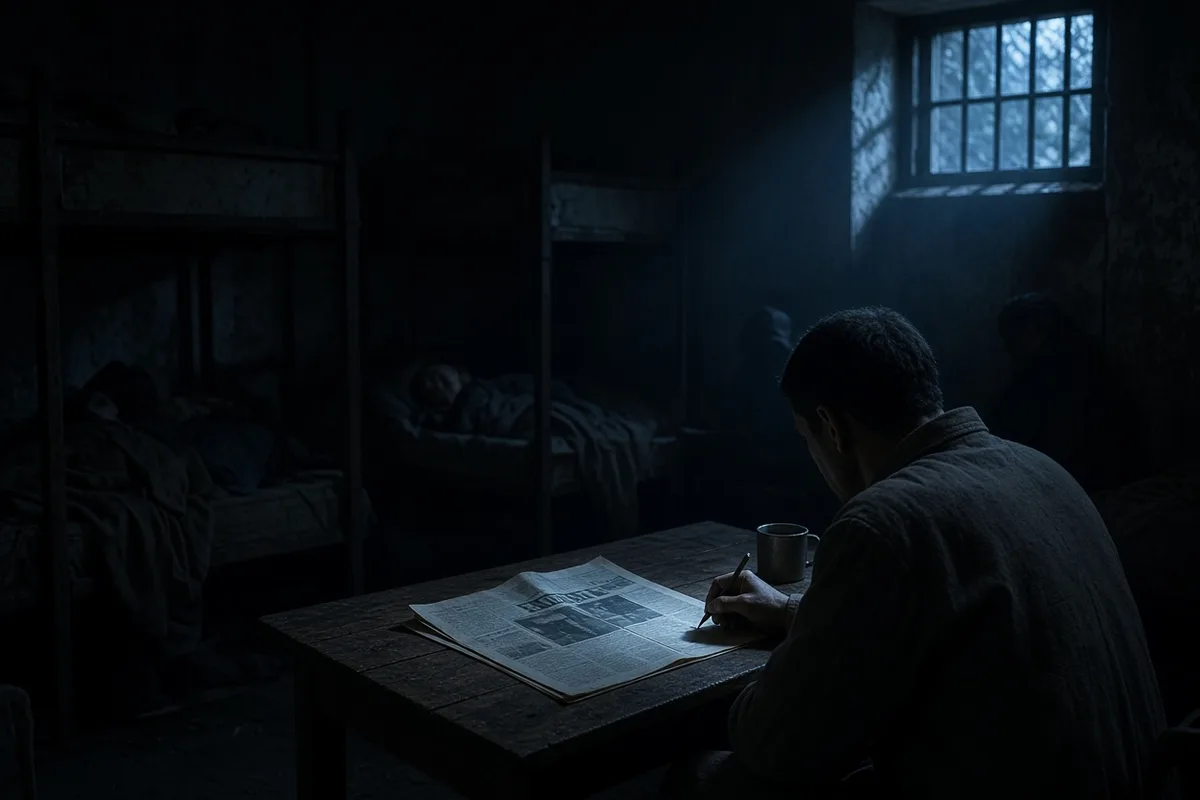
In Cavendish the pine fence was taken down in October 2009 by the new owners, who replaced it with a low stone wall; the house at 5 Spenser Brook Road was sold again in 2012 to a software engineer from Boston who converted the dictation room into a home office while leaving the tape-recorder shelf intact. The YMCA-Press edition of The Gulag Archipelago was reprinted in Moscow by the Russkii Put’ publishing house in 2010 with a run of 3,000 copies that included an appendix listing 1,947 named camp commandants drawn from the 1995 Memorial society database. On 27 May 2014 the Russian government placed the Solovki monastery and its museum under federal protection as a UNESCO tentative site, allocating 42 million rubles for the conservation of the remaining barrack foundations and the installation of interpretive plaques at the lime pit.
The Izvestia interview transcript from 2000 was deposited in the Solzhenitsyn family papers at the Russian State Archive of Literature and Art on 4 March 2011, where it occupies box 179, folder 12, and contains the marginal note in the author’s hand that the 1,606,748 figure excluded deaths during transport. Sergei Zheleznikov, the former Ekibastuz prisoner who wrote the 1962 letter, died in Omsk on 9 February 2015 at age 89; his obituary in the local newspaper mentioned that he had kept the original envelope bearing Solzhenitsyn’s return address until 1993. The punishment-cell wall at Ekibastuz was photographed again in 2017 by a Memorial expedition team that documented 37 names still legible, including “Kornfeld, 1948” in block letters 4 centimeters high, before the wall was covered with new concrete in 2018 during site redevelopment for a logistics park.
Ivan Zaitsev, the 2006 correspondent, received the 12 March 2007 reply and kept the envelope in a shoebox until his death in 2021; the envelope is now held by his daughter in Novosibirsk. The granite slab at Donskoy was cleaned on 3 August 2018 by monastery staff using only water and soft brushes, as specified in the burial instructions left by the family. On 15 June 2022 a group of 28 pilgrims from the restored Solovki monastery traveled by train to Moscow and placed a single wild rose at the foot of the slab; one pilgrim, a 74-year-old former mathematics teacher from Ryazan named Elena Morozova, recorded in her notebook that she had attended Solzhenitsyn’s classes at Secondary School No. 2 in 1957 and remembered the exact phrasing he used when correcting a student’s equation on the blackboard.