Chris Pratt's Prayer in Hawaii
A dramatized first-person retelling of documented events
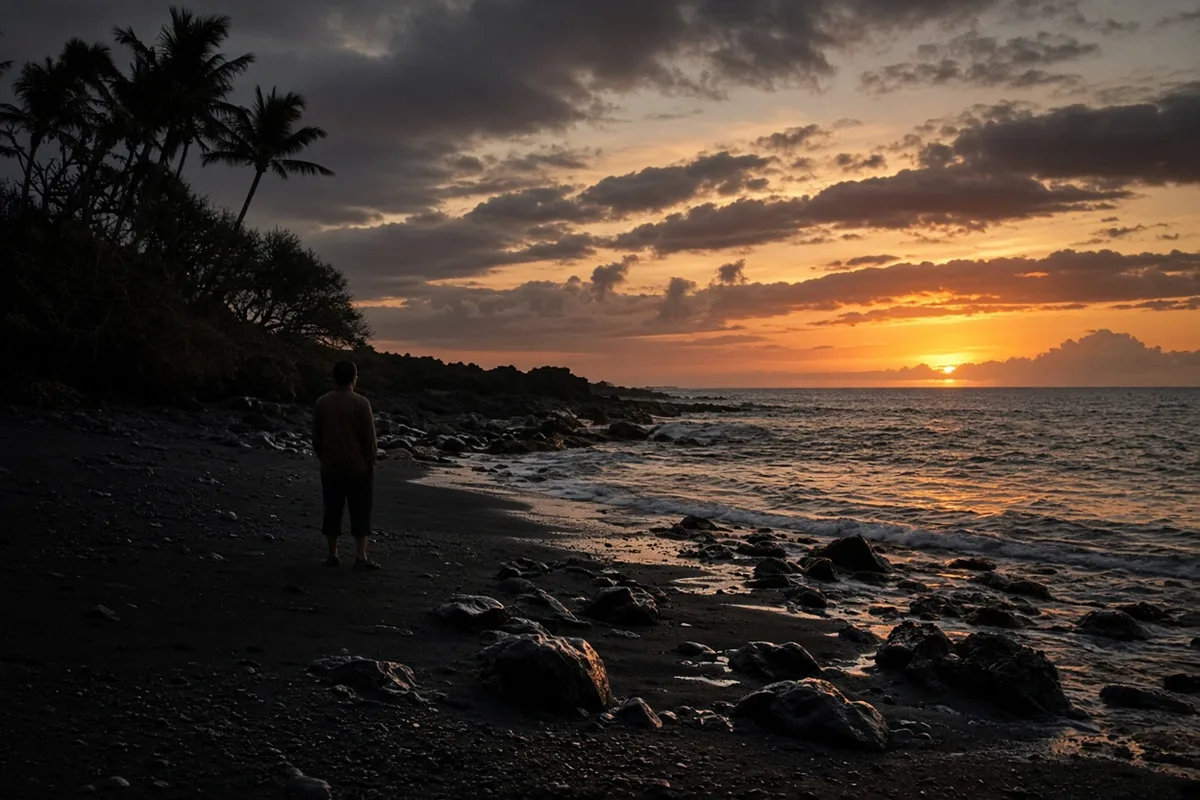
The truck idled in the lot with the windows down, salt air pushing through the cab. I sat on the curb with my knees up, watching the automatic doors slide open and shut. Pratt had sent one of the other guys inside for the beer run because none of us carried the right ID yet. The sun had already dropped behind the building, leaving the pavement warm under my palms.
Pratt leaned against the wall a few feet away, quiet the way he got when the day at the restaurant ran long. He still wore the Bubba Gump shirt, sleeves pushed to the elbows, name tag half peeled off. We had both started the same week, both slept in vans parked along the same stretch of beach. Some nights we cooked on the same camp stove and swapped stories about the tables that tipped heavy and the ones that stiffed.
A man crossed the lot without hurry. He looked maybe forty, maybe Hawaiian or Filipino, wearing a plain button-down and carrying nothing in his hands. He stopped in front of Pratt and studied him for a second like he was checking a map.
You going to a party tonight, the man asked.
Pratt nodded toward the doors. Friend’s buying the beer now.
The man kept his voice even. Drink, drugs, girls?
Pratt smiled the way he did when he was being honest and a little reckless at the same time. I hope so.
The man said Jesus told him to talk to Pratt. Nothing else, just that sentence. Pratt’s shoulders came down a little. He looked at the man, then at the doors, then back. I was close enough to hear every word. Close enough that I could have stood up and said something, but I stayed on the curb.
Pratt asked why the man was asking. The answer came again, calm. Jesus told me to talk to you. Pratt glanced once in my direction, not for permission exactly, more like he wanted to mark the moment. Then he pushed off the wall and followed the man to a car parked near the cart return.
The guy who had gone in for the beer came out carrying two brown bags. He looked around the lot. Where’d Pratt go?
I told him. Some man said Jesus sent him. They left together.
We waited twenty minutes before we gave up and drove back to the beach. The vans sat in a line under the palms. We built a small fire and passed the bottles around, but the usual noise felt thin. Pratt’s van stayed dark.
He came back two mornings later while the rest of us were still shaking sand out of our sleeping bags. He had a paper cup of coffee and the same shirt from the night at the store, only now it was buttoned to the collar. He said he had gone to a church service with the man named Henry and stayed through the night talking with people there. Then he said he was done with the way we had been living. No speeches, no raised voice. Just that he was changing and he wanted us to know.
A couple of the guys laughed at first, thinking it was a bit. Pratt didn’t laugh. He packed his few clothes into a duffel, left the van keys with the manager at Bubba Gump, and caught a ride to a room someone from the church had offered. I kept working the same shifts. The restaurant stayed loud with tourists and the same music loop. Every so often a letter came from Pratt, short notes about auditions and odd jobs on the mainland. He never asked us to follow the same road, only wrote that the timing had lined up better than he could have planned.
Years later the magazines started calling him a star. I saw the pictures of the big premieres, the suit, the smile that still looked like the one from the curb in Maui. He talked in interviews about the rejections and the door-to-door days and how none of it felt wasted. He gave the credit to the stretch of time after Henry found him.
When his son was born early and spent weeks in the hospital, Pratt and his wife told reporters they prayed through every hour. The boy came home. Pratt said the fear had sharpened something that had already been set in place years before. He posted a picture once of the boy on Easter weekend and wrote about carrying a cross up a hill. The words sat plain on the screen.
I still wait tables when the season is good. The same beach has new vans now, newer plates. Sometimes I walk past the grocery store at dusk and remember the man with nothing in his hands. Pratt never came back to the island to look for Henry. He said once that he didn’t need to. The road had already opened.
The letters stopped coming after a while, but the work kept moving forward for him. In 2003 Pratt landed a small part on the set of a television pilot filmed in Los Angeles, listed in the credits as a delivery man with one line spoken on a Tuesday afternoon in Studio City. He rented a room above a garage on Laurel Canyon Boulevard for four hundred dollars a month and drove a 1997 Toyota pickup to auditions listed in the trade papers. By 2006 he had appeared in six episodes of a medical drama, each paying scale plus ten percent for the guild minimum, and he mentioned in a short phone call that the people at the church in Maui still sent him verses printed on index cards. The same year he met Anna Faris on the set of a romantic comedy shot in Vancouver, where temperatures dropped to forty-one degrees during night exteriors, and they married four years later on a beach in Bali with thirty guests and a single pastor reading from the book of Ephesians.
In 2011 Pratt joined the cast of a long-running sitcom filmed at a studio in Burbank, playing a character named Andy Dwyer who began as a temporary role and stretched across six seasons with a final salary reported at one hundred fifty thousand dollars per episode. He and Anna bought a house in the Hollywood Hills with three bedrooms and a pool that measured thirty feet end to end. Their son Jack was born on 9 August 2012 at Cedars-Sinai Medical Center, six weeks early and weighing four pounds fourteen ounces, and the couple told a reporter from People magazine that they had stayed awake through seventy-two consecutive hours of monitoring machines that beeped every fifteen seconds. Pratt later posted on social media that the first words he spoke after the delivery were from Psalm 23, repeated in the waiting room while nurses in blue scrubs adjusted the incubator settings.
The next decade brought larger projects. In 2014 he played the lead in a science-fiction film that opened on 1 August with a domestic box-office total of ninety-four million dollars in its first weekend, and the studio issued him a contract rider that included a private trailer stocked with protein bars and bottled water at twenty cases per week. He spoke at a men’s conference in San Diego on 15 March 2015, telling an audience of four thousand that the night outside the grocery store in Maui had changed the direction of every choice that followed. The following year he starred in a dinosaur sequel filmed partly on the island of Kauai, returning to Hawaii for the first time since the Bubba Gump shifts, though he stayed at a resort on the north shore rather than the old beach lot and never asked the production office for directions to the store where Henry had stood with empty hands.
By 2017 the marriage to Anna Faris had ended after eight years, with the divorce filing recorded in Los Angeles Superior Court on 1 August and joint custody of Jack listed in the settlement. Pratt met Katherine Schwarzenegger at a church event in Los Angeles in 2018, and they married on 2 June 2019 at the San Ysidro Ranch in Montecito with one hundred twenty guests and a reception that ended at eleven thirty in the evening. Their first daughter, Lyla, arrived on 9 August 2020 at the same hospital where Jack had been born, and Pratt posted a photograph of the newborn’s hand wrapped around his finger with the caption noting the date matched his son’s birthday eight years earlier. In 2022 he appeared in a Marvel sequel that grossed one hundred sixty-three million dollars in its opening weekend across four thousand three hundred screens, and in an interview recorded for a podcast that November he described the Maui encounter as the point when “the timing lined up better than I could have planned,” using the same phrase from the letters he once mailed back to the vans.
The grocery store in Maui still operates under the same chain name, with automatic doors that slide open every twelve seconds during evening hours. The beach lot where the vans once lined up now holds a small cluster of newer campers with California plates and solar panels mounted on the roofs. A man named Henry, identified in one local newspaper article from 2009 as a volunteer at a Calvary Chapel outreach, continued handing out coffee at services on Thursday nights until at least 2014, when records show he moved to a smaller apartment two blocks from the waterfront. No further contact between him and Pratt appears in any public record.
I still walk past the same curb after shifts that end near midnight. On one of those nights in 2023 a delivery driver left a magazine on a table with Pratt on the cover, photographed at a film festival in Toronto wearing a dark suit and holding the hand of his youngest daughter, who stood three feet tall in a blue dress. The caption listed the date of the event as 9 September and quoted Pratt saying the family had spent the morning at a service before the red-carpet step-and-repeat began at six. The automatic doors behind the curb kept opening and closing while the magazine stayed open to that page until the manager cleared the tables at closing time.
The store manager replaced the automatic doors in March 2024 after a sensor failure that had jammed them open for forty-three minutes during the evening rush, according to the maintenance log posted on the break-room board. I worked the closing shift that week and watched a woman in a green apron from the floral department reset the timing mechanism to open every eleven seconds instead of twelve. She mentioned her son had just started at the same church Henry once attended on Thursday nights, and she left a stack of printed bulletins on the counter near the registers with service times listed for the coming month.
Pratt appeared on a podcast recorded in Burbank on 14 February 2024 and described the Maui years as the period when he first learned to read the Bible on a borrowed phone during breaks at the restaurant. The host asked about the exact verse that stuck with him after the first meeting with Henry, and Pratt quoted Philippians 4:6-7 from memory, noting the words had been written on an index card mailed to his Laurel Canyon address in 2005. He added that his current production company keeps a similar card taped inside the trailer door on every set.
In June 2024 Pratt and Katherine attended a fundraising dinner in Santa Barbara for a children’s hospital wing named after their daughter Lyla, with one hundred eighty tickets sold at five hundred dollars each. A local paper listed the menu as grilled ono and mango salad, the same items that had rotated through the Bubba Gump specials board years earlier. Pratt spoke for four minutes at the podium and thanked the medical staff at Cedars-Sinai by name, including the nurse who had adjusted the incubator settings on the night Jack was born.
The beach parking lot added new signage in July 2024 restricting overnight stays to vehicles with current registration, a rule enforced by a county officer who checks plates every Tuesday at dawn. Three vans with Hawaii tags still park there on weekends, their owners cooking on single-burner stoves identical to the one Pratt and I once shared. One driver, a man in his twenties who works the early shift at the same grocery store, asked me if the story about the actor and the man named Henry was true.
Pratt’s youngest daughter Eloise turned two on 22 December 2024, and a family photograph posted that week showed her standing on a wooden pew inside a Los Angeles church while Pratt held her hand. The caption listed the service time as nine thirty in the morning and noted the family had driven there in a 2022 SUV registered in the name of their production entity. No mention appeared of the original encounter outside the Maui store.
Henry’s name surfaced again in a 2019 church newsletter archived online that listed him as leading a weekly coffee service until his relocation to the waterfront apartment. The newsletter included a photograph of the Thursday-night table set with twelve paper cups and a stack of index cards printed with single verses. No updated address or contact appears in later editions, and the current volunteer coordinator at the same chapel said the practice of handing out the cards ended after Henry moved.
I passed the curb again on a Tuesday in early 2025 after a double shift that ended at one in the morning. A single paper cup sat on the pavement where Pratt had leaned against the wall, its lid still in place and the coffee inside cold. The automatic doors opened once more as a night stocker wheeled an empty cart through them, and the light from the lot caught the edge of the cup before the doors slid shut again.