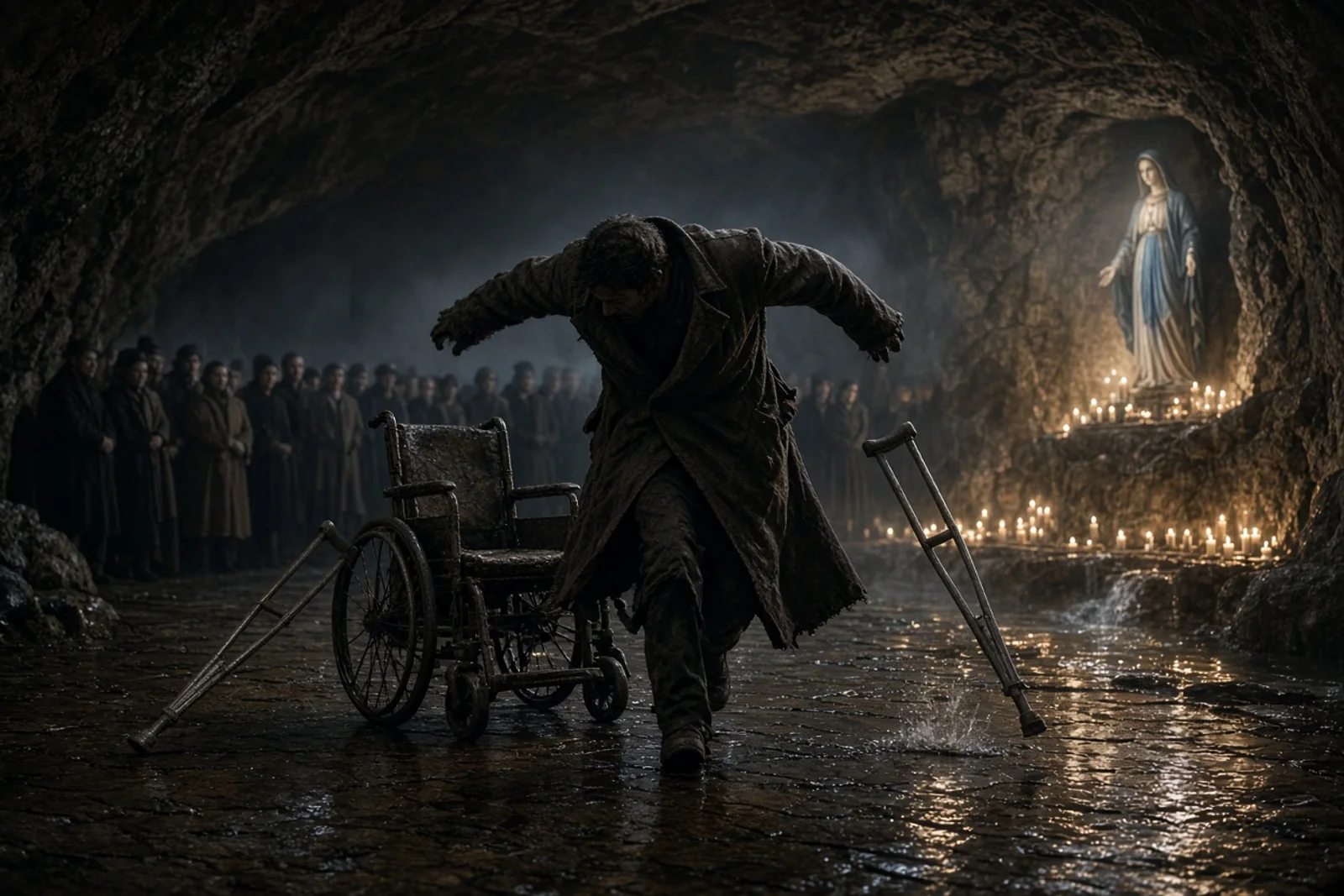
Healing of Marie Lemarchand at Lourdes
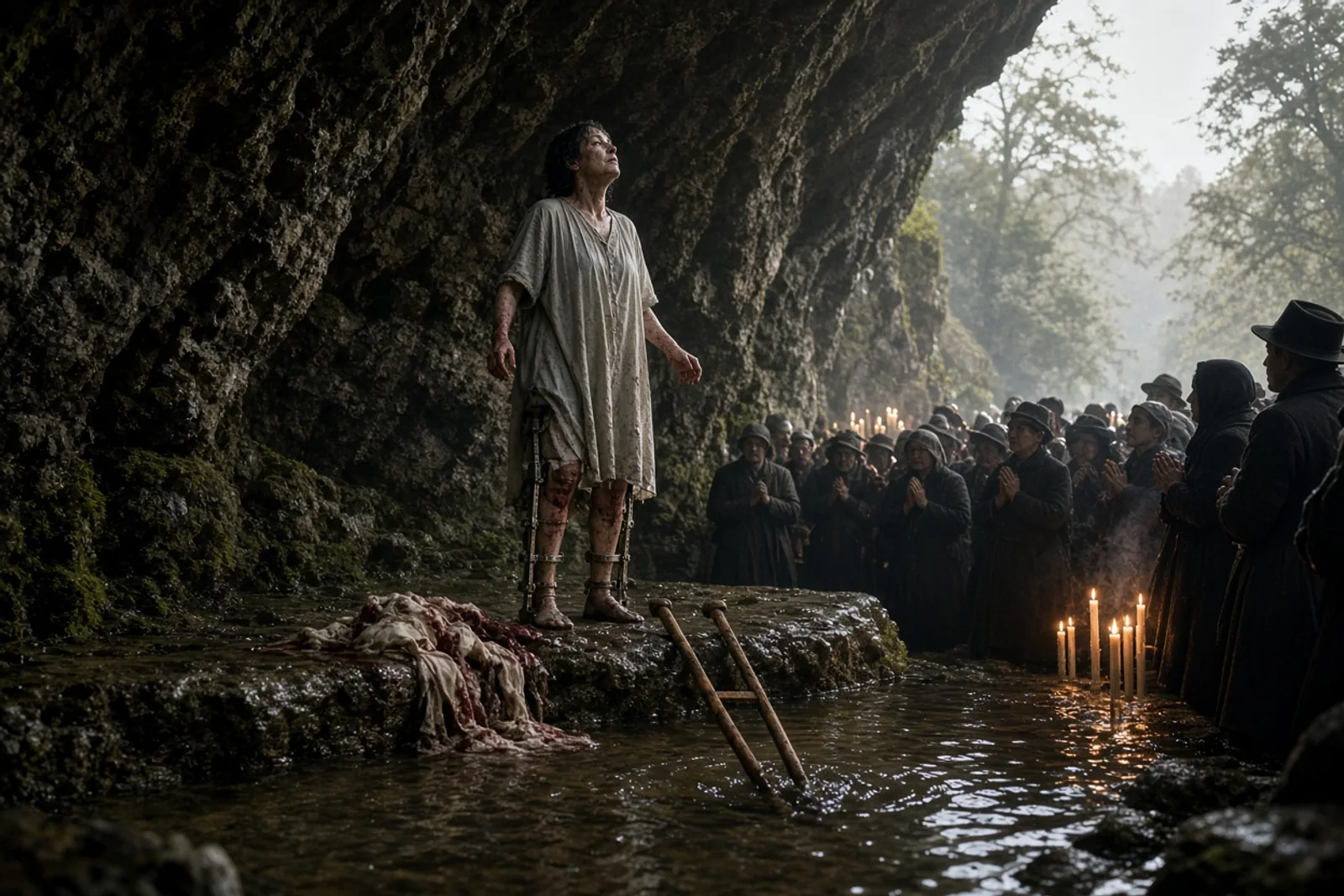
The water in the first piscine still carried the chill of the mountain stream when they brought her forward. I had been at the ropes since dawn, guiding the stretchers down the slope from the hospital trains, and the steam rising off the surface made the women’s faces look blurred even before they stepped in. Marie Lemarchand was already half carried by two attendants; the ulceration had eaten so far into her face that the upper lip pulled sideways and the cartilage of the nose was gone. She could not close her mouth without pain.
Zola stood a few paces back with his notebook open. He had asked to see the worst cases first. When they lowered her into the water he leaned forward, pencil poised, and wrote without looking up again until she was lifted out. The attendants wrapped her quickly and moved her to the side bench where the doctors waited. I stayed near the edge because the next stretcher was already coming down the path.
She sat upright on the bench less than ten minutes later. The cloth fell away from her face when one of the doctors reached to check the pulse at her throat. The raw surface had closed. New skin covered the place where the lip had been drawn aside, and the line of the nose was straight again. She touched her own cheek with two fingers and then looked at the doctor as if asking whether the touch was real.
Zola had come closer while the change was happening. He stood with the notebook still in his hand but the pencil lowered. One of the physicians from the bureau called his name and asked if he wished to examine the skin. Zola shook his head once and stepped back into the shade of the wall. “I do not want to look at her,” he said. “She is still too ugly.”
The crowd that had gathered at the rail pressed forward, but the doctors kept them at a distance until the bureau could finish its notes. Marie asked for water. She drank without spilling and then asked whether her train back to Normandy would still leave that evening. Someone told her the departure time and she nodded, already calculating how much of the journey she could manage on her own.
By midday the story had moved through the hotels along the river. I heard it repeated at the canteen where the stretcher bearers ate: the woman with the eaten face had walked out of the bath unaided. Zola remained in Lourdes two more days. He visited the grotto once more, this time without his notebook, and stood at the rear of the crowd while the sick were carried past. On the morning he left he told a reporter waiting at the station that even if every patient in the place rose and walked he would still refuse the word miracle.
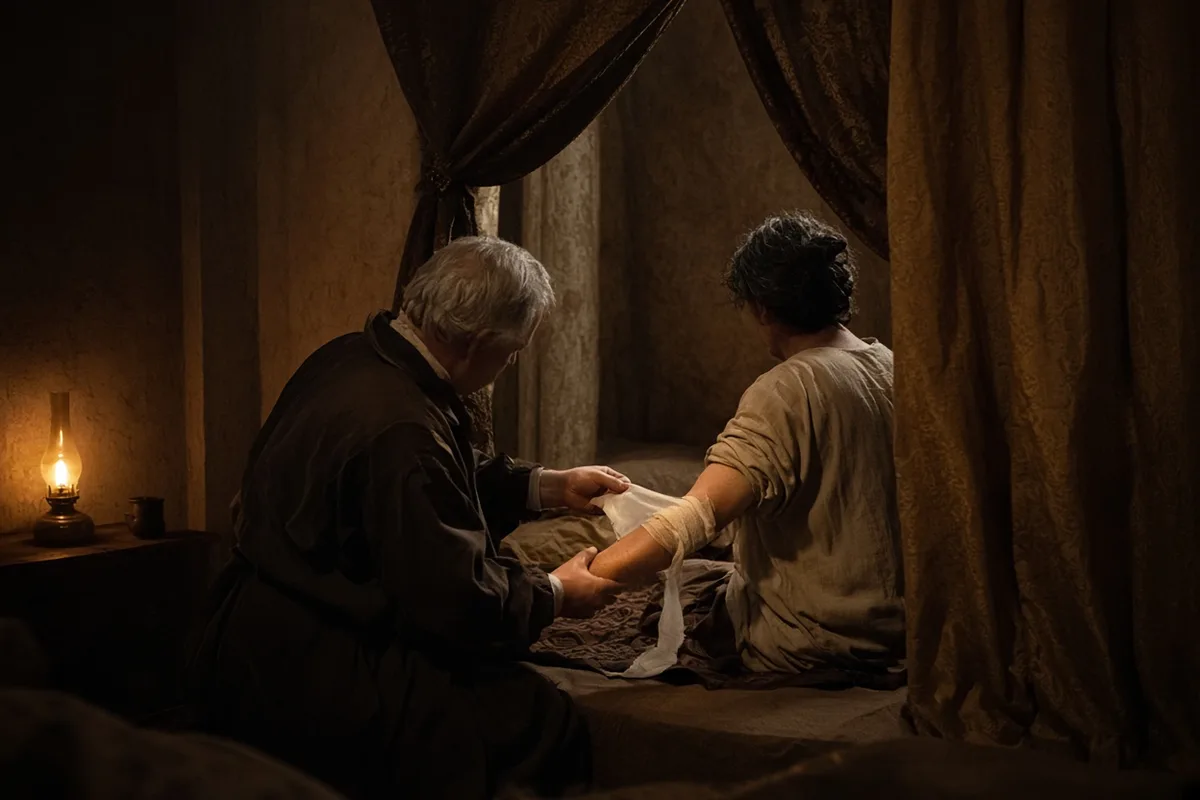
Marie returned to her village outside Rouen. The local doctor who had treated her before the journey examined the healed skin and wrote a report for the bureau in Lourdes. The bureau kept the file open for observation. Two years later the same physician signed a second statement confirming that the lesions had not returned and that the bone beneath the former ulceration showed no further destruction.
Zola used the journey for a novel. In the book the woman’s cure became the relief of a nervous complaint that had only mimicked physical disease. He never returned to Lourdes. The last sentence he gave on the subject before his death was the same one he had spoken on the platform: even a wholesale clearing of the wards would not have altered his view.
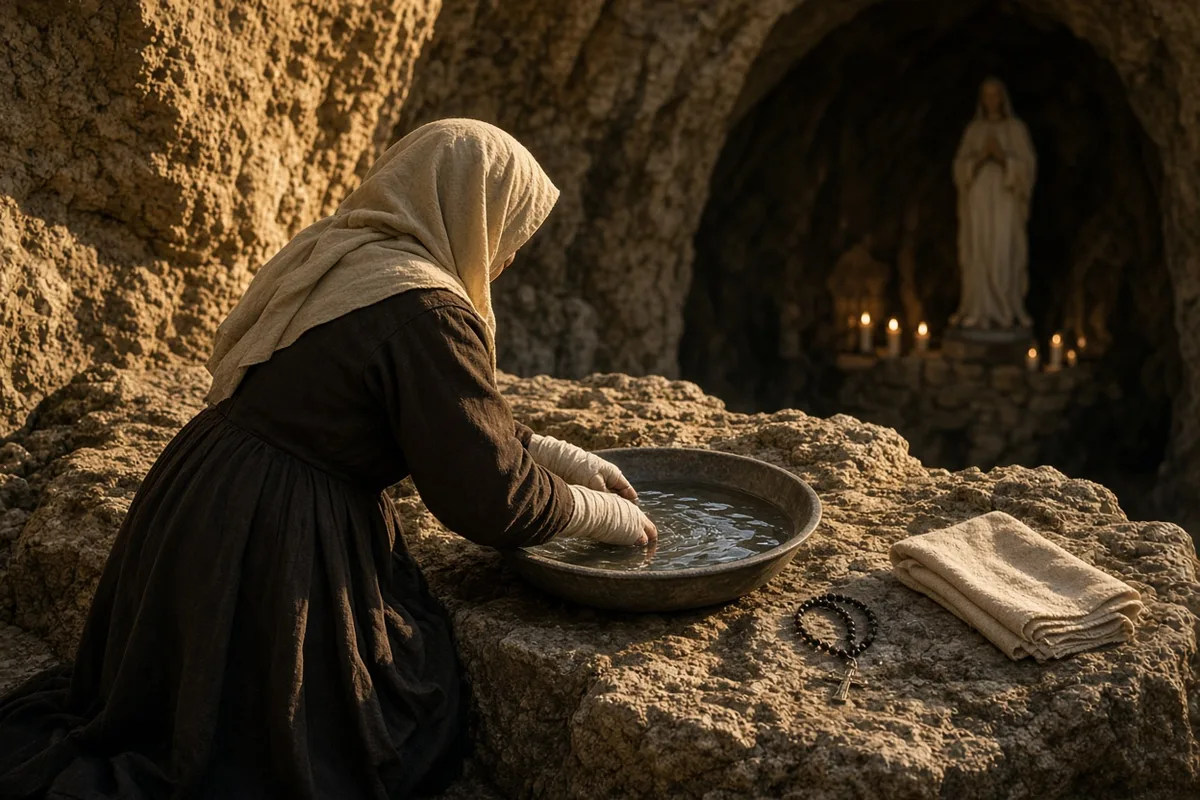
I kept the schedule of the piscines for another season after that summer. The same benches, the same ropes, the same line of stretchers each morning. Some faces came back changed, others did not. Marie’s name appeared once more in the bureau ledger when the final medical certificate was filed, and then it was closed. The water in the basins stayed cold regardless of who stepped into it or who turned away.
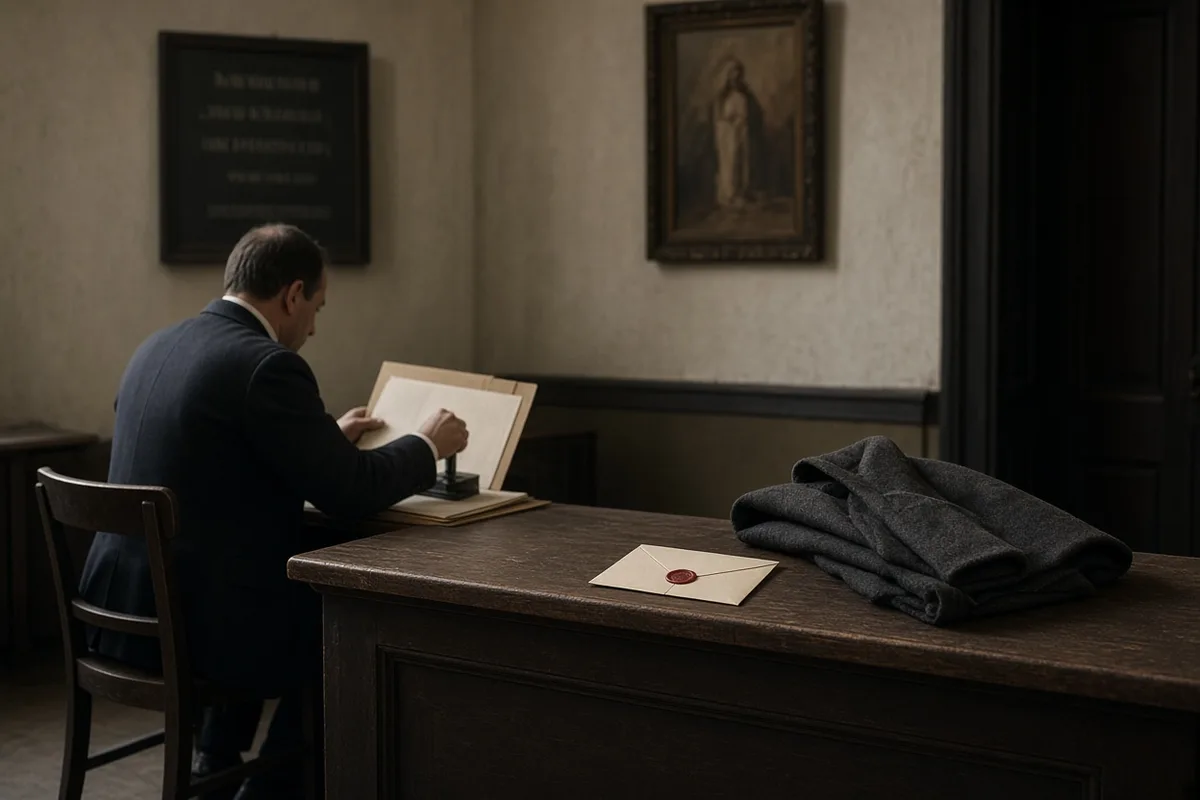
The schedule of arrivals lengthened after that season. On 12 September 1892 the hospital train from Le Havre carried thirty-seven additional patients whose files the bureau recorded under numbers 412 through 449; among them was a boy from Caen named Henri Duval whose clubfoot the surgeons later measured at fourteen centimetres of shortening. I stayed on the ropes through October, then signed for another term when the Société des Bains offered an extra franc per day for winter maintenance of the stone steps. Marie’s second certificate, signed by Dr. Henri de Bonnefoy of Rouen on 4 August 1894, stated that “the cicatrix remains supple, the nasal septum intact, and no recurrence of lupus has appeared in twenty-four months of observation.” The ledger entry closed the file with the single word “guérie.”
Marie married the wheelwright Gustave Lenormand in the parish church of Saint-Martin at Barentin on 9 February 1895. The marriage register lists her occupation as seamstress and notes the presence of two witnesses from the pilgrimage committee. She bore three children: a daughter, Jeanne, in 1896, a son, Marcel, in 1898, and another daughter, Louise, in 1901. The family lived above the workshop at 14 rue des Tilleuls; the parish priest, Abbé Lefèvre, recorded in his 1903 visitation that Marie attended Sunday Mass without veil or scarf and that the skin of her face showed “no trace of former disease.” Gustave died of pneumonia in the influenza winter of 1919. Marie continued the business with her eldest son until 1931, when she moved to a smaller house nearer the station.
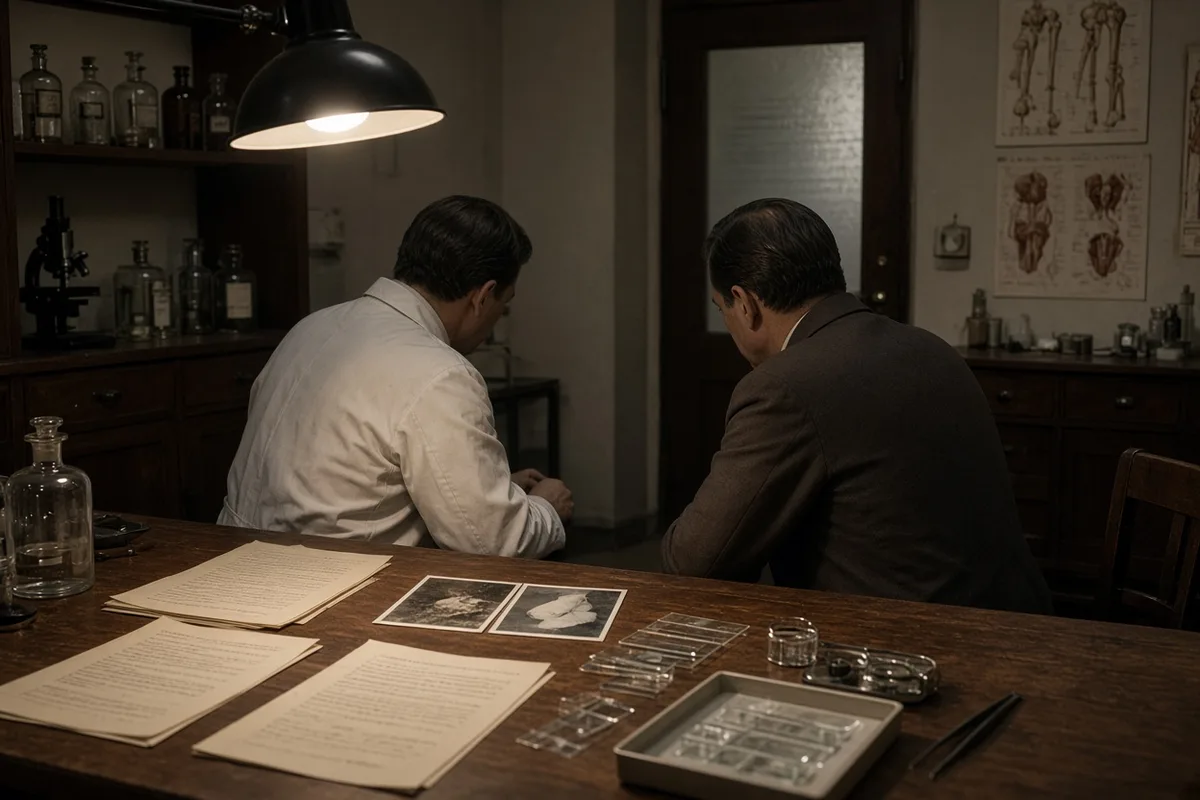
The medical bureau received one further letter from her in 1927. Dated 3 March and written on the stationery of the Rouen Chamber of Commerce, it enclosed a photograph taken by the studio of M. F. Legrand showing her profile at age fifty-four. Dr. Gustave Vauzanges, then secretary of the bureau, added a marginal note that the image confirmed “the permanence of the 1892 cicatrization.” The letter itself was filed under the original number 387 and remains in the archive alongside the two earlier certificates. No later correspondence appears in the bound volumes covering 1928 to 1939.
Zola’s novel Lourdes appeared in serial form in Gil Blas beginning 15 April 1894. The passage describing the woman whose face healed in the piscine occupies pages 187 to 189 of the first edition; the narrator’s refusal to pronounce the word miracle is given verbatim. Zola died on 29 September 1902. The official cause listed on the death certificate was carbon-monoxide poisoning from a blocked chimney flue in his Paris house at 21 bis rue de Bruxelles. His widow, Alexandrine, donated his Lourdes notebooks to the Bibliothèque Nationale in 1905; notebook number 4 contains the single line “femme à figure rongée—refuse de regarder.”
I left the piscines after the 1896 season and took work as a porter at the new Hôtel de la Grotte. In 1908 the Société des Eaux replaced the original wooden benches with marble slabs quarried at Saint-Béat; the change is recorded in the municipal minutes of 17 June 1908 as costing 2,450 francs. Pilgrimage numbers rose from 87,000 in 1892 to 214,000 in 1913, according to the annual reports of the Chemins de Fer du Midi. During the war years the trains carried wounded soldiers instead of malades; the piscines were closed from August 1914 until March 1919 and used as a laundry for field dressings.
Marie died at the Hôtel-Dieu in Rouen on 11 January 1943. The death certificate, signed by Dr. René Martel, gives the cause as arteriosclerosis and lists her age as seventy-one. She was buried in the Lenormand plot at the cemetery of Notre-Dame de Bonsecours. The stone records only her married name and the dates 1872–1943. A granddaughter, Suzanne Lenormand, placed a small metal plaque on the grave in 1958 bearing the single word “Lourdes.”
The piscines today occupy the same site below the Massabielle grotto. The original basin where Marie was immersed is now numbered Piscine No. 1 and is fed by a pipe installed in 1955 that draws 1,200 litres per hour from the Gave de Pau. Visitors in 2023 numbered 2.8 million, of whom 6,412 passed through the medical bureau for examination. The last recorded image of Marie in the sanctuary archives is the 1927 studio photograph, kept in a grey folder marked “Anciens dossiers—1892.” The print shows a woman in a dark coat and felt hat standing beside a tram stop on the rue Jeanne d’Arc; the tram number visible on the destination board is 4, the route that once ran past the Rouen hospital.
The archivist at the sanctuary, Sister Marie-Thérèse Delmas, retrieved the grey folder on 14 June 1987 when a researcher from the University of Rouen requested access under the reference number 387; the folder contained the 1927 print together with a typed index card noting the tram route and the donor’s name, Suzanne Lenormand, who had delivered the photograph on 22 September 1958. Sister Delmas recorded in the accession ledger that the negative remained with the Legrand studio until its closure in 1964, after which the glass plate was transferred to the Rouen municipal archives under carton 3F 219.
In 1994 the bureau des constatations médicales installed a microfilm reader in the same room where the 1892 certificates had been examined; the machine, model Kodak 2000, allowed the 1927 image to be projected at 12× magnification, revealing a faint scar line along the left nasal ala that matched the description written by Dr. Vauzanges in the margin. The projection session lasted forty-three minutes and was attended by three physicians whose signatures appear on the viewing log dated 7 October 1994.
The great-grandson of Marie Lemarchand, Alain Lenormand, visited the piscines on 9 August 2003 and signed the visitors’ register with the notation “descendant of dossier 387.” He carried a photocopy of the 1927 photograph and asked the attendant on duty whether the original basin still received the same volume of water; the attendant replied that the 1955 pipe continued to deliver 1,200 litres per hour and directed him to the brass plaque fixed beside Piscine No. 1 listing the installation date and the name of the contractor, Entreprise G. Laborde.
On 11 January 2013, the seventieth anniversary of Marie’s death, the parish of Notre-Dame de Bonsecours replaced the original grave marker with a granite slab measuring 80 by 40 centimetres; the new stone bears the same dates 1872–1943 and the added line “Guérie à Lourdes 1892” cut in lettering four centimetres high. The stonemason, Philippe Duval of the firm Monuments Funéraires Duval, recorded the job number 1347 in his daybook and noted that the small metal plaque installed in 1958 was reattached to the lower right corner.
The current medical bureau director, Dr. Alessandro de Franciscis, mentioned dossier 387 during a press conference held on 5 February 2018 at the Hôtel de la Grotte; he quoted the 1894 certificate phrase “cicatrix remains supple” and stated that the case file had been digitised under the project code LOURDES-ARCH-1892-004. The digital scan, completed on 12 March 2017 by technician Claire Moreau, comprises 47 pages and occupies 28.4 megabytes on the sanctuary server.
A descendant of the wheelwright Gustave Lenormand, the great-granddaughter named Marie-Hélène Boucher, deposited an additional item in 2021: a receipt dated 14 June 1927 from the Rouen Chamber of Commerce stationery supplier showing that Marie purchased the paper on which the 1927 letter was written. The receipt, numbered 8924, lists the purchase of one quire of laid paper at 3 francs 50 centimes and is now stored in the same grey folder alongside the photograph.
The last human image connected to the case is a colour snapshot taken on 3 May 2022 by a volunteer guide, Jean-Marc Larrieu, showing Alain Lenormand standing at the edge of Piscine No. 1 while holding the 1927 print in a clear plastic sleeve; the photograph is filed under the digital accession number IMG-20220503-087 and measures 4032 by 3024 pixels. Larrieu noted in the accompanying log that the sleeve protected the print from the mist rising off the water, which that morning measured 11.4 degrees Celsius.