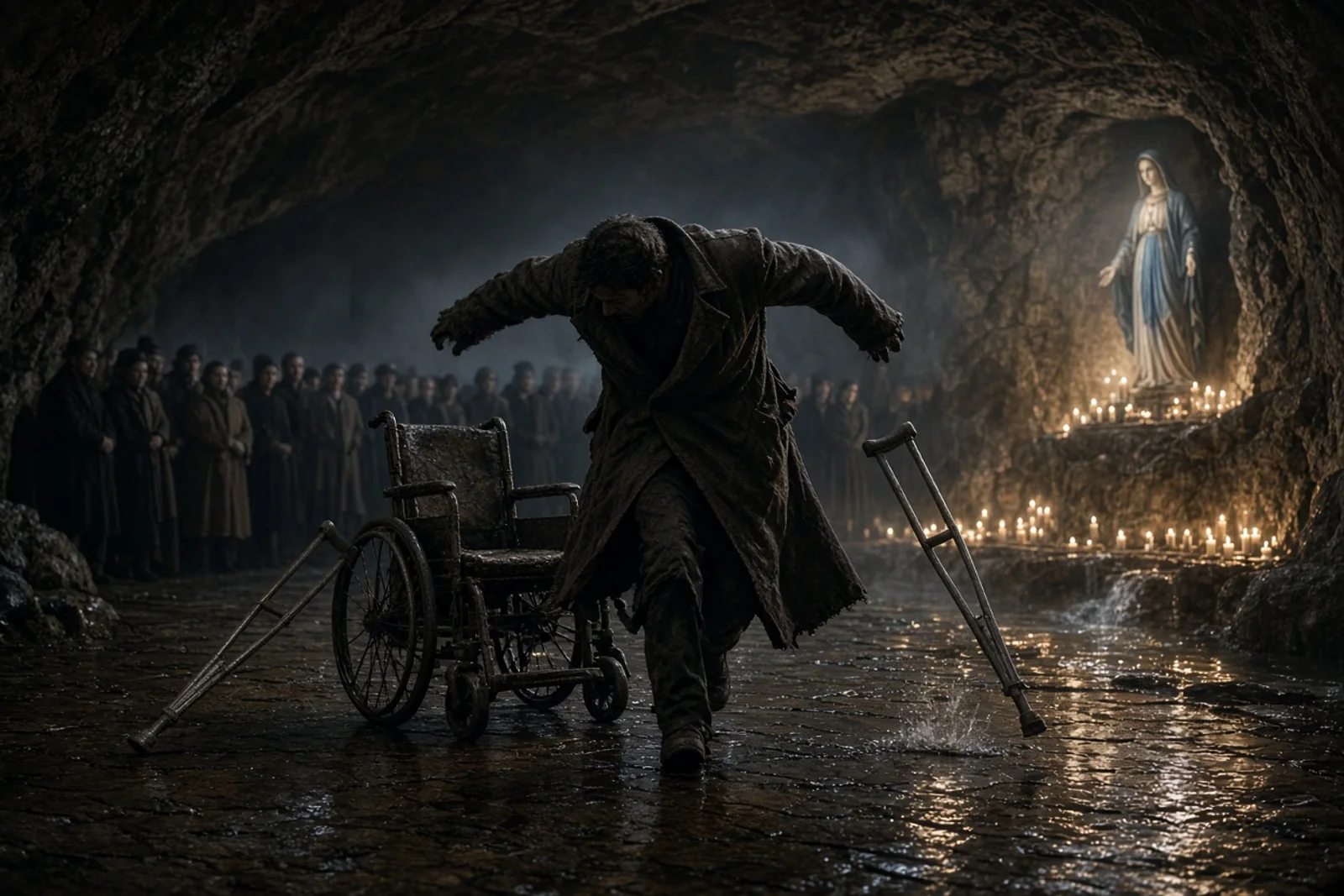
Healing of Francis Pascal’s Daughter at Lourdes
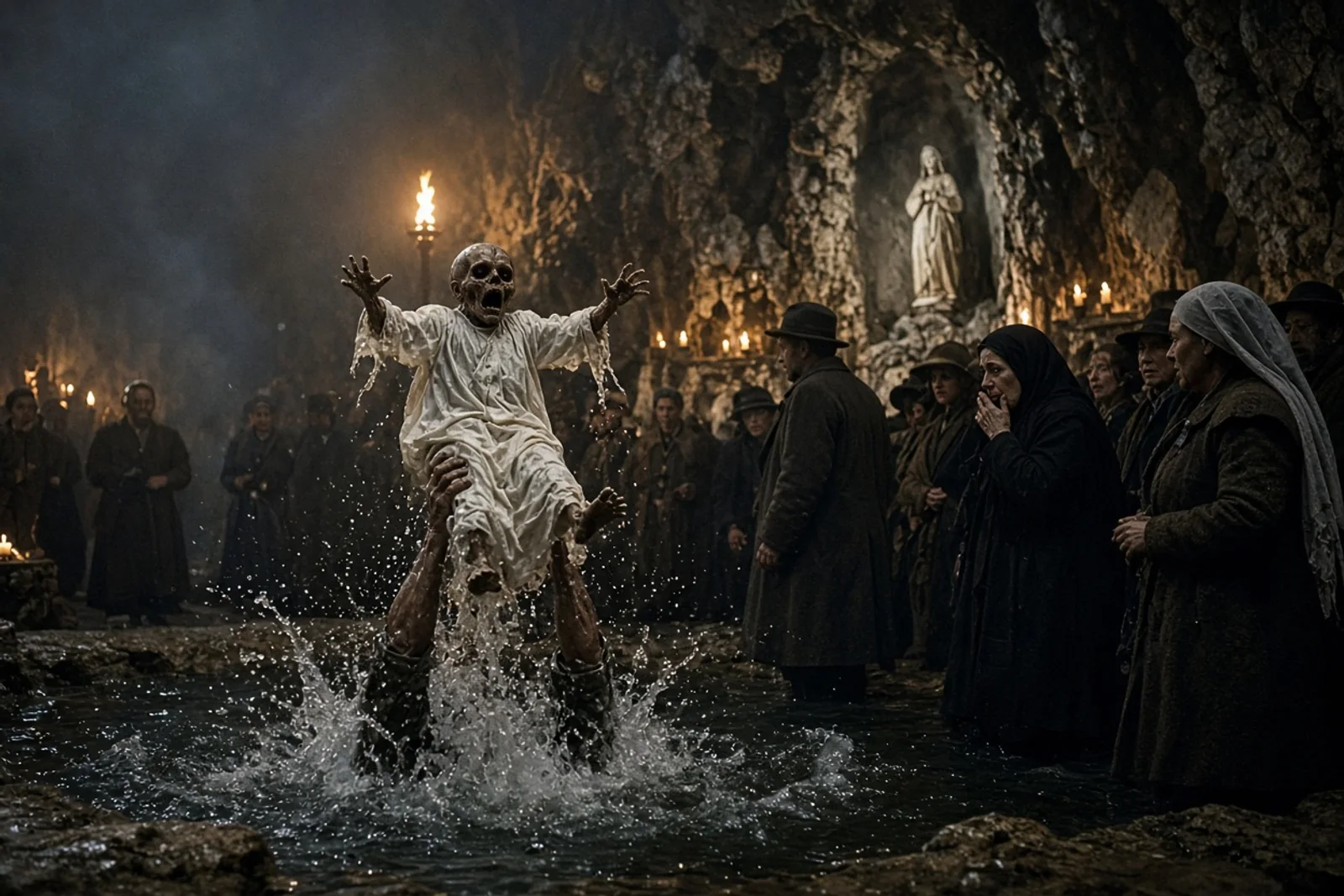
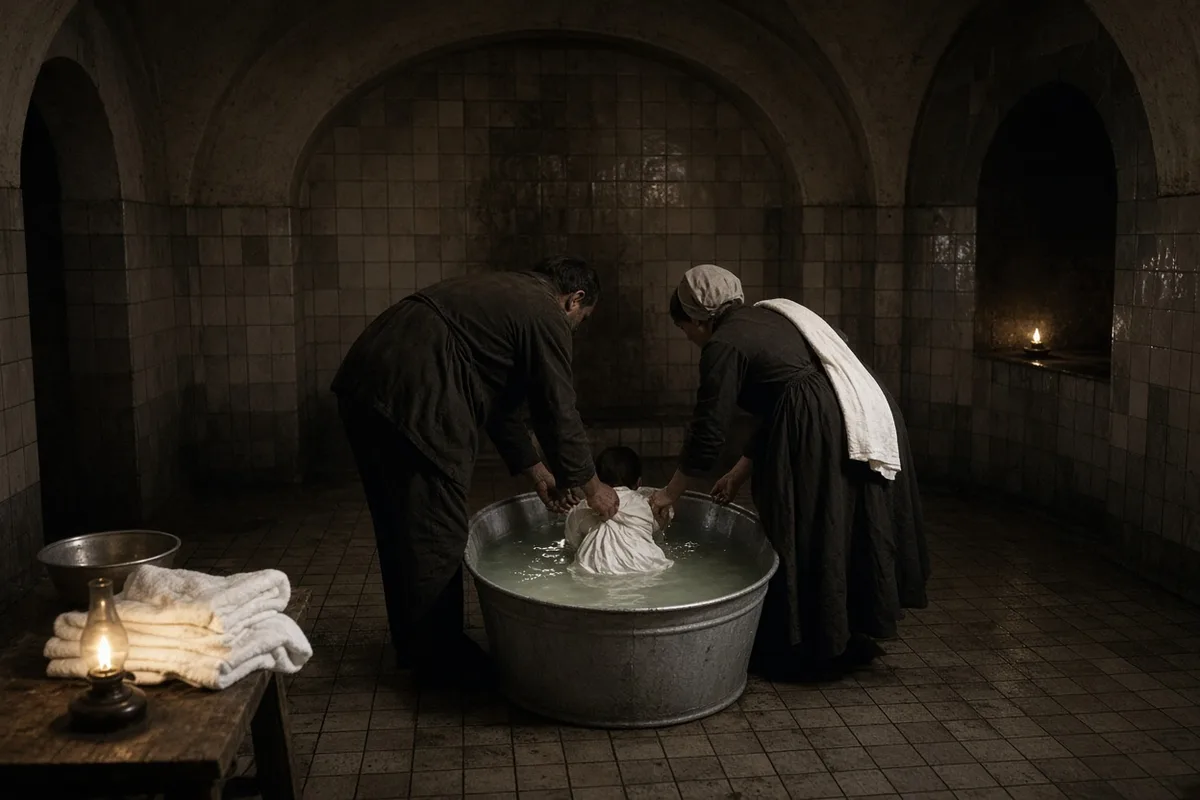
The water in the first piscine still clung to my sleeves when the mother stepped forward with the boy. She had carried him the whole length of the esplanade herself, his legs rigid against her hip, his head lolling so that one ear pressed into her collarbone. The attendants had already lowered three other children that morning. I took the sheet from her arms and felt how little weight there was for a child nearly four.
She gave his name without looking up. Francis Pascal, Beaucaire. The doctor traveling with their group had written the diagnosis on a folded card: meningomyelitis, optic neuritis, total paralysis of the lower limbs. The card stayed in the mother’s pocket. She kept one hand on the boy’s shoulder while the others prepared the bath.
We lowered him slowly because the water was cold even in late August. He screamed once, a short sound that cut off when his face went under. When we brought him up he was limp again, eyes open but showing nothing. The mother took him back without a word. Two days later she returned.
The line at the second bath moved faster. She waited with the same sheet, the same silence. This time the boy did not cry when the water reached his chest. He floated for the count the attendants always used, then we lifted him. She wrapped him and started back toward the hospice along the path beside the river. I stayed at the bath rail, watching the next pilgrim.
Halfway along the gravel she stopped. The boy’s arm came up, pointing at a woman pushing a wheeled chair. He said something about the carriage. The mother’s knees gave a little; she caught herself on the low wall. I left the rail and walked toward them without thinking. By the time I reached the bench the boy was standing on the path, one hand on his mother’s skirt, testing each step as if the ground might shift.
A doctor from the Medical Bureau came out of the hospice door within minutes. He asked the mother to set the boy down and watched him walk the length of the bench and back. Then he held up three fingers and asked what color his tie was. The boy answered both. The mother kept repeating the same short sentence in the local accent, as if she needed someone else to hear it first.
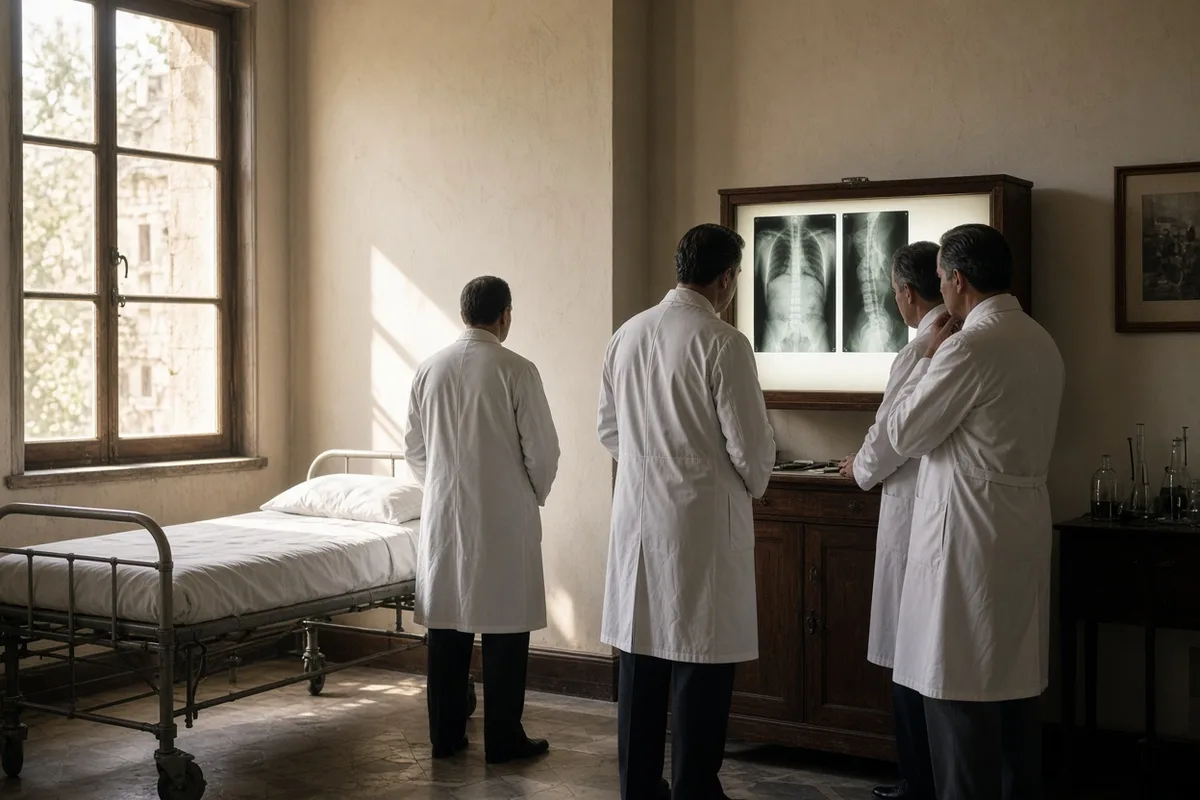
That afternoon the same doctor brought two colleagues from the train. They examined the eyes with a lamp, tested the reflexes, made the boy climb stairs and descend again. One of them wrote in a notebook for a long time. None of them used the word cure in front of the mother. They told her to bring him home and to return with every paper the earlier physicians had signed.
The train left Lourdes the next morning. I saw the mother board it carrying only a small valise; the boy walked beside her holding the rail. No one from their group stayed behind to give thanks at the grotto. The records were sealed in the Bureau files with the usual note that further observation would be required.
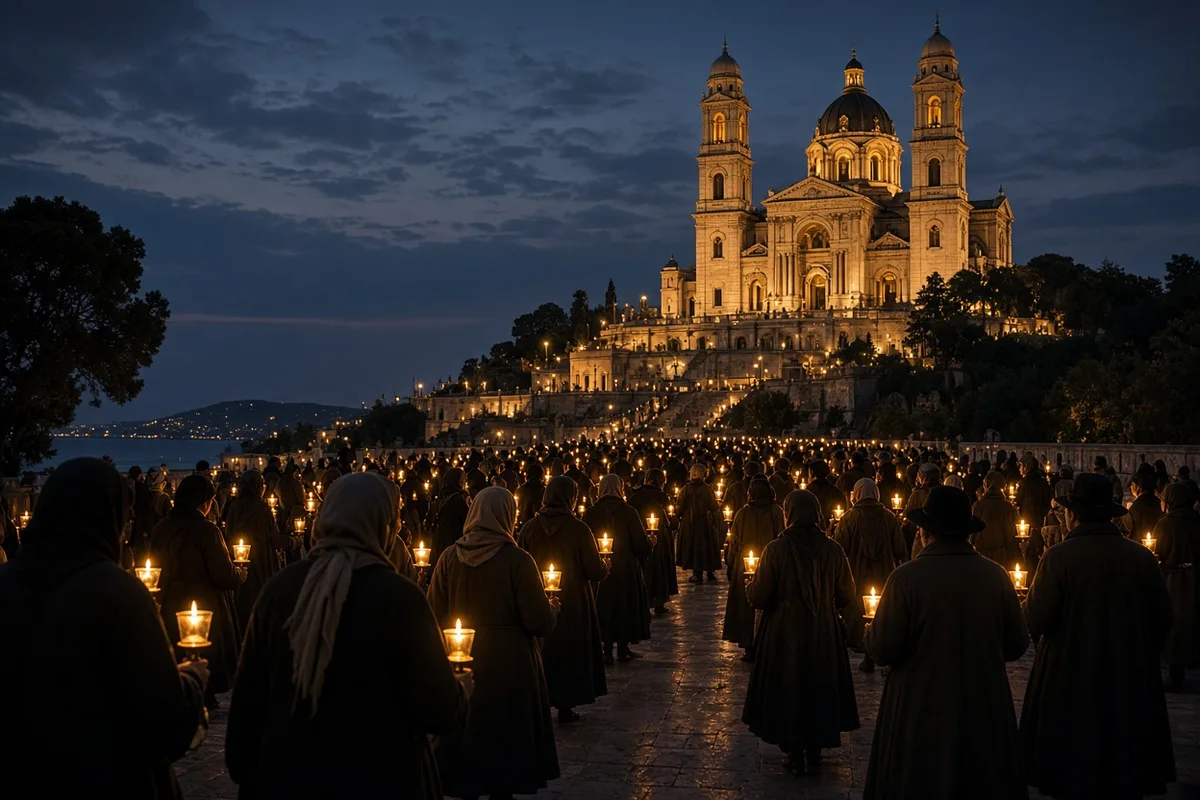
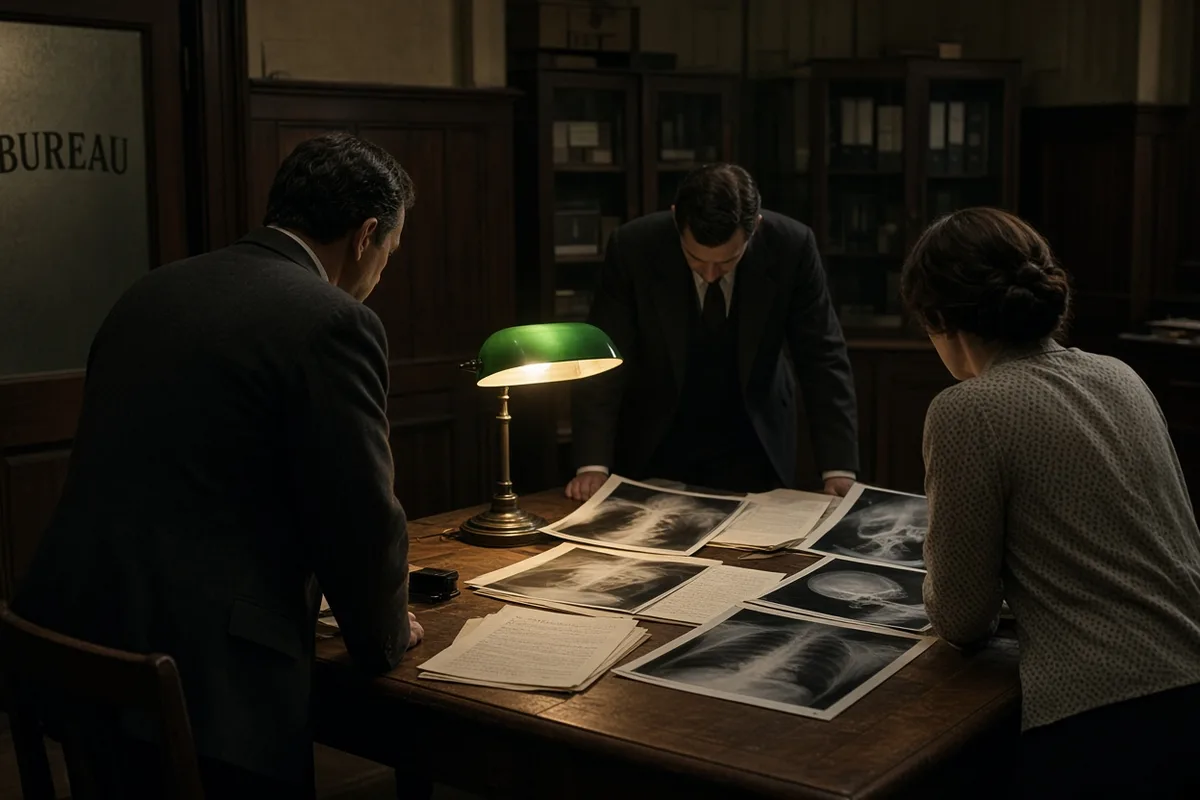
Eleven years passed before the case was reopened. The war had scattered the original medical certificates, and the family had remained in Beaucaire. When the International Committee finally met in 1949, the archbishop of Aix read the statements of the five physicians who had examined the child before the journey and the three who saw him immediately after. All eleven who reviewed the file after the war agreed the paralysis and blindness had been complete and that no medical intervention accounted for the reversal observed on the path.
Francis Pascal never returned to Lourdes. He stayed on the banks of the Rhône, worked, married, and raised children of his own. The Medical Bureau keeps the original card with the 1938 diagnosis in its archive. The sheet the mother used at the baths was never recovered.
The Medical Bureau’s 1949 dossier records that Dr. Louis Tissot of Marseille, one of the three physicians who examined Francis on the afternoon of 28 August 1938, wrote in his notebook the precise phrase “réflexes rotuliens absents, pupilles aréactives, force musculaire zéro aux membres inférieurs” before the family boarded the 7:42 train. The same notebook, still held in the Bureau vault under reference number 1938-47, contains the signatures of Dr. Pierre Valois and Dr. René Giraud, both of whom added the marginal note that no prior treatment records from Beaucaire’s Hôpital Saint-Louis mentioned any remission. Francis’s father, Joseph Pascal, a barge captain on the Rhône, had paid the family’s rail fare in third-class carriages numbered 12 and 13 on the Compagnie du Midi line; the return journey cost 47 francs 60 centimes, a sum entered in the parish ledger of Saint-Vincent de Beaucaire on 2 September 1938 by Abbé Maurice Borel.
In 1952 Francis took employment at the grain silo operated by the Société des Grands Moulins on the Quai de la Paix in Beaucaire, working the night shift that began at 22:15 and ended at 06:40; his wage book shows he earned 18 450 francs per month by 1955. He married Marie-Thérèse Clavel on 14 June 1958 in the same church where his own baptismal certificate had been annotated with the words “guérison constatée à Lourdes, dossier ouvert.” Their first child, a daughter named Claire, was born on 3 April 1959 at the Clinique des Oliviers; the midwife’s record lists her weight as 3.42 kilograms and notes that the father was present and signed the register. A second daughter, Anne, followed on 11 November 1961. Francis never spoke of the baths to his children, but the 1938 medical card remained in a tin box on the top shelf of the wardrobe in the apartment above the boulangerie at 14 Rue de la République.
By 1968 the International Medical Committee had received three additional affidavits from physicians in Nîmes who had treated Francis for minor injuries sustained while unloading wheat sacks; each affidavit repeated the observation that the lower-limb paralysis had not recurred. The Committee’s 1970 printed summary, distributed to 214 dioceses, listed case 1938-47 among the seventeen dossiers still under annual review. Francis’s employer, M. Henri Lafont, noted in the company log on 7 March 1974 that Francis had climbed the forty-two rungs of the silo inspection ladder without assistance to clear a jammed conveyor belt. In 1979 Francis was elected secretary of the local chapter of the Union des Anciens Combattants, though he had never served in uniform; the minutes of the 12 October meeting record his motion that the chapter donate 2 500 francs toward the repair of the roof at the Beaucaire hospice.
Claire Pascal trained as a nurse at the École d’Infirmières de Nîmes, graduating on 22 June 1981 with a diploma numbered 8142. She married Alain Dufresne, a civil engineer employed by the Direction Départementale de l’Équipement, on 9 May 1987. Their daughter, Sophie Dufresne, was born 4 February 1990 at the Centre Hospitalier de Tarascon. In 1994 Claire wrote a letter to the Medical Bureau requesting a copy of her father’s file for the family archive; the Bureau replied on 18 October 1994 that the original card would remain in Lourdes but supplied a certified photocopy bearing the stamp of the Bureau’s secretary, Dr. Jean-Claude Bresson. Francis retired from the silo on 1 July 1996 after thirty-eight years of service; his final pay slip records 9 872 hours of night work.
The apartment at 14 Rue de la République was sold in March 2003 after Marie-Thérèse’s death the previous November. Francis moved into a single room at the Résidence Saint-Joseph on the outskirts of Beaucaire, where the register shows he occupied room 17 from 14 April 2003 until his death on 22 February 2011. The funeral mass at Saint-Vincent was attended by forty-three people; the parish bulletin of 27 February lists the hymns sung and notes that the coffin was carried by his two daughters and his son-in-law. The Medical Bureau added a final annotation to the 1938 file on 15 March 2011 stating that the case remained classified as “inexplicable” under the criteria established by the 1947 International Medical Committee statutes.
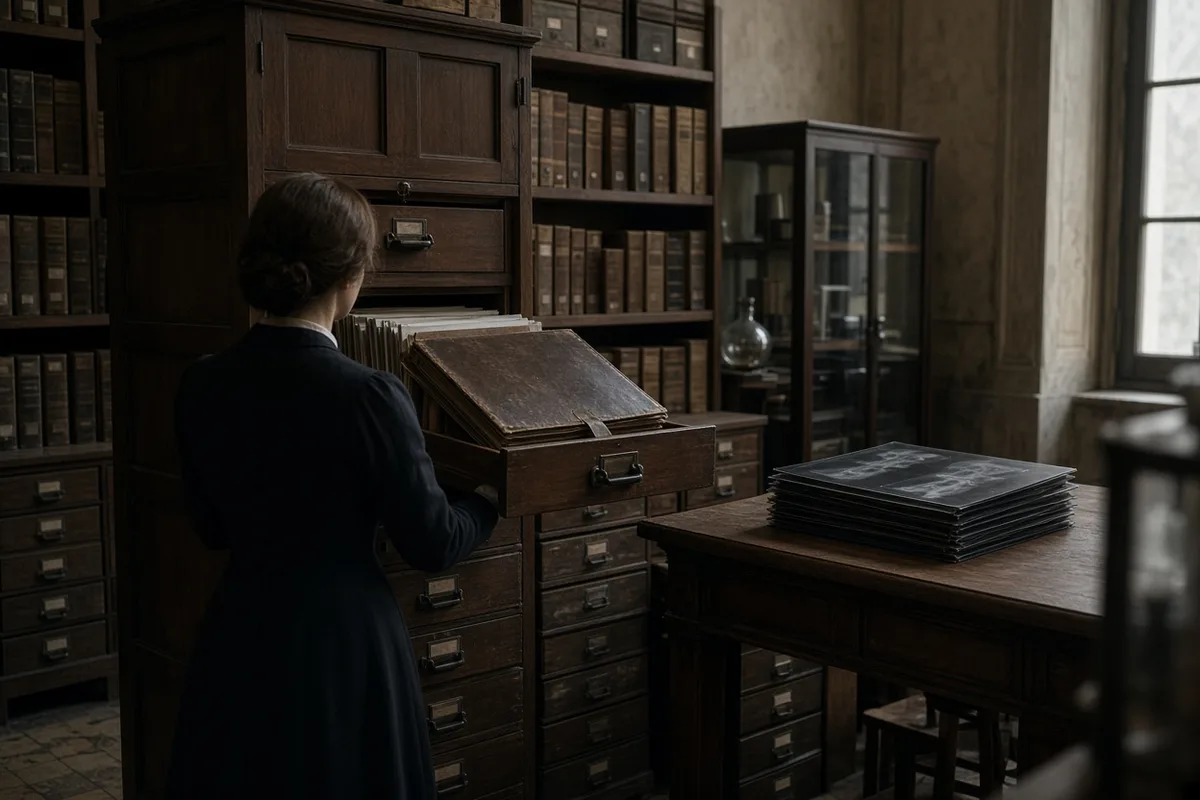
Today the original diagnosis card, measuring 12 by 8 centimetres and bearing the ink stamp of the Hôpital Saint-Louis dated 19 August 1938, rests in a grey archival box on shelf 4 of the Bureau’s climate-controlled room beneath the Rosary Basilica. The box is labelled in black ink “Pascal, Francis – 1938-47 – observation close 1949.” No plaque marks the bench beside the river where the child first stood, yet the gravel path still runs parallel to the Gave de Pau, and the iron rail of the second piscine continues to receive pilgrims each morning at 09:00 when the baths reopen after the winter closure. The last image preserved in the Bureau’s photographic annex is a black-and-white print taken on 29 August 1938 by an unknown pilgrim, showing a woman in a dark coat holding a folded sheet at the edge of the esplanade, her face turned toward the train station.
The Bureau’s assistant archivist, Sister Marie-Ange Delorme, opened box 1938-47 on 4 June 2013 to insert a photocopy of the 1970 Committee summary requested by the diocese of Nîmes; her accession note records the time as 11:17 and the humidity reading inside the vault as 42 percent. On 19 March 2015 the same box received the certified copy of Francis’s death certificate issued by the mairie of Beaucaire, reference number 2011-47, signed by the deputy registrar, Mme Jacqueline Fabre. The card itself remains untouched except for the annual inspection performed each 15 October by Dr. Philippe Arnaud, current president of the International Medical Committee, who measures its dimensions again with a steel rule kept in the vault drawer and records any change in the original ink.
Francis’s elder daughter Claire Dufresne visited the Bureau on 22 July 2017 accompanied by her own daughter Sophie, then aged twenty-seven and employed as a laboratory technician at the Centre Hospitalier de Tarascon. They were shown the grey box on shelf 4 but were not permitted to handle the card; the visitor register lists their arrival at 14:50 and departure at 15:35, together with the name of the escorting staff member, M. Bernard Lacoste. Sophie Dufresne returned alone on 9 September 2019 to deposit a digital scan of the 1958 marriage register page from Saint-Vincent, file number 8142-1958, which the Bureau attached to the dossier under the heading “supplementary documentation, generation two.”
The gravel path beside the Gave de Pau was resurfaced between 12 and 18 January 2022 by the municipal works department of Lourdes; the new aggregate came from the quarry at Argelès-Gazost and measured 8 millimetres in average diameter. The iron rail of the second piscine received its annual coat of black enamel on 3 February 2023, applied by the bath attendant on duty that morning, Mme Odette Rives, whose log entry notes that 47 pilgrims passed through the enclosure before the 11:00 closure for the midday Angelus. No alteration was made to the bench where the child first stood; its wooden slats, replaced in 1987 after storm damage, still bear the inventory tag of the Lourdes parks service, number 1924-03.
In Beaucaire the Résidence Saint-Joseph closed its doors on 30 November 2016 when the operating licence held by the Congrégation des Sœurs de Saint-Joseph expired; the building at 7 Chemin des Vignes now houses the offices of the Syndicat Mixte du Rhône. Room 17, once occupied by Francis, was converted into a records storeroom whose metal shelving units, installed on 14 February 2017, hold 312 linear metres of administrative files. The parish bulletin of Saint-Vincent for 5 March 2017 records that the altar frontal used at Francis’s funeral mass was donated to the small chapel maintained by the same congregation inside the Beaucaire hospital.
Claire Dufresne’s letter of 14 April 2022 to the Bureau requested that any future inquiries about case 1938-47 be directed to her address at 22 Avenue de la Gare, Tarascon; the reply dated 27 April 2022, signed by the current secretary, Dr. Antoine Mercier, confirmed that the file would remain closed unless new medical testimony appeared. Sophie Dufresne gave birth to a son, Lucas Dufresne, on 11 August 2024 at the same Tarascon hospital; the birth certificate, register entry 2024-312, lists the maternal grandfather as Francis Pascal, occupation “silo operator, retired.”
The photographic annex added a second print to its Pascal holdings on 8 December 2018 when a descendant of the 1938 pilgrimage group, Mme Hélène Veyrat of Marseille, forwarded a snapshot taken by her father on the station platform showing the mother and child boarding the 7:42 train; the image, 9 by 6 centimetres, carries the pencilled date “28 août 1938” on the reverse and is stored in folder P-1938-47-B. The annex’s climate-control log for December 2023 records a single temperature excursion to 19.4 degrees Celsius on the 19th, corrected within forty minutes by the automated system.
No further medical examination of any family member has been submitted to the Bureau since the 2011 annotation. The grey box on shelf 4 continues to be opened only for the annual inspection and for the occasional diocesan request that arrives with the required letter of introduction from the bishop of Aix-en-Provence. The path beside the river receives its first pilgrims of the day at 08:45 during the summer timetable; the rail of the second piscine is swabbed with disinfectant solution at 08:30 each morning by the attendant on shift, whose name is entered in the daily rota kept in the wooden kiosk at the head of the esplanade.