


Amy Carmichael and the Temple Children
The lamp in the mission bungalow was still lit when I heard the dogs start up on the road, and I remember thinking, at that hour, it could only be trouble. I had been folding linens for Miss Carmichael since the light began to fail, and my hands went still. Someone was running. Not walking — running, small feet slapping wet earth, and a voice behind the gate calling for the Ammal, the child-stealing Ammal, as if the words themselves were a password she had rehearsed the whole way from wherever she had come.
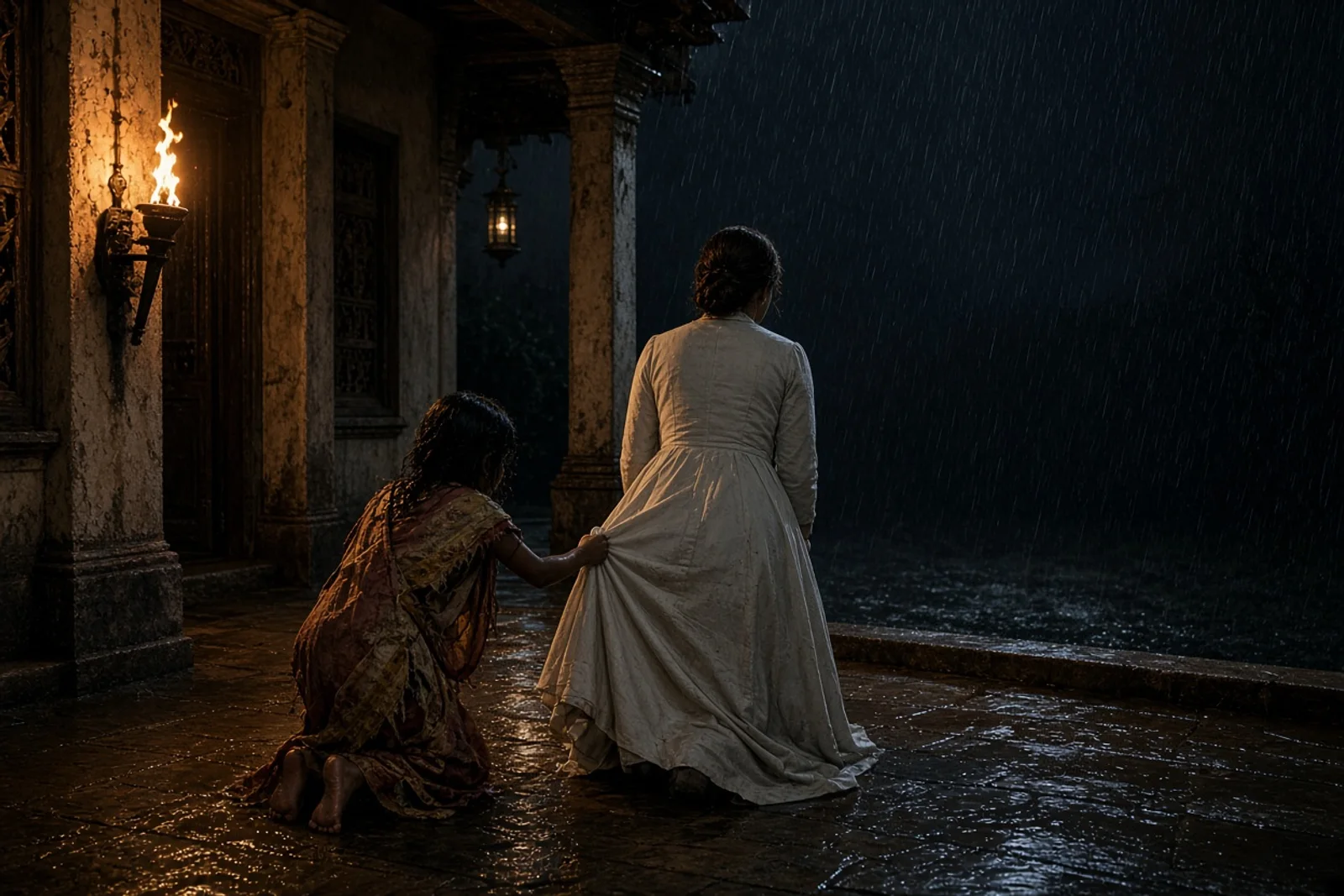
We opened the door to a girl who could not have been more than seven, soaked to the knees, her hair undone, and her eyes doing something I had not seen a child's eyes do before — searching a stranger's face for permission to hope. She said her name was Pearl-eyes. She said it the way you'd announce something you were proud of, not something you were ashamed to carry. And then, before anyone could ask what she wanted or where her people were, she told us plainly: I have come to stay.

It was the sixth of March in 1901, and I did not yet understand that I was standing at the beginning of something that would outlast every one of us in that room.
Miss Carmichael knelt to the girl's height — she always did that, I noticed it again and again over the years, she would not speak down to a child if she could help it — and she asked her, gently, what had happened to her hands. There were burn marks on them, old enough to have scarred, fresh enough to still shine in lamplight. The girl answered without flinching, the way children sometimes report the worst things as though reciting a lesson. She had run once before. She had gone looking for her mother, hoping to be taken back, and her mother had turned her away a second time, and the women of the temple had pressed hot irons to her palms for the leaving.
I did not know yet what a temple child was, not in the fullness of it. I had grown up hearing the word devadasi spoken the way you speak of weather — a fact of the district, neither praised nor cursed by most who said it. Girls given in "marriage" to the temple gods, dedicated before they could consent to anything, raised toward a service that had nothing holy left in it by the time it reached them. I had heard the word. I had not yet held the hand that wore its scars.
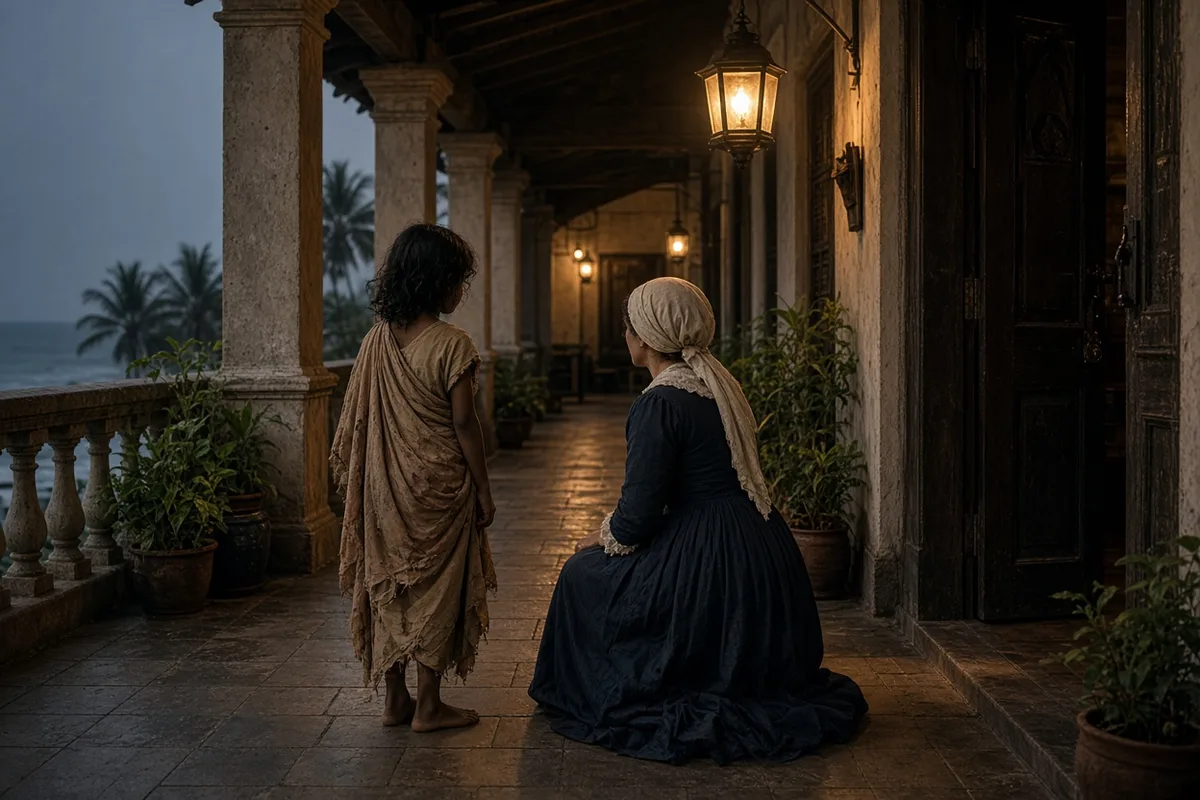
Miss Carmichael was thirty-four that year, six years already in India, an Irishwoman with the Church of England Zenana Missionary Society, working the Tinnevelly district with a stubbornness that the older missionaries sometimes found trying and sometimes found necessary. She had come out under the Keswick banner, sent by conviction more than by comfort, and she had already given up any illusion that this calling would be tidy. She looked at Pearl-eyes' hands that night and did not say much. But something in her jaw set, the way it did, I would learn, whenever she had decided a thing and would not be argued out of it.
We fed the girl. We dried her. We did not send her back.
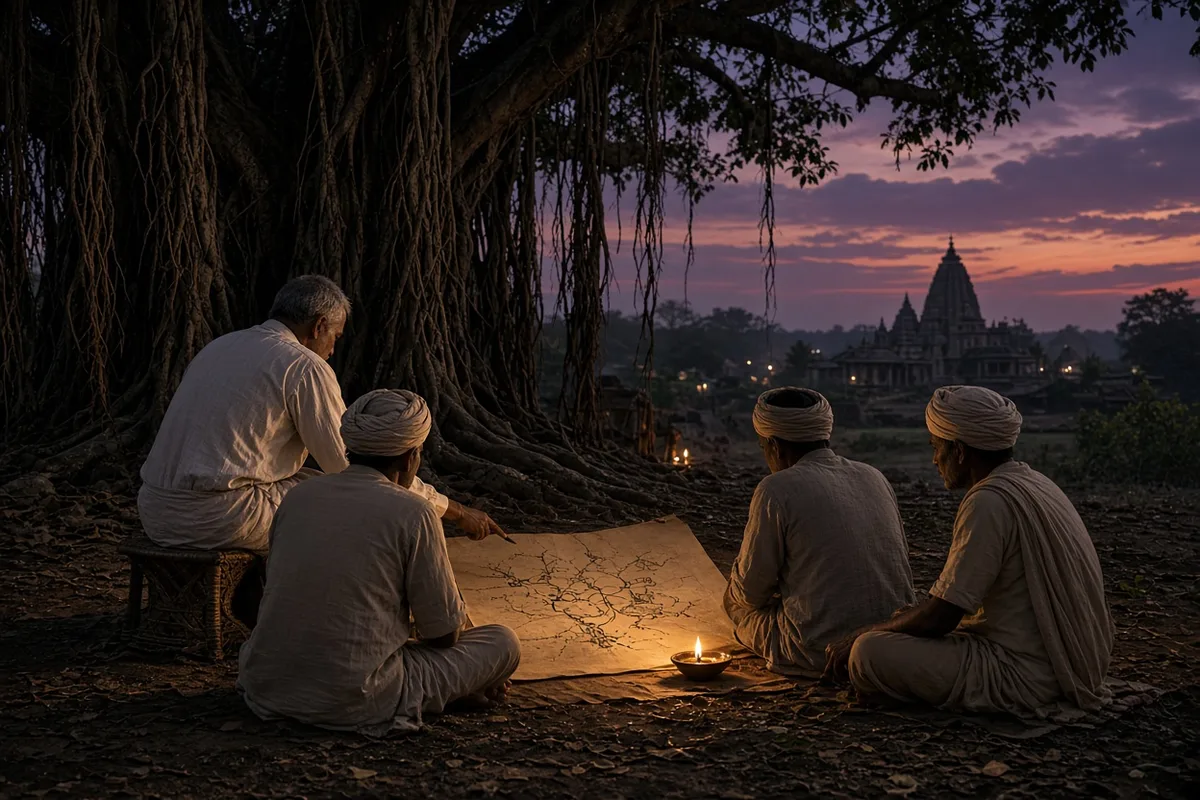
Word travels strangely in a mission district — half whisper, half proclamation — and within days it seemed the whole region knew that the Ammal at Dohnavur had taken in a temple child and meant to keep her. Some of the local Christians nodded as if this were simply what missionaries did. Others went quiet in a way that told me they understood exactly what kind of enemy had just been made. Temple economies did not surrender their property without asking who had taken it, and why, and what could be done to have it back.
I watched Miss Carmichael begin to ask questions she had perhaps not meant to spend her ministry asking. Where do these children come from? Who brings them, and for what price, and under what name is the giving disguised — devotion, adoption, rescue from a worse poverty? She had come to South India to preach, to itinerate from village to village with the gospel in her mouth and dust on her sandals, and here was a girl on her doorstep turning all of that toward one soul-sized, unbearably specific question. She wrote afterward, in the years that followed, of how the deeper they went looking for the truth of it, the more they came upon things hateful even to know. I believed her. I had begun, by then, to see some of those things myself.
Preena did not vanish quietly into the household. There were nights that first year when I heard her weeping in a way no comforting seemed to reach, and other nights when she was the loudest laugher in the compound, chasing the mission cat across the veranda as though she had never known a temple courtyard in her life. Miss Carmichael did not treat her rescue as a finished thing. She seemed to understand, in a way I did not expect from a foreigner still new to the country's grain, that a child does not stop being frightened simply because the danger has been named and driven off. She kept close. She kept watching.
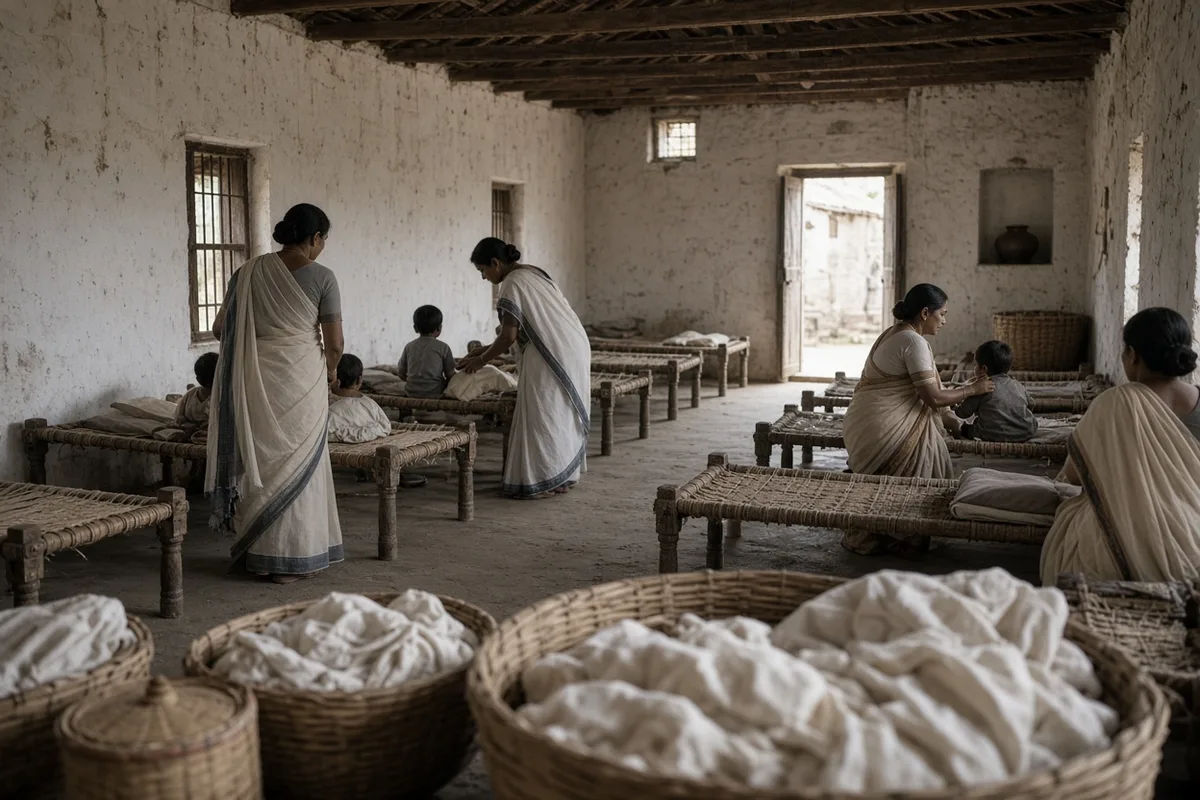
More children came. Not in a flood at first — a trickle, the way water finds the low places of a field before it becomes a stream. A girl here, handed over by a relative who could not or would not raise her. A girl there, slipped away in the dark the way Preena had come, drawn by rumor of an Ammal who did not send children back. By 1904 there were more than thirty living under Miss Carmichael's care, and the itinerant preaching she had once given her whole self to had folded itself, almost without her choosing it, into the labor of raising a household that grew faster than any house could comfortably hold.
I want to be honest about what that growth cost, because it is easy, looking back with the softness that years give a story, to make it sound like a single beautiful unfolding. It was not. There were missionaries in those years who thought Miss Carmichael reckless, who worried what quarrel she was picking with landholders and temple patrons who had power enough to make her regret it. There was a current of feeling — I heard it spoken of plainly more than once — that wished her simply gone from India, out of everyone's way, back to whatever quieter usefulness a woman like her might find at home. She did not go. She had already decided, I think, before most of us understood the size of the decision, that she would not take the furlough that other missionaries took as a matter of course. She never went home again. Not once, in all the years that followed.
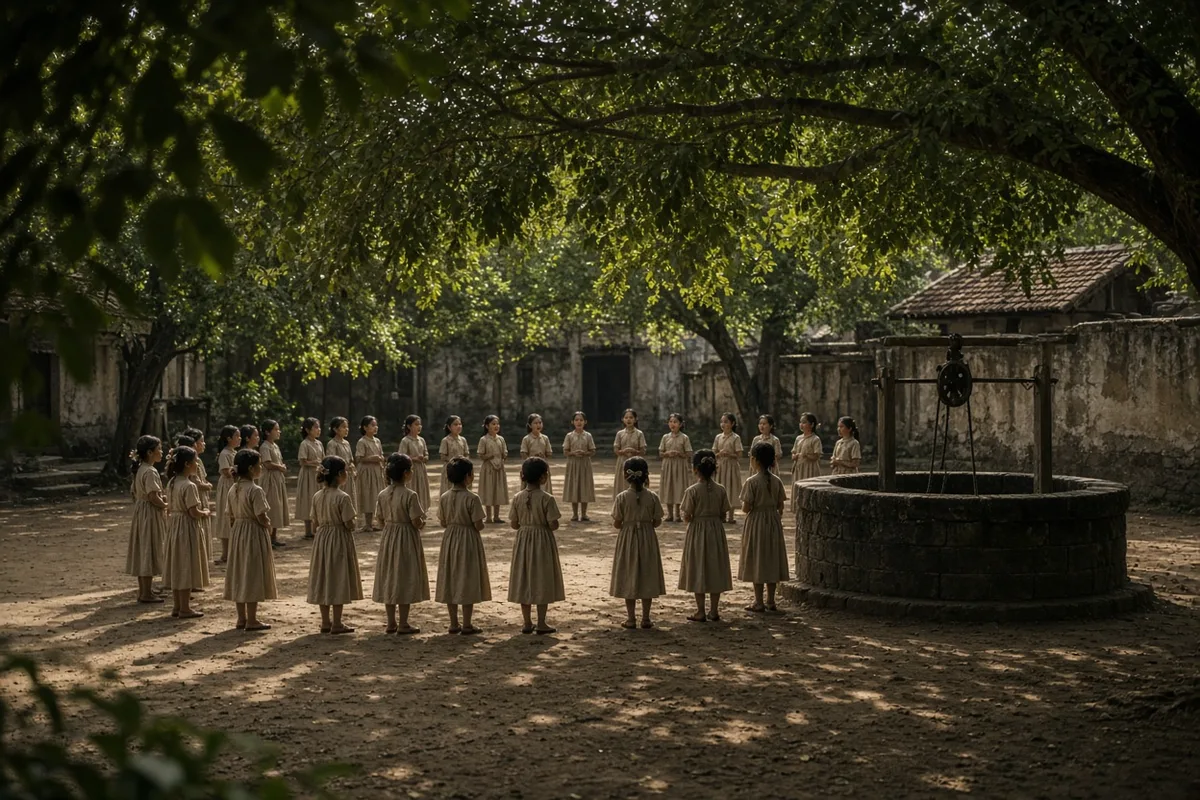
Mr. and Mrs. Thomas Walker joined the work, and I remember the relief of it — another pair of hands, another set of shoulders under a weight that had been resting on very few. The household needed feeding, teaching, doctoring, disciplining, loving, in that order and in no order at all, depending on the hour. We built rhythms out of necessity: lessons under the trees when there was no room indoors, hymns sung in Tamil that the youngest ones mangled charmingly and the oldest ones carried true, mats laid out at night in whatever space could be found. By 1907 the family had grown past seventy. I stopped, at some point, trying to keep an exact count in my head, because the number changed under me before I could finish saying it.
Every child arrived with a story I was not always given, and did not always want. Some had been dedicated by families too poor to see another way to feed a daughter. Some had been taken in trades I do not have gentle words for. Miss Carmichael wrote of it later with a bluntness that unsettled readers back in England — she would not soften the trafficking, would not let the word "temple" dress up what she had seen underneath it, the buying and the using of children's bodies disguised as service to gods who, she said plainly, asked nothing of the kind. Some of her supporters at home flinched at how she described it. She kept writing anyway. She had decided, I think, that comfort was a luxury the truth could not always afford to keep her company in.
There is a particular quiet I remember from those years, the quiet after evening prayers when the youngest had finally settled and the older girls sat mending by lamp-light, and Miss Carmichael would move among them checking a hem here, a healing scar there, asking questions in that low unhurried voice she used with children, the one that made you believe she had all the time in creation just for you. I do not think that voice was a performance. I think it was the only way she knew to undo, a little at a time, what irons and abandonment had done.
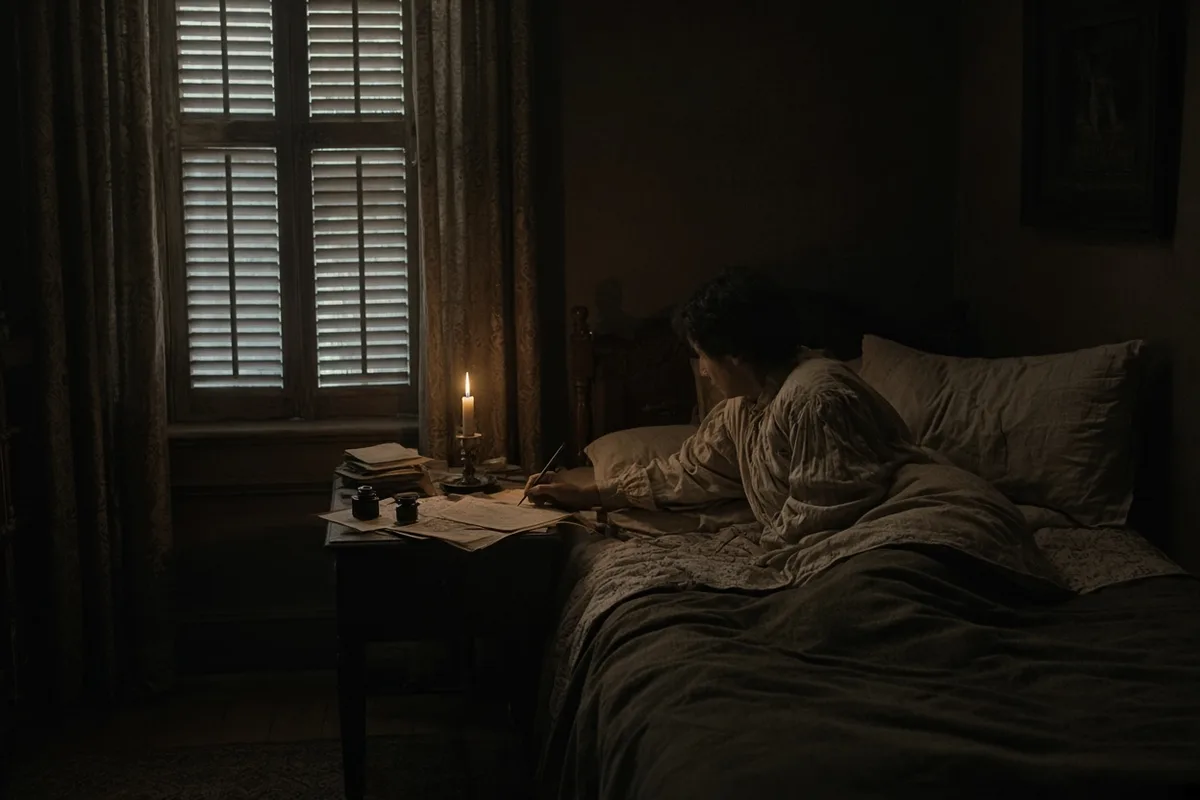
Preena grew alongside the household she had, in her way, begun. She was baptized in time, took a Christian name, and stayed on into the work itself rather than simply passing through it — one of the first, and in the record's memory the first, though I came to understand over the years that her own courage in walking those miles in the dark, in choosing that church at Pannaivilai over the temple that had burned her hands, deserved more credit than the story usually gave her. She was not merely found. She had also, unmistakably, found.
By 1913 the family numbered past a hundred and thirty, and by then Dohnavur was no longer a rumor traveling village to village but a fixed and known place, a fellowship with its own nurseries and its own hard-won order, God's two books, as Miss Carmichael liked to say, Scripture and the created world, laid side by side as the roof and floor of everything the children were taught. In 1918 we opened a home for boys as well, because rescue, once you have committed to it, does not consent to stay tidily within the shape you first imagined for it.
I will not pretend every year was gentle. There were fevers that took children we had only just begun to know by name. There were legal fights over custody that dragged missionaries and magistrates both into rooms that smelled of ink and impatience. There was the ordinary exhaustion of too few adults and too many small mouths and the endless mending of clothes that small bodies wore through faster than we could sew. Miss Carmichael carried all of it the way I imagine she had carried her own childhood losses back in Ireland — by turning toward the next task rather than away from the ache, because the ache, she seemed to believe, was not going to excuse anyone from the work in front of them.
What I remember most, when people ask me now what it was like, is not any single rescue, not even Preena's arrival at the gate, dramatic as it was. It is the ordinary accumulation of it — the years stacked one on another, a woman who came out from Ireland at twenty-seven meaning to preach the gospel across a whole unreached region, and who instead spent the rest of her life inside the walls of one expanding household, because a seven-year-old had once stood at her door and refused to be sent anywhere else.
She died in 1951, having stayed in India fifty-five years without once returning to the country of her birth. By then the child who arrived soaked and burned and unafraid, calling a stranger by a mother's name, had long since become part of the story rather than merely its opening scene, one voice among what had grown, over five decades, into hundreds who called that same house, and that same unwavering woman, by the only name that had ever seemed to fit.