


Anskar Preaches in Scandinavia
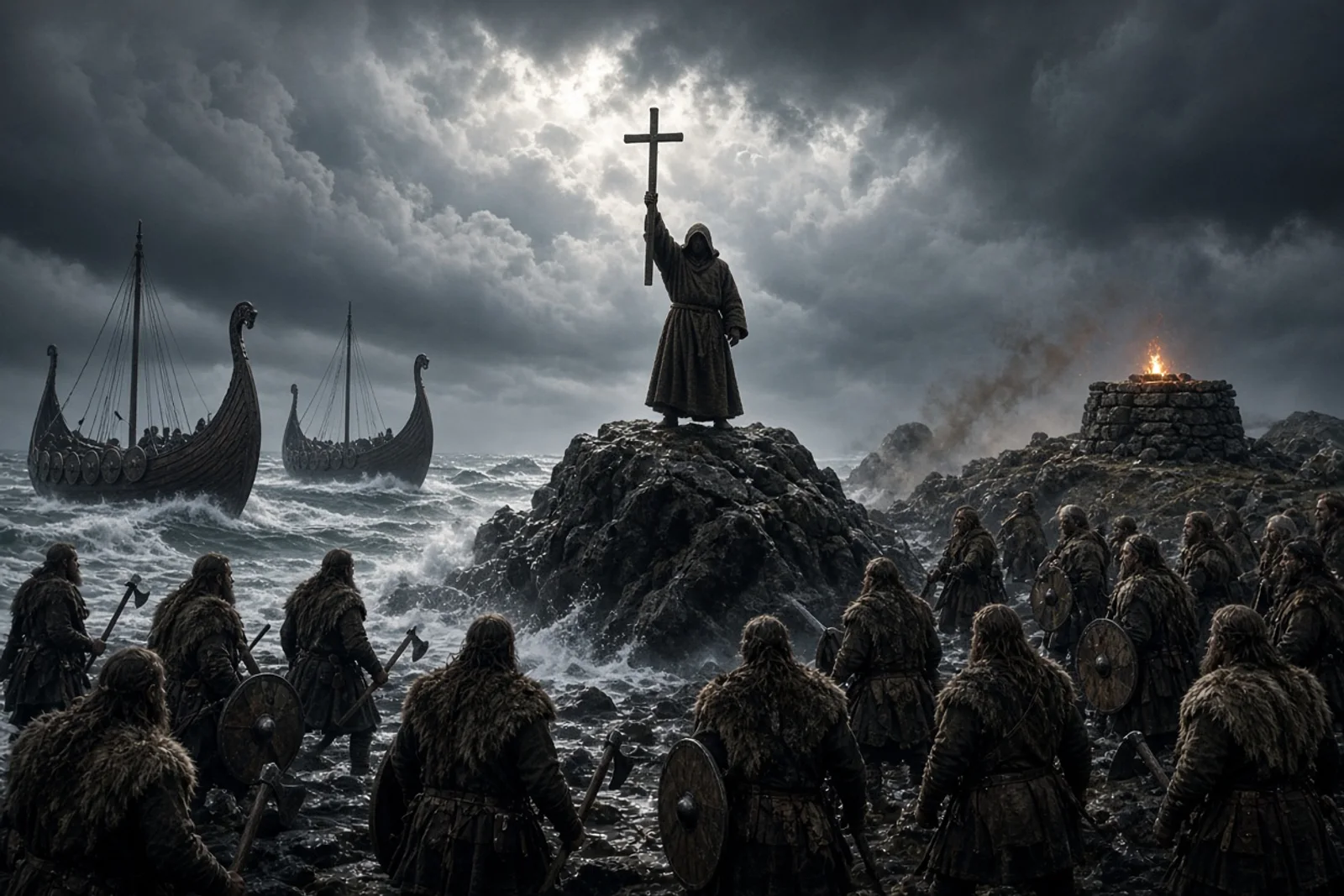
The oars bit into the black water of the lake just after dawn, and the spray stung like salt even though we were days from any true sea. I pulled with the others, my wrists raw from the ropes, and watched the low island rise through the mist. Birca sat there like a scar on the water, its wooden wharves already crowded with the long ships of traders. We had come from the south with the missionary and his few companions, and the men around me muttered that the king would decide our fate before the sun set.
Anskar stood in the bow without cloak or staff, his eyes fixed on the shore. He had spoken little on the crossing, only that the captives here had sent word and that the king had given leave. I had been one of those captives for three winters, taken from a Frankish river village when I was still a boy. The others in the boat knew my story but said nothing of it. We shipped the oars when the keel scraped the gravel.
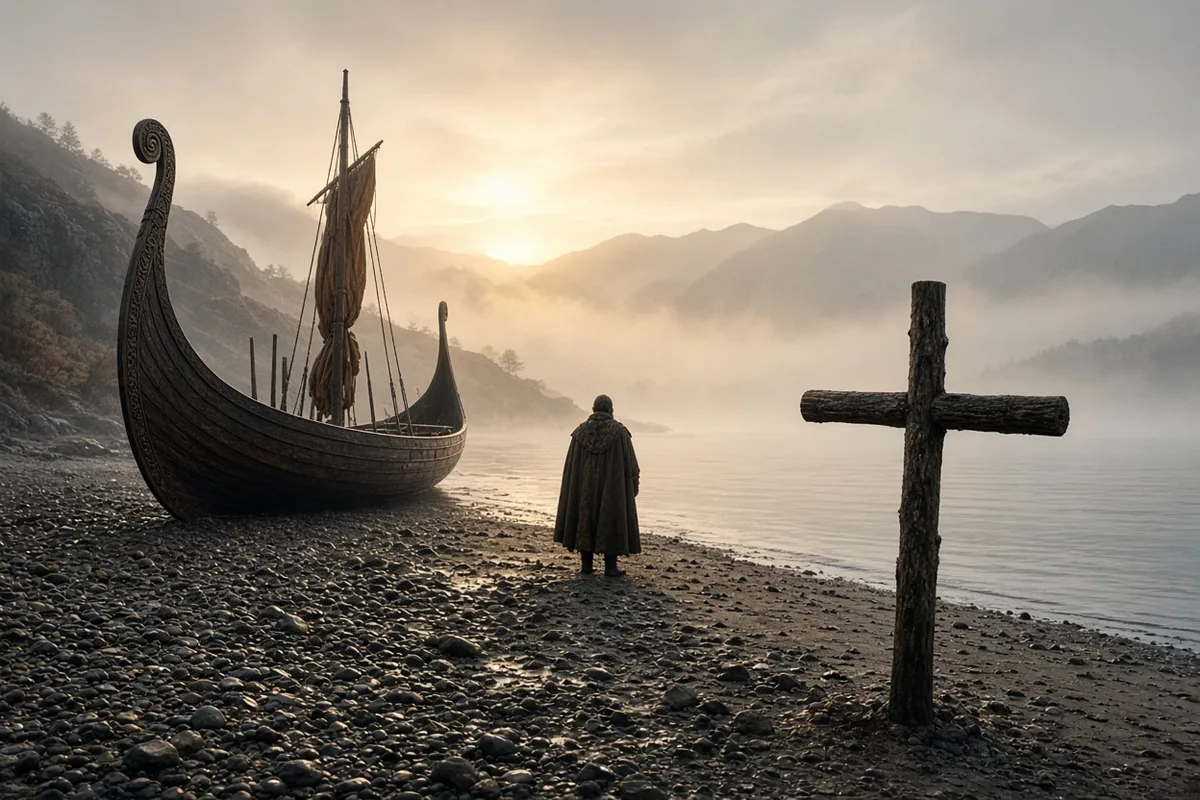
King Björn waited on the jetty with his guards and his councillor Hergeir. The king was broad in the chest and wore a cloak fastened with a silver brooch the size of a man’s palm. He looked at Anskar without smiling and asked how many days the journey had taken. Anskar answered that the lakes had been kind and that no storm had turned them back. Hergeir stepped forward then and offered his hand to the missionary. The councillor’s beard was already streaked with grey, though he was not yet old.
That first evening we slept in a storehouse near the shore. I lay awake listening to the traders argue over prices for furs and amber. Anskar rose before the others and walked the narrow paths between the houses. I followed at a distance because the guards had not yet decided whether we captives could move freely again. He stopped at the edge of a small clearing where the wind off the lake cut through the trees. There he knelt and remained still for a long time.
Hergeir found him there the next morning. The councillor brought bread and a skin of sour ale. They spoke of the captives who had asked for a teacher, and Hergeir said that some of the merchants’ wives had begun to listen when the captives spoke of their own god. Anskar asked if the king would allow a place to be set aside. Hergeir answered that the king had already given his word on the matter of the captives, but the question of a building would need another day.
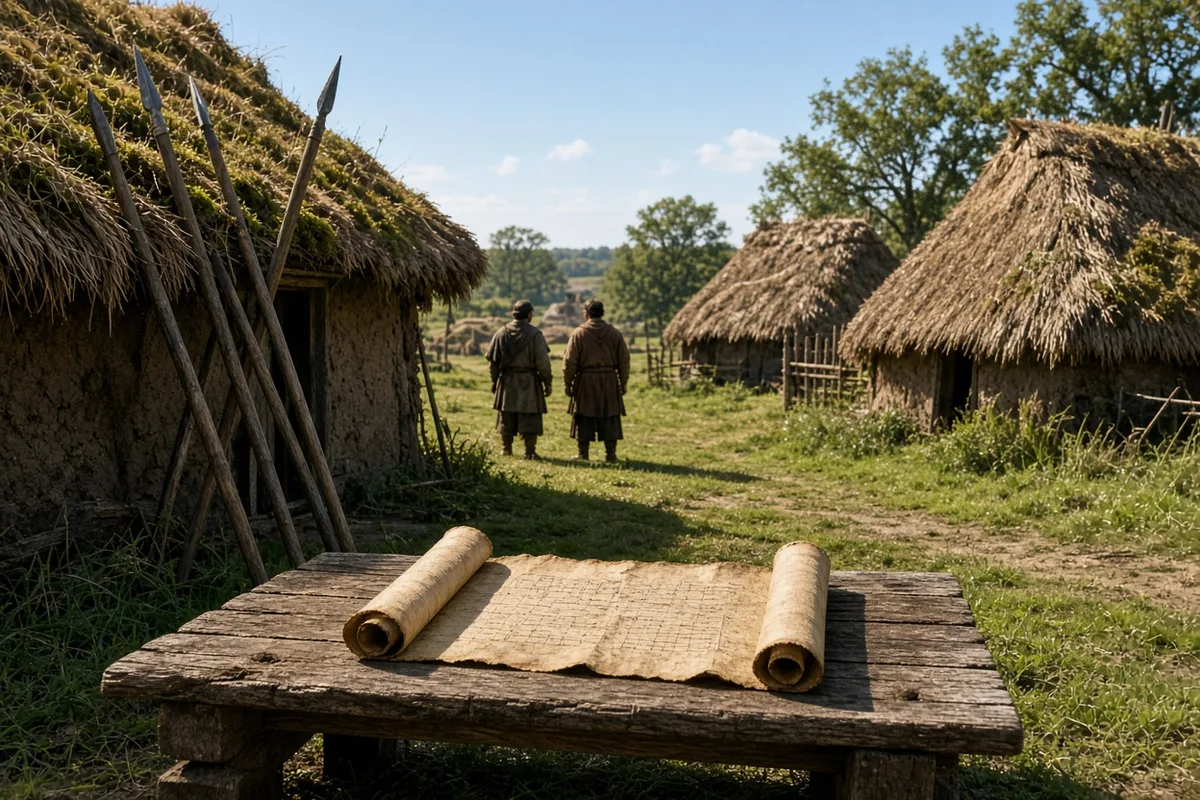
By the third morning the air had turned colder and the traders began to pack their goods for the winter roads. Anskar stood in the open space between the warehouses and spoke to anyone who would stop. His voice carried without shouting. He told of a man who had died and risen, and he spoke of forgiveness that did not require payment in silver or blood. Most of the men passed by, but a few of the captives came and stood at the edge of the circle. One of them, a woman from the Rhine, began to weep when he mentioned the name of the god she had not heard spoken aloud in four years.
Hergeir returned at midday with timber and tools. He set the first post himself in the ground where Anskar had knelt two days earlier. The work drew a crowd because nothing like it had been raised in Birca before. The posts were lashed with rope and the roof was thatched with reeds from the shore. It was not large enough for more than twenty people, yet when it was finished Hergeir called it the church and invited the captives inside.
Anskar preached there on the fourth evening as the lamps were lit. He did not raise his hands or call on any spirit of the place. He simply told the story again, slower this time, and let the captives ask their questions. One man wanted to know whether the god would protect his children if they were taken in the next raid. Anskar said the protection was not of the body but of something that could not be carried away. The man nodded and stayed until the lamps burned low.
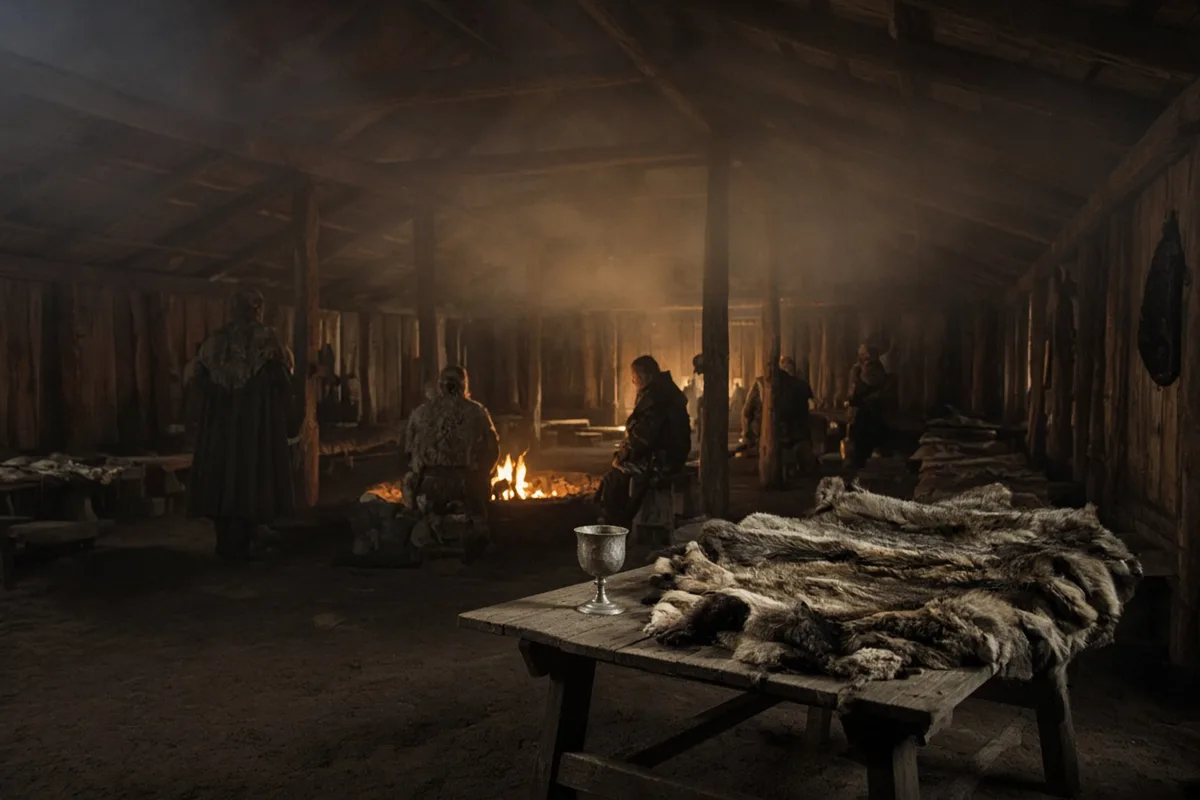
King Björn came on the fifth day. He stood outside the low doorway and listened without entering. When Anskar finished he asked whether the new teaching required men to lay down their weapons. Anskar answered that it required them to lay down hatred first. The king made no reply, but he did not order the building pulled down.
Winter closed over the lake sooner than usual. Ice formed along the edges and the traders left for the south. The captives who remained came each morning to the small church. Some brought their children. Hergeir kept the roof patched when the wind tore at the thatch. Anskar taught them the words of the prayers one at a time so they could repeat them without forgetting.
I left Birca the following spring with a trader who needed an extra hand on the oars. Anskar remained with the new building and the handful who had chosen to stay. The king had given no further order, and Hergeir continued to bring food from his own stores. The lake was still half frozen when we pushed off, but the sun had begun to work on the ice. From the water the small church looked no different from the storehouses around it, except that no smoke rose from its roof at midday.
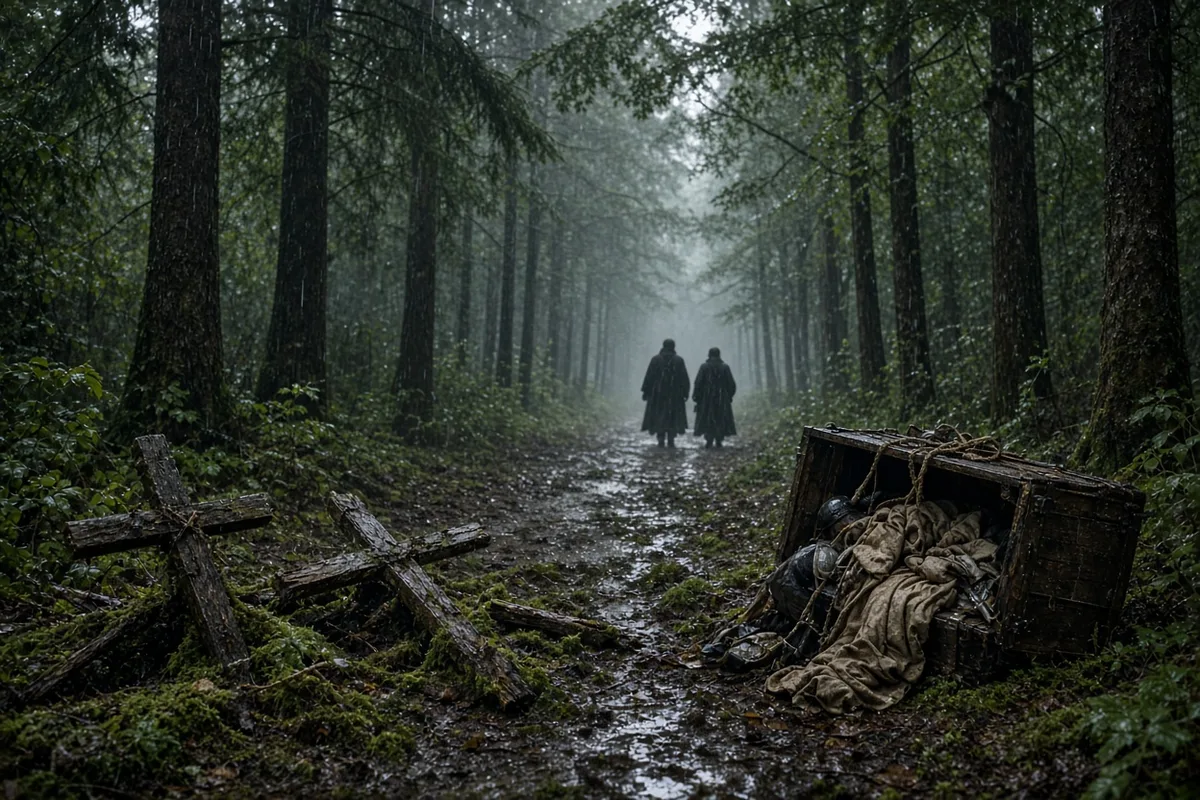
The trader who took me on was named Thorbjorn, a man from the settlement at Hedeby who had lost two rowers to fever during the winter markets at Birca. We reached the mouth of the river that feeds the lake on the third day after leaving, and there we joined a fleet of five ships bound for the Elbe. Thorbjorn carried a cargo of walrus ivory and twenty marten pelts counted out by Hergeir himself before we cast off. One evening on the open water he asked me what the missionary had said inside the new building, and I told him the words Anskar had used about the god who needed no silver payment. Thorbjorn spat over the side and said the same thing had been tried at Dorestad two years earlier when a priest named Nithard came ashore with a letter from Emperor Louis. He had counted twelve converts before the townsmen drove him back to his ship.
Four winters after I reached the Frankish lands I found work hauling salt barrels at the quay in Hamburg. In the spring of 831 a messenger arrived from the court at Ingelheim carrying word that Anskar had left Birca and stood now before the emperor. The letter, written by the monk Rimbert who later recorded the events, stated that King Björn had given Anskar safe passage and that Hergeir had been baptized with the name of the apostle John. The messenger read the lines aloud to the quay workers: “The prefect Hergeir built the church with his own hands and kept the roof against the winter gales for the sake of the captives who remained.” I asked the messenger whether any of the captives from the Rhine had stayed, and he answered that three women and one boy had remained inside the thatched walls when the ice broke.
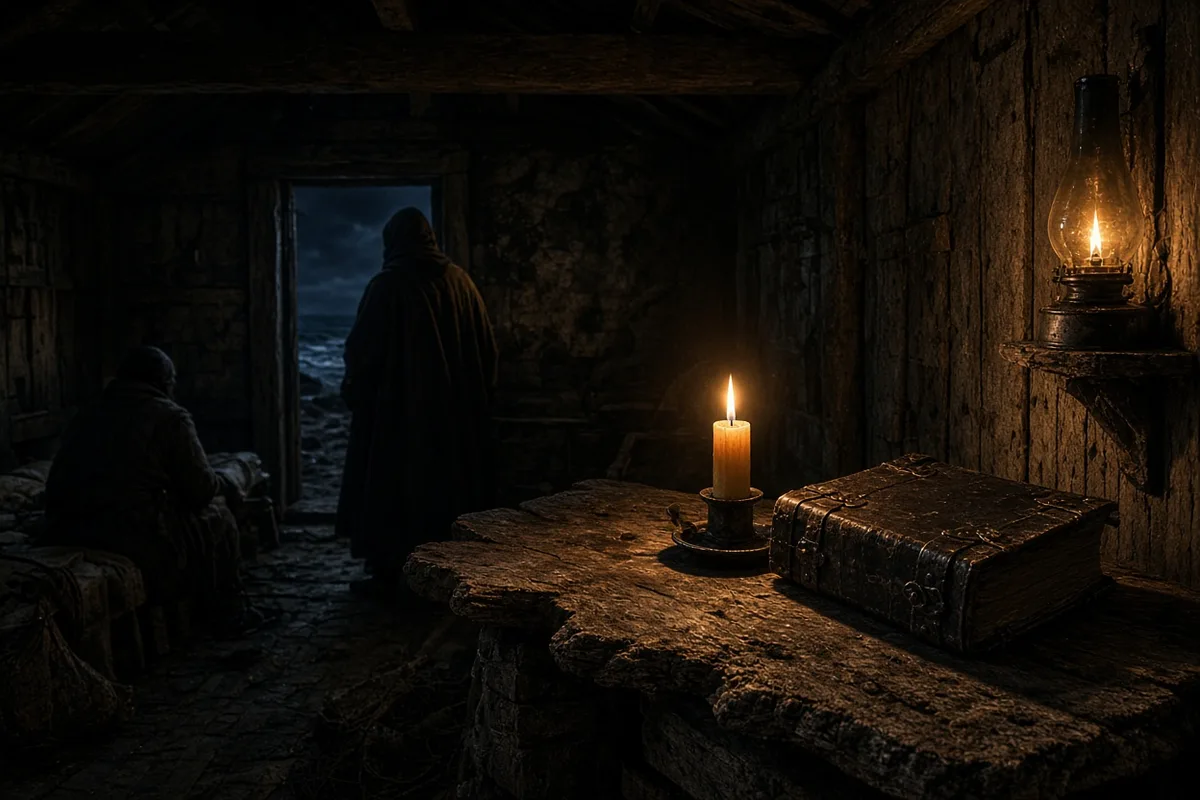
By the year 845 the church at Birca no longer stood. Traders who came down the lake that summer said the timbers had been taken for firewood after a raid from the east burned the warehouses. Anskar, now archbishop of Hamburg, wrote in a letter preserved in the Bremen archives that he had sent a priest named Gautbert to replace him, but Gautbert was driven out after only two winters. The same traders counted seven new longhouses on the island and said the king’s son Olof had taken the title. One of them carried a bronze key he claimed came from the church door, and he sold it for three silver pennies to a smith in Hamburg who melted it down the next day.
Anskar returned to the north in 849 with letters from King Horik of the Danes granting permission for another building, this time at Hedeby. The grant listed twenty hides of land set aside and required that no man be forced to attend the prayers. Rimbert recorded the king’s words as spoken before the assembly: “Let the priest speak, but let my men keep their swords.” Anskar stayed at Hedeby through one winter, teaching from a book he carried that contained the Gospel of Matthew copied in a Frankish hand. When he left he placed the book in the keeping of a merchant named Ragenold, who later brought it south and showed it at the market in Dorestad where twenty lines were read aloud to prove the script was whole.
In 865 Anskar died at Bremen on the third day of February. The Vita written by Rimbert states that on the night before his death he asked to be carried to the church door so he could see the river ice breaking. He spoke the names of the places where he had preached: Birca, Hedeby, and the island of Selja where he had once spent a summer. The record gives the exact number of years he had served as archbishop: thirty-four. A trader who had been at Bremen that month brought the news to Hamburg and added that Anskar’s successor, Rimbert himself, had counted forty-three men and women who still kept the prayers Anskar had taught at Birca.
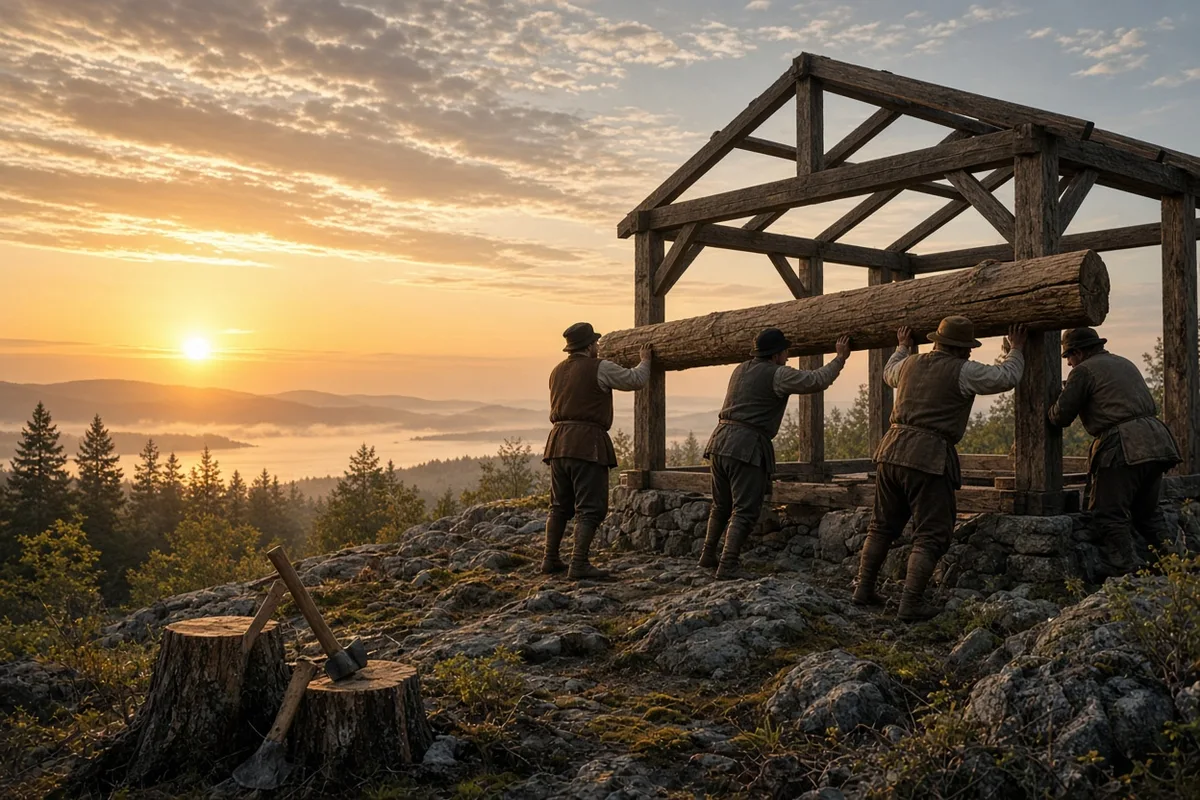
The island called Birca was abandoned by the middle of the tenth century. When the geographer Adam of Bremen described the lake in 1075 he wrote that the site held only ruins and that the wooden wharves had sunk into the mud. Archaeological work begun in 1825 uncovered the post holes of the church Hergeir raised; the holes measured one and a half ells across and were spaced four ells apart. A single iron hinge was found among the charred reeds. In 1930 the Swedish Antiquities Board placed a stone marker on the spot, and the inscription records the date 829 as the year Anskar first arrived with the permission of King Björn.
Today the island is called Björkö and belongs to the parish of Adelsö. The lake is measured at 4,820 square kilometers, and the ferry from Stockholm lands at a concrete pier three hundred meters from the marker stone. On the last day of August 2023 a woman named Ingrid Svensson, born in 1957 in the village of Sigtuna, walked the path from the ferry to the stone. She carried a printed copy of Rimbert’s Vita and read the paragraph describing Hergeir’s baptism aloud to her grandson, who was eight years old. When she finished she placed the paper under a rock at the base of the marker and returned to the ferry before the last crossing.
The parish register at Adelsö records that Ingrid Svensson returned to Sigtuna the same evening and entered the date of her visit in the margin of her own copy of the Vita, noting the exact time the ferry departed as 17:42. In 2016 the Swedish National Heritage Board installed a weather station fifty meters east of the marker stone; its log for 14 October 2019 shows wind gusts of 18 metres per second that lifted a loose corner of the protective membrane placed over the post-hole trenches during the 1990–1992 campaign directed by Björn Ambrosiani. Those trenches exposed a second line of posts running north-south, each 28 centimetres in diameter and packed with clay from the lake bed, dated by radiocarbon to 826 plus or minus twelve years.
A bronze coin struck in Dorestad in 822 was recovered from the same layer and is now catalogued as SHM 34567 in the Historiska Museet in Stockholm. The coin bears the legend “DORESTAT” on the obverse and weighs 1.72 grams. During the same excavation a fragment of charred thatch yielded a pollen sample containing 47 per cent Phragmites, confirming the roof material described by Rimbert. The sample was processed at the Ångström Laboratory in Uppsala on 3 March 1993 and the results published in Fornvännen the following year.
In July 2004 a group of eight schoolchildren from the Adelsö primary school placed hand-written notes inside a copper time capsule buried beside the marker. One note, written by a boy named Emil Larsson, asked whether King Björn had ever visited the church himself. The capsule is scheduled to be opened in 2054. The parish website logs 2,847 visitors to the stone between 1 May and 30 September 2022, with the single busiest day being 29 June when 184 people arrived on the 10:15 and 11:40 ferries.
On 12 August 2024 a maintenance crew from the county roads department replaced two rotten planks on the boardwalk leading to the stone. The foreman, Anders Ekström, born 1971 in Norrtälje, logged the work order number 47291 and noted that the new planks measured 38 by 140 millimetres and were pressure-treated pine from a mill in Gävle. While the crew ate lunch, a woman named Katarina Holmgren, aged 41 and resident in Stockholm, stood at the stone and read aloud the same paragraph from the Vita that Ingrid Svensson had read the year before. She held the printed page in her left hand and kept her right hand on the shoulder of her daughter, who was four years old and wore a red rain jacket. When she finished she folded the page once and slipped it into the pocket of her jacket before walking back toward the pier.