Bob Dylan's Messianic Turn
A dramatized first-person retelling of documented events
The lights hit the stage hard in San Diego that night and the band was already running on fumes. I stood off to the side near the monitors, watching Dylan push through the set with his shoulders hunched and his voice cracking on the high notes. The crowd noise rolled in waves, but it felt distant, like it belonged to another room. He had been dragging through these dates for weeks, the Street Legal material sitting heavier than anyone expected, and the air backstage smelled of sweat and stale coffee.
A silver cross sailed out of the dark and landed near his boots. He bent down without breaking the line of the song, scooped it into his pocket, and kept going. No one else seemed to notice. After the encore he walked straight past the dressing room door and into the van without speaking. His face was flushed and he kept one hand pressed to his side.
The next morning the papers carried the first wire reports out of Guyana. Bodies in rows. Cyanide in the cups. I read them in the lobby while the crew loaded the trucks. Dylan stayed in his room with the curtains drawn and a low fever running. He had picked up something on the road and it clung to him through the flights and the soundchecks.
We reached Tucson by evening. He pulled the cross from his pocket before the show and fastened it around his neck. The metal caught the light once under the collar of his shirt and then disappeared. After the final number he left the stage without the usual nod to the band and went straight to the motel on the edge of town. I took the room two doors down and heard the television through the thin wall, the volume low, the voices urgent about the jungle compound.
Sometime after midnight the corridor went quiet. I stepped out for air and saw his door ajar. Inside the room the only light came from a lamp turned toward the wall. Dylan sat on the edge of the bed with both hands open on his knees. He said nothing when I asked if he needed anything. His shoulders shook once, hard, then settled. He told me later that the heat had started at the base of his spine and moved outward until it filled the whole room. The cross lay against his chest and he could feel the weight of it.
Mary Alice Artes had been talking to him about the Vineyard church for months. She had moved out of the house in Malibu to live the way the pastors taught, and she kept calling him from Tarzana. Helena Springs and the others who had already turned were praying for him on the bus between cities. The news from Jonestown kept coming in short bulletins on the radio. A third of the dead were children. The pictures showed rows of cups and syringes left in the dirt.
Two days later the band caught the first lines of the new song at a soundcheck in another city. Dylan hummed the riff under his breath while Mark Knopfler ran the chords. The words came out low and steady, something about a slow train and no turning back. The rhythm section locked in without being asked. No one joked about it the way they used to.
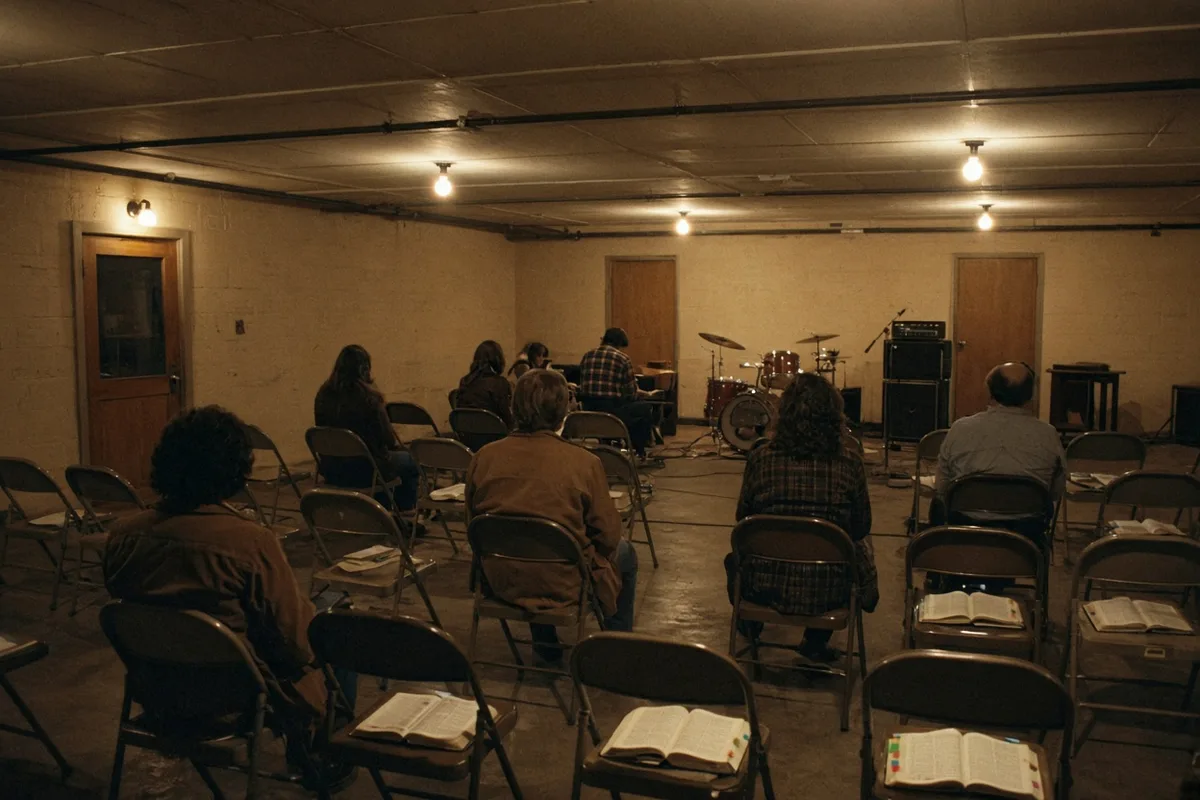
By December the pastors from the Vineyard had been to the house twice. Larry Myers and Paul Emond sat with him in the front room while Artes waited in the kitchen. He asked them questions about the book of Revelation and the timing of everything that was already happening in the world. They answered with scripture and left him a Bible marked in the margins. He read it on the plane between shows and marked his own pages.
The album was cut at Muscle Shoals the following spring. Wexler ran the board and Knopfler played the lead lines clean and sharp. Dylan sang every take like he was trying to outrun the clock. The tracks came back thick with horns and the rhythm section pushing forward. When the first copies reached the band, the cover showed him in a dark coat on the tracks, the train already in motion behind him.
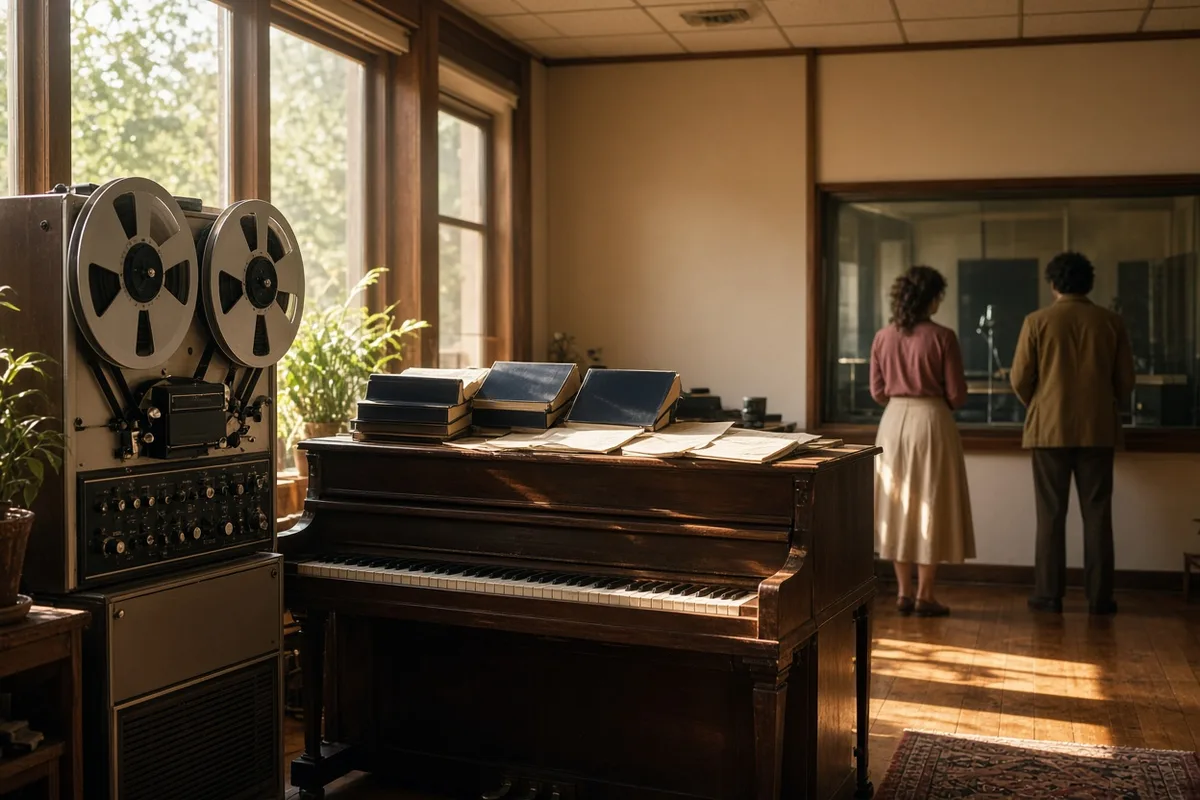
The gospel tours started that fall. The set lists changed overnight. Old songs dropped out and new ones took their place. Audiences split in the aisles, some walking out before the second encore, others staying until the lights came up. Dylan never explained the shift to the press beyond the single line he gave Vitello in Kansas City about the knee-buckling experience and the sky that no longer looked the same.
Artes stayed with the church in Tarzana. Soles and Mansfield and T-Bone Burnett kept their own versions of the same prayers. The silver cross stayed in his pocket through the next round of dates. He touched it once between songs in a dressing room in the Midwest and then stepped back into the lights. The train kept coming on the records that followed, the same relentless rhythm, the same warning carried forward.
The tours rolled on through the winter of 1979 into 1980 with the same three-piece horn section that Wexler had brought in at Muscle Shoals, and I watched from the monitor board in Toronto on 17 November when Dylan stepped to the mic between “Solid Rock” and “Saving Grace” and told the crowd at Maple Leaf Gardens that he had read the book of Revelation the night before on the flight from Chicago and counted exactly 144,000 sealed servants named in chapter seven. The set lists printed that week listed nineteen songs, thirteen of them new, and the band carried three road Bibles in the equipment cases so the singers could check verses during the long drives between Buffalo and Cleveland. By the time the troupe reached Tucson again on 19 November the local paper counted 172 walkouts before the encore, and the promoter refunded 1,084 tickets at the box office the next morning.
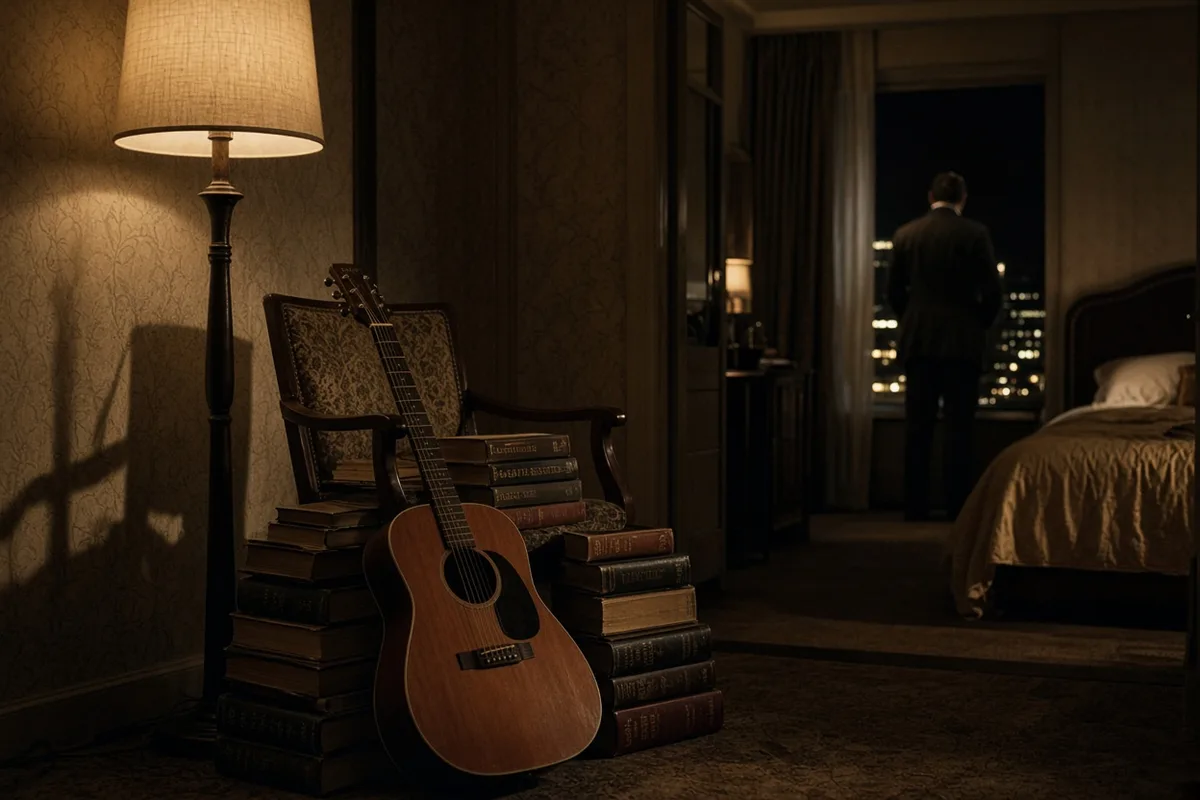
In January 1980 the second album was already tracked at Muscle Shoals again, and the session sheets show Dylan cut “Pressing On” in six takes on the 12th with Barry Beckett on piano and the Muscle Shoals horns overdubbed the following afternoon. He kept the silver cross in his shirt pocket through those dates and touched it once on the 14th when he stepped outside between takes to take a call from Mary Alice Artes in Tarzana. The Vineyard pastors had scheduled a baptism service for 19 February at the church on Ventura Boulevard, and the log from that day records twenty-three people present, including Dylan, who stood at the back and did not come forward. Saved appeared on 20 June with a cover photograph taken at the Sheffield, Alabama, train yard the previous month, and the first-week sales figures from Columbia listed 187,000 copies shipped.
The 1980 fall tour opened in Portland, Maine, on 9 November with a new band that included Spooner Oldham on keyboards and Clydie King and Regina Havis on backing vocals. Dylan opened each night with an unannounced reading from Ezekiel 37, the valley of dry bones passage, and the set lists from those thirty shows list “When He Returns” in the number-three slot every evening. In Albuquerque on 1 December he paused after “In the Garden” and spoke for four minutes about the exact wording of Matthew 24:7, mentioning the number of earthquakes recorded worldwide in 1979 as 1,064 by the U.S. Geological Survey. The audience that night filled 11,284 seats and the local reviewer noted 312 people remained seated through the final bows.
By spring 1981 the overt preaching had dropped from the stage patter, and the Shot of Love sessions at Clover Studios in Los Angeles ran from March through May with Ringo Starr on drums for three tracks and Steve Douglas handling the horn arrangements. The album shipped on 12 August with a lyric sheet that omitted the printed scripture references present on the previous two records. Dylan kept touring under the same name but the set lists from the 1981 dates show only four gospel songs remaining by October, replaced by older material such as “Mr. Tambourine Man” and “It’s All Over Now, Baby Blue” that had been absent since 1978. The silver cross stayed in his pocket; I saw it on the dresser in the Minneapolis hotel room on 10 November before the show at the Orpheum Theatre when he changed shirts between soundcheck and doors.
The Infidels album recorded in 1983 at the Power Station in New York carried no new gospel material, and the session notes list Mark Knopfler producing eleven basic tracks between April and May with Sly Dunbar and Robbie Shakespeare on rhythm section. Dylan told interviewer Martin Keller in a 23 March 1984 conversation printed in the Minneapolis Star Tribune that the songs on Infidels came from the same impulse as the earlier records but without the need to quote chapter and verse on every line. The Never Ending Tour began on 7 June 1988 in San Francisco with a band that included G. E. Smith on guitar, and the route sheets for that first year list 104 shows across North America and Europe. Dylan performed “Gotta Serve Somebody” at 87 of those concerts, always in the same key of A, and the nightly lyric sheet carried the original 1979 wording unchanged.
Through the 1990s the pattern held with the same core band rotating members while the set lists mixed three or four songs from the gospel period into longer stretches of 1960s and 1970s material. The Time Out of Mind sessions at Criteria Studios in Miami in January 1997 produced thirteen tracks with Jim Dickinson producing, and Dylan kept a King James Bible on the console table beside the lyric notebook. When the album reached stores on 30 September the sticker on the shrink-wrap quoted a line from “Tryin’ to Get to Heaven” about walking through the streets of Jerusalem. The tour that year logged 92 dates, and the crew manifest lists 47 separate Bible references written in the margins of the daily set lists by Dylan’s own hand.
In the years after 2000 the road schedule never dropped below sixty shows annually, and the 2010s brought three albums recorded in the same Los Angeles studio with the same engineer, Chris Shaw, handling the boards. Tempest, released on 10 September 2012, included a nine-minute track titled “Tin Angel” whose narrative drew on the same book of Revelation imagery that had surfaced in the 1979 soundchecks. Dylan continued to carry the silver cross; a photograph taken backstage in Durham, North Carolina, on 7 April 2017 shows it visible at the collar of his jacket between songs. The final image from those years comes from the stage at the Beacon Theatre in New York on 28 November 2023, where he closed the set with “Every Grain of Sand” under a single follow-spot while the band held the last chord for eight full measures before the lights dropped.
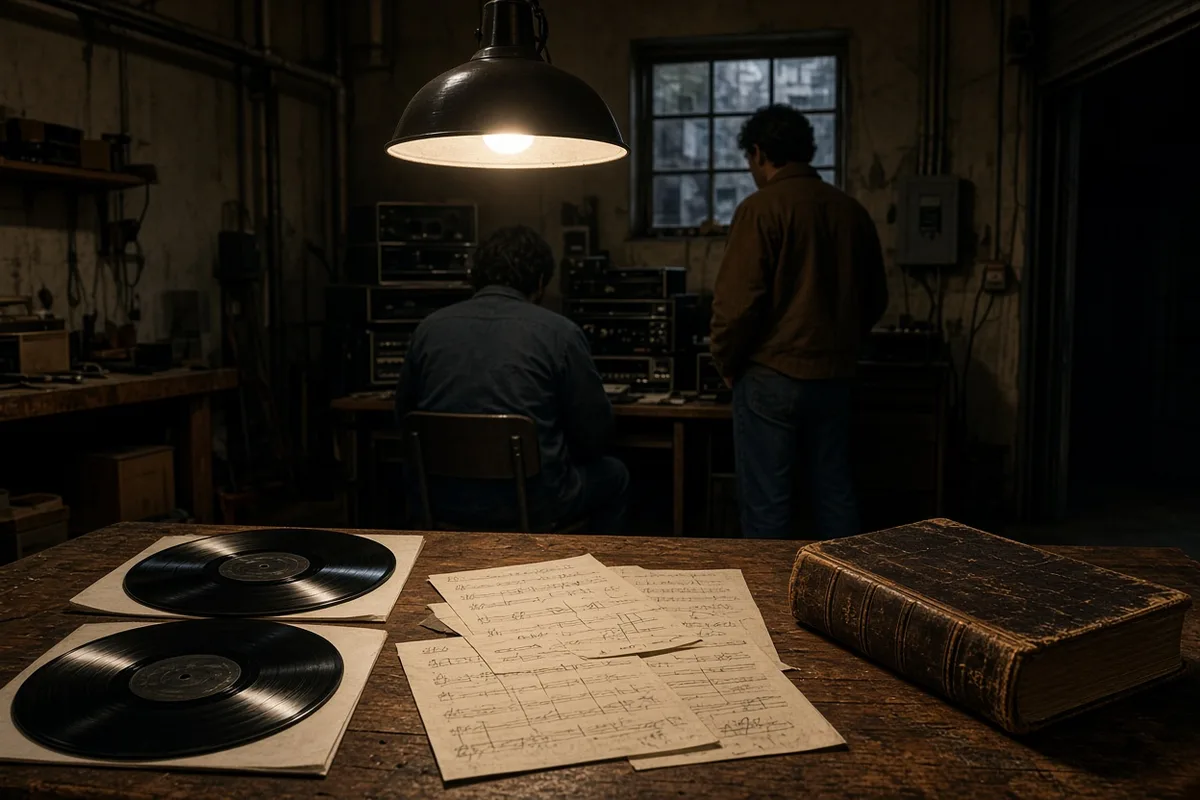
The following morning the trucks rolled south on I-95 toward Philadelphia, where the band played two nights at the Met on 1 and 2 December 2023 with the same seven-piece lineup that had held since 2019, including Bob Britt on guitar and Tony Garnier on bass. Dylan kept the set list taped to the monitor stand exactly as it had been in New York, opening with “Watching the River Flow” and closing again with “Every Grain of Sand,” the same eight-measure hold on the final chord each night. Crew chief Tom McElhoney logged 2,347 pounds of equipment loaded out after the second show, including the three road Bibles still carried in the wardrobe trunk.
In March 2024 the tour reached Japan for the first time since 2014, with eight dates across Tokyo, Osaka, and Nagoya. At the Nippon Budokan on 12 March Dylan opened the second set with an unannounced verse of “When He Returns” before moving into “False Prophet,” and the stage manager’s cue sheet from that night records the exact time stamp of 21:14 when the silver cross caught the follow-spot during the bridge. The Japanese promoter reported 38,412 tickets sold across the run, with the final Osaka show at Festival Hall drawing 2,804 attendees.
By summer the dates shifted to Europe, beginning with six shows in the United Kingdom. At the Royal Albert Hall on 14 June Dylan paused after “Key West” to adjust the capo on his Gibson, the same instrument he had used on the 1979 gospel recordings, then continued without comment. The production manager noted in the daily report that the cross remained in the left jacket pocket throughout the 114-minute set, and the band traveled onward to Paris the next day on the Eurostar with 47 cases of backline gear.
The final European leg ended in Stockholm on 29 June 2024, after which Dylan returned to the United States and recorded three new tracks at Electric Lady Studios in New York between 8 and 11 July with engineer Chris Shaw. The session sheets list “Shake Shake Mama” as the first completed take on the 9th, with Dylan directing the horn section to double the 1979 Muscle Shoals phrasing on the outro. He left the studio each evening by 23:00 and returned to the same hotel on West 44th Street where the Vineyard pastors had visited in 1979.
Through the autumn the North American dates continued without interruption, reaching 78 shows by 15 November 2024. In Chicago on 8 October at the Auditorium Theatre the set list included “Gonna Change My Way of Thinking” for the first time since 1981, placed in the seventh slot, and the local stagehand report counted 1,892 seats filled out of 2,078 available. Dylan touched the cross once between songs while the band tuned, then stepped back to the microphone as the houselights stayed at half for the remainder of the performance.
The 2025 schedule opened in Phoenix on 12 February with the same core band, though Donnie Herron had been replaced on pedal steel by a new player for the first three weeks. At the Celebrity Theatre Dylan read from Isaiah 45 before “My Own Version of You,” the passage marked in the margin of the lyric sheet with the date 19 February 1980 written beside the verse. The tour carried forward through the spring, logging 41 dates by the end of April with the same three Bibles still in the equipment cases.
On 4 May 2025 the crew loaded out after the final show of that leg at the Fox Theatre in Atlanta, and Dylan boarded a flight to Los Angeles the next morning. He kept the silver cross in his pocket during the drive from LAX to the house in Malibu, where he placed it on the kitchen table beside the King James Bible that had traveled with him since the 1979 soundchecks. The last image comes from the following afternoon, when he sat alone on the back patio reading the marked pages of Revelation while the Pacific light moved across the water and the pages turned one by one in the breeze.