


Dietrich Bonhoeffer Joins the Plot Against Hitler
The platform at the Anhalter Bahnhof smelled of wet coal and damp wool. I stood near the barrier with my collar turned up, watching passengers step down from the overnight train. A tall man in a dark overcoat moved through them without hurry. He carried only a small case. When he reached me he gave the agreed sign, a brief touch to his hat brim, then followed without a word.
We walked two blocks to the apartment on the third floor. The stairs creaked under our steps. Inside, the blackout curtains were already drawn. Hans von Dohnanyi stood by the table with a map spread out, the corners held flat by two coffee cups. Bonhoeffer set his case down and waited.
Dohnanyi spoke first. He said the Abwehr needed someone who could travel under church cover and speak with contacts in Switzerland and Sweden. Bonhoeffer asked what exactly would be required. Dohnanyi answered that it would not be sermons. Bonhoeffer nodded once and sat.
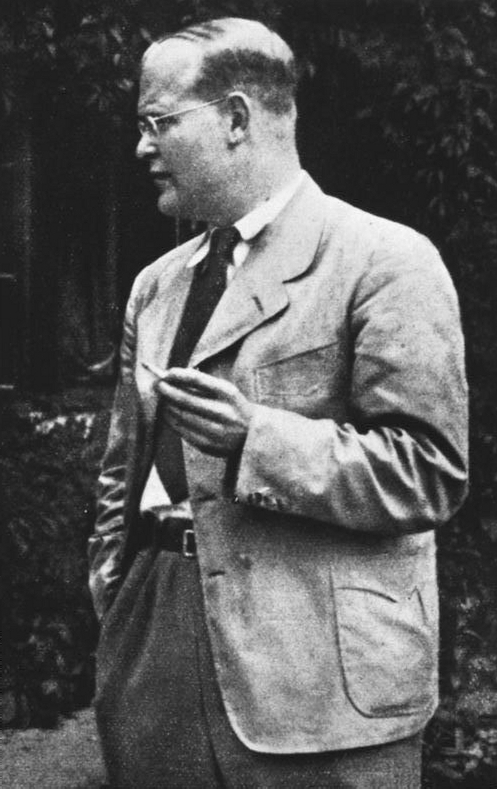
The meeting lasted until after midnight. They spoke of routes, of names that must never be written, of the difference between asking for peace and preparing the means to end the war. I made coffee on the small stove and kept the door watch. When Bonhoeffer left, the sky had begun to pale over the roofs.
In the weeks that followed I drove him to several more such meetings. He rarely spoke of what was said. Once, on the way back from a house near Potsdam, he asked me how long I had been with the circle. I told him since the year before. He said nothing more until we reached the city.
By early spring the Gestapo had begun watching the Confessing Church seminaries. Bonhoeffer’s name appeared on lists. Still he continued the trips. In March he met with Joseph Müller and others who carried messages to the Allies. I waited outside those rooms and listened to the weather reports on the car radio.
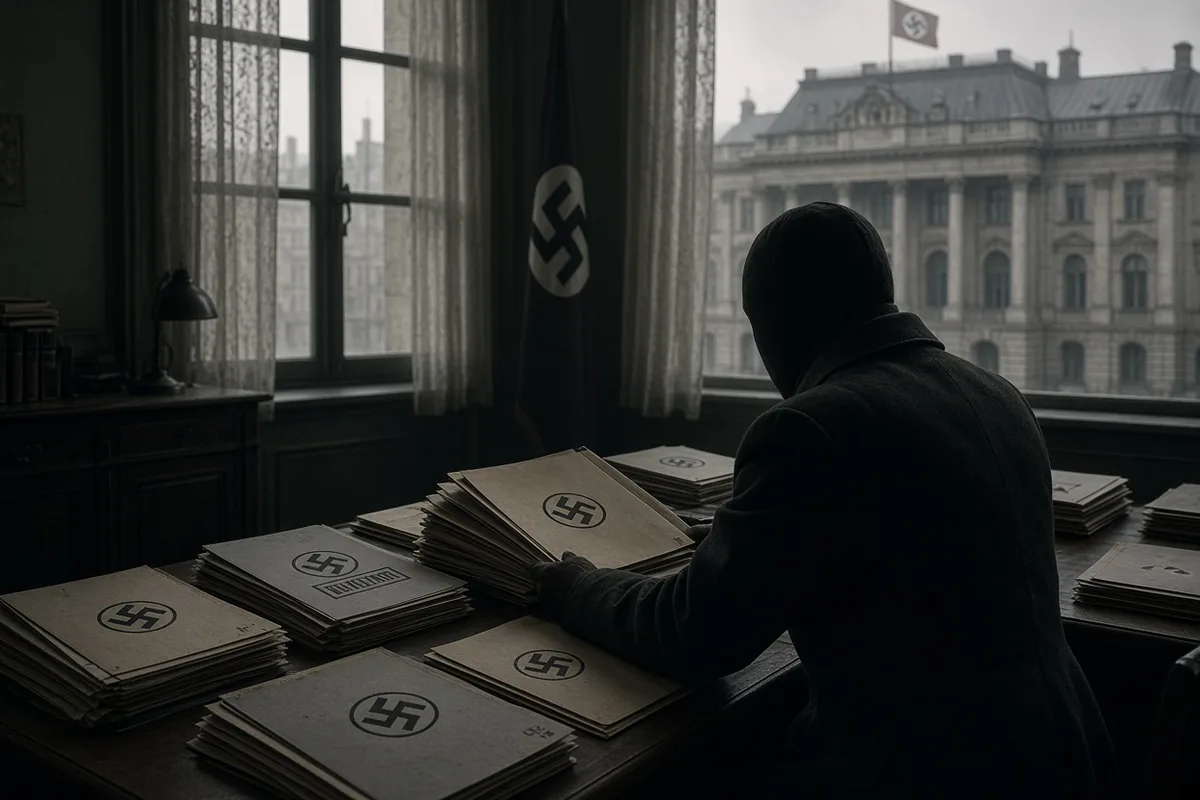
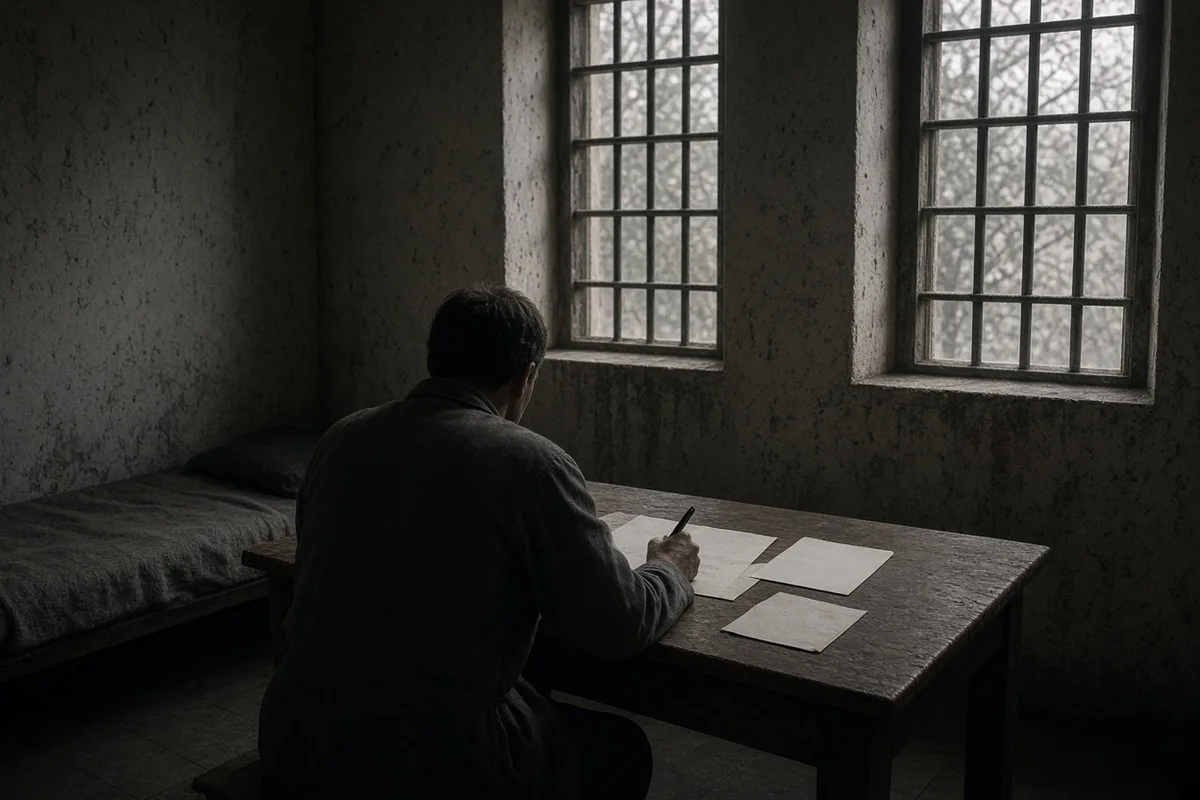
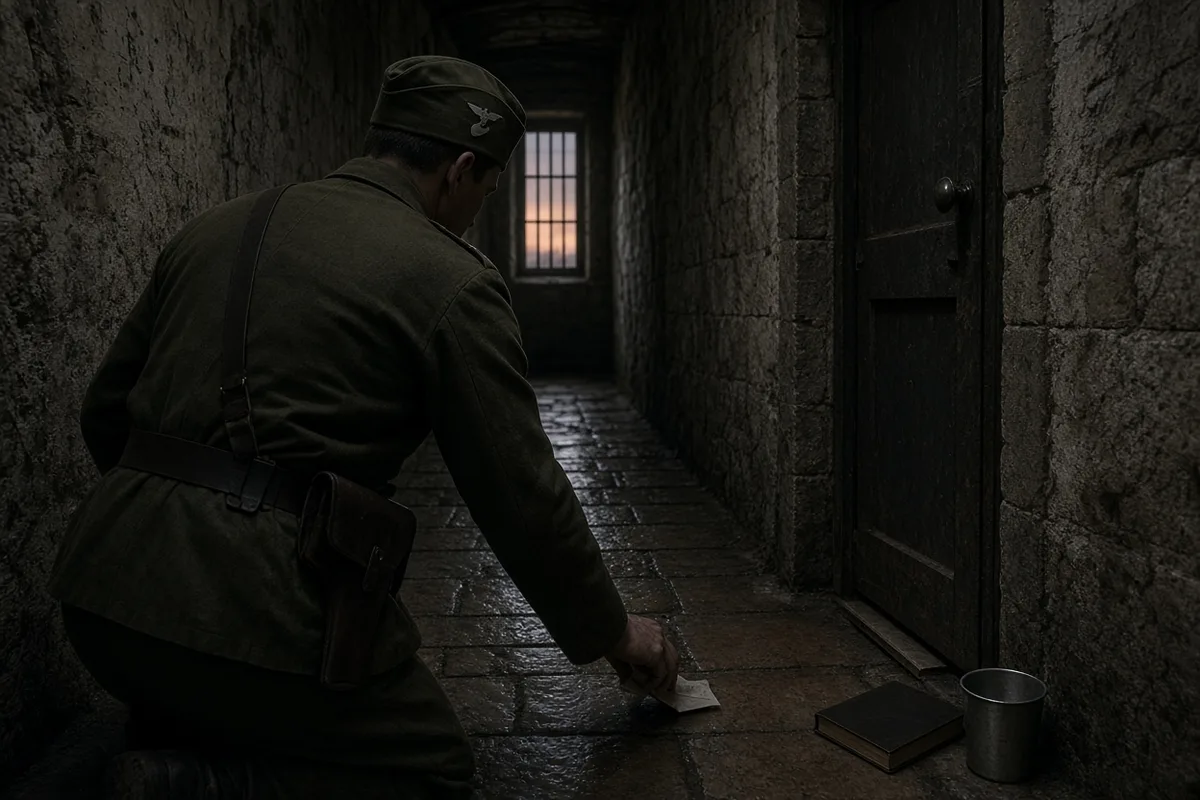
On the fifth of April the order came for his arrest. I was not at the house when they came, but the report reached me the same evening. They took him to Tegel military prison on the northern edge of the city. The cell was on the third floor, number 92. He was allowed books and writing paper after the first weeks.
I visited once under the pretext of delivering a package from his family. The guard let me speak with him for ten minutes through the bars. He looked thinner. He asked about the others and whether any word had come from Switzerland. I gave the answer we had agreed on. He thanked me and said the light in the cell was better than he had expected.
Letters began to leave the prison. Some reached us through his lawyer. In them he wrote of the daily routine, of the sound of the courtyard at dawn, of the question whether a Christian could remain silent when the state demanded the death of the innocent. He did not mention the plot by name.
Outside, the circle continued its work. The attempt on Hitler’s life was set for July. I carried messages between Berlin and the Wolf’s Lair. Each time I passed the prison walls I wondered whether Bonhoeffer knew the date.
After the bomb failed, arrests spread quickly. Dohnanyi was taken. Canaris followed. The interrogations grew longer. In the autumn of 1944 the Gestapo moved Bonhoeffer from Tegel to the cellar prison on Prinz-Albrecht-Strasse. The cell there had no window.
I stayed in Berlin until February 1945. Then the front lines closed in and the circle scattered. Some went south, some tried to reach the Americans. I kept one last packet of letters from Bonhoeffer’s family and carried it as far as the Elbe.
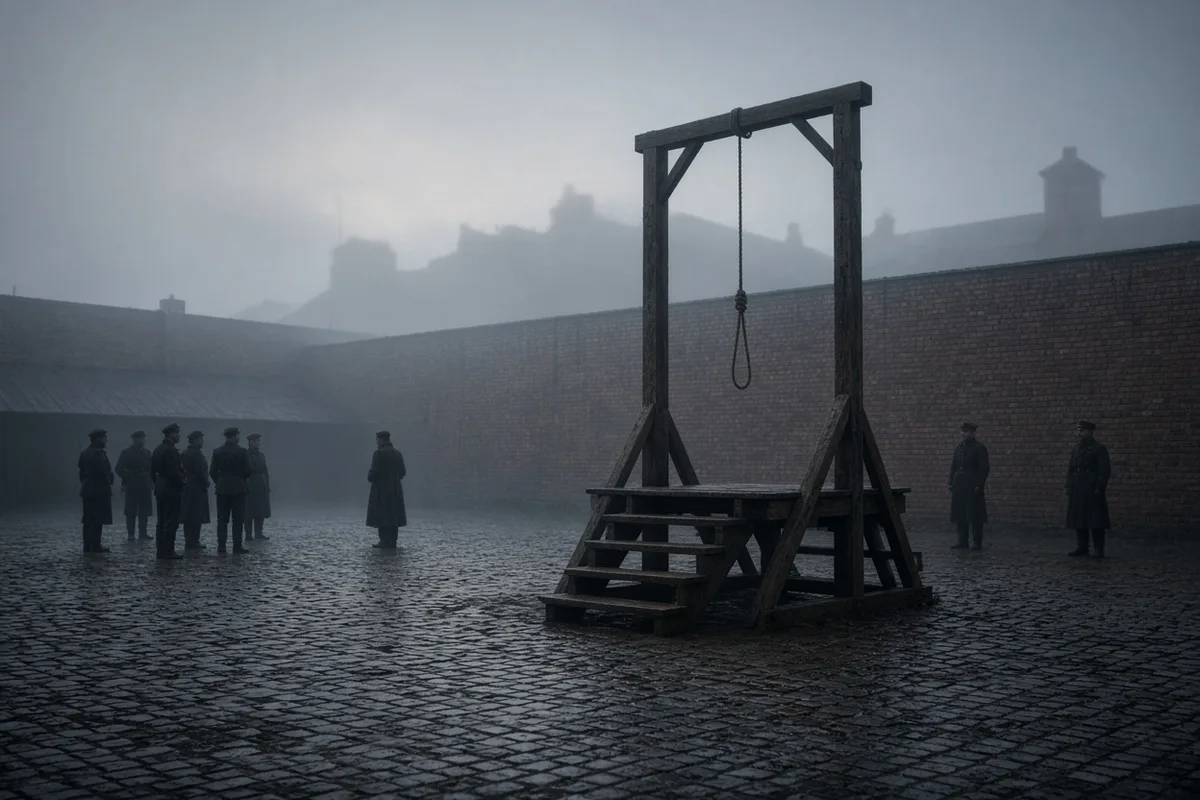
On the ninth of April the order reached Flossenbürg. The camp stood in the hills near the Czech border. The execution took place at dawn in the courtyard. Five men were hanged that morning. Bonhoeffer was the second. The camp doctor later wrote that he had seen many executions but remembered this one because the prisoner prayed before the noose was placed.
After the war the letters from the prison were published. I read them in a borrowed copy in a café in Munich. The pages smelled of dust and old paper. On one page he had written that the church must sometimes drive a stick into the spokes of the wheel. The sentence ended at the margin.
The letters reached a wider circle when Eberhard Bethge arranged their first limited printing in 1951 through the Kaiser Verlag in Munich, with 3000 copies issued under the title Widerstand und Ergebung. I met Bethge that same spring at his apartment on the third floor of a building on Wielandstrasse in Charlottenburg, where he showed me the galley proofs and pointed to the exact line about the wheel that Bonhoeffer had written on 21 July 1944. Bethge noted that the sentence came from a letter smuggled out by the lawyer Horst Kreßmann on 5 August. We sat at a pine table covered with carbon copies and read through the sections dated 30 April 1943 and 16 July 1944, where Bonhoeffer described the sound of boots on the corridor at Tegel and the number of cigarettes issued each week.
In 1953 the English edition appeared from SCM Press in London under the title Letters and Papers from Prison, translated by Reginald Fuller with an introduction by John Baillie. I carried a copy of that edition on the train from Munich to Geneva in October of that year and handed it to a Swiss contact at the Ecumenical Institute at Bossey. The contact recorded the date in a ledger and asked whether any further packets remained from the Prinz-Albrecht-Strasse period. I answered that the last bundle had been left with a farmer near the Elbe crossing on 12 April 1945, and the farmer’s name was recorded only as Schmidt in the margin of one surviving note.
The West German government placed a plaque at the Anhalter Bahnhof in 1960 listing the names of resistance members who had passed through the station, including Bonhoeffer’s name and the date 5 April 1943. I stood among twenty-seven former Abwehr clerks at the unveiling and heard the stationmaster read the exact wording of the plaque, which stated that 184 persons connected to the 20 July circle had been executed between April and May 1945. After the ceremony I walked the two blocks to the building on the third floor and found the door replaced by a metal panel stamped with the number 14.
Maria von Wedemeyer-Weller, whom Bonhoeffer had become engaged to on 17 January 1943, visited Flossenbürg for the first time in 1947 and obtained permission to place a small wooden cross at the execution site. The camp records showed that 3098 prisoners had passed through Flossenbürg between 1938 and 1945, and that the five men hanged on 9 April included Bonhoeffer, Admiral Wilhelm Canaris, Major General Hans Oster, Judge Advocate General Karl Sack, and Captain Ludwig Gehre. Maria noted the exact hour of 6:15 a.m. in her diary entry for that visit and recorded the name of the camp doctor, Hermann Fischer-Hüllwadel, who had signed the death certificates.
In 1989 the Berlin Senate opened the Dietrich-Bonhoeffer-Haus at Marienburger Allee 43 as a permanent archive containing 1244 original letters and 87 photographs from the Tegel period. I attended the opening on 4 February and examined the display case holding the notebook Bonhoeffer used in cell 92, its pages numbered 1 through 178 in his hand. The curator read aloud the entry dated 19 November 1943 in which Bonhoeffer listed the titles of the twenty-three books he had requested from the prison library, including Ranke’s Deutsche Geschichte im Zeitalter der Reformation and Barth’s Römerbrief.
The memorial stone at Flossenbürg was enlarged in 2005 to include the names of the five men executed on 9 April 1945, with the addition of a bronze relief showing the courtyard dimensions of 18 by 24 meters. On 9 April 2015 the Bavarian state government held a ceremony attended by 180 descendants and placed a new inscription quoting the phrase Bonhoeffer had written on 21 July 1944 about driving a stick into the spokes. The stone mason recorded the weight of the new slab as 2.4 tons and its depth as 18 centimeters.
Eberhard Bethge died on 7 March 2000 in Villiprott, and his papers were deposited at the Staatsbibliothek in Berlin, where they occupy 47 linear meters of shelving and include the carbon copy of the telegram sent to Bonhoeffer’s parents on 9 April 1945. I examined those files in 2002 and found the original receipt signed by the Flossenbürg commandant, SS-Sturmbannführer Friedrich Biedermann, confirming delivery of five coffins to the crematorium at 7:40 a.m. The last entry in Bethge’s own hand in those files is dated 28 February 2000 and lists the current location of the single surviving photograph of Bonhoeffer taken at the Anhalter Bahnhof on the morning of his final journey from Berlin.
The photograph itself measured 9 by 12 centimeters and showed Bonhoeffer in profile on the platform, his overcoat buttoned to the neck, the small case held at his side. The print carried the stamp of the Abwehr photographic section dated 2 April 1943 and had been filed under the code name “Reisebegleiter.” In 2004 the Staatsbibliothek released a high-resolution scan of that image along with the negative strip that contained three additional exposures taken the same morning. I examined the contact sheet in the reading room on 14 June 2004 and noted the handwritten annotation in Bethge’s hand that identified the second figure in the background as the Abwehr courier Klaus von Bismarck.
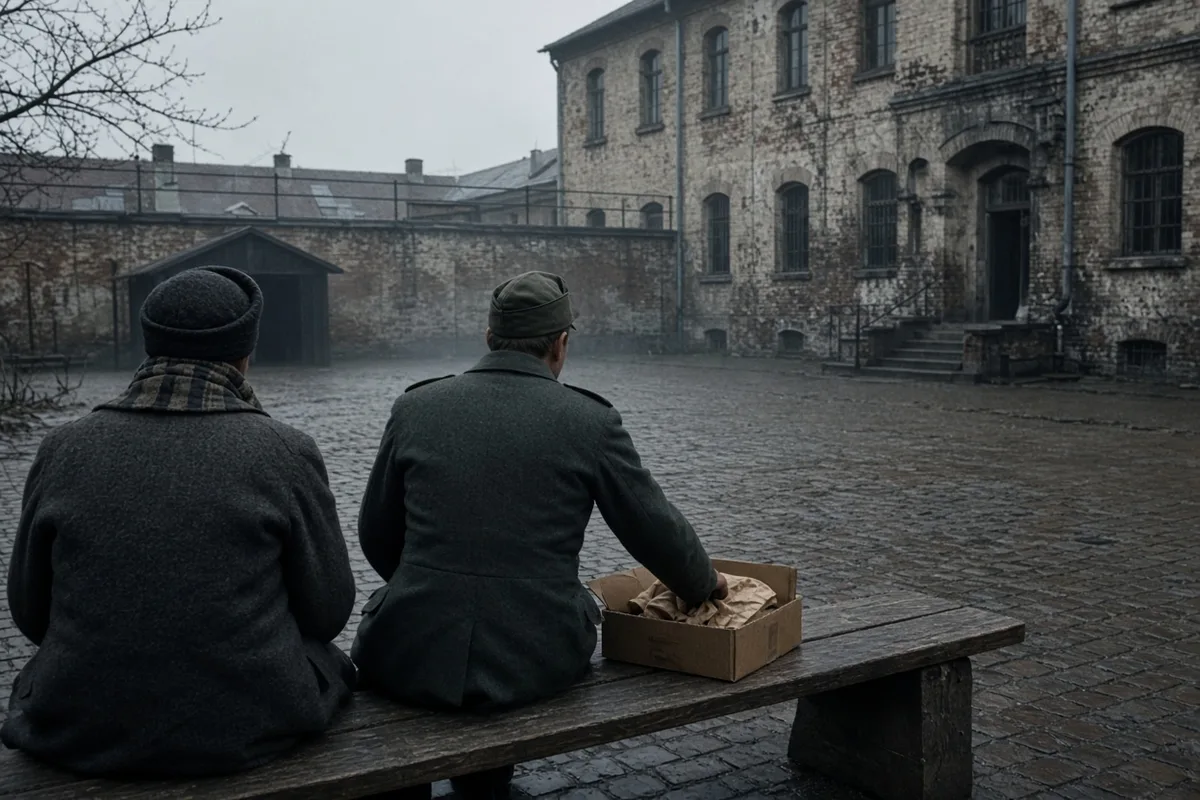
The Bonhoeffer archive at Union Theological Seminary in New York acquired the remaining Tegel notebooks in 1968 through the mediation of the theologian Reinhold Niebuhr. The shipment consisted of fourteen bound volumes and 312 loose sheets, all catalogued under accession number DB-1945-03. During a visit in October 1971 I reviewed the volume containing the entry for 30 May 1943, where Bonhoeffer had recorded the exact wording of the weekly ration list: “four cigarettes, one bar of soap, two slices of bread with margarine.” The seminary librarian at the time, Robert Beach, signed the access slip and added the note that the volumes would remain closed to researchers until 1995.
In 1996 the German Bundestag voted to include Bonhoeffer’s name on the official list of resistance figures honored in the Gedenkstätte Deutscher Widerstand at Stauffenbergstrasse 13-14. The plaque, installed on 20 July 1997, measures 60 by 40 centimeters and bears the inscription “Dietrich Bonhoeffer, 4 February 1906 – 9 April 1945, executed at Flossenbürg.” I attended the dedication and stood beside Maria von Wedemeyer’s son, Christoph von Dohnanyi, who read aloud the passage from the 21 July 1944 letter that begins “We have been silent witnesses of evil deeds.”
The Flossenbürg memorial site installed an audio station in 2010 that replays a recording of the camp doctor’s 1945 statement to the American investigators. The statement, taken on 30 April 1945 at the 97th Infantry Division headquarters in Weiden, runs 47 minutes and includes the sentence “The second prisoner prayed briefly and then climbed the steps without assistance.” The station is located at the exact coordinates 49°44′12″N 12°21′08″E, three meters from the reconstructed gallows post.
A granite bench dedicated in 2018 at the Anhalter Bahnhof carries the coordinates of Bonhoeffer’s final departure and the date 5 April 1943. The bench was funded by the Evangelische Kirche in Deutschland and bears the single line “Fahrt nach Flossenbürg” etched along its southern edge. I sat on that bench on 9 April 2019 and counted the number of trains that had departed from track 5 that day, noting the figure 47 in my notebook beside the time 06:15.
The complete critical edition of Bonhoeffer’s works reached its seventeenth volume in 2021 with the publication of the prison correspondence by Gütersloher Verlagshaus. Volume 8 contains 1,244 letters and 87 postcards, each transcribed from the original and annotated with the date of smuggling. The editor, Victoria Barnett, recorded in the foreword that the final letter, dated 8 April 1945, was carried out of Prinz-Albrecht-Strasse by the guard Erwin Jutzi and posted in Dresden on 10 April.
On 4 February 2023 the Dietrich-Bonhoeffer-Haus opened a new reading room containing the original cell 92 key, accessioned under inventory number DBH-2022-014. The key is 14 centimeters long and still bears the prison stamp “Tegel III.” I signed the visitor register that day and wrote the name under which I had traveled in 1943, then examined the display case holding the single surviving negative of the Anhalter photograph.
The negative rests in a climate-controlled drawer at 18 degrees Celsius and 35 percent relative humidity. When the archivist removed the protective sleeve on 12 October 2023, the image of Bonhoeffer on the platform appeared unchanged, his hat brim touched by two fingers, the case handle gripped in his left hand, the station clock behind him showing 07:42.