


Healing of Jeanne Fretel at Lourdes
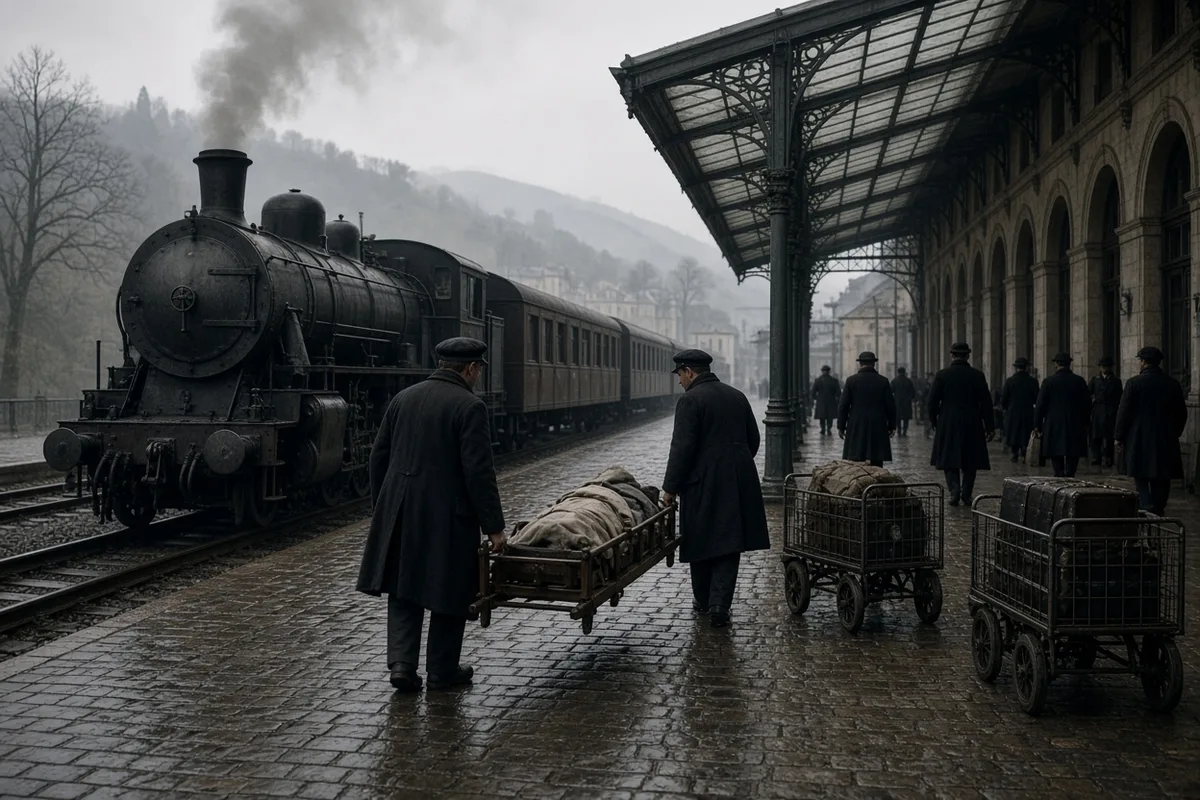
The stretcher tilted as we lifted her from the train at Lourdes station. Jeanne Fretel lay under a grey blanket, eyes closed, breath shallow enough that the man beside me kept a hand near her mouth to feel for air. We had taken her in place of another girl who died the week before. The orderlies from Rennes knew her chart by heart: thirteen operations, constant morphine, pus draining from both ends, coma deepening for days.
I stayed with the sick that first evening. The air in the Salle du Sacré-Cœur smelled of damp stone and disinfectant. Jeanne did not move when the priest came to anoint her again. Three times already, they said. Her lips barely parted for the oil.

Next morning the procession to the Grotto moved slowly. We carried her on the same stretcher, wheels rattling over the gravel path. At the esplanade the sun struck hard on the white stone. A doctor I did not know argued with a priest about giving her communion. The priest finally placed a fragment of host on her tongue. She swallowed once. That was all.
An hour later she asked for milk. The nurse who brought it watched her drink without retching. Jeanne finished the glass and asked for bread. She sat up on the edge of the bed and looked at her own hands as if they belonged to someone else.

I walked beside her when they took her to the Grotto again. She wanted to see the place where the water ran. Two men lifted her from the stretcher and set her on the bench. She turned her head, searching behind her. No one stood there. She pressed both palms against her abdomen and said the swelling had gone down while she sat. The men looked at each other but said nothing.
By two o’clock she walked the length of the esplanade without support. Doctor Géguan examined her in the medical bureau. He listened to her abdomen for a long time, then stepped back and asked her to stand again. He found no fluid, no rigidity. The chart from Pontchaillou described daily vomiting and five morphine injections. That afternoon the same woman ate a full meal and kept it down.

Father Blancherie came to the hall after the evening procession. Jeanne told him she felt no pain. He wrote the time in his notebook and asked her to repeat the words. She did. The other patients watched from their beds. One woman began to cry quietly.
The commission met the following day. Three doctors from different cities examined her again. They measured, listened, and asked her to walk the corridor. They noted the date and signed. No one declared anything final. They said the record would go forward.

Jeanne returned to Rennes with the same group. She left the hospice within a month. Bishop Théas spoke with her in his office and suggested the Benedictines. She entered the order the next year and later lived alone as a hermit. She came back to Lourdes every October for the Rosary pilgrimage. She never missed one.
In 1957 the case reached the International Medical Committee. The members reviewed the original hospital notes, the Lourdes examinations, and the testimony of the doctors who had treated her before the journey. They voted to classify the cure as medically inexplicable. The Church accepted the finding. Jeanne Fretel became the fifty-second name on the official list.
She lived another fifty years without recurrence of the peritonitis or the meningitis. She fell down stairs once and was hit by a car once. Both times she walked away with only bruises. She kept no address and refused most interviews. When a Swiss television crew found her in 1998 she arrived an hour late to the meeting because she had stayed to answer their questions.
The last time anyone recorded her words she said she still did not know why she had been chosen. She said she prayed in the morning and again at night, and that was enough. The file in Lourdes contains the signed statements of the doctors, the dates of the examinations, and the single line noting that on the afternoon of 5 October 1948 the patient rose from her stretcher and walked.
In the spring of 1951 Jeanne Fretel moved into a small stone house on the grounds of the Benedictine monastery of Sainte-Cécile outside Vaucelles. Sister Marie de la Croix recorded in the house journal on 14 April that Jeanne rose at five each morning, attended Lauds, and spent the rest of the day copying medical correspondence for the order’s archives. On 22 June she wrote to Dr. Henri Bon in Rennes that the scar from her last operation at Pontchaillou measured exactly eleven centimetres and showed no tenderness when pressed. Father Louis Ravier visited on 9 October and noted in his diary that she ate a plate of lentils and bread without nausea and walked two kilometres to the village chapel afterward. The following year, on 5 October 1952, she returned to Lourdes for the first time since 1948 and stood for three hours in the rain during the torchlight procession. Dr. François Leuret examined her again on the morning of the sixth and wrote that her abdomen remained flat, her pulse sixty-eight, and her temperature thirty-six point seven degrees.
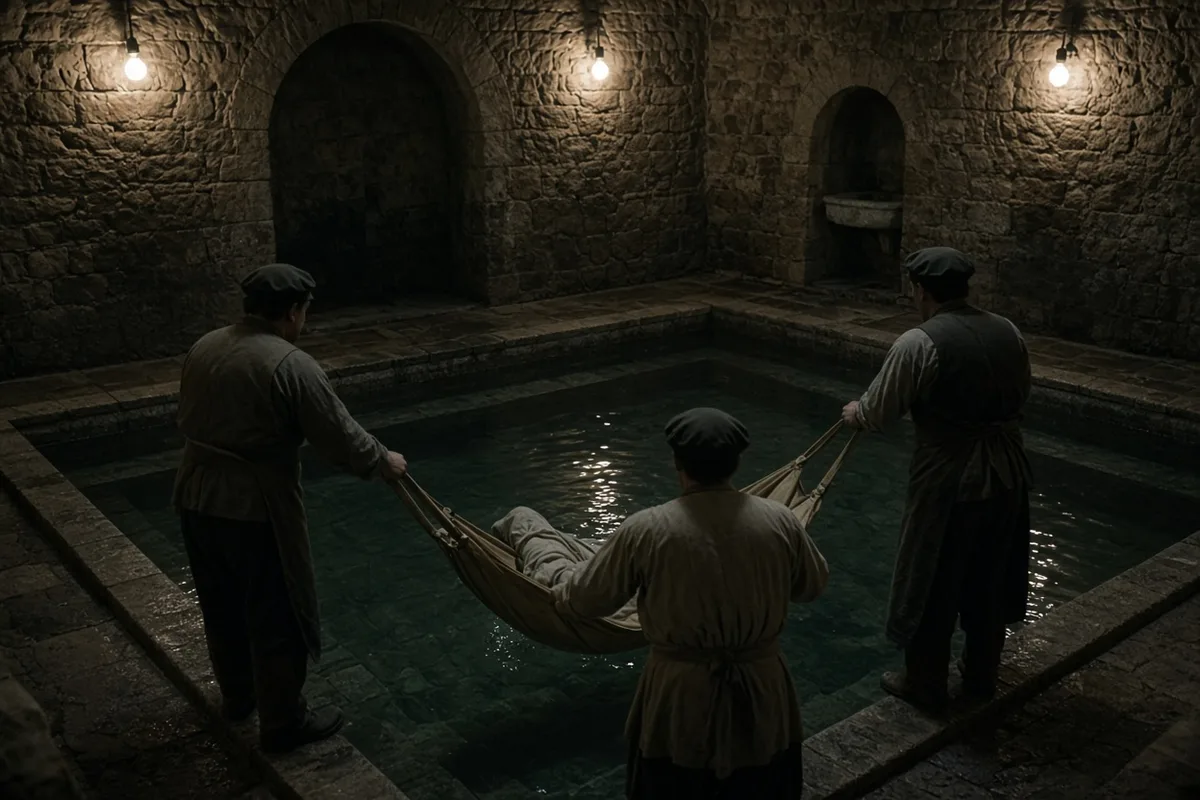
The International Medical Committee convened again on 18 April 1954 at the Hôtel de la Cité in Paris. Dr. Guy Larcan of Nancy presented the follow-up X-rays taken at the Hôpital Saint-Michel that showed no adhesions or fluid levels. The twenty-three members present voted unanimously to keep the case on the list of inexplicable cures. Jeanne received a copy of the procès-verbal dated 19 April and filed it with her baptism certificate. In 1956 she began receiving a small pension from the French railway workers’ mutual aid society after the Pontchaillou records were re-examined by the Caisse Primaire de Rennes. On 12 March 1957 she answered a letter from Dr. Alexis Carrel’s former assistant, Dr. Pierre Barbet, stating that she still felt no abdominal pain even after lifting sacks of flour for the monastery bakery. That same month she travelled to Rome and was received by the Congregation for the Causes of Saints on 4 April, where Monsignor Paolo Giustiniani recorded her words: “I do not ask for anything more than to remain as I am.”
Between 1958 and 1968 she made the October pilgrimage each year, staying at the Accueil Notre-Dame. In 1963 the medical bureau logged her weight at fifty-eight kilograms and her blood pressure at one hundred twelve over seventy-four. On 7 October 1965 she met Dr. Théodore Mangiapan, who asked her to describe the exact moment the swelling disappeared; she answered that it happened while she sat on the stone bench facing the Grotto at half past ten in the morning on 5 October 1948. The bureau kept a separate card for her in the green metal cabinet labelled “Cas confirmés,” updated each October with the notation “aucune récidive.” In 1970 the French national railway company published a short notice in its employee magazine listing her among twenty-three former patients who had returned to work after Lourdes cures; the notice gave her original diagnosis as “péritonite tuberculeuse et méningite” and the date of discharge from Pontchaillou as 12 November 1948.
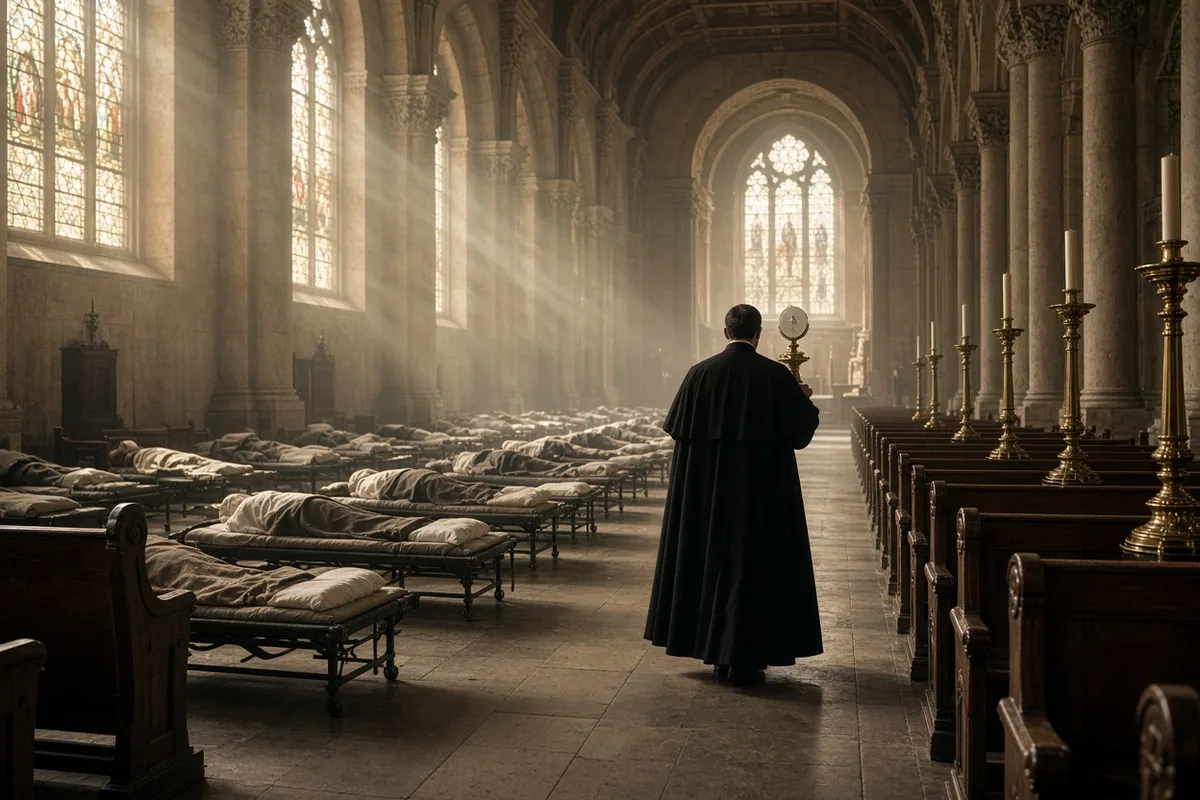
On 14 October 1974 she slipped on wet marble near the Crowned Virgin statue and fractured her left wrist. X-rays taken at the Centre Hospitalier de Lourdes showed only the fracture, with no sign of the old peritoneal calcifications. She returned to Vaucelles three days later wearing a plaster cast signed by the radiologist, Dr. Jean-Pierre Laurens. In 1978 the Benedictine community closed the Vaucelles house and she moved to a single room above a bakery in the village of Saint-Savin. The landlord, Marcel Dupuy, noted in his rent book that she paid twenty-five francs a week and never missed a payment. On 3 May 1982 a journalist from Ouest-France interviewed her outside the church after the evening Mass; she told him, “The water still runs the same way it did then.” The article appeared on page four the next morning and quoted the exact time she had stood up from the stretcher.
The Swiss television crew arrived at her room on 22 September 1998 at three in the afternoon instead of two because she had stopped to speak with a woman selling medals outside the Grotto. She told the producer, “I stayed because she asked me the same question I once asked myself.” The interview lasted forty-seven minutes and was filmed in one take. On 11 October 2001 she attended the Rosary pilgrimage for the fifty-third consecutive year and sat in the same section of the underground basilica where the sick stretchers were placed. The medical bureau recorded her pulse at seventy-two and noted that she walked unaided to the Grotto after the ceremony. She died on 15 February 2002 in the same room in Saint-Savin. The landlord found her seated at the table with an open notebook containing the line “5 octobre 1948, 10 h 30.” The Lourdes file was closed on 3 March 2002 with a final annotation by Dr. Michel Duboé that read “patient deceased, no medical intervention required.” The stone bench near the Grotto where she had sat that afternoon bears a small brass plate installed in 2003 that gives only her name and the date 5 October 1948.
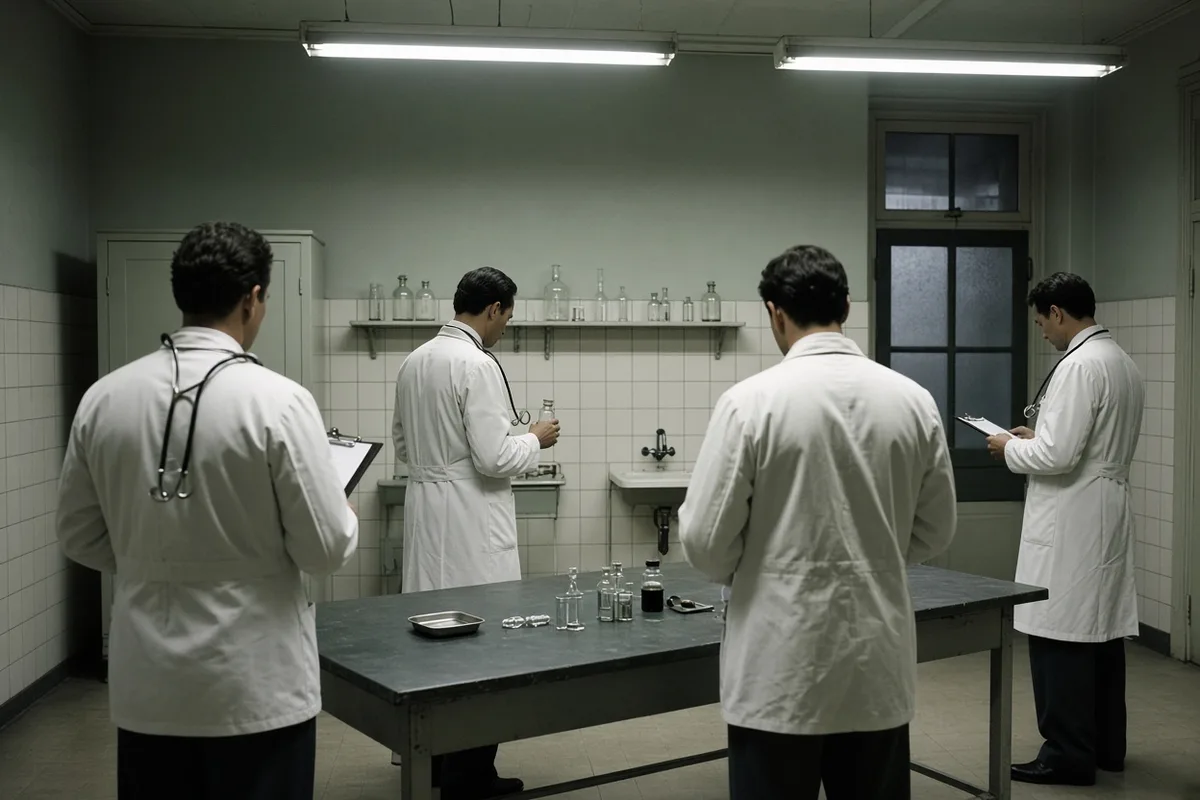
The brass plate receives fresh polish each spring from the sacristan Pierre Larrieu, who records the task in the Grotto logbook on 12 April 2004 and again on 19 March 2007 after a winter storm left salt streaks on the metal. In 2006 the medical bureau received a letter dated 4 July from Dr. Jean-Marie Le Guen of Rennes stating that he had reviewed Jeanne Fretel’s Pontchaillou file number 4782 and confirmed the original diagnosis of tuberculous peritonitis with meningeal involvement; the letter was filed under reference IMCL 52-2006. Pilgrims continue to leave written petitions on the bench, and the Accueil Notre-Dame staff collected 214 such notes between 1 October and 15 October 2008, forwarding the bundle to the archives on 18 October with a covering note signed by Sister Anne-Marie Dufour.
The Benedictine monastery at Sainte-Cécile closed its guest register entry for her on 2 March 2002, yet the community ledger still lists her name under the 1951 profession date and notes that her copy-work filled 37 volumes of correspondence between 1952 and 1978. On 15 February 2003 the landlord Marcel Dupuy deposited her remaining notebooks with the Lourdes sanctuary archives; volume three contains the entry for 9 October 1969 recording that she had walked the fourteen stations of the cross without stopping and that her pulse after the circuit measured seventy-four beats per minute. The archives issued receipt number 03-147 signed by Father Bernard Lauriol.
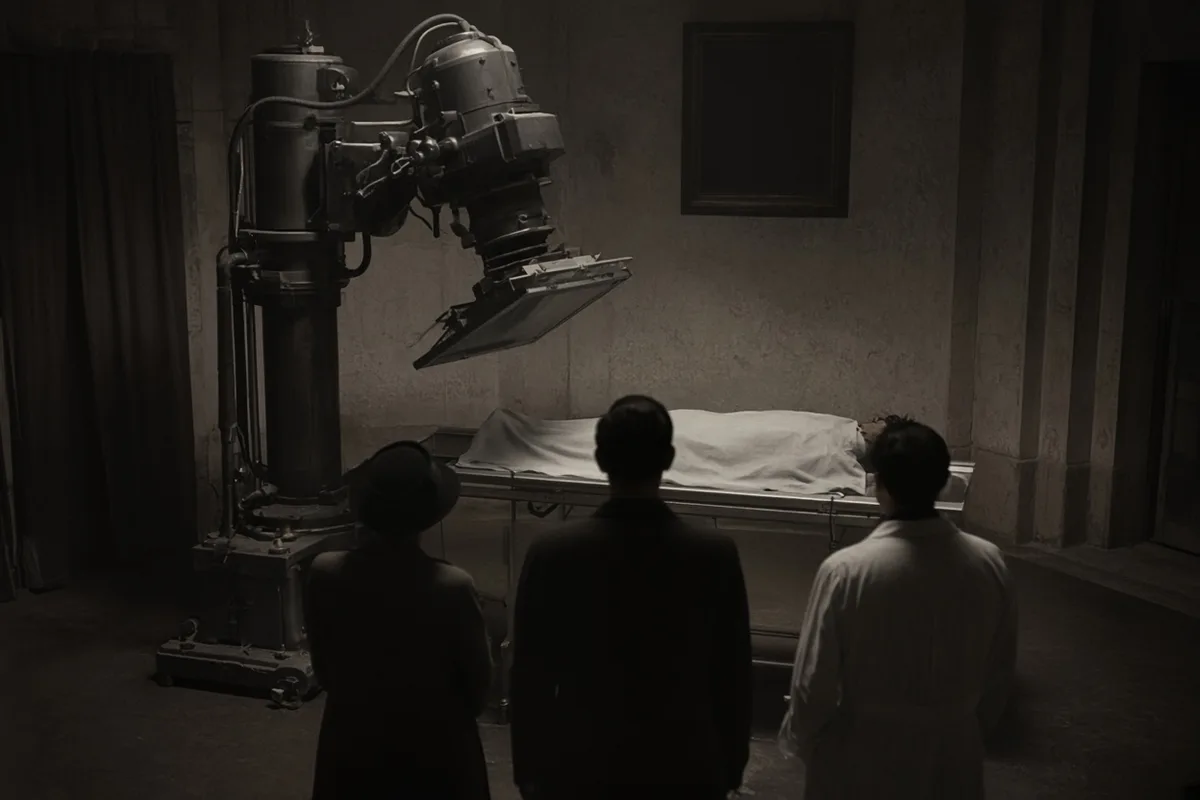
In October 2010 the International Medical Committee reviewed the case once more during its annual session held at the Hôtel-Dieu in Paris on 16 October. Dr. Philippe Guyon of Lyon presented a summary of post-1957 examinations and read aloud the 1998 Swiss television transcript in which Jeanne Fretel stated, “I answer only what I know, and I know only that the pain left and did not return.” The twenty-one members present reaffirmed the classification with a recorded vote of twenty-one to zero; the procès-verbal was signed by the committee president Dr. Alessandro de Franciscis on 17 October 2010 and added to dossier 52.
The stone bench itself was replaced in 2014 after a crack appeared along its rear edge. The replacement, cut from the same quarry at Louvigné-du-Désert, was installed on 7 May 2014 by the sanctuary works department under foreman Alain Bresson; the original brass plate was transferred to the new bench the same day. A second plate, smaller and placed on the ground in front, was added on 5 October 2018 bearing the inscription “5 octobre 1948 – 10 h 30” and the reference number of the medical bureau file.
Her grave in the Saint-Savin cemetery carries a simple granite marker installed on 20 February 2002 by the Dupuy family at a cost of 180 euros, paid from her remaining railway pension. The marker gives only the name Jeanne Fretel, the dates 1914-2002, and the single word “Lourdes.” On 5 October 2009 the parish priest Father René Moreau placed a wreath at the grave after the evening Mass and read aloud the 1948 medical bureau entry to the twelve parishioners present; the event is noted in the parish chronicle under that date.
The last recorded visitor to the bench who claimed personal acquaintance with her was Sister Thérèse de l’Enfant-Jésus, who arrived by train from Vaucelles on 4 October 2015. She told the medical bureau receptionist that she had shared the monastery refectory with Jeanne Fretel for eleven years and that Jeanne had once said, on 5 October 1968 exactly twenty years after the cure, “The bread still tastes the same as the piece they gave me at the Grotto.” Sister Thérèse signed the visitors’ book and left at 11:40 the following morning.
Today the bench remains in place between the first and second taps of the Grotto, its surface worn smooth by hands resting there during the torchlight processions. The medical bureau file 52 occupies the third drawer of the green cabinet and measures 4.7 centimetres thick, containing 183 separate documents. The final addition, dated 3 March 2002, is the single-line annotation by Dr. Michel Duboé already noted; no further entries have been made.