


Jim Elliot's Killers Become His Family's Brothers
The radio crackled at eleven that morning, and I was the one standing closest to it, coiling a length of cable I had no reason to be coiling except that my hands needed something to do while we waited for Johnny Keenan to come back on the air. Marj Saint was three feet away, and three other women were pressed in around her, and none of us breathed right until his voice came through again, thin and flattened by static, telling us what he could see from the Piper Cruiser as he banked low over the brown water of the Curaray.
I had been at Shell Mera long enough to know the sound of a pilot trying to keep his voice level. Johnny had that sound now. He said he saw the stripped skeleton of the other yellow plane sitting in the shallows, and nothing moving anywhere near it, and then, a quarter mile downriver, he said he saw khaki trousers and a white shirt, a man face down in the current, not swimming, not fighting the water at all.
Marj did not cry out. I remember that most, because I had braced myself for it. She simply went very still, the way the jungle goes still before a downpour, and somebody's hand found her elbow, and the radio kept talking into the room as though it had no idea what it had just done to us.
Word came slower after that, the way bad news does when there is a river and a hundred miles of green between you and the truth. Quichua Indians who had known Ed McCully identified him by sight before nightfall on the Wednesday. The current would not give his body up. They left his size thirteen and a half shoe on the bank, the way you'd leave a marker on a trail, and they brought his watch back instead, and somebody had to carry that watch the rest of the way to Shell Mera, and I remember thinking a wristwatch had never weighed so much in anyone's hand.
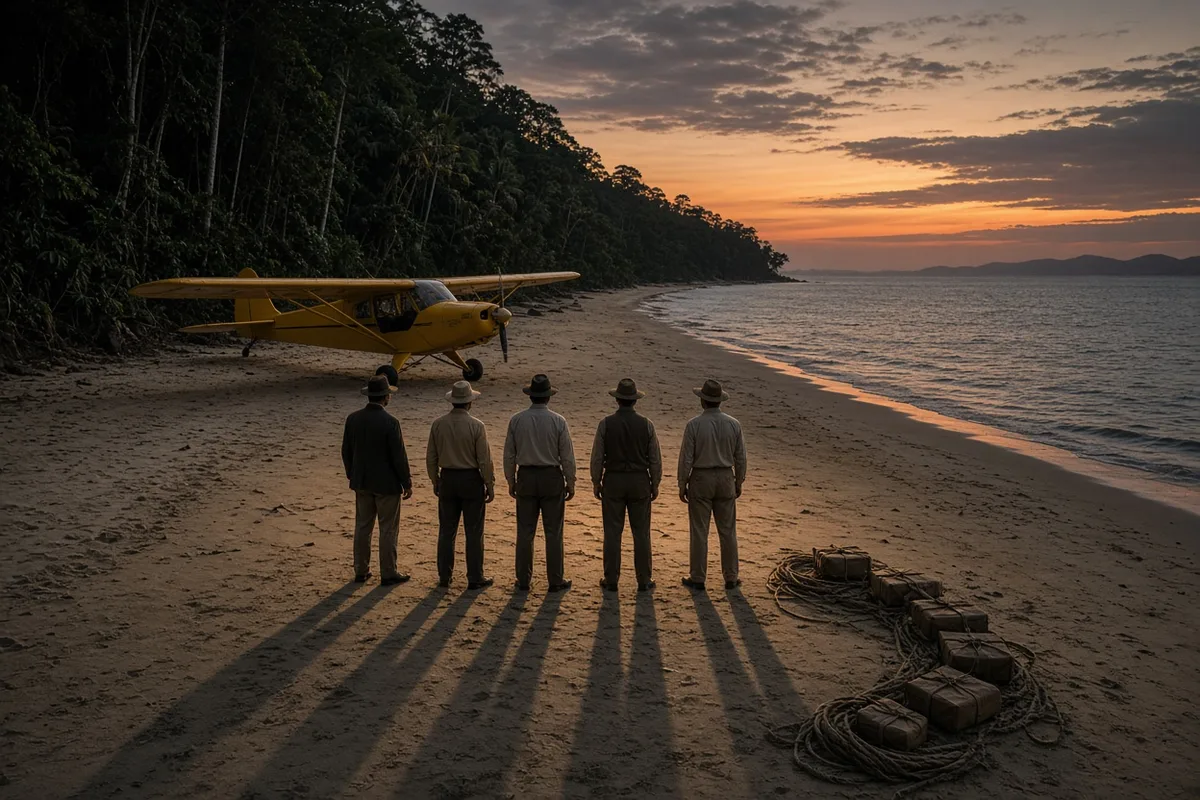
I had watched all five of those men load a plane at one time or another, and none of it seemed possible sitting in that room. Nate Saint I knew best, because he was always tinkering with something — a wing strut, a radio bracket, a bucket-drop rig he'd built himself to lower gifts on a long rope while circling a jungle clearing at low altitude, letting the plane's own turning motion swing the bucket down to earth without ever landing. He built that thing with the patience of a man who believed there was a way through anything if you were willing to keep trying. Jim Elliot I knew as the one who prayed the longest and laughed the loudest, and Pete Fleming was quieter, always with a book, and Ed McCully carried himself like the law student he'd once been, and Roger Youderian had the bearing of a man who had jumped out of airplanes over Europe during the war and was not afraid of much on the ground. Between the four of them and a fifth, they had spent thirteen flights that autumn dropping gifts down into the Auca clearings — a cooking pot with ribbons tied to it so it would flutter as it fell, buttons, shirts, an axe head, knives, photographs of themselves so the Waorani could see the faces behind the gifts. The Indians had sent things back up on the same line — a headband, woven thread, a smoked monkey tail — and every man at that base had allowed himself, cautiously, to hope.
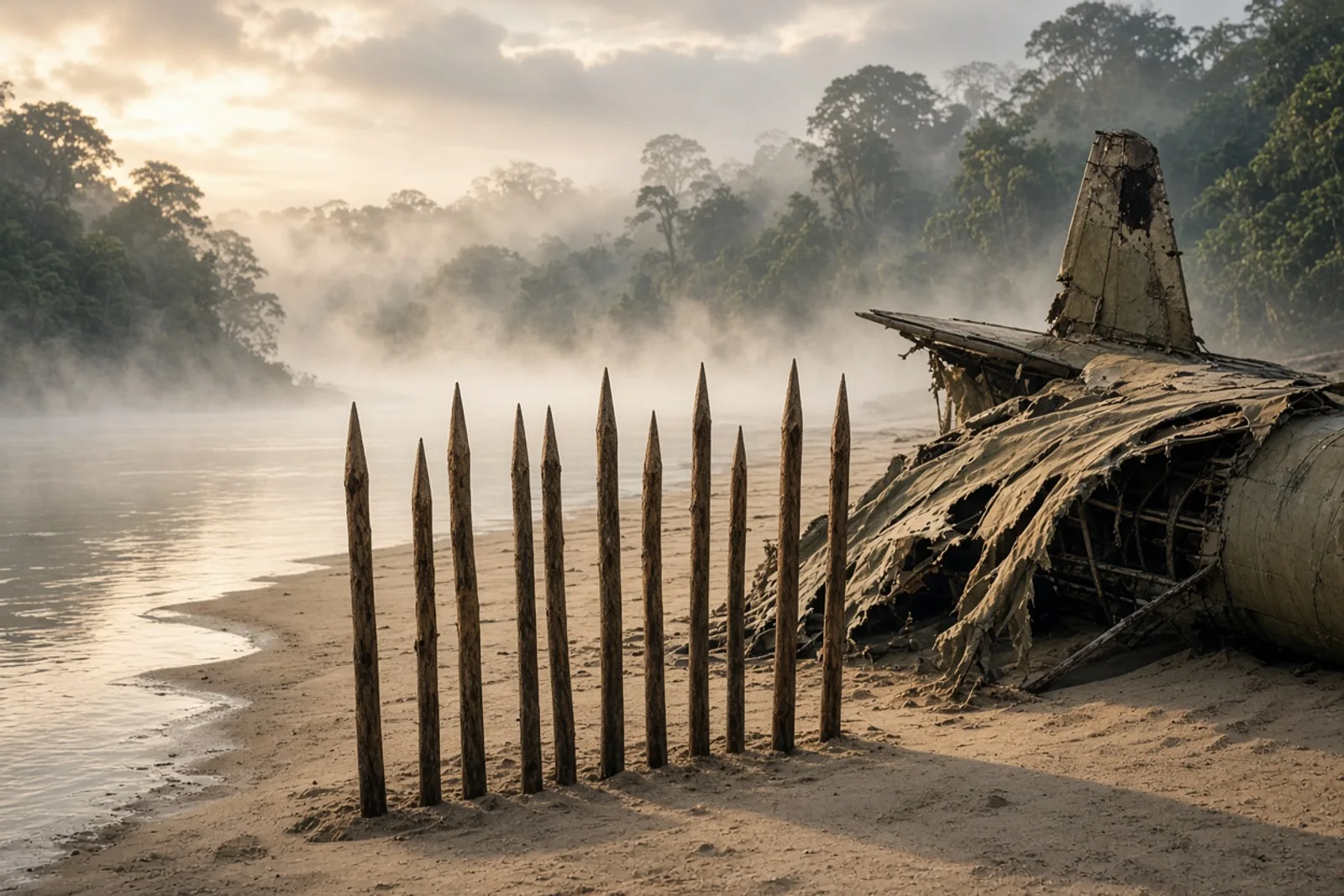
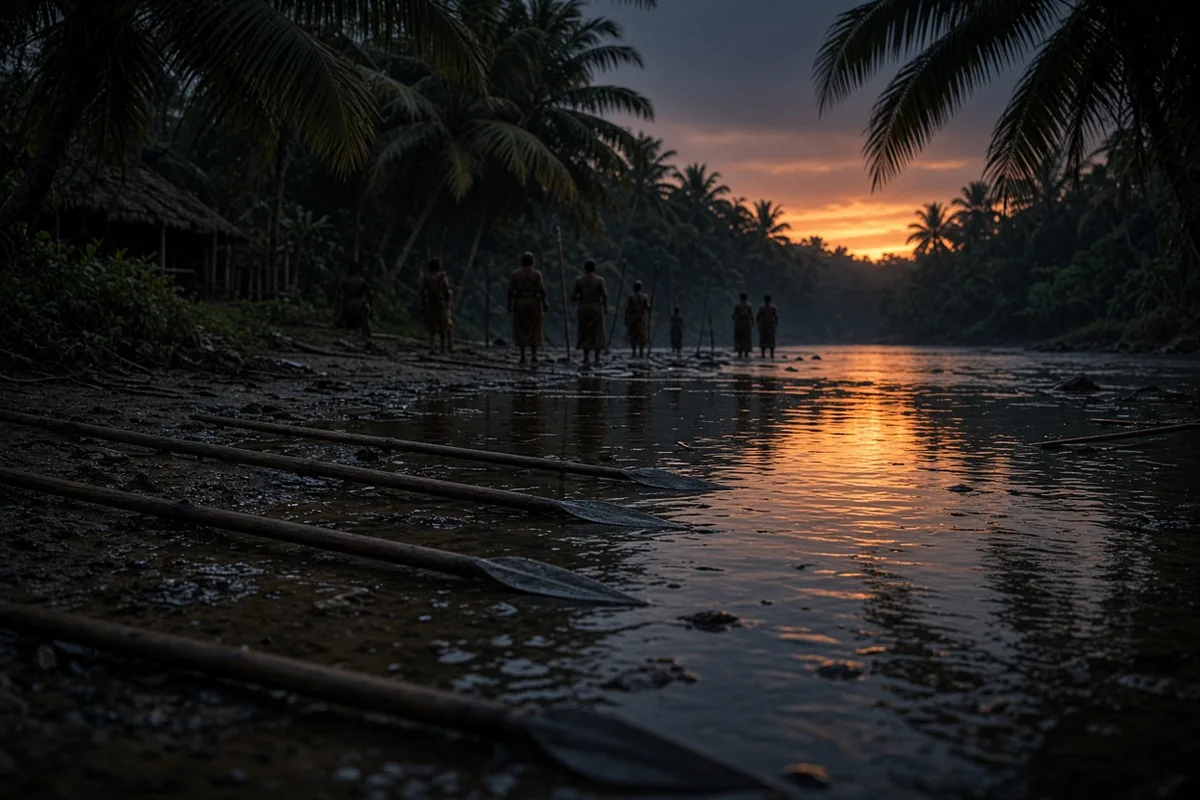
On Friday the thirteenth I was part of the group that went in on foot and by canoe, twenty-five miles of jungle that swallowed the trail behind us as fast as we cut it. We met Ecuadorian soldiers coming the other way, and more Quichuas, and an American military officer, and a photographer from Life magazine named Cornell Capa who kept his camera dry under his jacket even when the rest of him wasn't. We found the beach they had called Palm Beach. We found an overturned pot with beans still in it, cold, untouched, exactly the kind of small ordinary object that undoes a man faster than the larger horror does. And in the water, weighted down or simply too heavy with grief to rise, we found four of them — Roger Youderian, Pete Fleming, Jim Elliot, Nate Saint.
I will not describe what four days in a tropical river does to a body, except to say that the men beside me, hardened as they were, turned their faces away more than once, and that some of the men still had spears standing up out of them, eight feet of chonta wood driven through cloth and skin as if the river itself had grown thorns. We buried what we could just inside the treeline, working fast, because the sky had opened into one of those downpours that turn jungle paths into rivers themselves within minutes, and I remember the sound of shovels in mud competing with the sound of rain on leaves, and nobody speaking except to give directions.
They were young. Twenty-seven to thirty-two, all of them husbands, all of them fathers — eight children among the five families, the oldest barely school age, and one more baby not yet born who would arrive within the month and never know a father except through photographs. I carried that fact back out of the jungle with me the way you carry a stone in your boot, feeling it with every step and unable to stop.
Three of those men — Saint, Elliot, and McCully — had known each other years before any of us met them, back at a college in Illinois where Saint had spent a single year and where Elliot and McCully had been the kind of men everybody on campus already had opinions about, athletes and jokers and, underneath all that, men who prayed with an intensity that made older missionaries slightly uneasy. Fleming had joined them later, and together the four had begun to talk, quietly at first, about a tribe the lowland Quichua called Auca — savage — a name given by outsiders that told you more about the outsiders' fear than about the people themselves. Perhaps five hundred of them, scattered across a stretch of forest not much larger than the state of Connecticut, moving their clearings often enough that no one outside the tribe could reliably find them twice. Everyone who tried was met with spears. A Swedish-led expedition years earlier had been turned back the same way, no one hurt, but no one welcomed either.
The four missionaries thought the airplane might succeed where a machete trail never would. Through the autumn of 1955, gift by gift, flight by flight, they believed they were building something. On the ground they called it Operation Auca, half in earnest and half as the kind of self-deprecating joke men make about their own dangerous hopes. On January 8, 1956, they had waded ashore at Palm Beach to meet three Waorani face to face for the first time. Within days, seven tribesmen had come out of the forest with spears instead of open hands, and the operation that had taken thirteen flights and months of careful, hopeful planning to build was over in the time it takes a spear to fly.
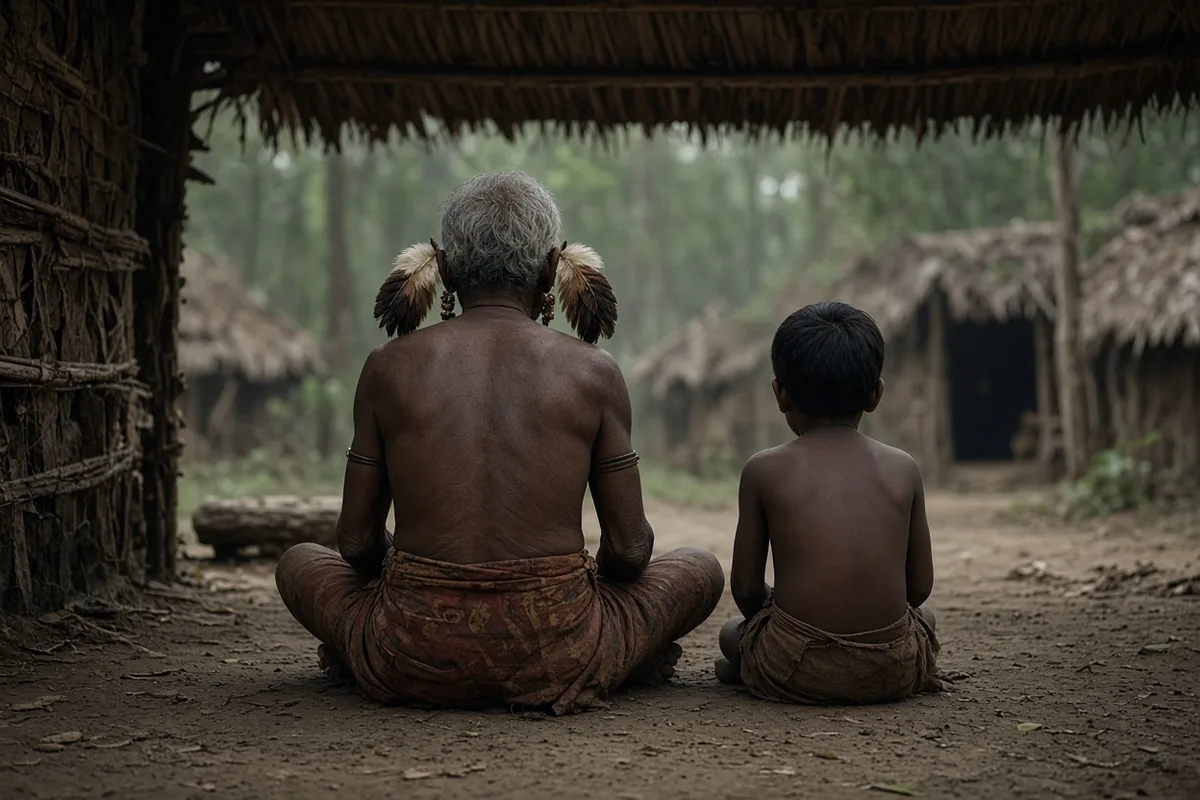
I flew supply runs out of Shell Mera for another two years after that, watching Marj Saint raise her children and watching a young widow named Elisabeth Elliot do the same, and none of us expected what came next, because grief does not usually rearrange itself into welcome. But Rachel Saint, Nate's sister, kept at the Auca language the way her brother had kept at engines, refusing to let a problem stay unsolved. She had help from a Waorani woman named Dayuma, who had left the tribe years before and who had come, in that strange and particular way people do, to trust the God the missionaries had died carrying toward her people.
In November of 1957 two Quichua men came to the mission station at Arajuno with news that two Auca women had appeared at a Quichua settlement downriver. Elisabeth Elliot went to them immediately. Their names were Mankamu and Mintaka, and Mintaka, I was told, was the older of the two who had actually stood on Palm Beach the week the men died. The women went back with Elisabeth to Shandia, and there, over the following months, three Auca women who had not seen one another in more than a decade — Dayuma, Mankamu, Mintaka — sat together and began, slowly, to talk about going home, and about bringing outsiders with them.
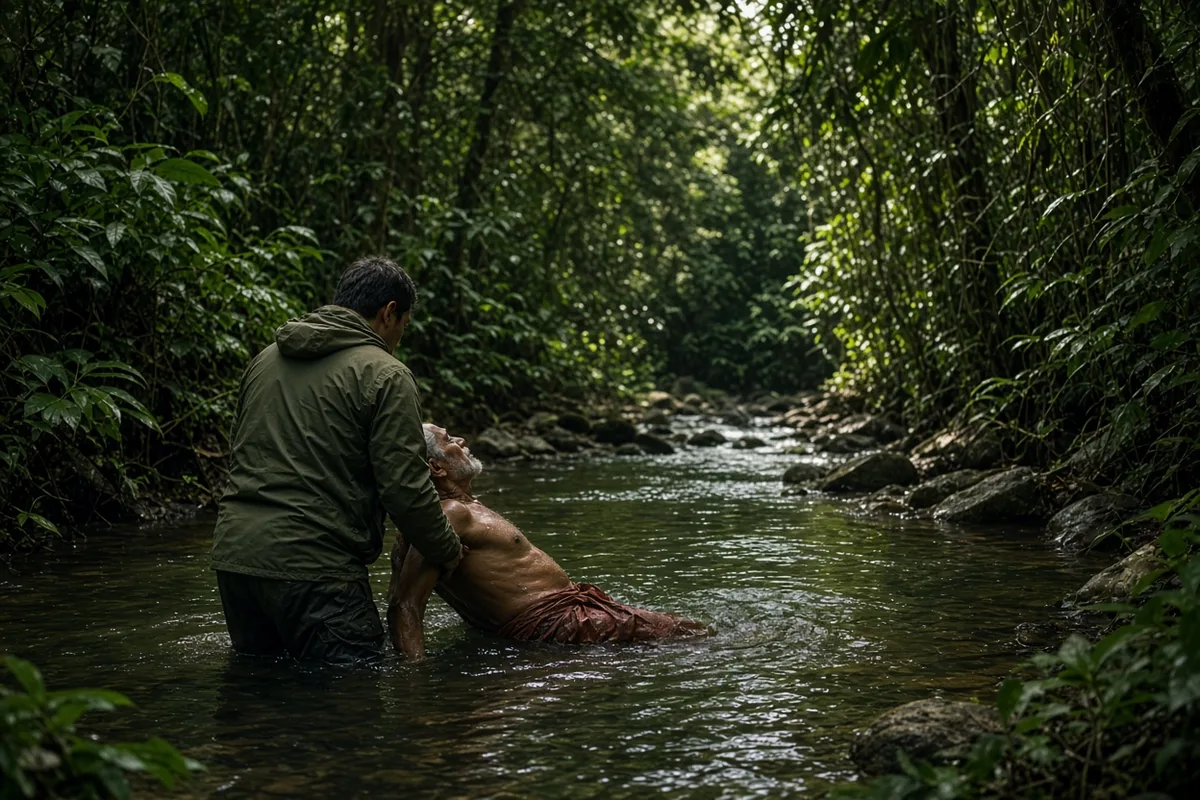
On September 3, 1958, they went in. Three weeks later they came out again, to Arajuno, where Marj Saint and Elisabeth Elliot were waiting, and this time they did not come alone. Seven Waorani came with them, carrying an invitation none of us at the base fully believed until we saw it written into what happened next: Rachel Saint and Elisabeth Elliot, with Elisabeth's small daughter Valerie, not yet three years old, were invited to live inside the tribe.
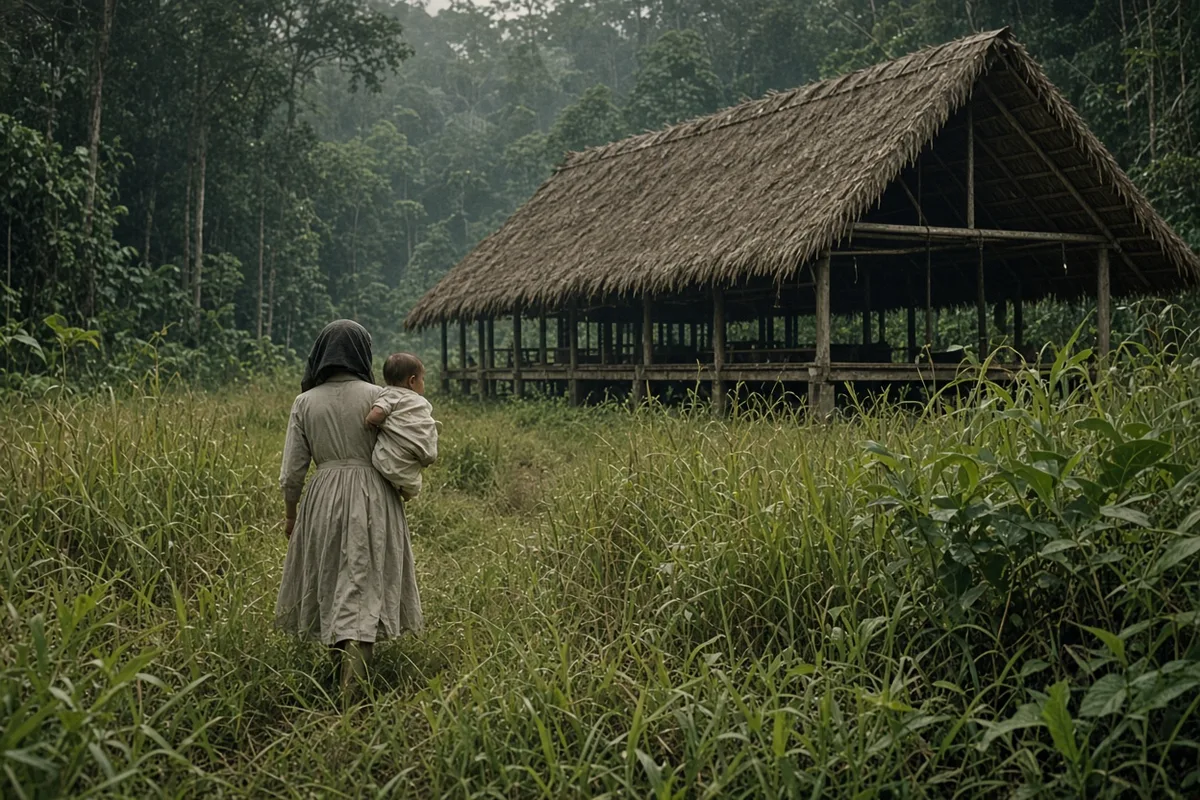
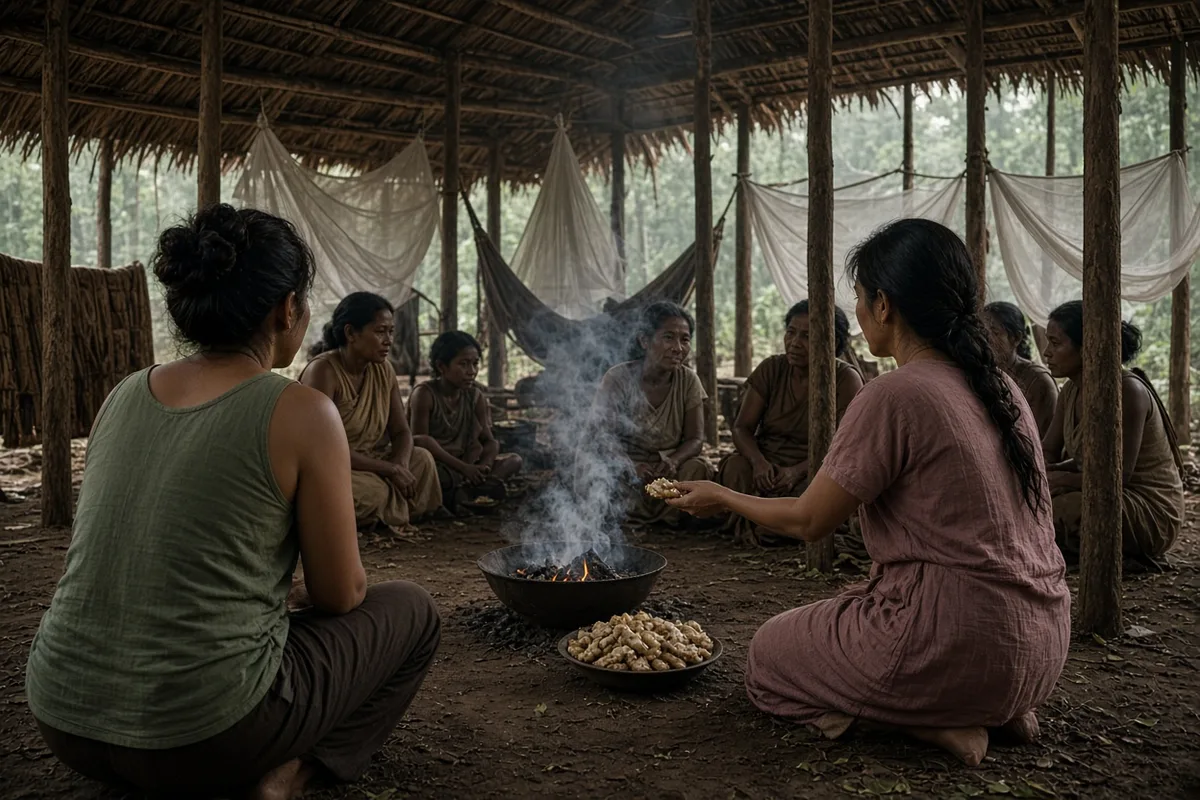
They went in on October 8, 1958. I helped carry supplies partway on that trip and turned back before the final stretch, because that door was not mine to walk through. What I heard afterward, from people I trusted, was that the Waorani received the two women and the child as family, building them a house of their own, sharing meat and manioc, treating them as sisters rather than strangers. Word came back, too, of why the killings had happened at all — the tribe had believed the men were cannibals, some threat come up out of the river to eat them, and it was fear, plain fear, that had driven seven men to raise their spears on Palm Beach. They called it, later, a mistake.
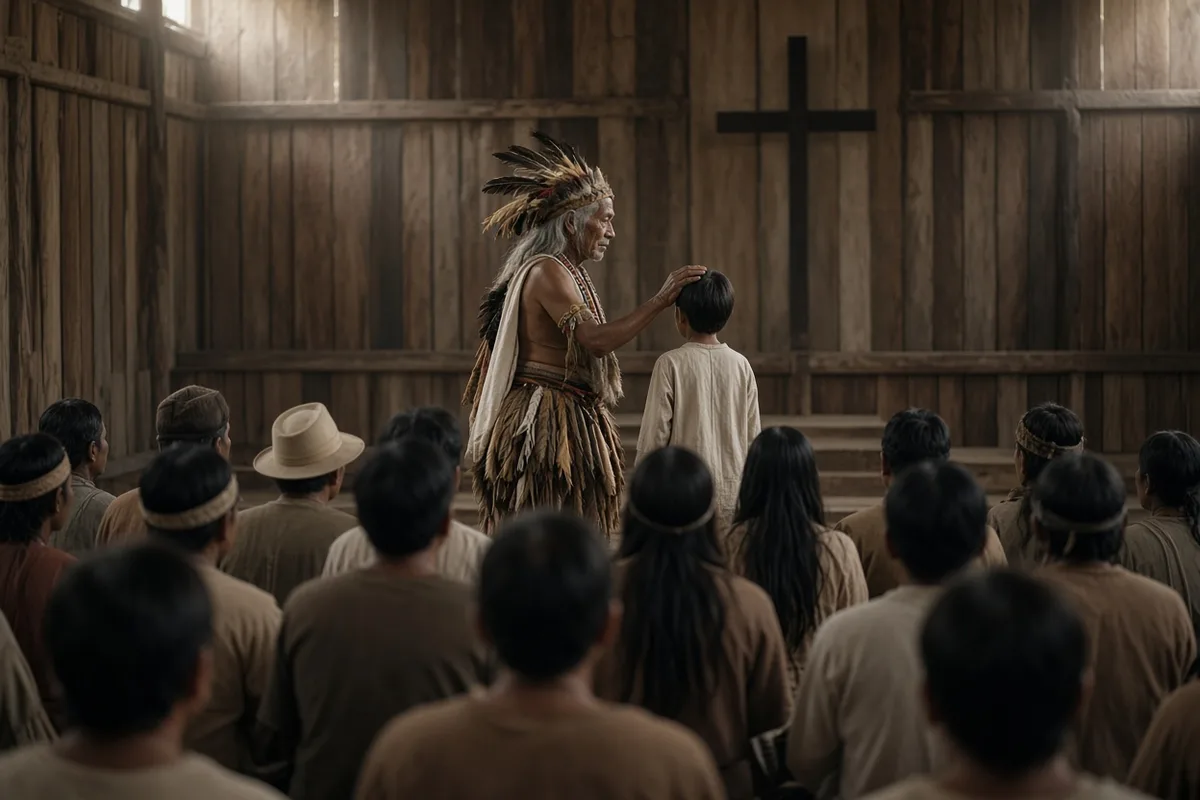
I heard that within that clearing on the Tiwaeno River, Elisabeth Elliot lived not ten feet from two of the seven men who had killed her husband — Gikita among them — and that Gikita himself helped roast a plantain for Valerie, the same little girl who had been ten months old when her father died and would grow up calling that man's sons her playmates. Fifteen or twenty Waorani moved through that clearing on any given day, and the men went out with blowguns for meat, and the missionary who had buried her husband under a sheet of jungle rain now sat in a leaf house built by the very hands that had ended his life.
By the time I heard Mrs. Elliot had returned briefly to the United States, to an apartment near the ocean in New Jersey, working on a third book with a small tape recorder that had spent a year absorbing jungle heat and jungle rain, Valerie was nearly five and had no memory of her father at all, only his photograph propped up where she could see it. Royalties from the first book, the one telling the whole story from the gift drops to the spears to the leaf houses, went into a foundation the five widows had set up together, to educate the children who would grow up knowing their fathers only through other people's memories.
I think sometimes about that overturned pot of beans on Palm Beach, cold in the mud, and about the cooking pot with ribbons that Nate Saint had lowered from his circling plane months before, bright and turning in the wind, meant as a kind of handshake across a silence five hundred years old. Both pots sat in the same stretch of riverbank eventually. One was an offering. One was what was left after the offering was refused. And past both of them, past the spears and the four days in brown water and the shovels working fast against the rain, there is a picture I still hold clearer than the radio call that started it all — a grown man named Gikita, spear-hand gone quiet, turning a plantain over a fire for a little girl who could not remember why any of it should have been impossible.