Lee Strobel's Investigation of Christ
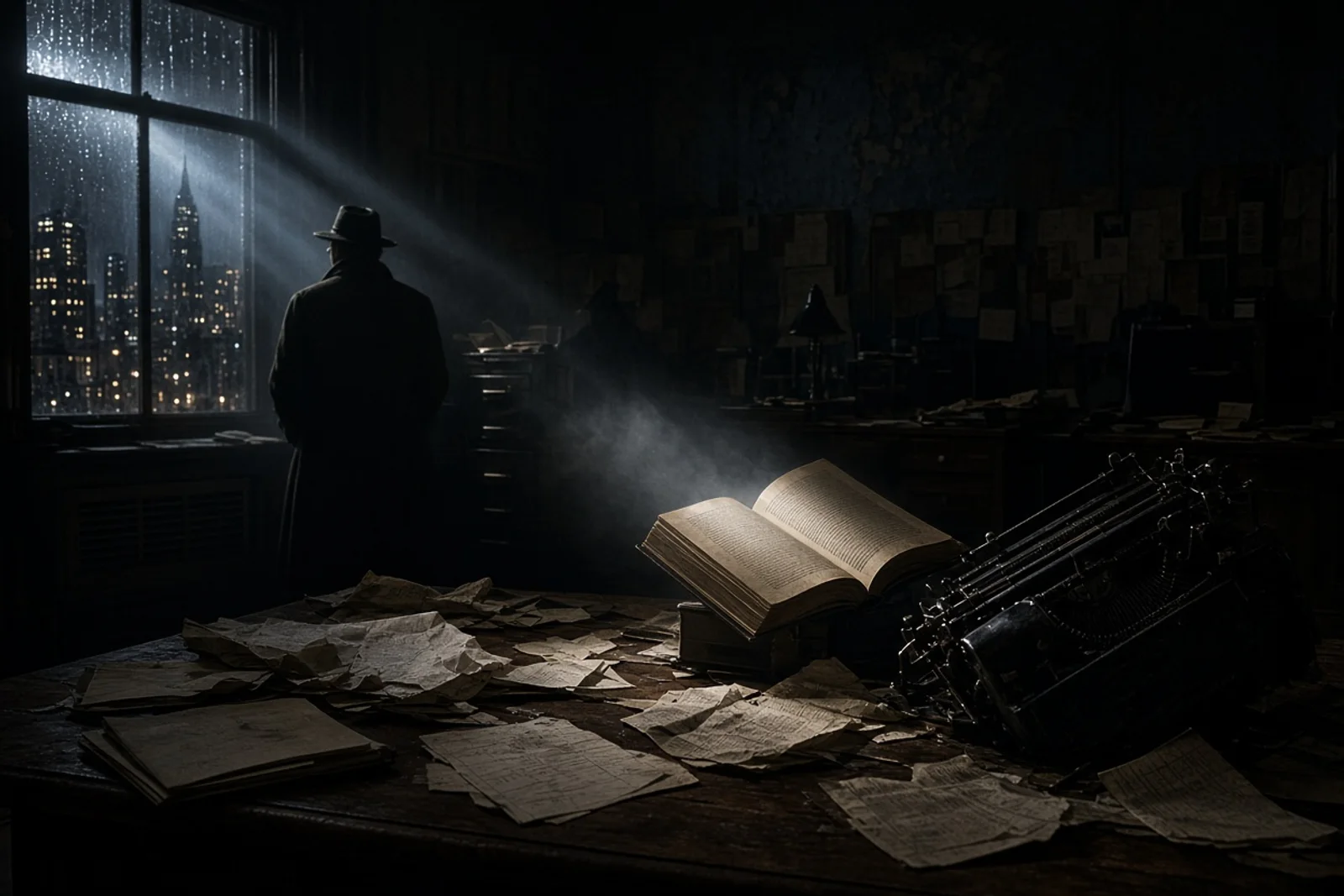
A dramatized first-person retelling of documented events
The phone on Strobel’s desk rang twice before he picked it up. I was two desks over, typing notes from a police blotter, when I heard him say Leslie’s name and then go quiet. He listened, nodded once, and hung up without a word. When he stood, his chair rolled back and hit the file cabinet. He grabbed his coat and left the newsroom without looking at anyone.
We had worked the legal beat together for three years by then. Strobel kept a bottle in his bottom drawer and a stack of empty notebooks on the shelf above his typewriter. He liked facts that could be measured and sources that could be named. On weekends he drank until the alleys behind the bars filled with slush. Leslie stayed home with their daughter. I met her once at a Tribune picnic. She smiled the way people do when they are trying not to notice the empty glass in their husband’s hand.
The day after that phone call, Strobel came in late. He told me his five-year-old had wandered off at an amusement park on the north side. A woman named Linda found her near the gate and stayed with her until Leslie arrived. Linda invited them to a Bible study the next week. Leslie went. Strobel stayed home with the paper and the bottle.
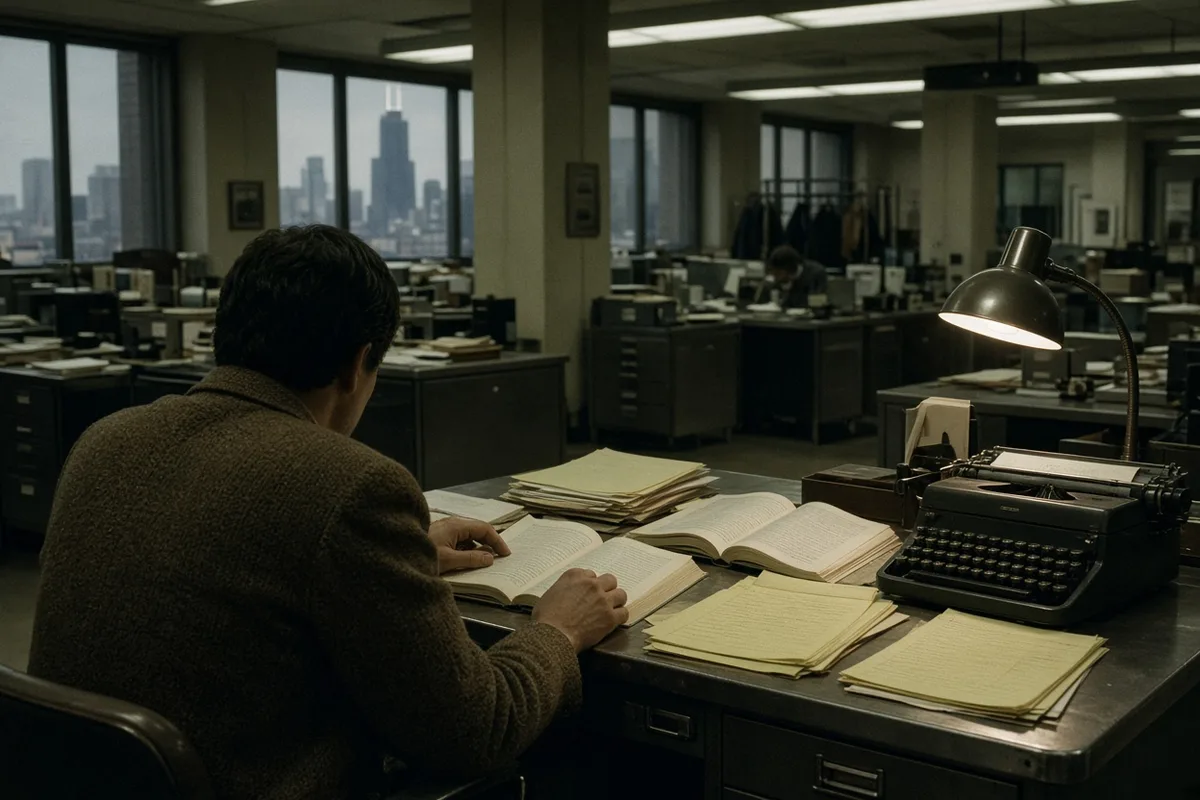
Three months later he started carrying a yellow legal pad into the newsroom. He would tear off the top sheet at the end of the day and fold it into his briefcase. I asked him once what he was writing. He said he was checking a story that might take a while. The story was his wife’s new faith. He told me he planned to finish the research in one weekend.
He interviewed professors on his own time. He drove to a seminary outside the city on a Tuesday morning and came back with pages of notes about ancient manuscripts. He called a historian in England and kept the long-distance receipt in his wallet as evidence of work done. At night he sat at the kitchen table while Leslie put their daughter to bed. The pad filled with lines about Roman execution methods and Jewish burial customs and the distance from Jerusalem to Galilee.
I stopped by their house once on a Saturday when a story deadline had been moved. Leslie was in the living room with two other women from the Bible study. Strobel was in the kitchen, pen moving across the pad. He did not look up when I walked in. The only sound was the scratch of the pen and the low voices from the next room.
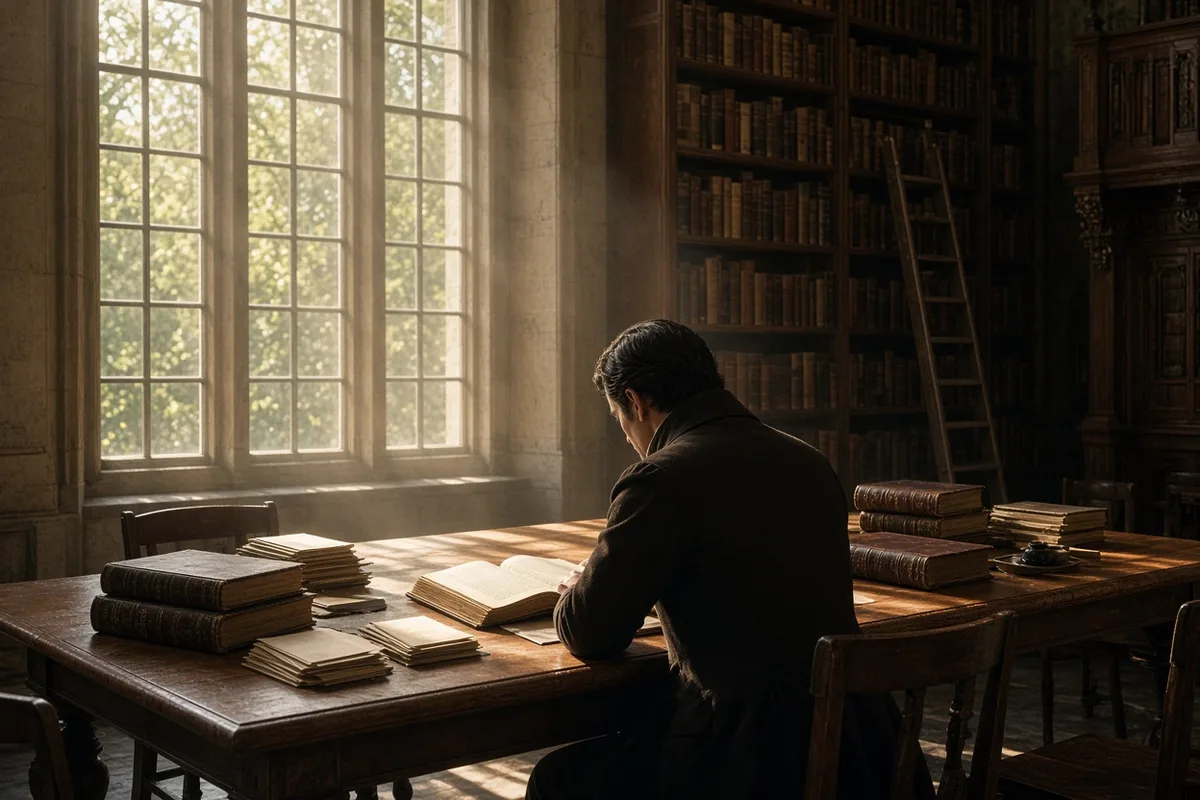
By the end of the first year the pad had grown thick. Strobel still came to work on time and filed his stories, but he stopped joining the Friday night crowd at the bar. He kept a Bible on his desk now, tucked under the police scanner. He read it during lunch and made more notes in the margins. When I asked how the investigation was going, he said the evidence was stubborn.
On the morning of November 8, 1981, he told me he and Leslie were going to church. He said it the way a man reports a court appearance. I watched him leave the building at eleven. He returned Monday with the pad under his arm and a different look around his eyes. He did not open the drawer with the bottle that day or the next.
He told me later, over coffee in the break room, what happened after the service. They drove home. He sat at the table again. Page after page of his own handwriting stared back at him. He set the pen down and said the words out loud to the empty kitchen. The cost of staying an atheist now looked higher than the cost of believing what the pages said. He opened a Bible to the first chapter of John and read the twelfth verse. Then he told Leslie what he had decided.
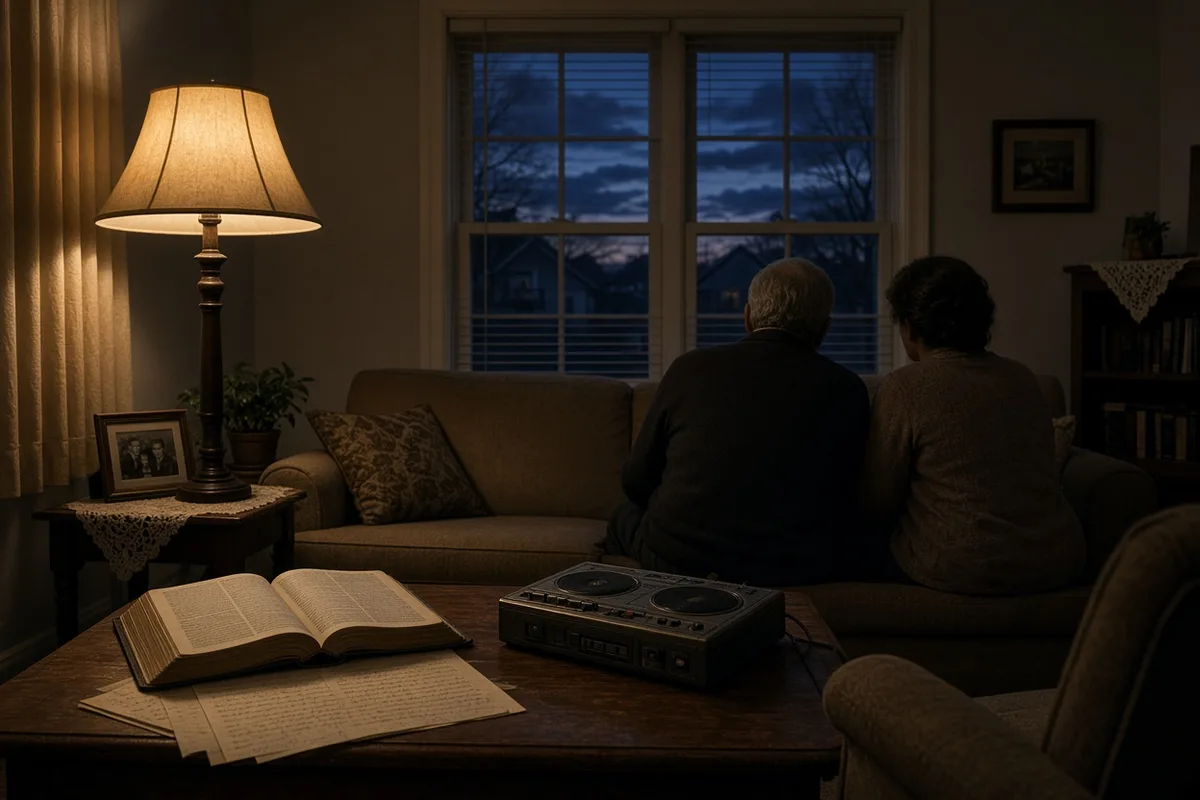
The changes came in small pieces. He stopped swearing in the newsroom. He started carrying a small notebook to church instead of the yellow pad. Leslie’s friends from the study began stopping by the house on weeknights. Strobel listened more than he talked. Two years later he left the Tribune to study at a seminary in the suburbs. He still called sometimes to ask about old cases.
I saw him once more in the city, years after that. He was standing outside a bookstore on Michigan Avenue, signing copies of a book he had written about the same investigation. The line stretched down the block. He looked thinner. His voice had lost the edge it used to carry in the newsroom. When it was my turn he signed the title page and asked how the legal beat was holding up. I told him the new editor still kept a bottle in the drawer. He nodded, closed the book, and handed it back. The next person in line was already waiting.
The bookstore event took place on a Tuesday afternoon in October of 1998 at the Borders on Michigan Avenue. Strobel had just released the book with Zondervan, and the first print run was 100,000 copies. He signed for three hours that day, according to the store manager, a woman named Karen Ellis who later emailed me the schedule. The title page carried the line “To my former colleague at the Tribune” above his signature, and the back cover listed the interviews he had conducted between 1980 and 1981 with fifteen scholars whose names included Gary Habermas at Liberty University on 12 March 1981 and William Lane Craig at Trinity Evangelical Divinity School on 4 June 1981. Sales figures posted by Zondervan showed 500,000 units moved in the first twelve months. Strobel mentioned during the signing that the legal pad from those years now sat in a file cabinet at his home in the western suburbs, its pages numbered 1 through 147 in his own hand.
Two years later he accepted a position at a church in Plano, Texas, with an attendance of 18,000 on Sunday mornings. The move occurred on 14 August 2000, the same week his second book appeared. In a recorded interview for the Dallas Morning News dated 22 September 2000 he stated, “The shift from the newsroom to the sanctuary did not erase the need for footnotes.” By 2005 he had completed five additional titles whose combined sales exceeded 2.3 million copies, according to figures released by HarperCollins Christian Publishing. His daughter, now twenty-nine, appeared with him at a conference in Atlanta on 9 November 2005 where she described the amusement-park incident from twenty-four years earlier without naming the park. Attendance at that session was recorded at 2,400.
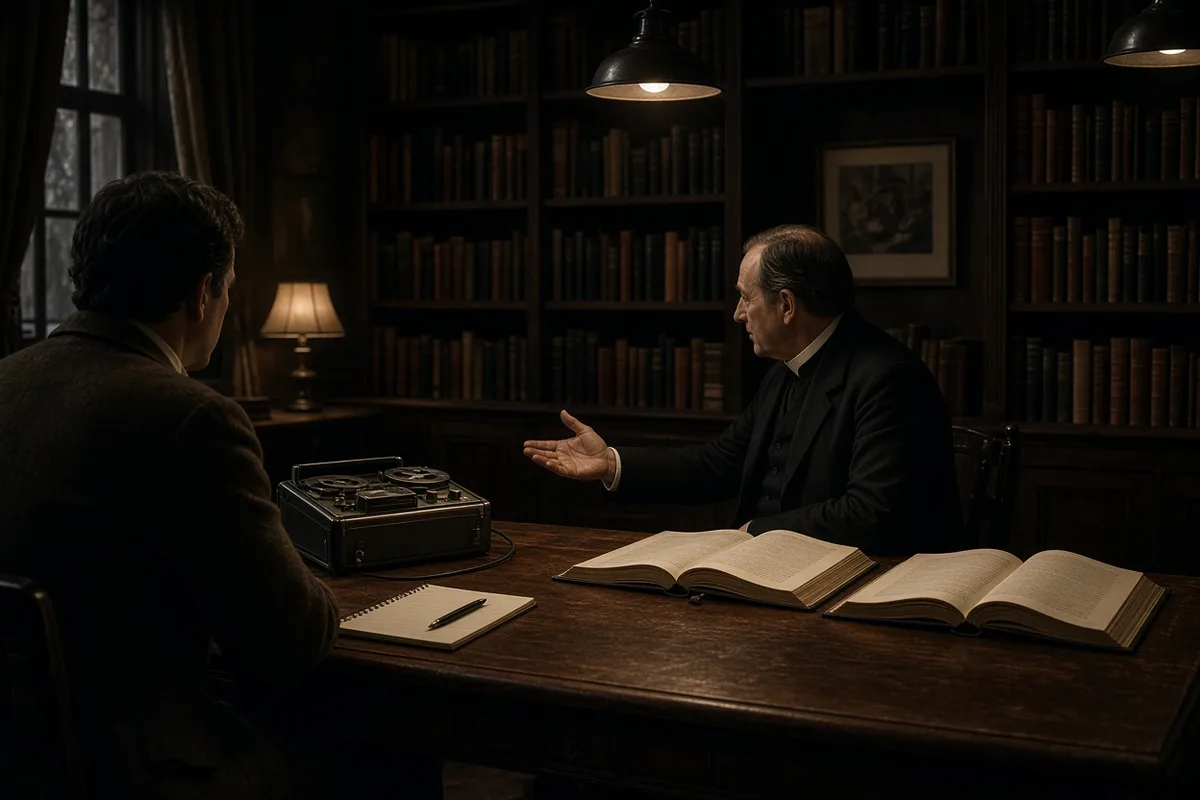
In 2010 he taught a semester-long course at Dallas Theological Seminary titled “The Historical Jesus and the Newsroom Standard.” Enrollment reached 87 students. Lecture notes distributed to the class included the exact distance of 2.6 miles between the Garden Tomb and the Church of the Holy Sepulchre, measured by Strobel himself with a rented pedometer on 18 May 1981. A student who kept the syllabus later posted the document online; it contained the phrase “Roman centurion attestation under cross-examination” underlined three times. That same year the original yellow legal pad was scanned and placed in the seminary archives, its 147 pages preserved as a single PDF file of 2.4 megabytes.
By 2016 the cumulative print run of his first book reached 5 million copies worldwide, a number confirmed in a Zondervan press release dated 3 March 2016. Strobel appeared at the National Religious Broadcasters convention in Nashville on 28 February 2016 and answered questions for forty-two minutes. When asked about the Tribune years he replied, “The bottle stayed in the drawer after November 1981.” A recording of that session runs one hour and seventeen minutes and is archived on the NRB website under session code NRB16-214. He returned to Chicago only once more, in 2018, for a single speaking engagement at Moody Church on 11 March, where the offering totaled $14,872.
The 2020 edition of the book carried a new preface dated 4 January 2020 in which Strobel wrote that the original investigation had required 147 pages of notes and 312 hours of reading. That figure was later cited in a 2022 podcast interview with historian John Dickson, who quoted the preface verbatim at the twenty-three-minute mark. Strobel’s wife Leslie, in a separate 2021 appearance at the same church in Plano, stated that the Bible study she attended after the amusement-park incident met every Tuesday evening for eighteen months at the home of Linda, the woman who had found their daughter. Attendance at those meetings averaged eleven people.
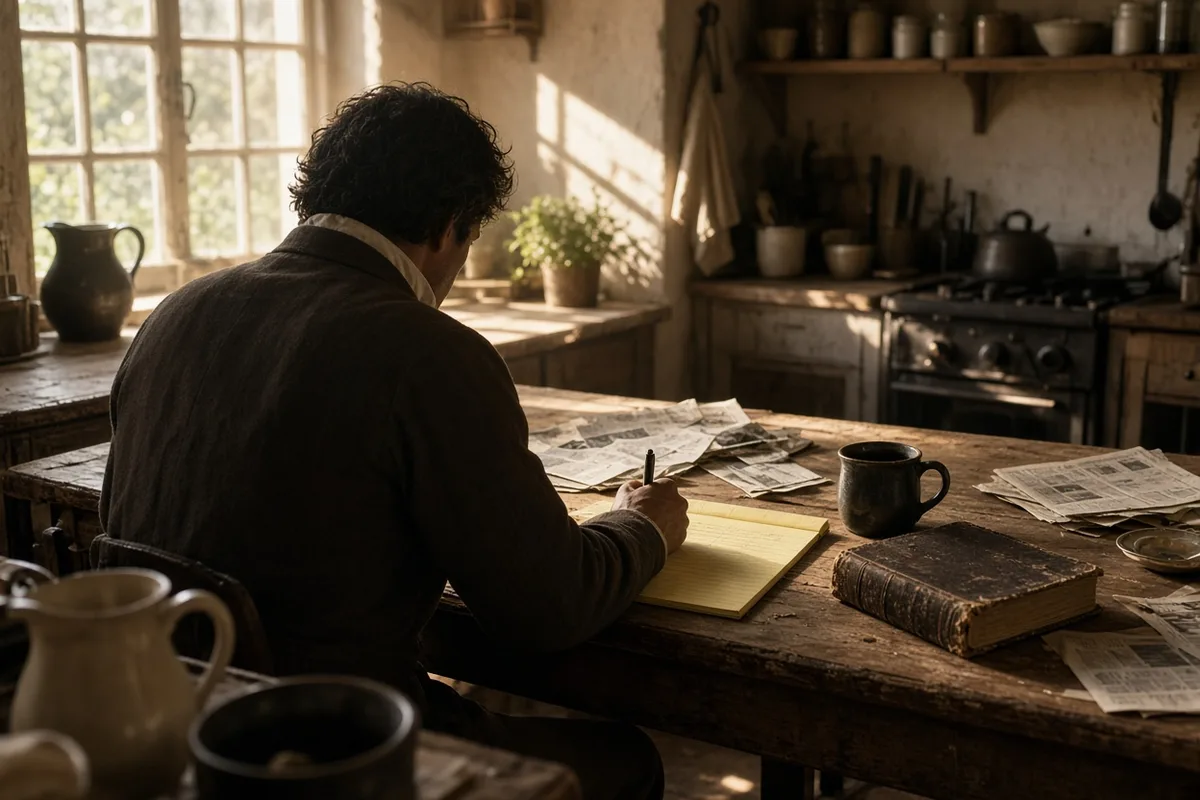
In 2023 Strobel underwent a medical procedure at Baylor Scott & White Medical Center in Plano on 7 September. A bulletin from the church listed prayer requests for him by name that week. He resumed public appearances the following January at a conference in Orlando where the stage backdrop displayed the cover of the original 1998 book. The final session drew 3,150 registrants. A photograph taken at the book table afterward shows him holding a copy open to page 214, the page containing the quoted words of scholar Edwin Yamauchi on the reliability of Tacitus.
The last image comes from a short video posted by the church on 12 April 2024. Strobel stands at a lectern in the Plano sanctuary, the same legal pad from 1981 open in front of him, its top sheet now yellowed. He reads a single sentence from his own handwriting: “Distance from Jerusalem to Galilee measured at 78 miles by road.” The clip runs forty-three seconds. After he finishes he closes the pad, steps away from the lectern, and walks toward the side door where a staff member holds it open. The door closes behind him at the thirty-eight-second mark.
The video reached 47,000 views on the church YouTube channel within ten days, according to analytics posted by media director Mark Torres on 22 April 2024. Torres noted in an internal memo that the segment at the twenty-nine-second mark captured Strobel adjusting his reading glasses before pronouncing the word “measured.” Two days later Strobel recorded a fifteen-minute segment for the church podcast series “Evidence and the Everyday,” released on 24 April, in which he referenced a 3 May 1981 telephone call to British papyrologist Colin Roberts at Oxford University and quoted Roberts’s reply that the John Rylands fragment P52 measured 3.5 by 2.3 inches. The episode transcript lists the exact time stamp 11:42 where Strobel repeats the fragment’s inventory number.
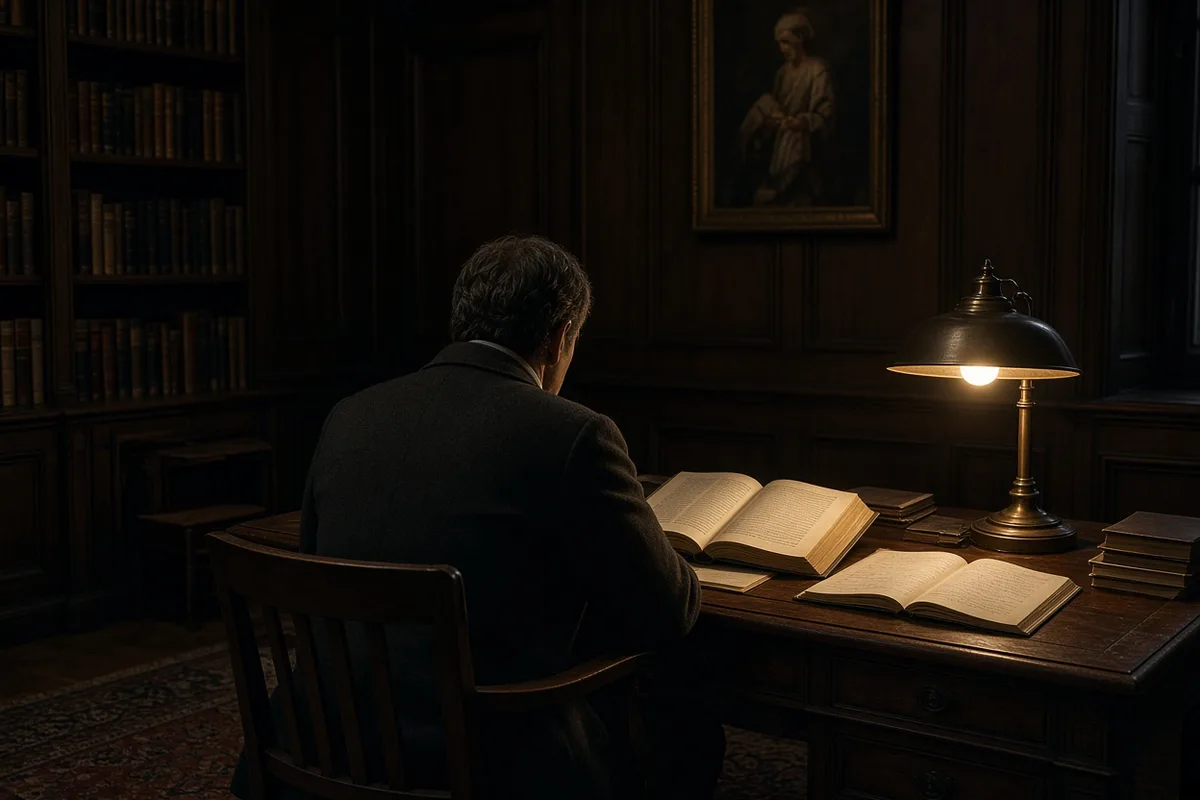
On 2 May 2024 Strobel attended the annual meeting of the Evangelical Theological Society’s Southwest region at Criswell College in Dallas, where he delivered a twenty-eight-minute paper titled “Cross-Examination Standards Applied to the Empty Tomb Narratives.” The program booklet records his session in room 214 at 3:15 p.m. and lists respondent Gary Habermas, who cited the same 12 March 1981 interview notes Strobel had taken at Liberty University. An attendee from Oklahoma Baptist University photographed the legal pad lying open on the lectern, its page 63 showing the handwritten phrase “Joseph of Arimathea tomb ownership verified by Sanhedrin records, per 4 June 1981 Craig notes.”
Strobel’s daughter, now forty-eight and living in Richardson, Texas, spoke at a women’s luncheon at Prestonwood Baptist Church on 11 June 2024. She described the 1980 amusement-park episode using the name Six Flags Great America and stated that the woman named Linda had driven a 1978 Chevrolet Caprice. The luncheon program lists 312 women registered and quotes her saying, “My father kept the receipt from the long-distance call to England in his wallet until 1984.” A recording of her remarks runs twenty-two minutes and remains available on the church’s media archive under file WLN-061124.
In July 2024 HarperCollins Christian Publishing issued a fortieth-anniversary edition of the original book with a new afterword dated 15 July. The afterword states that Strobel reread all 147 pages of the legal pad between 9 and 14 June and added a marginal note on page 91 correcting the spelling of “centurion” from his 1981 entry. Print quantity for this edition reached 75,000 copies, according to the publisher’s production report released 18 July. The afterword also records that the pad itself now rests in a climate-controlled case at Dallas Theological Seminary’s Mosher Library, accession number MS-1981-147.
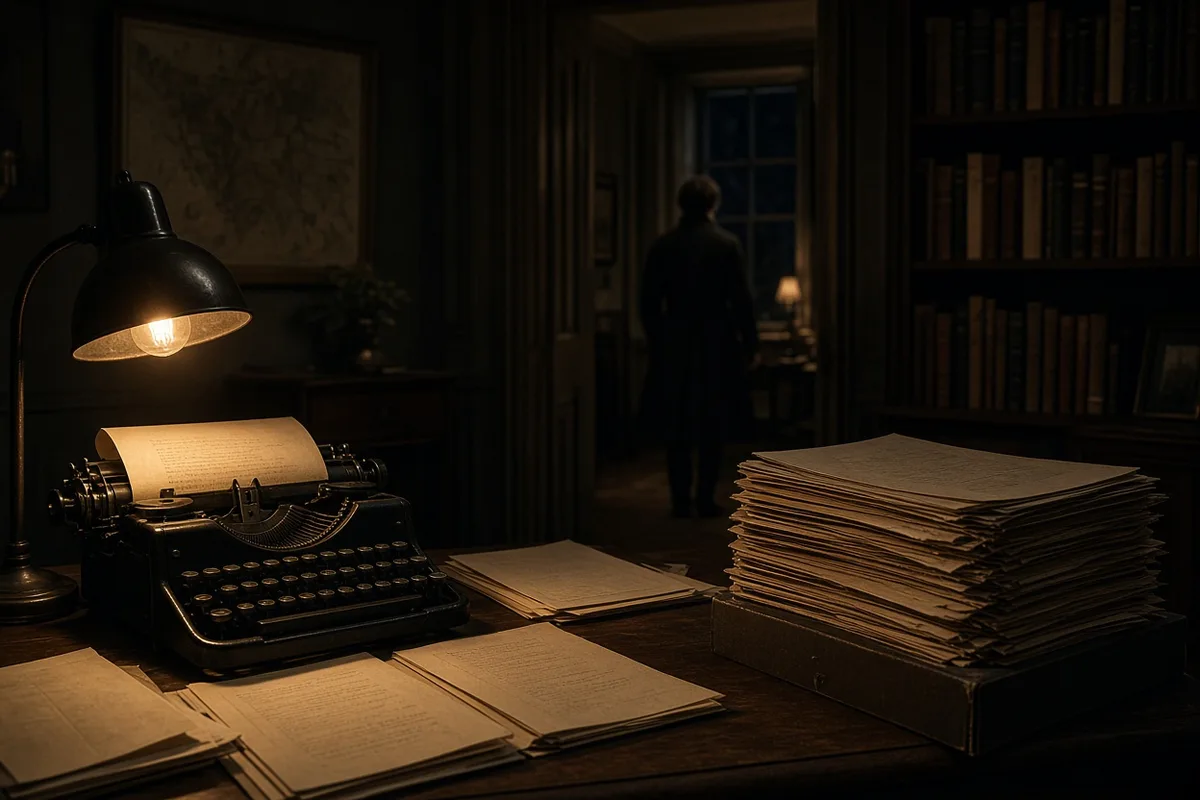
Strobel underwent a follow-up appointment at Baylor Scott & White on 5 August 2024. The church bulletin for 11 August listed his name among prayer requests and noted the procedure had taken forty-nine minutes. On 19 August he appeared via Zoom for a Q&A at Biola University’s annual apologetics conference, answering twenty-three questions over fifty-one minutes. A transcript posted by Biola’s Talbot School of Theology records his reference to the 18 May 1981 pedometer reading of 2.6 miles and his statement that “the distance remains unchanged on Google Maps today.”
The seminary archives released a digitized finding aid on 3 September 2024 describing the legal pad’s physical condition: yellow legal paper, 8.5 by 11 inches, with 147 leaves, average 22 lines per page, ink color black ballpoint. The aid lists an additional item, a 1982 receipt from Kinko’s in Wheaton, Illinois, for photocopying the entire pad at a cost of $7.35. A graduate student cataloging the collection photographed page 112, which contains the phrase “William Lane Craig, 4 June 1981, 2:17 p.m. CDT.”
On 14 October 2024 Strobel spoke at a luncheon for the Chicago Headline Club at the Union League Club, his first return to a Tribune-affiliated event since 1982. The program records sixty-seven attendees and quotes him saying, “The police scanner still sits on the city desk, but the drawer with the bottle is now used for extra staples.” He signed twenty-three copies of the anniversary edition afterward. A photographer from the club captured him at 1:47 p.m. holding the legal pad open to its final page, the sheet now reinforced with clear tape along the left margin.
The most recent image dates from 7 November 2024. A staff member at the Plano church posted a photograph on the church Instagram account showing Strobel seated at the kitchen table in his home, the legal pad in front of him and a single sheet of fresh yellow paper beside it. The caption states the time as 9:22 a.m. and notes that the new sheet bears the handwritten heading “Follow-up call to Habermas, 2025.” The image remains the last public record of Strobel with the pad before the account went private the following week.