


Miracle on the Hudson
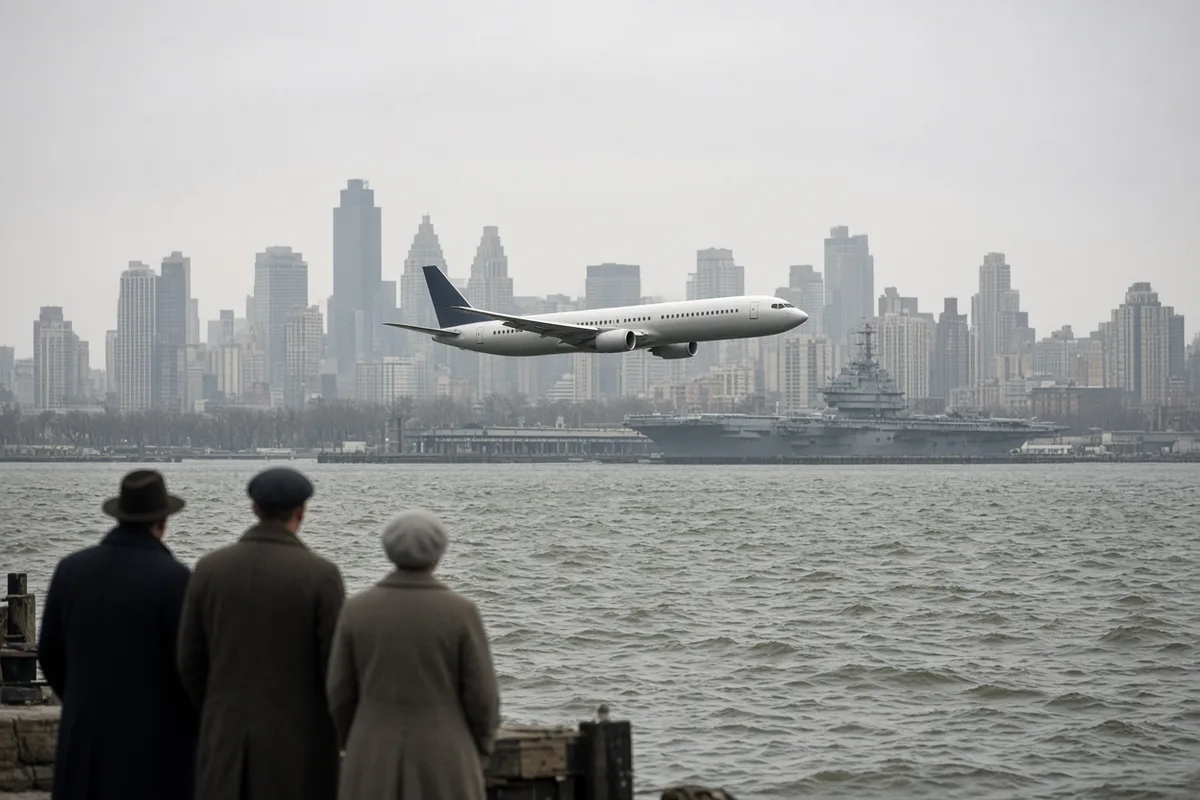
The river had that flat gray shine it gets in January, the kind of cold that gets into your knuckles before you notice your feet. I was on deck doing what I did every weekday afternoon, watching commuters shuffle toward the gate, half-listening to the diesel hum under my boots, when I heard something wrong in the sky. Not loud. Wrong. A jet that low over the Hudson should have been screaming with engine noise, and this one wasn't screaming at all. It was gliding, silent, banking south along the water like something that had already decided where it was going.
I'd worked the river long enough to know an airplane that quiet, that low, wasn't headed for a runway. It was an Airbus, white and blue, dropping toward Weehawken with its nose up just slightly, wings level, and for three or four seconds nobody on my deck said a word. Then somebody pointed. Then everybody was pointing.
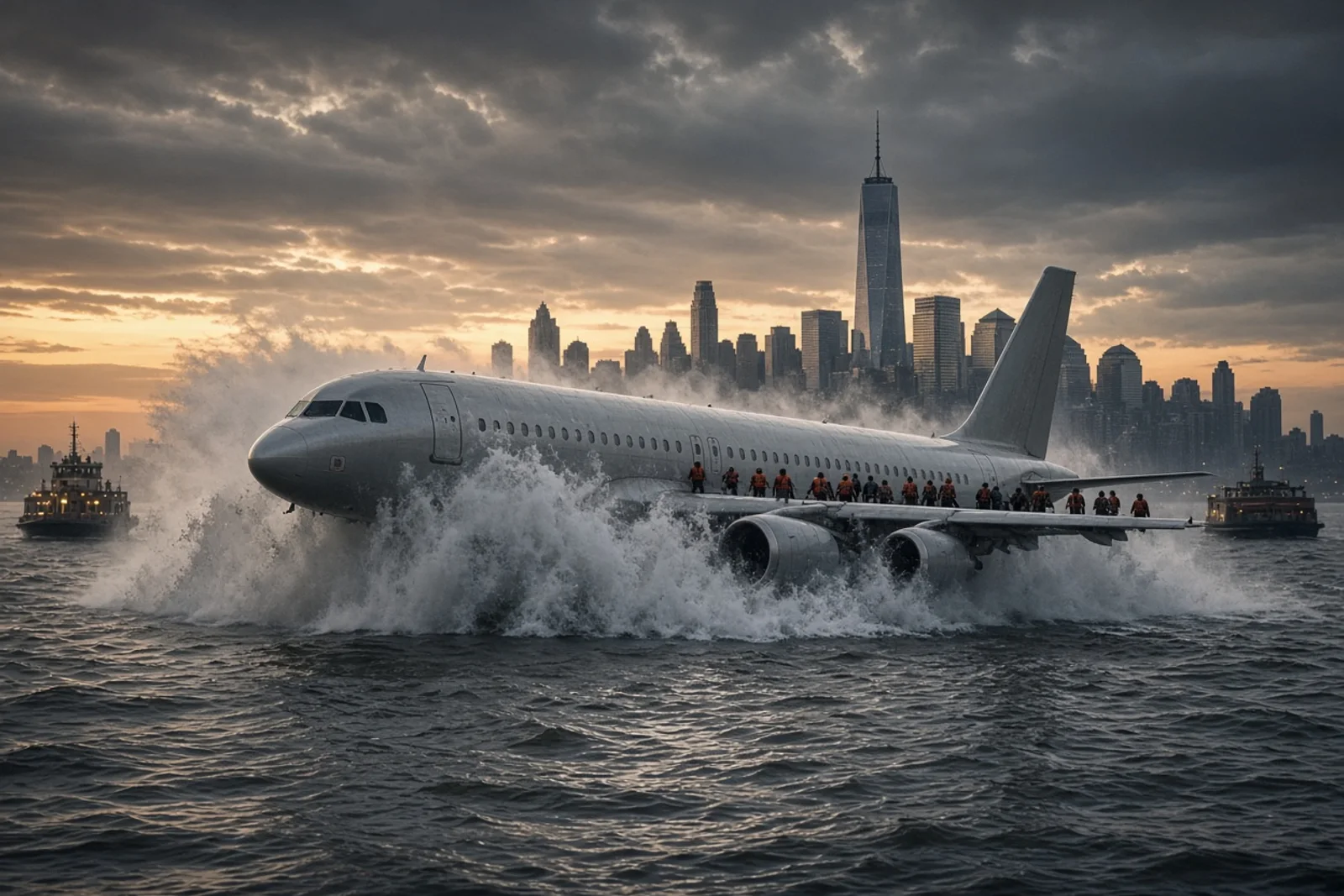
It touched down more than it crashed. That's the thing people don't believe until they've seen the footage a hundred times — no fireball, no cartwheel, just a long tearing hiss of white water thrown up on both sides as the fuselage skated the surface near Forty-Eighth Street, on the New York side, drifting with the current toward the Jersey shore. The spray hung in the air a moment, caught the low winter light, and came down. And there it sat. A hundred and fifty feet of airplane, floating, tilting almost nothing, doors already starting to open.

I don't remember giving an order. I remember the wheel coming hard over and the deck tilting under me as we came about, and every other boat on that stretch of river doing the same thing at the same time — ferries, tugs, a dinner cruise boat, police launches, Coast Guard boats — converging on that plane like the whole river had been waiting for exactly this.
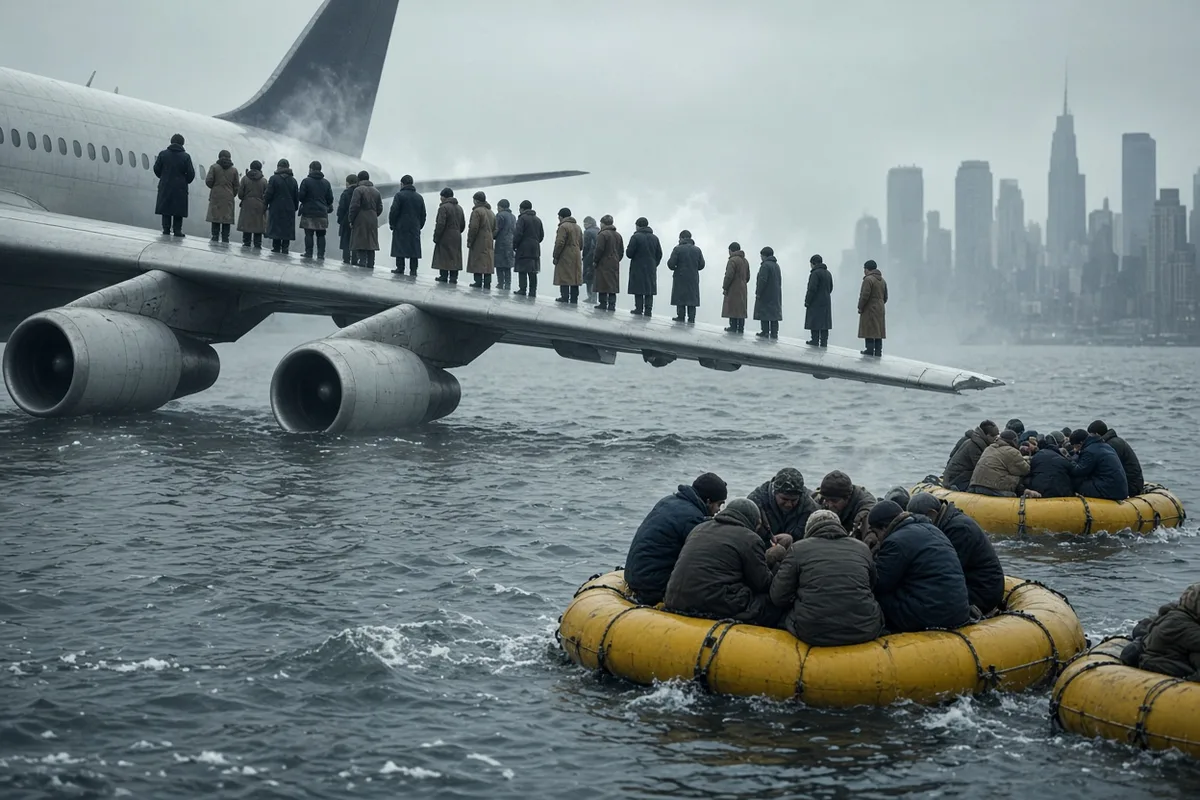
It took minutes to close the distance, though it felt like no time and also like forever, both at once. Up close you could see the exits had already opened forward and over the wings, and people were coming out onto the wings themselves, standing in a thin, shifting line above water that could not have been much above freezing. Some of them had inflated their life vests right there on the wing, orange bulges under their coats. Some hadn't found vests at all and stood in suits and skirts with their arms wrapped around themselves, watching the water lap at their shoes.
The wing was sinking, just slightly, just enough that the ones at the far end were ankle-deep and the ones near the fuselage were still dry, and everybody was doing that thing people do in a line when the ground is disappearing — shuffling backward in tiny steps toward whoever still had solid footing.

We got close enough to throw lines. I remember the particular sound a mooring line makes hitting a wet wing, a flat slap, and a man near the engine nacelle grabbing it two-handed like it was the only true thing in the world. We weren't the only boat working that wing. There were three, four vessels alongside within what must have been ten minutes of the plane going quiet on the water, hands reaching, ladders coming down, and it was the kind of chaos that has an order to it if you're inside it — the ones who could climb, climbing; the ones who couldn't, being pulled.
I pulled a woman up by both wrists who had no coat at all, just a blouse gone see-through with river water, and her hands were the color of the sky. She didn't cry. She said thank you, twice, very quietly, and then sat down hard on the deck like her legs had only been waiting for permission to quit.
Somewhere in that first rush we heard, boat to boat over the radio, that there'd been a child aboard, lap-held, too small for her own seat, and that thought sat in my chest the whole time we were pulling people over the rail, a specific fear with a specific size to it. She came off fine. Everyone came off. I didn't know that yet, standing on a slick deck with my arms burning from hauling strangers over a gunwale, but I know it now, and it still catches me that a plane went into a river in January and not one person on it died that day.
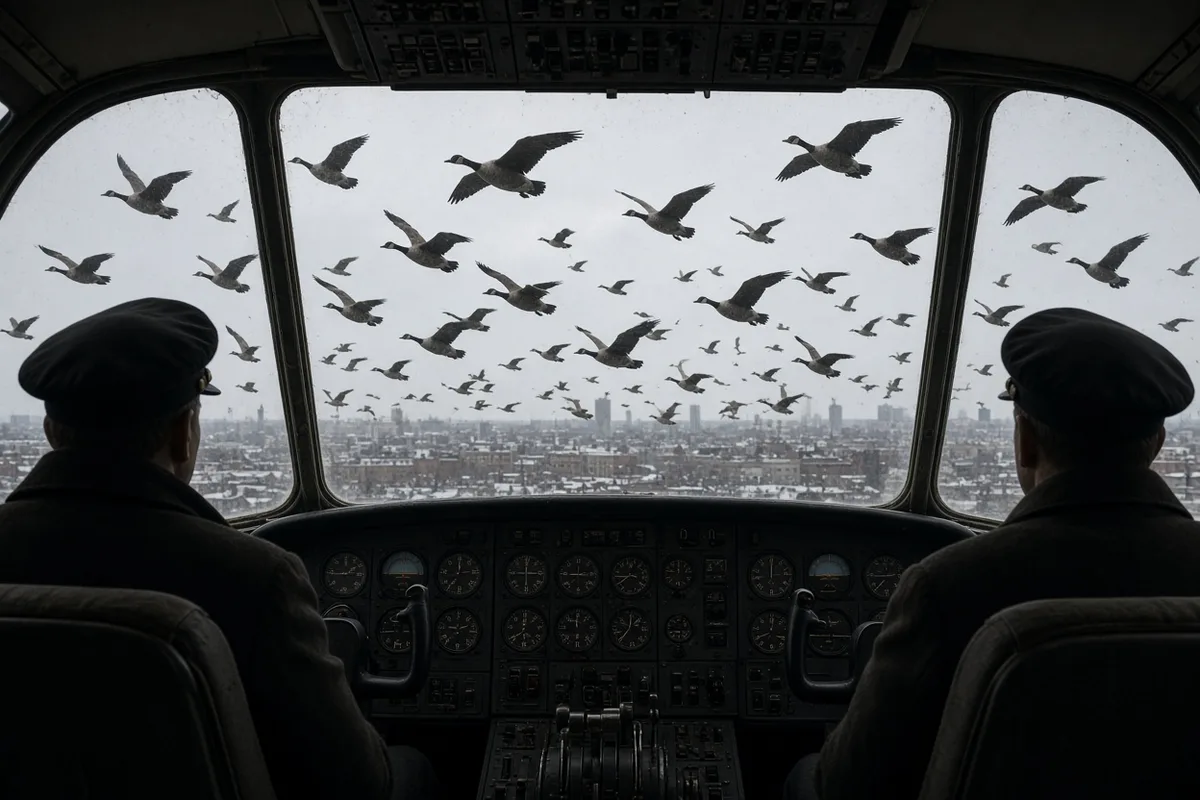
What we didn't see, out there on the water, was the two minutes and forty-some seconds that had already happened before we ever spotted the plane — the part that only the recorders knew, and the two men up front. A flock of birds, Canada geese most likely, crossing the flight path less than two minutes after takeoff from LaGuardia, and then both engines going quiet almost together, an airplane suddenly turned into the heaviest glider ever built, ten thousand feet of altitude between the crew and every bad outcome, and no runway close enough to reach. We learned later, the way the whole country learned later, what had been said in that cockpit — the calm, flattened voice on the radio telling the tower they were going to be in the Hudson, and then the six words to the cabin behind him, brace for impact, brace for impact — because there wasn't going to be a Teterboro, wasn't going to be a LaGuardia return, there was only water, wide and cold and straight ahead.
I think about that glide more than almost anything else from that day. Three and a half minutes, near enough, of a hundred and fifty-five people trusting two men they couldn't see to bring them down soft, and the two men up front working a checklist for a failure they'd never trained on exactly like this, and somewhere underneath the checklist a decision that had to be made with no time left to second-guess it. Land on water going the wrong way and you don't get a second attempt.
We didn't know, hauling people over our rail, whose hands had been on the controls. We just knew the airplane had come down flat and level instead of nose-first, that the fuselage had held together instead of breaking apart, and that mattered more in that moment than any name.
By the time the last of them were off the wings, the plane was noticeably lower in the water, settling by the tail, drifting with the current, and somebody shouted that the cabin was clearing, that everyone was out. It wasn't quite everyone yet, not in that instant, but close enough that you could feel the whole rescue exhale a little.
We found out afterward that the captain had walked the aisle twice before he left, once each direction, calling out to be sure no one was still strapped into a seat in the rising water at the back, before he was the last one off his own airplane. That's a fact that sat with me a long time after — the last man off, checking twice.
Not everyone came away untouched. A flight attendant near the tail took a bad injury when the fuselage struck, working through it anyway to get people moving. Four passengers came off seriously hurt, one with a leg torn open on debris in the aisle, and it was cold enough, wet enough, that hypothermia was doing its own quiet damage to anyone who'd gone into the water instead of straight onto a wing or into a raft. We wrapped people in whatever we had — jackets, blankets, a tablecloth somebody produced from somewhere — and none of it felt like enough, and all of it had to be enough, because that's what there was.
The ambulances were already lined up on the Manhattan side by the time we made the dock, lights turning without sirens, medics working down the line of survivors checking hands and lips and pupils, calling out who needed to go first. Some walked off our deck under their own power, unsteady, wrapped like they were headed somewhere warm at last. Some were carried.
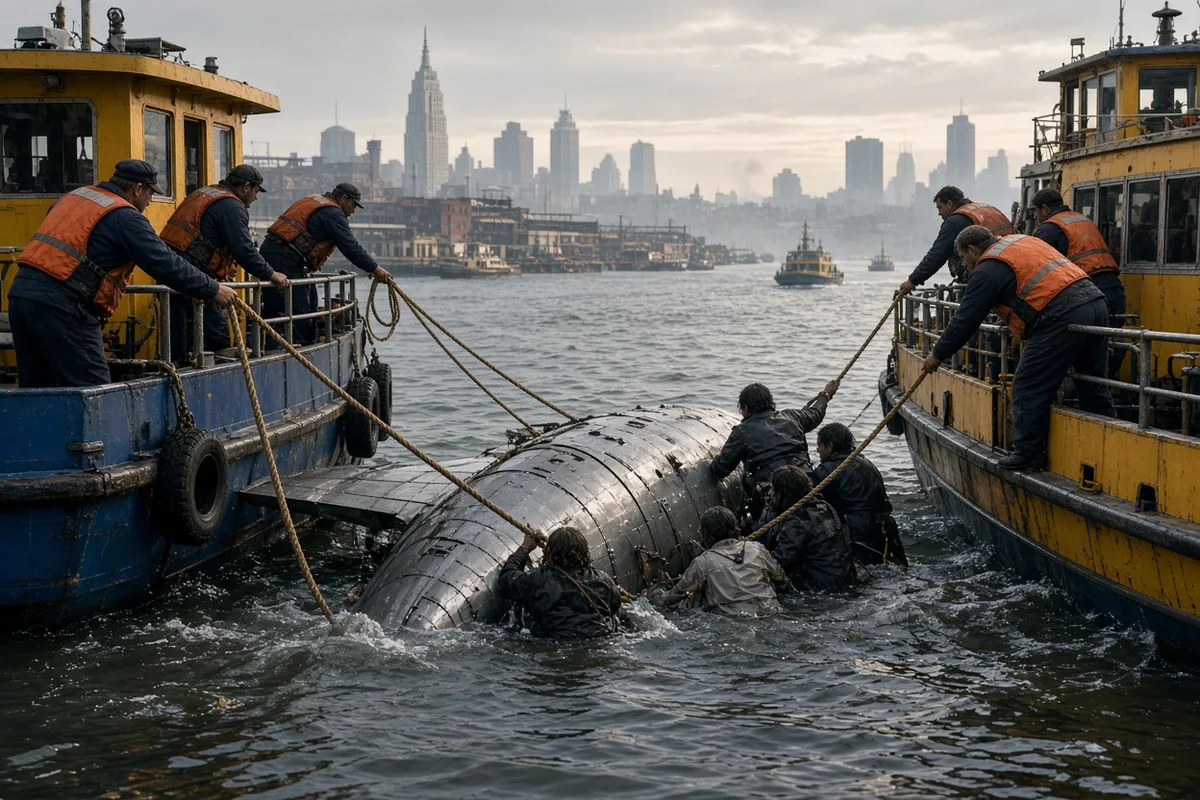
I stood on the dock afterward longer than I needed to, watching the plane itself get towed, slow and low in the water, tail dragging, engines silent under the surface, being brought in like something that had fought the river and been let go. It didn't look like a hundred and fifty-five people had just walked off it into the cold. It looked like wreckage. It was wreckage. It just happened to be wreckage nobody had died inside of.
The investigators came fast, the way they do after anything with an airplane in it, and within a day there were people from the safety board walking the same docks I'd walked, asking questions about times and headings and who had said what over the radio, building the record out of instruments and interviews the way I was building my own memory out of cold hands and mooring lines. Their report would take more than a year to finish, adopted the following May, page after page about bird ingestion certification and checklist design and immersion suits and life vest stowage, all the dry language that a river full of screaming and silence eventually turns into once it's written down properly. But underneath the language was the same plain fact everybody on the water already knew that afternoon: both engines gone, roughly two hundred and eight seconds of glide, and a hundred and fifty-five people set down on a river without losing one.
The city had already started calling it something before the investigators ever opened a file. Miracle on the Hudson, people said, on the sidewalks, on the news that night, and I understood the impulse even standing there soaked to the elbow in river water, because nothing about that afternoon looked like it should have ended the way it did. A cold river in January doesn't usually give anybody back.
In the weeks after, I'd see the faces again on television — the captain, gray-haired, steady-voiced, saying it wasn't him alone, that it had been the first officer beside him and the flight attendants moving people to the exits and the passengers helping each other over seatbacks, and the boats. He kept mentioning the boats. I heard that and thought of the particular slap of a wet line hitting a wing, and the woman with sky-colored hands who said thank you twice and then couldn't stand anymore.
The airplane itself sat in a hangar for a long while afterward, then went on display, dented and salt-stained, so that people could walk up to the thing and put a hand on the actual metal that had skimmed a river instead of breaking apart on it. I never went to see it. I didn't need to. I still get the smell sometimes, jet fuel and river silt and wet wool, if the wind off the water is cold enough and comes from the right direction, and it puts me right back on that deck, arms burning, counting heads, waiting for someone to tell me the number was right.
The number was right. A hundred and fifty passengers, one of them a child too small for her own seat, five crew, all of them off that airplane and onto boats and eventually into warm rooms with blankets and paper cups of coffee held in hands that wouldn't quite stop shaking for a while. Four passengers hurt badly enough to remember it in their bodies for years. One flight attendant the same. And not one name added to any list that matters more than all the others.
I think about the birds sometimes, too — how a handful of geese crossing a flight path at the wrong altitude, at the wrong second, could reach into two jet engines and take away, almost simultaneously, every ordinary way that flight was supposed to end. And how the only thing standing between that and something far worse was a few minutes of glide, a river wide enough to hold an airplane, and boats close enough, in a city that never stops running its water lanes even on the coldest afternoon of the year, to get there before the cold could finish what the birds had started.
That's the part I keep coming back to, more than the fame that came after, more than the ceremonies and the streets renamed and the film made years later. Just the river, doing what rivers do, indifferent and freezing and wide open, and enough hands on enough decks willing to turn hard into its current the second it looked like somebody needed pulling out.