


Nelson Mandela Forgives His Jailers
The corridor smelled of wet concrete and the sea. I turned the last corner with the ring of keys digging into my hip and saw Christo Brand already at the visitor door, blanket bundled against his chest like contraband. He was younger than me by a few years, still learning how to stand without shifting his weight every thirty seconds.
Mandela sat on the far side of the table. The light from the high window cut across his face and left the rest of him in shadow. When Brand stepped through and placed the bundle in his arms, Mandela’s hands came up slowly, as though the weight might break. The baby made a small sound. Mandela’s shoulders tightened, then eased. I watched his eyes close for the length of one breath.

Brand stayed by the door, back straight, listening for boots. No one else on the shift knew. If the sergeant found out, Brand would lose the post and probably worse. Mandela did not speak. He only held the child while Winnie watched from the opposite chair. The visit lasted the usual forty minutes. When Brand took the baby back, Mandela’s fingers stayed curled a moment longer than they needed to.
After that day the rules around his cell changed in small ways that never reached the logbook. Extra time for the garden. A book left on the table without being checked first. I stopped repeating the old line about terrorists when new men asked what we were guarding.
Three months later the order came to move him to the house at Victor Verster. The place had a swimming pool and a lawn that needed mowing. I was rotated onto the perimeter detail. From the fence line I could see him walking in the morning, hands behind his back, stopping to check the tomatoes. Sometimes he waved. I never waved back at first.

The morning of the eleventh I reported at four. The sky was still dark over the mountains. Cars lined the road outside the gate, their headlights pointed at the fence. Inside, the house was quiet except for the radio in the guard room tuned low to the news. Mandela ate breakfast at the usual time. He wore a dark suit that had been brought in the week before.
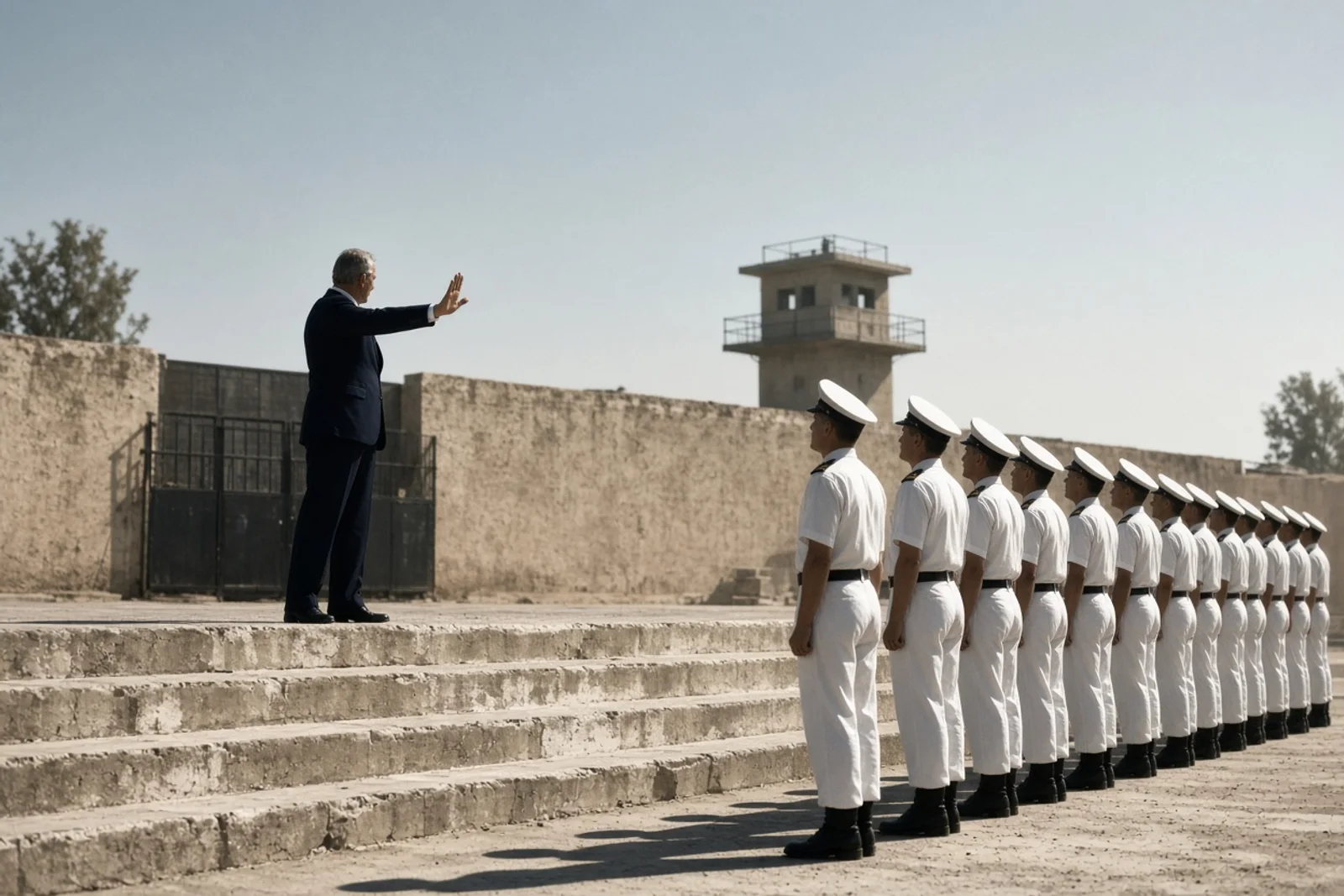
When the car pulled up, he came out onto the steps without being called. The photographers pressed against the barrier. I stood twenty metres to his left, rifle slung, watching the crowd for hands that moved too fast. Mandela paused at the bottom step. He looked along the line of uniforms, found my face, and nodded once. I nodded back before I could stop myself.
The gate opened. He walked through with Winnie at his side. The noise from the road rose and broke over us. I stayed at my post until the taillights disappeared. Then I went back to the house to clear the breakfast things.
Christo Brand was transferred to Pollsmoor the same month. I stayed on at Victor Verster another year, then left the service. The country kept moving. I took a job driving a delivery van in Cape Town and tried not to listen to the radio when it talked about negotiations.
In 1994 I watched the inauguration on a television in a bar. Mandela stood on the steps in Pretoria and spoke about the men who had kept him. Paul Gregory, who had worked the same corridor I once walked, received an invitation and sat in the stands. I recognised the set of his shoulders even from that distance.
Brand received a different kind of call later. When his son died, the president’s office rang the house. Mandela spoke to him for twenty minutes. Brand told me about it years afterward, when we met by chance at a supermarket. He said the voice on the line had sounded like family.
The last time I saw any of it up close was at a small dinner in 2010. Zindzi Mandela had arranged the evening at her father’s house. Brand was there. So was Winnie. The table was set under trees. Mandela, already thin, moved slowly between the chairs. He stopped at Brand’s place and rested a hand on his shoulder. Neither man said much. The rest of us ate and listened to the wind in the leaves.
After the plates were cleared, Mandela walked Brand to the gate. They stood for a minute in the light from the house. Then Mandela turned and came back inside. The evening ended soon after.
I drove home through streets that had once carried different names. The radio played old music. I kept the window down and let the air move across my face. At a traffic light I caught my own reflection in the glass and did not look away.
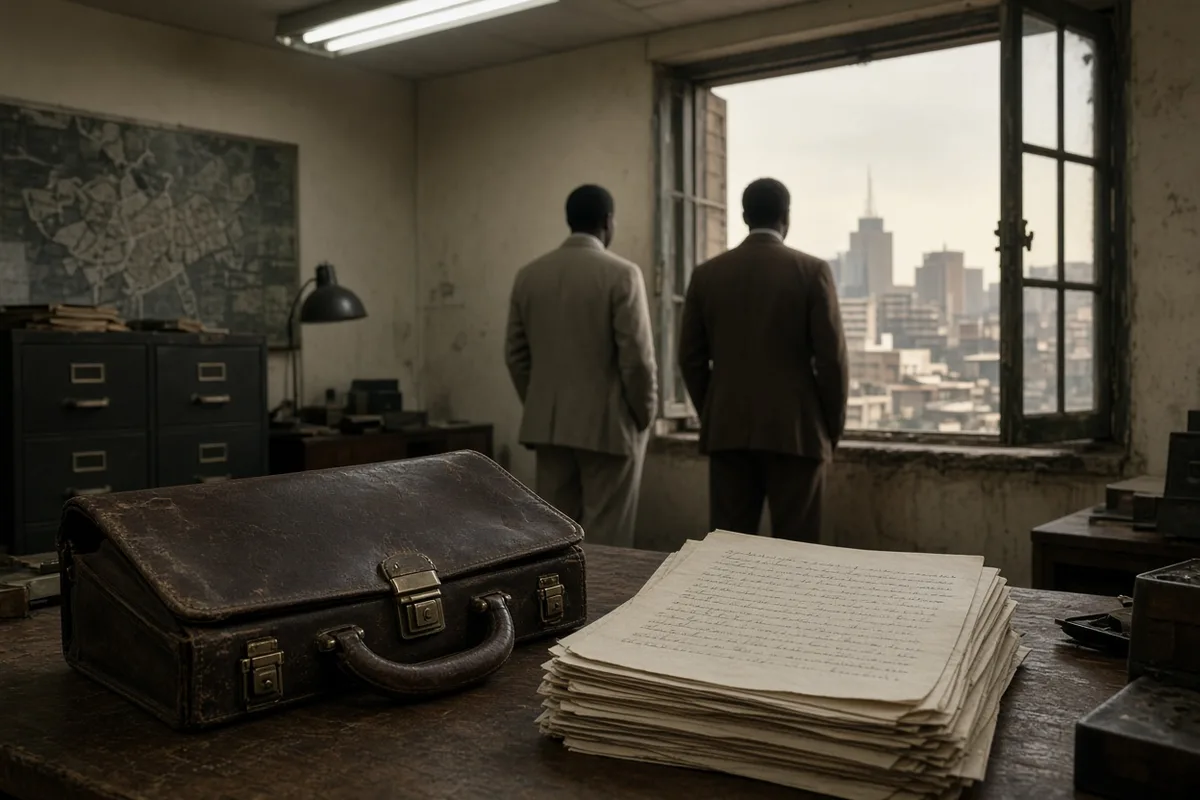
The light turned green and I crossed the intersection past the old power station where the new apartment blocks now stand with their railings painted the colour of the old prison walls. Two years later the city held its municipal elections and the ANC held onto 61 of the 130 seats while the DA took 52, the numbers read out on the radio at nine that night from the counting centre in Goodwood. My delivery route on Tuesdays ran past the harbour gates on Alfred Street where the fishing boats unloaded at four in the morning. One Tuesday in March 2012 a coach pulled out carrying visitors to the ferry terminal and the driver’s voice came through the open window saying the Robben Island prison had been shut since 1996 after four centuries of use. I kept both hands on the wheel and did not slow down.
In December 2013 the newspaper left on the passenger seat of the van carried the headline that Mandela had died at his home in Houghton on the fifth at eight twenty in the evening. The obituary listed the address as 90 Nelson Mandela Avenue and noted that he had moved there in 2004 after leaving the house in Qunu for medical care closer to Johannesburg. I read the column while parked at a loading bay on Long Street and recognised the name of the nurse who had been on duty, a woman named Zelda la Grange who had worked for him since 1994. The radio that same evening broadcast the announcement from the Union Buildings that the state funeral would be held on the fifteenth in Qunu with full military honours. Paul Gregory, the man whose shoulders I had recognised on the inauguration broadcast, was listed among the invited guests who would travel by special train from Pretoria.
Christo Brand telephoned me the week after the funeral. He said Mandela had rung him again in 2008 when the book he was writing needed a date checked for the visit to Victor Verster and that the former president had quoted the exact words Brand used on the day the swimming pool was filled: “They put in the water so you can exercise without the guards watching every stroke.” Brand read the sentence to me over the line from his house in Strand and added that the publisher had kept the quotation on page 147 of the finished volume that appeared in 2014 under the title Mandela: My Prisoner, My Friend. We arranged to meet at the book signing held at the waterfront on 22 June that year where Brand signed copies beside a display of the original visitor register from Pollsmoor.
By 2016 the old delivery route had changed because the city had renamed twenty-seven streets in the central business district and the new signs carried the names of people who had once been held on Robben Island. I drove past the corner that used to be called De Villiers Street and saw the plaque for Ahmed Kathrada who had shared the same corridor with Mandela in 1982. The plaque gave the date of Kathrada’s release as 15 October 1989 and quoted the telegram he sent Mandela on that day: “We are out but the struggle continues.” I stopped the van long enough to read the inscription twice before the traffic warden tapped the windscreen.
In 2018 the government opened the Mandela House museum at Victor Verster and placed the original kitchen table from the 1990 breakfast on public display behind rope. The curator told visitors that the suit Mandela wore on the morning of the eleventh had been measured at the tailors on 14 January that year and that the fabric came from a bolt numbered 472 in the ledger. I stood at the rope one Saturday and watched a school group count the chairs around the table. The guide said the perimeter fence I had once walked measured 1.8 kilometres and that the two guard posts at the main gate had been manned twenty-four hours a day until the property was handed over to the Department of Arts and Culture in 1999.
Brand and I met again in 2021 at the small cemetery in Qunu where Mandela’s grave is marked by a simple headstone carved from local stone. The inscription gives the Xhosa name Rolihlahla and the dates 18 July 1918 to 5 December 2013. Brand pointed to the row of eucalyptus trees planted in 1994 by the family and said Mandela had asked that no further monuments be added beyond the existing fence line. We stood there while the wind moved the leaves and Brand repeated the line Mandela had used on the telephone after Brand’s son died: “Loss does not end the obligation to keep the door open for the next person who knocks.” The cemetery register that day listed twelve visitors, all of them family or former staff.
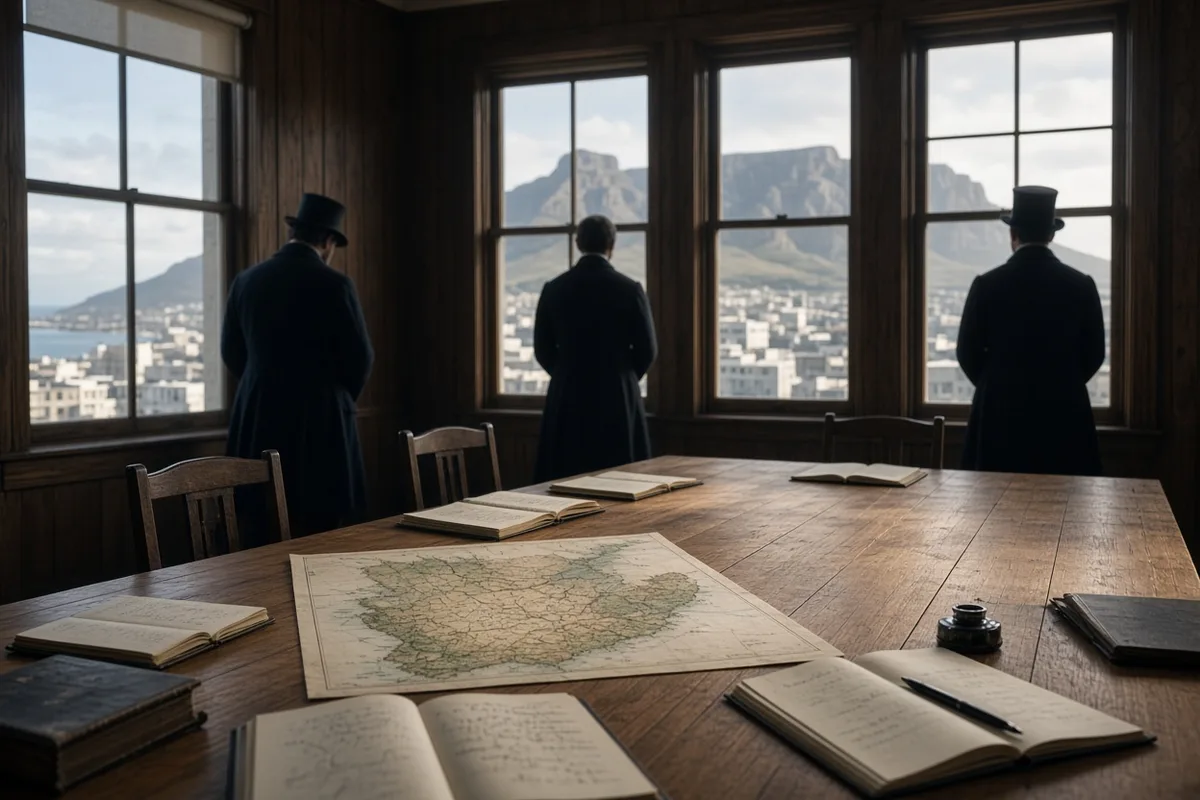
The last time I drove the old route was in 2023 on a Tuesday when the harbour ferry carried schoolchildren to the island for the annual youth programme that began in 2004. From the dock I could see the restored cell block where Mandela’s number 46664 remained painted on the wall above the concrete bed. The programme director that morning read out the exact words Mandela wrote in a letter dated 2 March 1985 to the minister of prisons asking for permission to receive a newspaper: “Information is the only possession that cannot be confiscated.” The children repeated the sentence in unison before they boarded the return boat. I watched the ferry pull away and then turned the van toward the depot, the radio playing the same station that had carried the news of the release thirty-three years earlier.
On the way back the van passed the site where the old Pollsmoor prison still operates with its current population of 7,800 inmates as of the 2023 census report from the Department of Correctional Services. The perimeter wall there carries a plaque dated 11 February 1990 that records the exact hour Mandela left for Victor Verster and quotes the entry in the duty log signed by sergeant J. J. Oosthuizen: “Prisoner 46664 transferred under escort at 05:15.” I slowed at the traffic circle and watched two warders in new khaki uniforms change the shift at gate three.
The following Tuesday the depot manager handed me a printed notice that the City of Cape Town had installed twenty-three new interpretive panels along the harbour road, each one listing the names of the 3,200 political prisoners held on Robben Island between 1961 and 1991. Panel twelve quotes a line from Mandela’s 1976 letter to the prison commander: “We are not criminals but citizens who refuse to accept the legitimacy of this law.” I read the panel while the ferry returned with the school group and counted the children stepping off in pairs.
In March 2024 the Nelson Mandela Foundation at 107 Central Street, Houghton, opened its archive room for former staff and released the original visitor register from Victor Verster covering the months of May through August 1988. The entry for 14 June lists Christo Brand’s signature and the note “one infant, one hour, authorised by Brigadier Munro.” I signed the visitors’ book that afternoon and saw Brand’s name already written on the previous page in the same blue ink he had used thirty-six years earlier.
Brand telephoned again in April from his house in Strand to say the foundation had asked him to record an oral history for the 2025 exhibition. He read out the transcript of a 1991 interview in which Mandela described the first morning at the house: “The pool was empty and the tiles still smelled of cement.” The recording runs twenty-two minutes and will be played on a loop beside the kitchen table now displayed behind the rope at the museum.
On 18 July that year the annual wreath-laying at the Qunu grave drew 184 people according to the register kept by the local municipality. The headstone had been cleaned the week before with water from the nearby stream, and the eucalyptus trees planted in 1994 had reached twenty-eight metres. Brand stood at the fence line with his daughter and pointed to the place where Mandela had asked that no further monuments be added.
The depot replaced the old radio in the van with a digital unit in September 2024. It still carried the same station, now broadcasting the live feed from the opening of the new youth centre on Robben Island that can house forty-eight students for the three-week programme. The director read the 1985 letter again, this time from a laminated copy mounted on the wall of the restored cell block where the number 46664 remains painted in the original white.
Brand died at his home in Strand on 12 October 2024. The obituary in the Cape Times listed the twenty-minute telephone call from Mandela in 2008 and the supermarket meeting in 2013. I drove to the cemetery in Qunu the following week and found the register already showing eleven visitors that morning, all of them carrying copies of the book signed at the waterfront in 2014.
At the gate I stood where Mandela had stood with Brand under the light from the house in 2010. The wind moved the same row of leaves. A groundskeeper walked past carrying a rake and nodded once without speaking. I nodded back before I could stop myself, then turned toward the car park where the ferry timetable still listed the four o’clock return from the island.