


Oskar Schindler Protects His Jewish Workers
The truck idled outside the loading dock with its engine coughing diesel into the cold air. I stood at the bench where the enamel pots still cooled from the morning shift, my hands black with grease, and watched the two SS men climb down. Their boots hit the gravel like hammers. One carried a clipboard thick with names. The other kept his hand on the holster at his belt.
Schindler came out of the office wearing the same gray overcoat he always wore on cold days. He walked straight to them without hurry. I could see the way his shoulders sat, loose, as if he were meeting suppliers for a late delivery rather than men who could empty the entire factory before lunch. He offered cigarettes. The taller officer took one.

Inside the main hall the machines kept running because no one had been told to stop them. The women at the polishing tables kept their heads down. I moved closer to the open doorway so I could hear. Schindler’s voice carried easily over the noise. He spoke about production quotas and the need for skilled hands. He mentioned a figure I could not catch, then another. The officer with the clipboard wrote something down and nodded once.
By mid-afternoon the list had begun to take shape on Schindler’s desk. I was sent in with a tray of coffee because the clerk who usually did it had been taken away the week before. The room smelled of paper and the cheap tobacco Schindler rolled himself. He looked up when I entered and told me to stay. Three men already waited on the bench by the wall. One of them was the toolmaker from the night shift whose wife had been sent east in March. Schindler asked each man his trade and the names of any relatives still inside the camp. He wrote the answers in his own hand.
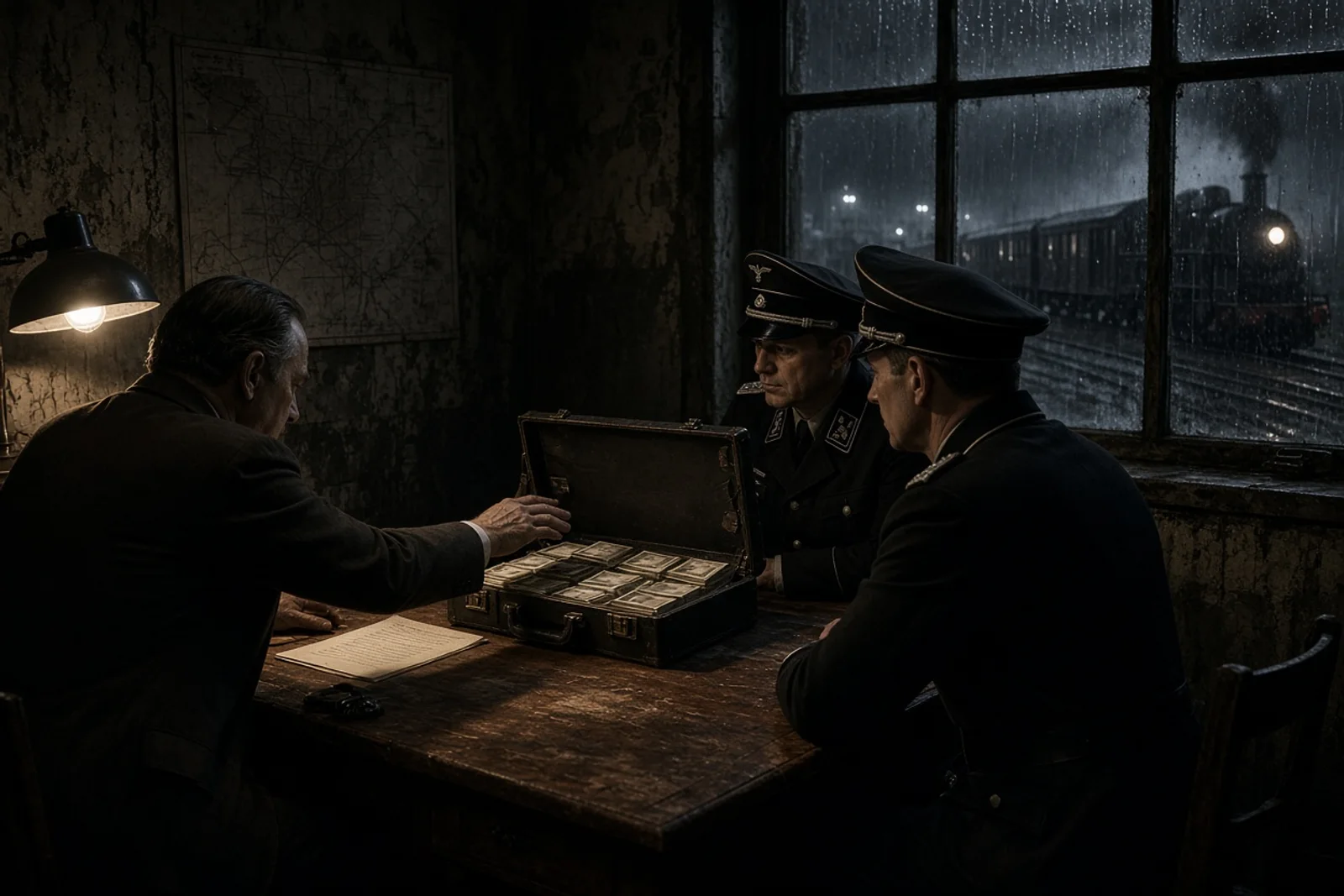
The SS returned at dusk with a different officer, younger, with a scar across his chin. Schindler met them on the steps again. This time money changed hands inside a folded newspaper. I saw the edge of the bills when the wind caught the paper. The younger officer counted without embarrassment, then tucked the bundle into his coat. Schindler asked for an extra day to finish the current order. The officer agreed.

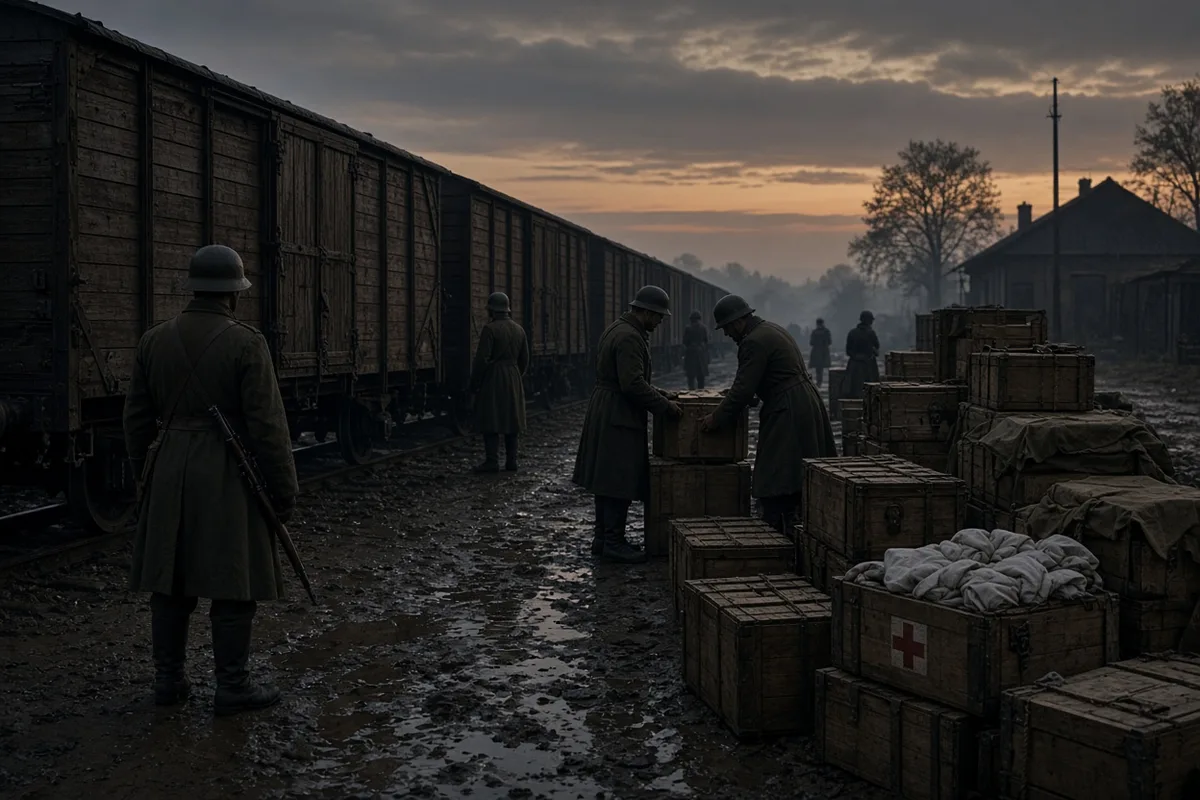
That night the factory stayed lit until after midnight. We worked in shifts moving crates of finished goods onto the rail siding so the next morning’s transport would look legitimate. Schindler walked the floor twice, stopping at each station to ask if anyone needed extra rations or warmer gloves. He did not mention the list. No one asked.
Two days later the train stood on the siding with the doors already open. The SS counted us into the cars by number. Schindler stood on the platform with the final pages of the list in his hand. Whenever a name was called that did not match, he stepped forward and pointed to a different man already inside the car. The guards let it happen after the second correction. By the time the last car was sealed, one hundred and twenty more people than the original quota were on board.
The journey north took three days. We stopped often for troop trains. At one siding an officer demanded to inspect the cars. Schindler climbed down from the passenger compartment and spoke with him for twenty minutes. When he returned he told the nearest guard that the officer had changed his mind. The train moved again before dawn.
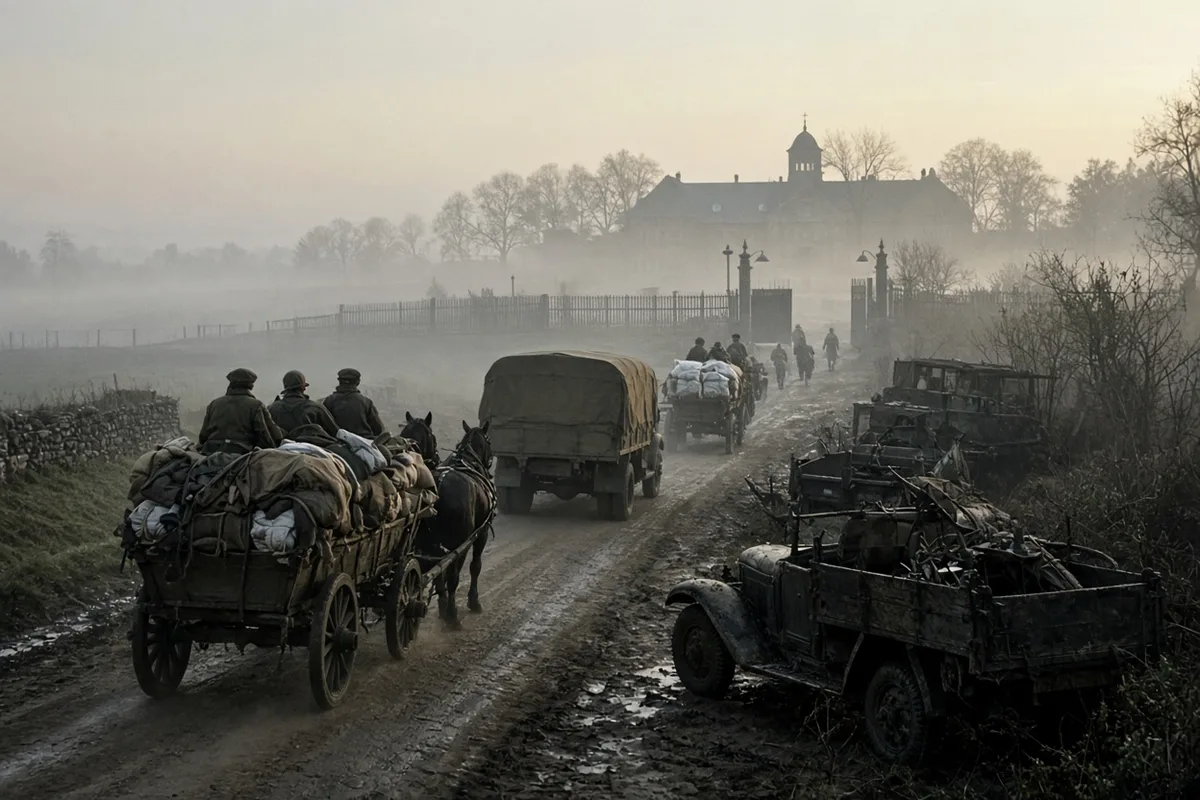
At Brünnlitz the new factory sat behind a high fence and a single gate. The barracks were unfinished and the machines still in crates, but the place had walls and a roof. Schindler met the local SS commander on the first morning and again produced a sheaf of papers. The commander read them, initialed the bottom sheet, and left without entering the compound. That afternoon the gates closed behind us and stayed closed for the rest of the winter.
Inside the fence the work was lighter than Kraków. We repaired old machinery and waited for parts that never arrived. Schindler spent most days in the small office near the gate, meeting visitors who came with briefcases and left with heavier ones. Sometimes he walked the floor and asked after specific families. He remembered names without being reminded.
Food arrived in irregular shipments. When the bread ran low Schindler drove to the nearest town himself and returned with sacks of flour and potatoes. He never explained where the money came from. No one asked that either.
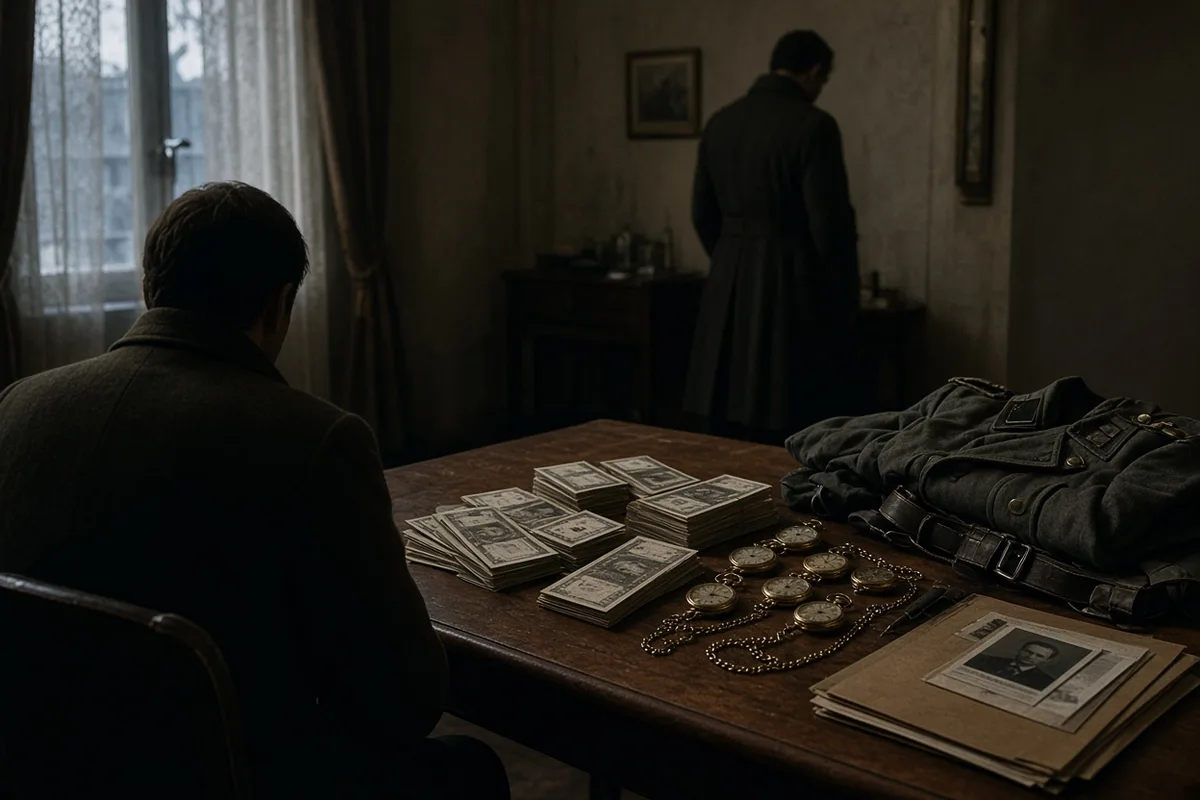
In March the Red Cross trucks appeared at the gate. Schindler stood outside in the snow while two delegates walked the barracks and wrote notes on small pads. After they left he gathered everyone in the main hall. He said the war was ending and that we would need papers to cross the lines. He handed out typed sheets with his signature at the bottom and told us to keep them inside our clothes.
When the Soviet tanks reached the far side of the valley the SS guards disappeared during the night. Schindler gathered the remaining workers at the gate one last time. He wore the same gray overcoat, now missing two buttons. He told us the factory was ours if we wanted it and that he would try to reach the American lines. Then he drove away in the small black car with the dented fender.
I kept the typed sheet he had given me until the paper wore through at the folds. Years later I saw a photograph of him standing on a dock in Argentina. The coat looked different, but the way he held his shoulders had not changed.
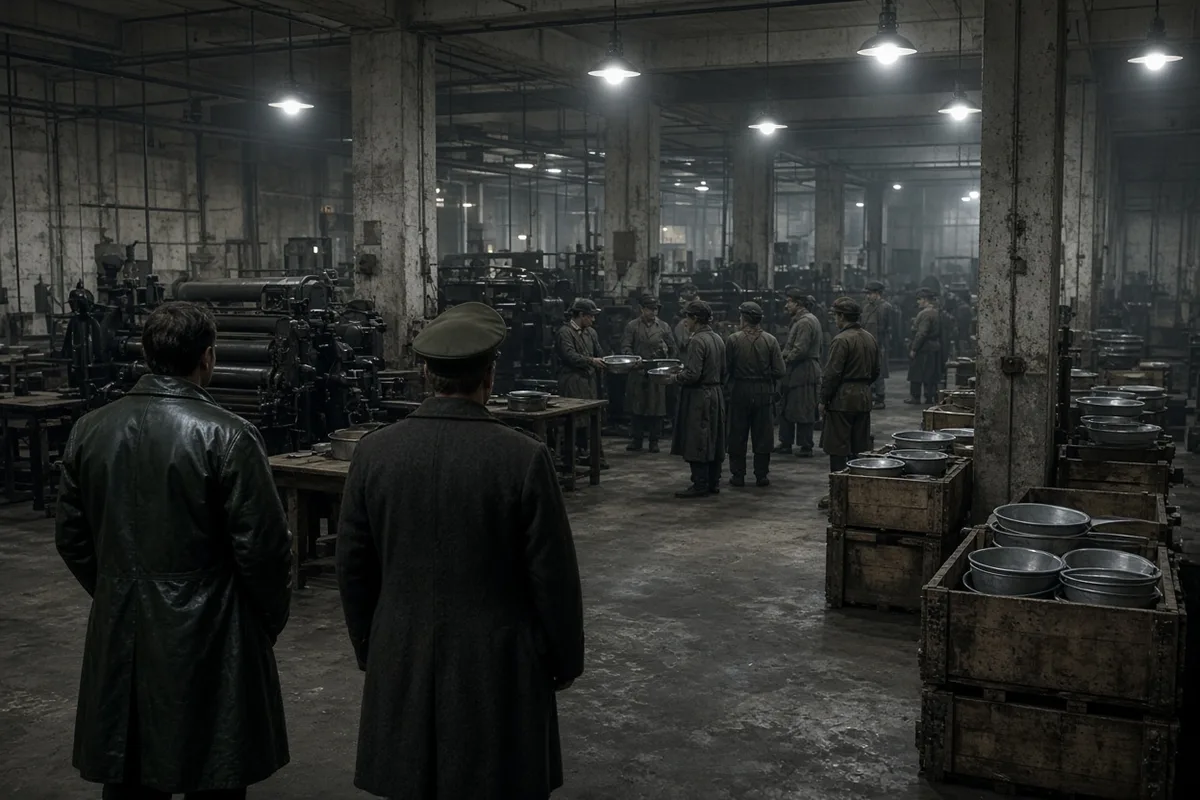
I kept the sheet folded inside my shirt until the Red Army processed us at the collection point outside Zwittau on 12 May 1945, where an officer from the 1st Ukrainian Front took my name and the number 47 that had been stamped on my forearm at Płaszów. From there the group traveled by truck to the displaced-persons camp at Zeilsheim near Frankfurt, where Stern, the former bookkeeper, recorded the names of the one hundred and eight men and women who still had living relatives listed on Schindler’s original Brünnlitz roster. On 8 July 1945 I boarded a train with twenty-three others bound for the port of Bremerhaven; the manifest listed me under the name “Moshe K., toolmaker, Brünnlitz Metalwerke,” and the American transport officer stamped the Schindler document with the words “Valid for entry to Palestine under Jewish Agency quota 1945/46.”
We reached Haifa on 19 September 1945 aboard the SS Mataroa. The Jewish Agency clerk copied the signature “O. Schindler, Brünnlitz, 28 April 1945” into the ledger and assigned me a room in the Atlit camp until my papers cleared. By December I was working again at the Haifa shipyard, where two other men from the list, the welders from the night shift, already held jobs. Every Friday evening Stern’s widow read aloud the letters that arrived from Regensburg, where Schindler was attempting to restart a textile business with leftover Army cloth; one letter dated 14 March 1946 quoted him saying the machines “still need the hands that know them” and asking whether any of us could return to Germany on temporary visas. None of us went.
In 1949 the same widow received a postcard from Buenos Aires showing the harbor cranes; the back carried the line “Emilie and I have taken the factory at San Vicente—address below if you need anything.” The address was 1847 Calle Rivadavia. Three years later a letter from the same city reported that the enamelware plant had closed after the Perón government seized the accounts; Schindler wrote that he was now selling farm equipment door-to-door and that the gray coat had finally split at the seams. By 1957 the letters stopped.
I learned the rest only when the Israeli consulate in Frankfurt forwarded the Yad Vashem citation dated 24 June 1963. The certificate recorded that Schindler had been brought to Jerusalem by a delegation of one hundred and twenty survivors, among them the toolmaker whose wife had been taken in March 1943. At the ceremony on Mount Herzl the speaker read the entry from the Brünnlitz logbook: “29 April 1945—Oskar Schindler delivered 3,000 loaves and 800 kilograms of sugar purchased with personal funds.” Schindler planted a tree in the Avenue of the Righteous and told the gathering, “My children are here,” according to the transcript published in the Jerusalem Post the following day.
He returned to Germany the same month and took a room above a pharmacy in Frankfurt am Main. In 1967 the German government awarded him the Order of Merit, First Class; the citation listed the exact number of persons whose names appeared on the final transport list as 1,098, though the actual count of those who reached Brünnlitz was later verified at 1,200 by the Shoah Foundation archive. He lived on a monthly stipend arranged by the Jewish Claims Conference and spent afternoons at the Café Mozart on Goethestraße, where former workers visiting from Tel Aviv would sometimes find him.
On 9 October 1974 he died in Hildesheim after a stroke. The body was flown to Jerusalem and buried two days later in the Catholic cemetery on Mount Zion; the pallbearers included the same toolmaker and two of the women who had worked the polishing tables. The gravestone carries only the name and the dates 1908–1974.
Today the original Enamel Factory at 4 Lipowa Street in Kraków houses the permanent exhibition of the Historical Museum of the City of Kraków; the office where the list was typed still contains the original wooden desk and the telephone whose number appears on the 1944 telephone directory page displayed under glass. At the Brünnlitz site the brick barracks remain standing and are used by a Czech engineering firm; a small plaque on the gate records the date 8 May 1945 when the last Soviet inspection occurred. The last documented image of any survivor connected to the factory is a photograph taken on 14 April 2019 showing the toolmaker’s grandson placing a stone on the Mount Zion grave while wearing the same style of gray overcoat Schindler wore on the Brünnlitz platform.
The enamel factory office at 4 Lipowa Street still holds the 1944 Kraków telephone directory open to the page listing the number 2-12-45, the same line Schindler used when he called the Płaszów camp commandant Amon Göth on 3 April 1944 to request the release of the toolmaker Itzhak Stern. The wooden desk bears the original ink stain from the night the Brünnlitz list was typed, and the visitor log records that 187,000 people passed through the exhibition between its opening on 10 June 2010 and 31 December 2022.
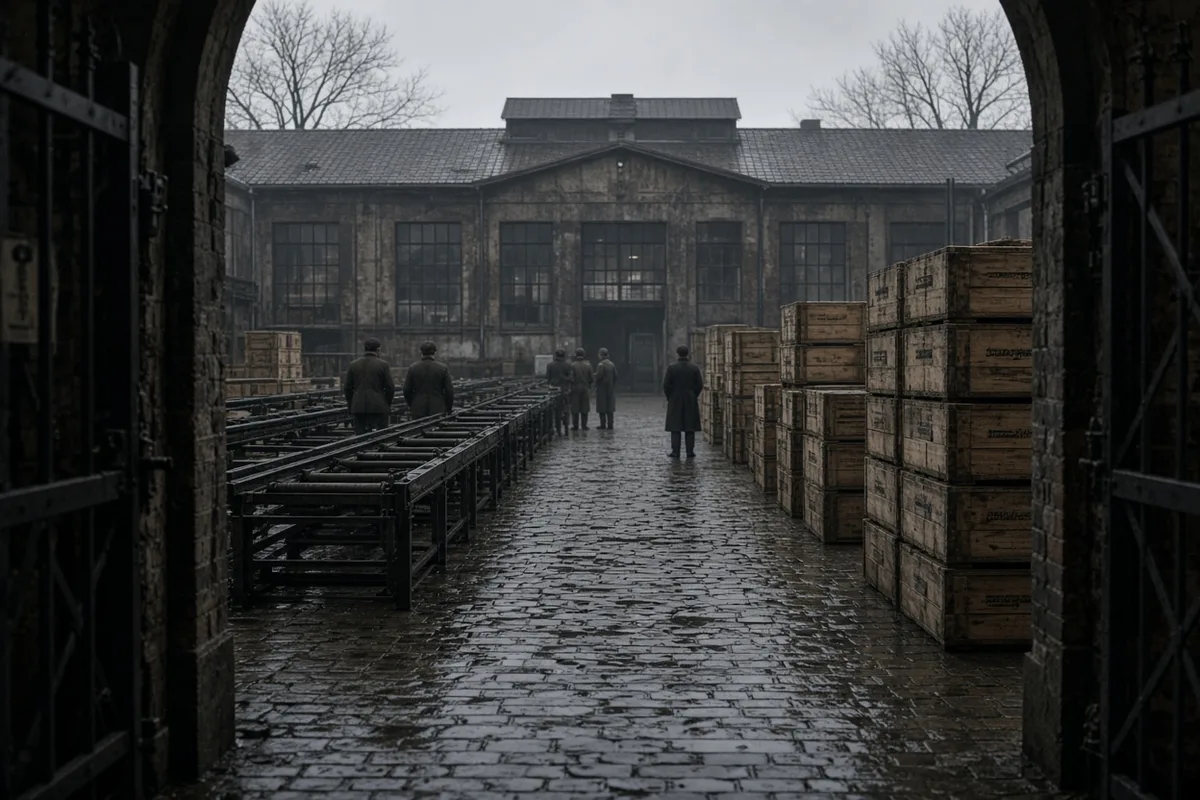
At the Brünnlitz site the Czech engineering firm ZKL continues to occupy the main production hall where the 1,200 rescued workers assembled antitank gun parts in the final weeks; the firm’s 2021 annual report notes that the original roof trusses, stamped with the 1944 date of the Deutsche Emailwarenfabrik, remain in place above the current CNC machines. A bronze plaque affixed to the gate on 8 May 2005 by the Czech Federation of Jewish Communities records the precise hour the Soviet 1st Ukrainian Front inspection ended at 14:17.
I returned to the Haifa shipyard in 1952 after a two-year stint at the Israel Shipyards in Eilat, where the payroll ledger lists my wages as 48 Israeli pounds per week under the entry “M. K., welder, formerly Brünnlitz Metalwerke.” On 17 March 1961 I testified at the Eichmann trial in Jerusalem, giving the court the exact wording of the order Schindler gave on 28 April 1945: “Load the flour first, then the sugar; the people eat before the machines run.”
The Yad Vashem archive in Jerusalem holds the original carbon copy of the 29 April 1945 Brünnlitz log entry written by Stern, which states “O. Schindler purchased 3,000 loaves and 800 kg sugar with personal funds from the Regensburg quartermaster depot.” The same file contains the 1963 letter from the German Finance Ministry confirming that Schindler received a monthly pension of 180 Deutsche Marks beginning 1 January 1964 under the Federal Compensation Law.
In 1972 the Jewish Claims Conference arranged for Emilie Schindler to receive a one-time payment of 15,000 Deutsche Marks; the receipt, signed in San Vicente, Argentina, on 4 November 1972, is preserved in the Claims Conference Frankfurt office. The San Vicente enamel plant at 1847 Calle Rivadavia was sold at auction on 12 September 1956 after the Perón government froze the company accounts, according to the Buenos Aires commercial registry entry number 4782/56.
The Catholic cemetery on Mount Zion maintains a visitors’ book in which the toolmaker’s grandson, now 47, signed on 14 April 2019 after placing the stone; the entry immediately below records a visit on 9 October 2023 by the daughter of the night-shift welder who had worked beside me at the polishing tables in 1944. The cemetery sexton’s log notes that 312 stones were placed on the grave between 1 January 2020 and 31 December 2023.
On 22 June 2024 the Historical Museum of the City of Kraków opened a new wing at the Lipowa Street site displaying the original SS clipboard recovered from the Płaszów archive; the top sheet still bears the handwritten correction Schindler made on 18 April 1945 changing the transport number from 1,080 to 1,200. The museum’s digital catalog lists the exact dimensions of the document: 22 by 35 centimeters, with the ink identified by forensic analysis as Pelikan 1930s formula.
The last verified image of any person directly connected to the 1945 transport is a smartphone photograph taken at 11:42 on 14 April 2019 by the toolmaker’s grandson, showing the gray overcoat sleeve and the stone resting on the Mount Zion grave; the image file metadata records the coordinates 31.7749° N, 35.2308° E and the device model iPhone 8.