



Scientists Identify First New Cat Species in Century
Paola Nogales-Ascarrunz saw a cat at the sanctuary so small she took it for a kitten.
“I saw this cat, it was really, really small, and I couldn’t believe how small it was. I thought it was a kitten,” she said.
She was volunteering at Senda Verde Wildlife Sanctuary, near La Paz along the Yolosa River in Bolivia’s Nor Yungas, when the animal held her attention. The male had lived there since 2017. A local man from a forest community near La Paz had found him as a kitten, mistaken him for a domestic cat, and fed him noodles, rice and eggs. Only after realizing the animal was wild, and that he could not care for it, did he surrender it to the refuge.
Colleagues first guessed a known tiger cat of the kind described from Brazil. Nogales-Ascarrunz kept looking at the coat and the tail.
“If you look at the spots or the tail, they really don’t match,” she said.
The male, about ten years old and nicknamed Tigrino, stayed on at Senda Verde as the living question of what kind of tiger cat Bolivia held.

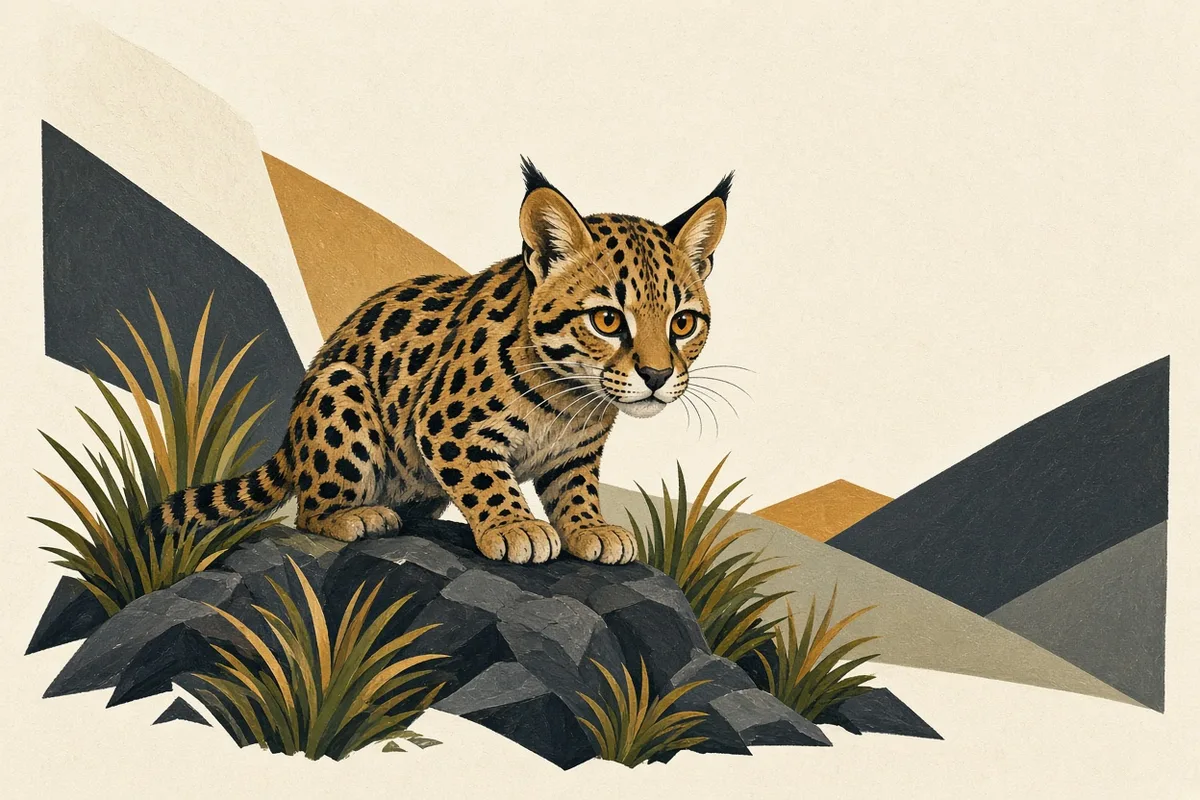
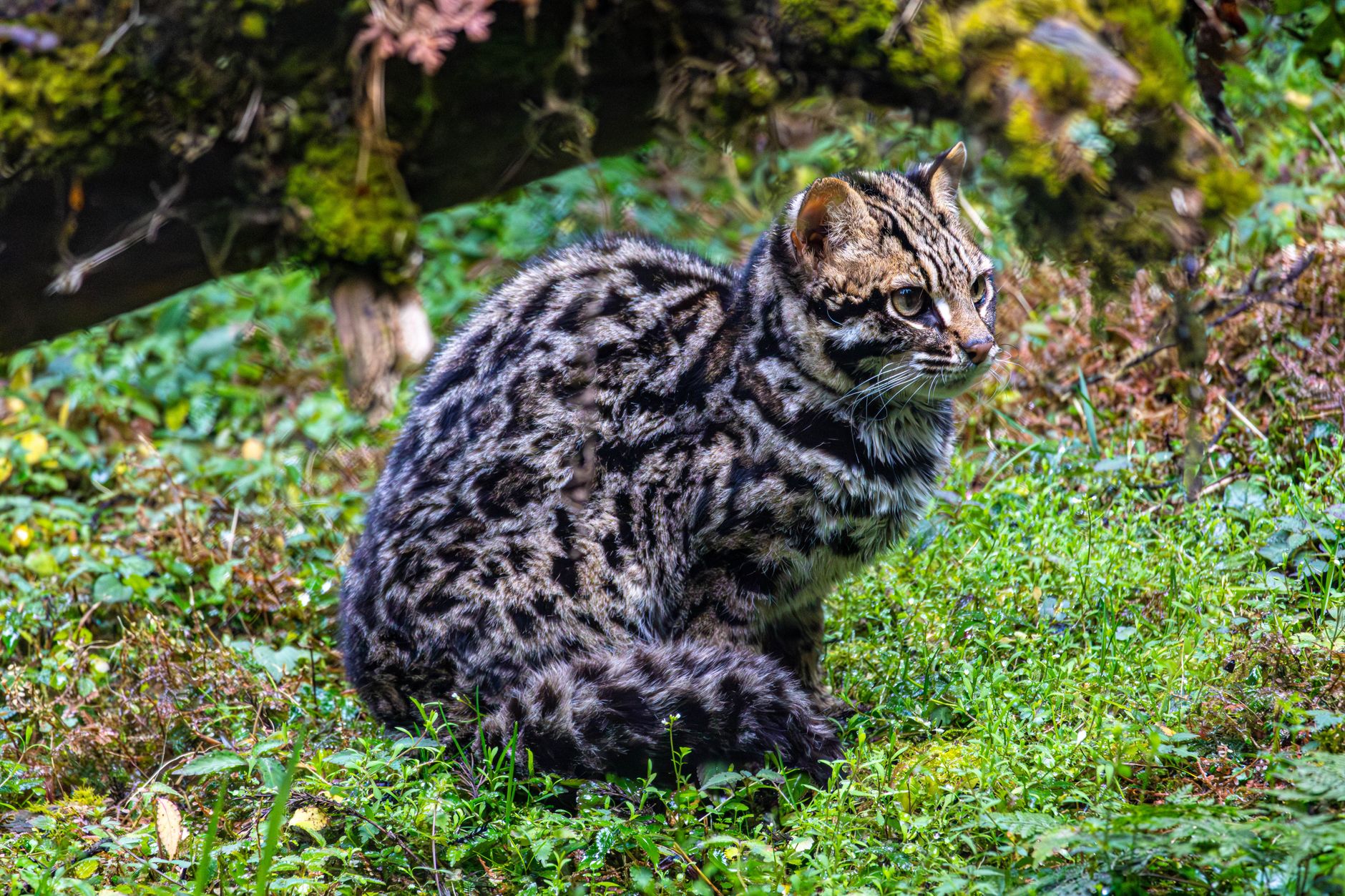
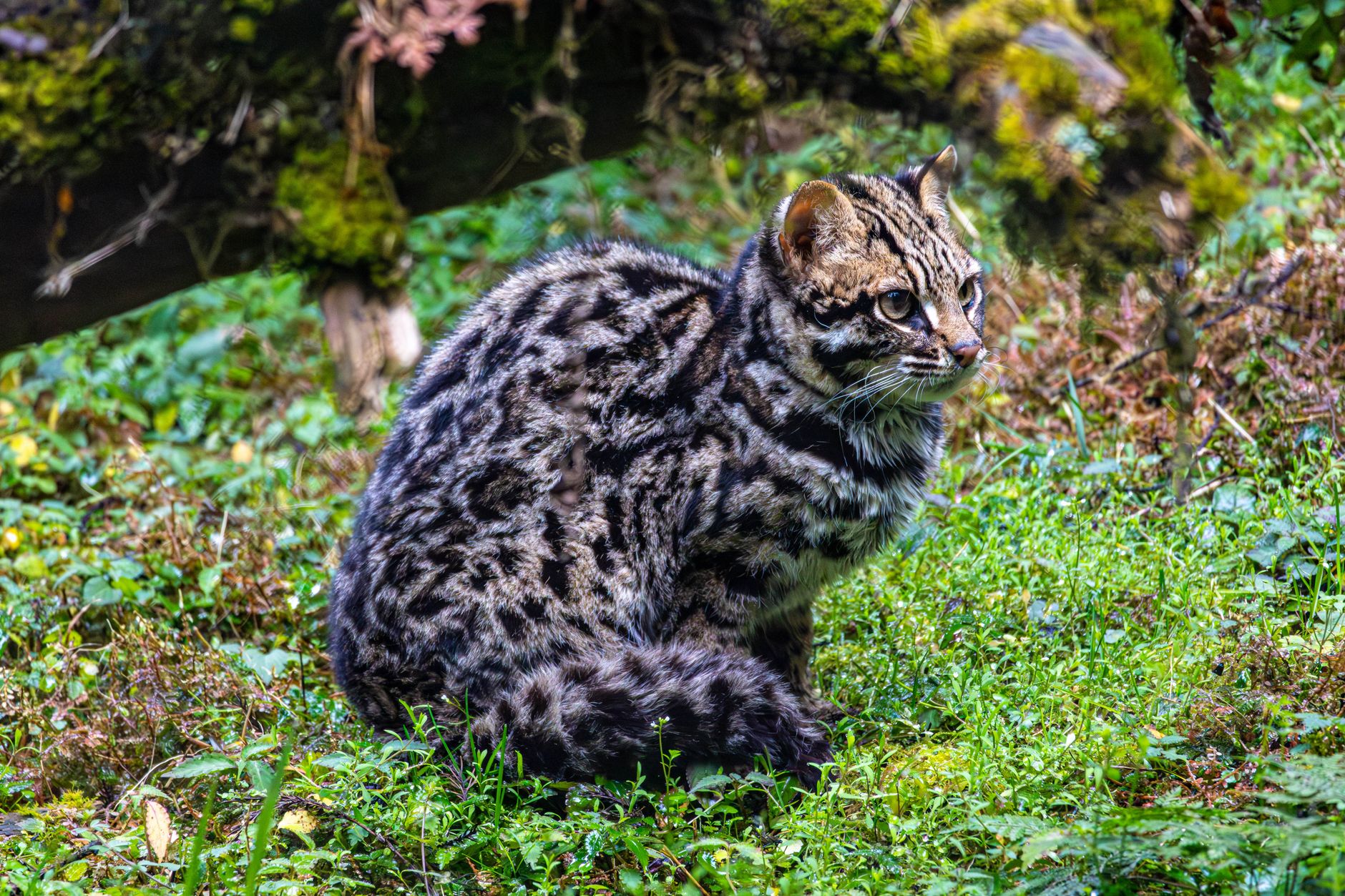
Leopardus tilcayo, the tilcayo cat, is smaller than a house cat. From head to body the animal measures about 45 to 46 centimeters, with sources also citing lengths from 42 to 50 centimeters. A long, slender tail adds about 25 centimeters. It weighs around 1.3 to 1.4 kilograms, about three pounds; some accounts give a range up to 2 kilograms, or four to six pounds. The ears are rounded. The coat is muted brown, marked with large, irregularly shaped dark rosettes.
“It's fur is light brown ... with irregularly shaped rosettes across its body,” Nogales-Ascarrunz said.
The species belongs to Leopardus, the genus of small spotted cats native to the Americas. John Edward Gray proposed the name in 1842 for skins held in London. The group is an old branch of the New World small-cat lineage; its members carry 36 chromosomes rather than the 38 typical of other felids. Ocelots, margays, kodkods, Geoffroy’s cats and the Andean mountain cat sit in the same genus, alongside the tiger cats and pampas cats whose boundaries have long been argued. The tilcayo lives in the Yungas of Bolivia, a cloud-forest region on the eastern slopes of the Andes where the mountains meet the Amazon basin. The Yungas form a narrow transitional belt between highland and lowland forest, humid and rich in species found nowhere else. Researchers published the description of Leopardus tilcayo in Current Biology on Thursday, September 17, 2026.
It is the first living cat species formally described in more than a century, since Leopardus fasciatus in 1923.
Tissue from the sanctuary cat, and from a second individual that later arrived at Senda Verde, went into a broader genetic survey. Researchers sequenced complete genomes from 38 cats sampled across eight Latin American countries—Costa Rica, Colombia, Peru, Bolivia, Brazil, Suriname, Guyana and Venezuela. Eight of those samples came from museum specimens: teeth, bones, muscle tissue, skin and fur.
The analysis found that animals long grouped by appearance as tiger cats represent five distinct species. The Bolivian lineage had separated from its closest relatives about 1.4 million years ago, a distance the team treated as a species-level divide in cats.
“We never expected this Bolivian tiger cat to be a separate species, and no one had ever proposed it as a different animal, subspecies or otherwise,” said Jonas Lescroart, an evolutionary biologist at the University of Antwerp and co-lead author of the study.
The same work described a new subspecies in Peru, Leopardus tigrinus antisuyo. Fabio Oliveira do Nascimento, a taxonomist at the Museum of Zoology at the University of São Paulo who was not involved in the study, had long called the tiger-cat family tree highly contentious and poorly understood. The new genomes began to settle that map.
Local communities in Bolivia already had a name for the animal. “This cat, they call it Tilcayo,” Nogales-Ascarrunz said. The word had passed down through generations by oral tradition; when researchers asked whether it carried a meaning in Quechua or other indigenous languages, people answered that their grandparents had simply called it the Tilcayo. The team chose that local Bolivian name for the scientific epithet rather than invent a fresh Latin-derived label, keeping the traditional knowledge attached to the animal itself.
Tadeu de Oliveira, an ecologist at the State University of Maranhão in Brazil and a coauthor of the study, noted that the animal had never been collected for museums. No prior specimens existed in those collections. He also observed that the tiger-cat lineages occupy habitats that are vanishing fast. Leslie Lyons, of the University of California, Davis, pointed to the same hard-to-see taxonomy: more cat species fit the picture once the genetic data clarified what appearance alone could not.
What remains unknown is how many of the animals still move through the cloud forest.
“We really don't know how many cats are still in the wild,” Nogales-Ascarrunz said.
Knowledge of the tilcayo rests on two live individuals examined by researchers and a small number of camera-trap records. Those traps indicate the cat may be primarily nocturnal. Remains of small rodents found in scat samples suggest they form part of its diet. The size of the wild population and its geographic range have yet to be established.
The Yungas face pressure from deforestation, agricultural expansion, fires and mining. Researchers have submitted their findings to the International Union for Conservation of Nature. Tiger cats are currently treated by the IUCN as two vulnerable species with declining populations. An upcoming review will assess the five lineages separately.
Eduardo Eizirik, an evolutionary biologist at the Pontifical Catholic University of Rio Grande do Sul in Brazil and senior author of the study, said, “Showing the general public that even in a flagship group such as cats ... there are still new species to be discovered may transmit an important message.”
“There are many undiscovered species out there in the world, and they are at risk of disappearing before we even discover them.”
Researchers are deploying additional camera traps across the Yungas to find more of the animals, map their range, and ground work on the wild population. Nogales-Ascarrunz is installing the traps in the Bolivian cloud forest to document the species beyond the two live individuals already examined.
The next steps are more accurate numbers and clearer estimates of where the cats still move. Until those records accumulate, the male nicknamed Tigrino remains at Senda Verde Wildlife Sanctuary along the Yolosa River in the Nor Yungas, the only known individual of the species living in protective captivity.