


Smallpox: The Only Disease Humanity Has Erased
The dust came up under the Land Rover's tires long before the village showed itself, a red haze that clung to my clothes and got into my teeth, and I remember thinking, not for the first time, that Somalia in October felt like the inside of a kiln. Merca was still eleven kilometers off. Someone had radioed in a rash case, a young woman, fever three days before the spots came, and my job — my only job, week after week, for longer than I wanted to count — was to go and look at skin.
I had done this hundreds of times by then, in villages whose names I forgot as soon as I left them, kneeling by pallets and lifting sleeves, checking palms and soles because the rash liked to start there, on the face, on the hands, in the mouth. Most of the time it was chickenpox, or measles, or nothing at all, a fever that had already broken and left behind nothing but a frightened mother. I had learned not to hope for either outcome too hard. Hoping made you sloppy.

By 1977 we had already chased this virus across half the earth. It was strange to think that a disease which had, over the course of one century, taken three hundred million lives — more than every war of that century combined, though nobody ever put it that way in the villages — had been reduced to this: a handful of us in Land Rovers and on foot, following rumors of rash from town to town, closing in on it the way you close a door on a draft, inch by inch, until there was nowhere left for the air to move.
It had not always been this way. I remembered, from my training, being told how the campaigns of the sixties had leaned on mass vaccination alone — needle after needle, arm after arm, entire populations lined up under a hot sun — and how in the crowded places, the cities and river towns, the disease kept slipping through the gaps in a coverage that could never quite reach everyone in time. Somewhere around 1967 that changed. Surveillance and containment became the doctrine: find the case, ring it with vaccinated contacts before the virus could take its next step, starve it of new bodies to live in. It sounded almost gentle, put that way. In practice it meant miles of bad road and villages that did not always want to see us coming.

I had heard the older hands talk about Jenner, the way you hear men talk about a distant ancestor, with a kind of reverence that had nothing to do with knowing him. Seventeen ninety-six. Cowpox and milkmaids and a boy named Phipps, though none of us ever spoke his name; we spoke of Jenner's observation the way you'd speak of a match being struck in a dark room a very long time ago. Everything we did, every vial in the cold boxes strapped to the back of my vehicle, ran back to that one report, that one hunch turned into proof.
The card in my breast pocket — the WHO recognition card, we called it, with its careful drawings of the rash at each stage, papule to pustule to crust — had become something like a rosary to me. Fever, then two or three days of nothing, deceptively nothing, and then the bumps rising all together on the face and forearms, moving to the trunk last, unlike chickenpox's scatter. I had memorized the drawings before I ever saw the real thing, and when I finally did see it, months into the work, in another town, another year, I understood that no drawing prepares you for the smell of a room where a person is dying of it.

The disease moved slowly enough to be almost polite about it. Seven to seventeen days from exposure to fever, the manuals said, and no infectiousness until that fever broke the skin's calm. It gave us, if we were fast, if we were lucky, a window. Find the case. Vaccinate the household, the neighbors, anyone who had shared water or shade or a doorway with the sick person, in a ring wide enough that the virus, when it tried to jump, would land on ground already closed to it. We had done this in India, where the case counts had once run in the tens of thousands a year, and in Bangladesh, and in the Horn, walking sometimes because no vehicle could manage the terrain, carrying vaccine in boxes packed with ice that melted faster than we liked in that heat.
That October afternoon we reached the outskirts of Merca a little after two, and the woman I had come to see was sitting up on a straw mat inside a low mud-walled room, her mother beside her fanning flies from a bowl of water. I did not need long. The rash was on her face and hands, well advanced, the pustules distinct and deep-seated, the kind that when you rest a finger lightly against the skin you feel like a shot buried under it, a hard little pellet the drawings on my card had tried and failed to capture. I did not say anything to the mother right away. There is a particular kind of quiet that settles into a room once you know, before you've told anyone you know, and I sat in it for a moment before I spoke.
Her name, and I will not use it here, because it belongs to her and not to this story, was recorded that day as the last confirmed case of naturally occurring smallpox on earth. Nobody in that room understood the sentence I have just written. I am not sure I fully understood it myself, kneeling there with sweat running into my collar, filling out a form with a pen that kept skipping on the paper. I only knew that we needed a ring around this house, and around the next house, and around every house within reach, before the fever in her blood found somewhere new to go.

We spent the following days doing what we had done in a hundred other outbreaks — knocking, explaining, rolling up sleeves, marking arms, counting households, waiting to see if the disease would slip past us the way it always seemed to slip past us in the stories the older workers told, the near-misses that had kept this campaign running for a decade past anyone's early estimate of how long it should take. I remember lying under a mosquito net at night listening for a fever in my own body, the way you start listening for a fever in your own body once you have spent your afternoon a few feet from someone's open pustules, whatever the vaccine card in my file said about my own immunity.
Nothing came. Not to me, not, in the end, to the wider ring we had drawn. The weeks went by, then months, and the case counts elsewhere on the continent, in the places that still worried us, kept reporting zero, and then zero again, until zero became a pattern instead of a lucky week. I was not in Geneva when the reports were assembled, when Fenner and the others sat down to write out, in the dry language of an official record, that the chain of transmission the world had been chasing for two hundred years had finally, provably, broken. I only knew it the way you know a fever has passed in someone you love — not from a single moment but from the accumulation of days in which the thing you feared did not happen.

I thought often, in that stretch of waiting, about how strange the whole shape of the campaign looked from the ground. In the cities where the decision-makers worked, eradication was a plan with dates and targets. Out where I was, it was a woman on a straw mat, a ring of arms rolled up in the heat, a cold box losing its ice too fast, a form filled out badly because the pen kept skipping. Both things were true at once. The largest public health achievement in the history of the species was, on the days I lived through it, a series of very small, very tired errands.
There was a satisfaction in it that I have never managed to explain to people who were not there, something close to what I imagine a demolition crew feels when a building that has stood for generations finally comes down clean, no rubble where it shouldn't be, no one hurt in the collapse. Except this building had stood far longer than any structure of brick or stone. Three thousand years, some said, was a conservative estimate for how long this virus had been finding its way from one set of lungs to another, riding caravan routes and ship holds and army camps, killing kings and slaves with the same indifference.

By 1980 I had moved on to other postings, other diseases with their own patient, ordinary cruelties, but I followed the news the way you follow news about a person you once nursed through a long illness and then lost track of. The World Health Assembly met that year and issued its declaration, the formal one, the one with all the right signatures, stating what the case counts had already told those of us close enough to the ground to feel it: the disease was gone. Not contained. Not suppressed. Gone, in the specific and almost unbelievable sense that the virus had no more human bodies left in which to continue, and nowhere else in nature to hide.
I have tried, since then, to hold that fact up against everything else I carry from those years, and it does not sit easily. I think of the smell in that room in Merca, and I think of all the rooms before it, going back centuries, that never had anyone kneeling in them with a vaccine box and a card of careful drawings. I think of the numbers the historians attach to other catastrophes on other continents, disease riding ahead of soldiers and settlers into places where no one had ever built immunity to it, the toll that outran any accounting anyone bothered to keep at the time. Smallpox did that work too, long before anyone thought to try to stop it, and no campaign, however complete, undoes what it already did.
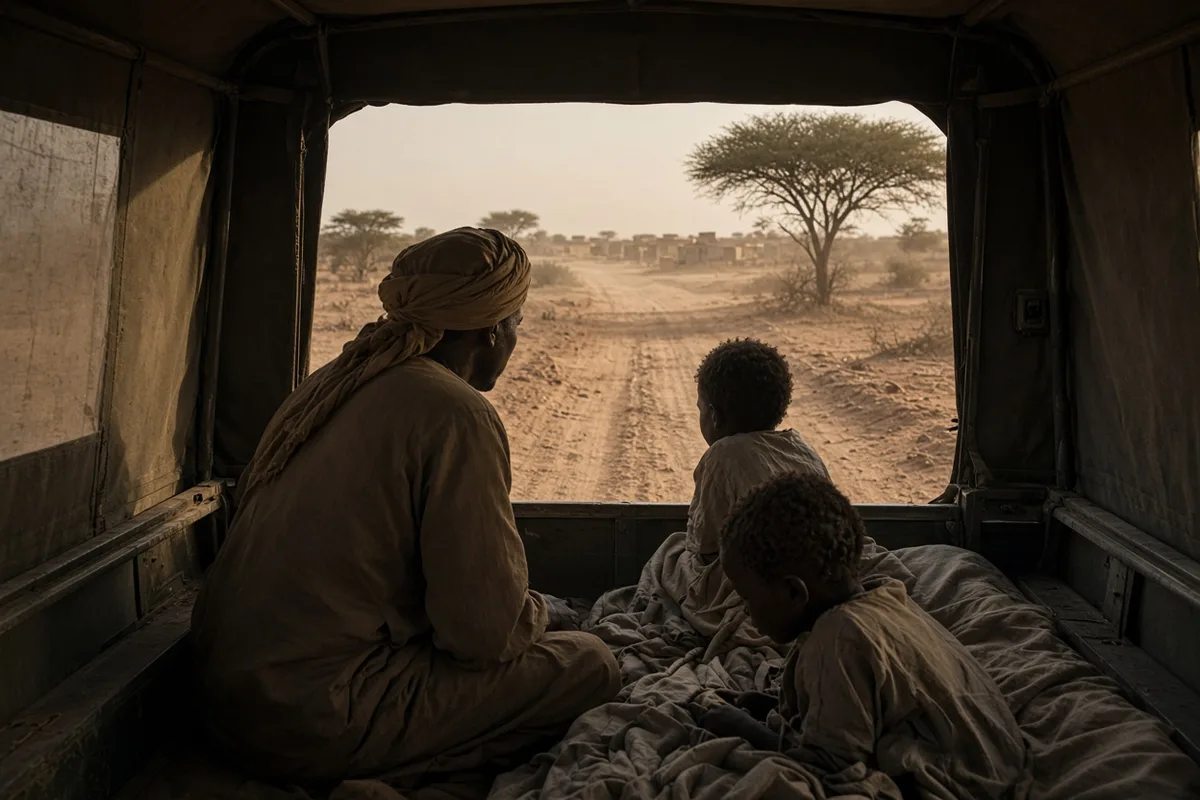
What I keep, mostly, is smaller than any of that. I keep the sound of a form being filled out with a bad pen. I keep the particular give of a pustule under a fingertip, which I have never forgotten and do not want to. I keep the memory of counting days after Merca, waiting for a fever that never came, the way you might wait for weather that the sky keeps threatening and never delivers, until one day you realize you have stopped watching the sky at all.
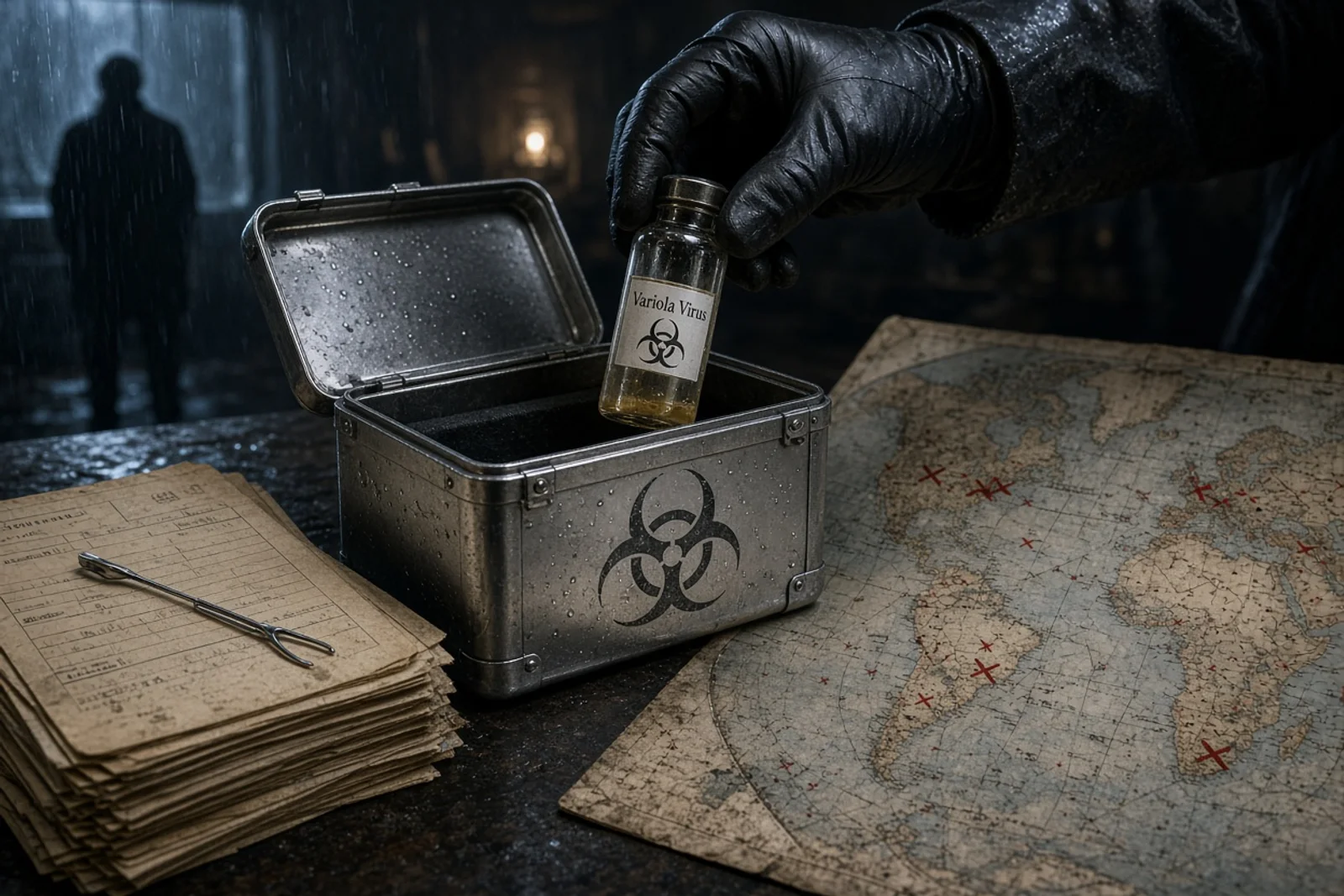
The vaccine stocks did not disappear the way the disease did. I know that two laboratories still keep the virus under lock, one in the United States, one in Russia, a committee meeting every year to argue over whether the world is done with it yet. I understand the caution. I have seen what it does to skin, to breath, to a room. But there is something almost tender in the fact that after all of that — after Jenner's hunch, after the ring vaccinations in villages with no paved road in or out, after every arm I ever rolled up under that white Horn of Africa sun — we did not destroy the enemy so much as walk it, patiently, out of every body left for it to live in, until it had nowhere further to go.
I think of the woman in Merca sometimes, though I never learned what became of her after her fever broke, whether the scars stayed heavy on her face the way they did on so many who survived, that particular pitting the old vaccinators used to check for on strangers as a kind of silent biography. I hope she is old now, somewhere, with grandchildren who have never had to learn what her card in my old file was for, who have never had to learn to feel a person's arm for a hard little bump beneath the skin, and who will go through their whole lives without ever once needing to.