


T. S. Eliot Joins the Church of England
The rain had thinned to a mist by the time we reached the lane. I had driven the last stretch from Oxford with the windows down, the smell of wet hawthorn cutting through the car. Eliot sat beside me without speaking. His collar was turned up, his hat low. We had agreed weeks before that no one else need know the hour.
Finstock church stood small against the fields. The door was already locked from inside when we arrived. Stead met us at the side gate, keys in his hand, eyes quick and uneasy. He had insisted on the bolts. “I hate spectacular conversions,” Eliot had written him earlier, and Stead repeated the line now as if to steady himself.
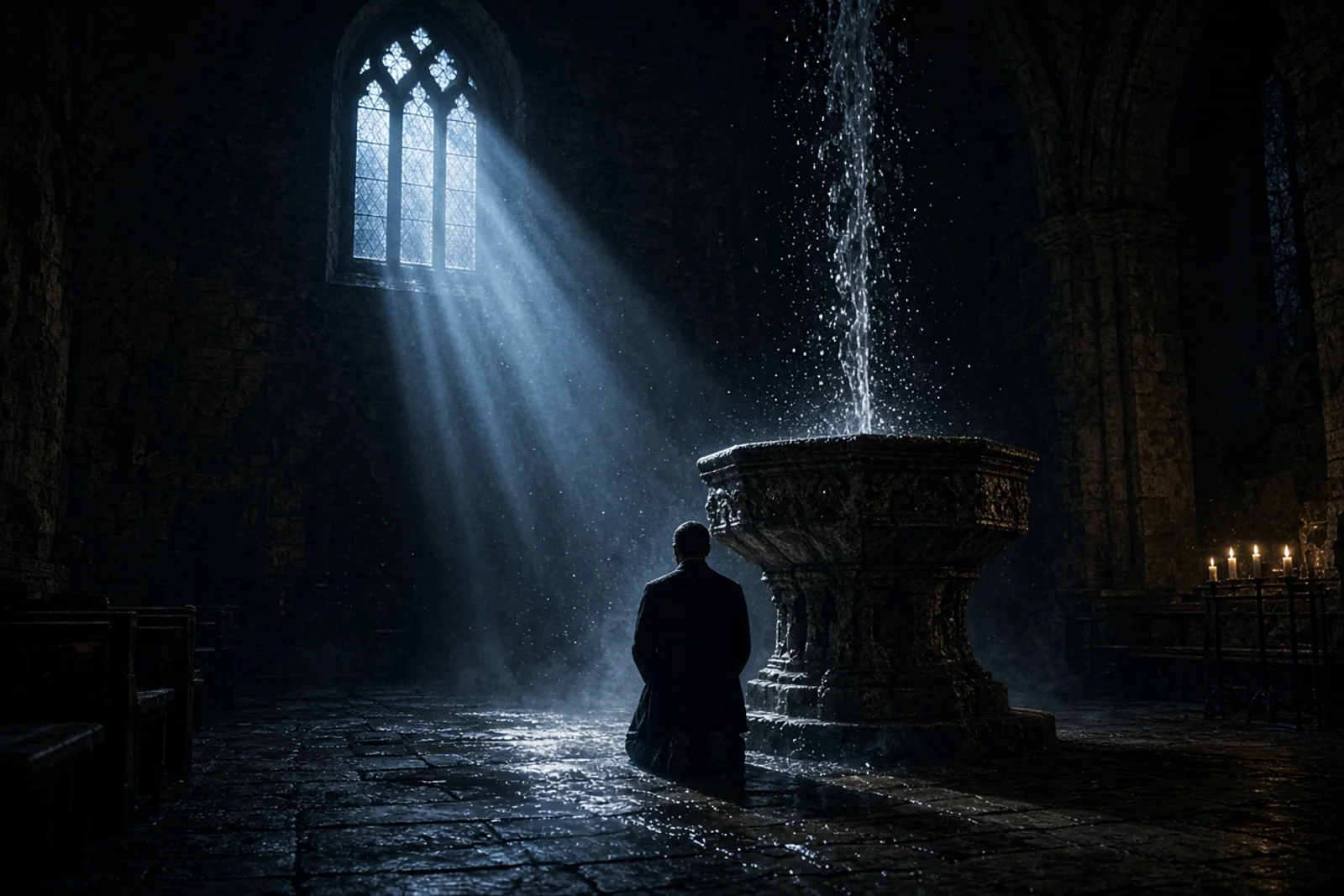
We stepped through the low porch. The nave smelled of damp stone and old wax. Stead had brought only the necessary vessels and a single witness from the parish, an elderly man who kept his gaze on the floor. I stood a few paces back, near the font. The water had been drawn that morning. It caught the weak light from the clerestory windows.
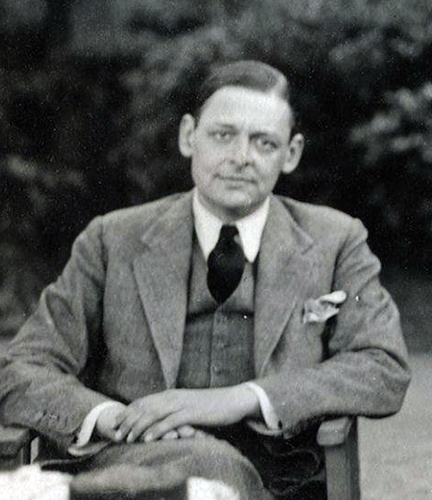
Eliot removed his hat. His face looked narrower than usual. The years at the bank, the nights correcting proofs for The Criterion, the long unraveling with Vivienne had left their mark. He had carried the manuscript of The Waste Land through those same years like a map of everything that could not be mended. Now he stood still while Stead read the service in a lowered voice.
The words moved without flourish. No audience waited outside. No photograph was taken. When the water touched his forehead Eliot closed his eyes for a moment longer than the prayer required. Stead’s hands were steady. The elderly witness coughed once into his sleeve and fell silent again.
Afterward we walked the short distance to the car without speaking of what had happened. Eliot asked only whether the roads would be clear by morning. We drove back toward Oxford under a sky that had cleared to a hard grey.
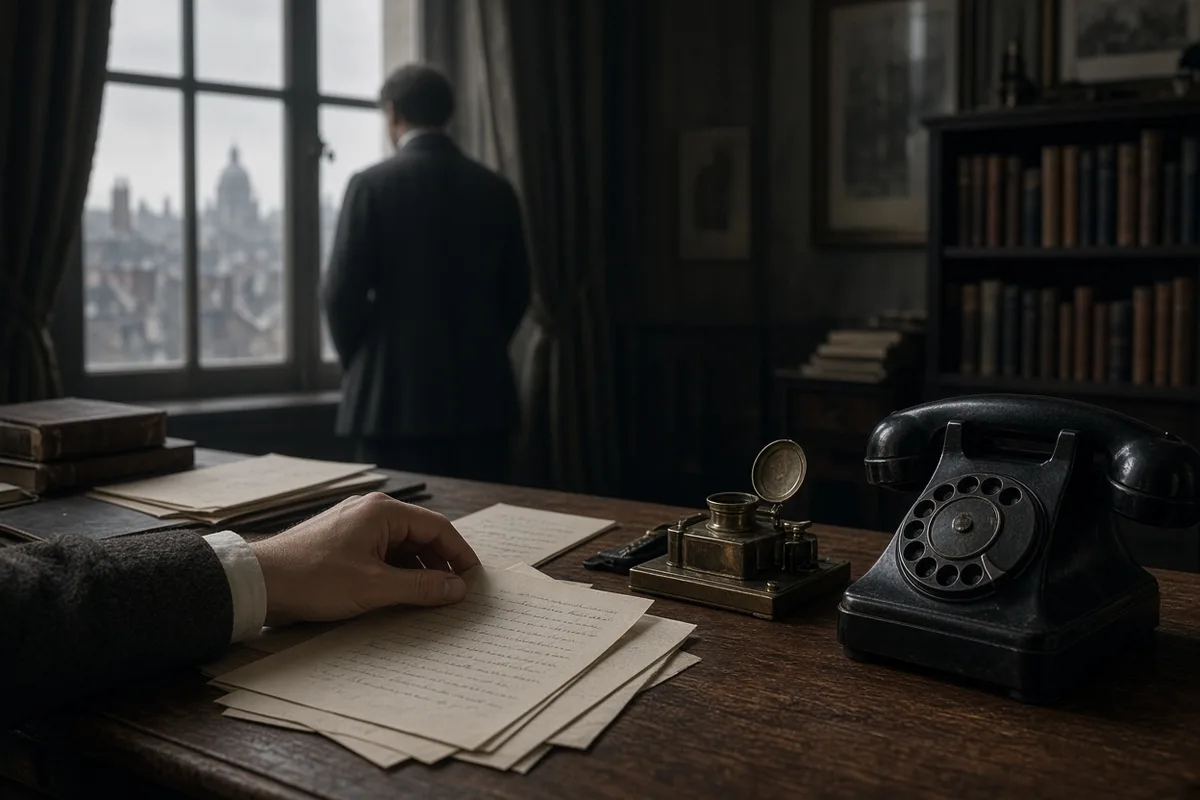
The next day he was confirmed at Cuddesdon. Bishop Strong performed the rite in the chapel there. The building was quiet, the ceremony brief. Eliot knelt on the stone without ceremony, received the bishop’s hands, and rose again. Strong said little beyond the required words. Eliot answered in the same measured tone he used when discussing a line of verse that still needed work.
In the weeks that followed he returned to London and to the routines he had already begun to shape. He attended Mass at St Stephen’s in Gloucester Road whenever the hours allowed. The church stood a short walk from his rooms. He took his place in the pew without drawing attention, though several of the older parishioners soon recognized him. He served as sidesman at first, then later as churchwarden. The duties were ordinary: counting the collection, locking the doors after evensong, making certain the candles were replaced before the next feast.
Vivienne’s health continued to decline. The separation came in 1933. Eliot moved for a time into the clergy house attached to St Stephen’s. He kept the same hours for work at Faber, the same long evenings with manuscripts, but the pattern of his days now included regular confession and the daily offices. He spoke of the change only when asked directly, and even then he limited himself to the public statement already printed in the preface to For Lancelot Andrewes. Classicist in literature, royalist in politics, anglo-catholic in religion. The sentence stood as he had written it.
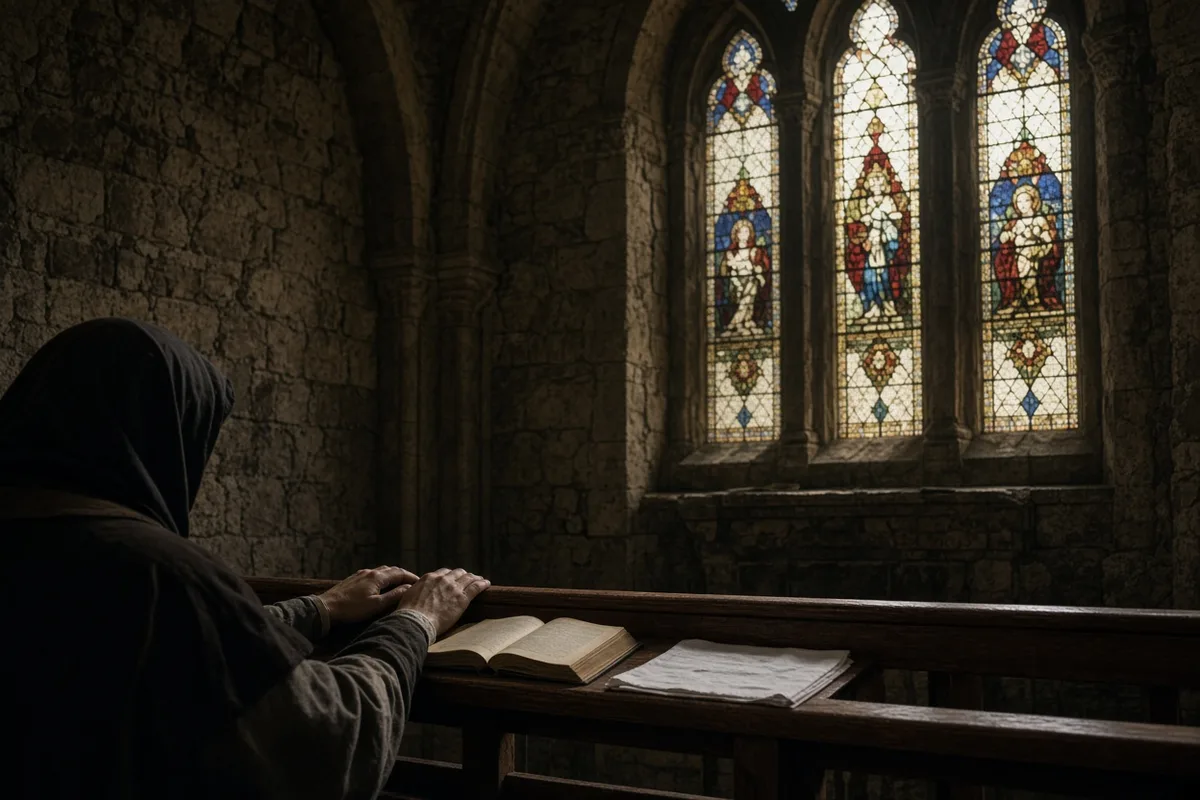
The poems that came afterward carried the new discipline inside their lines. Burnt Norton appeared first, then the others. He worked at them between meetings at the bank and later at the publishing house. The still point he named in those pages was not an abstraction. He had found it in the repeated motion of the liturgy, in the silence between the collects, in the fact that the same prayers were offered whether or not the world outside noticed.
Valerie Fletcher entered his life quietly years later. They married in 1957. She managed the correspondence and the archive with the same care he had once given to other writers’ manuscripts. After his death she continued the work until her own. Her funeral was held at St Stephen’s, the same church where he had kept the wardenship for twenty-five years.
I saw him only a few times after the confirmation. Once, near the end of the 1930s, he was leaving the church after a weekday Mass. He carried his hat in his hand. The street was busy, yet he walked as though the pavement itself required attention. He nodded when he noticed me but did not stop. The traffic moved past. He turned the corner and was gone.
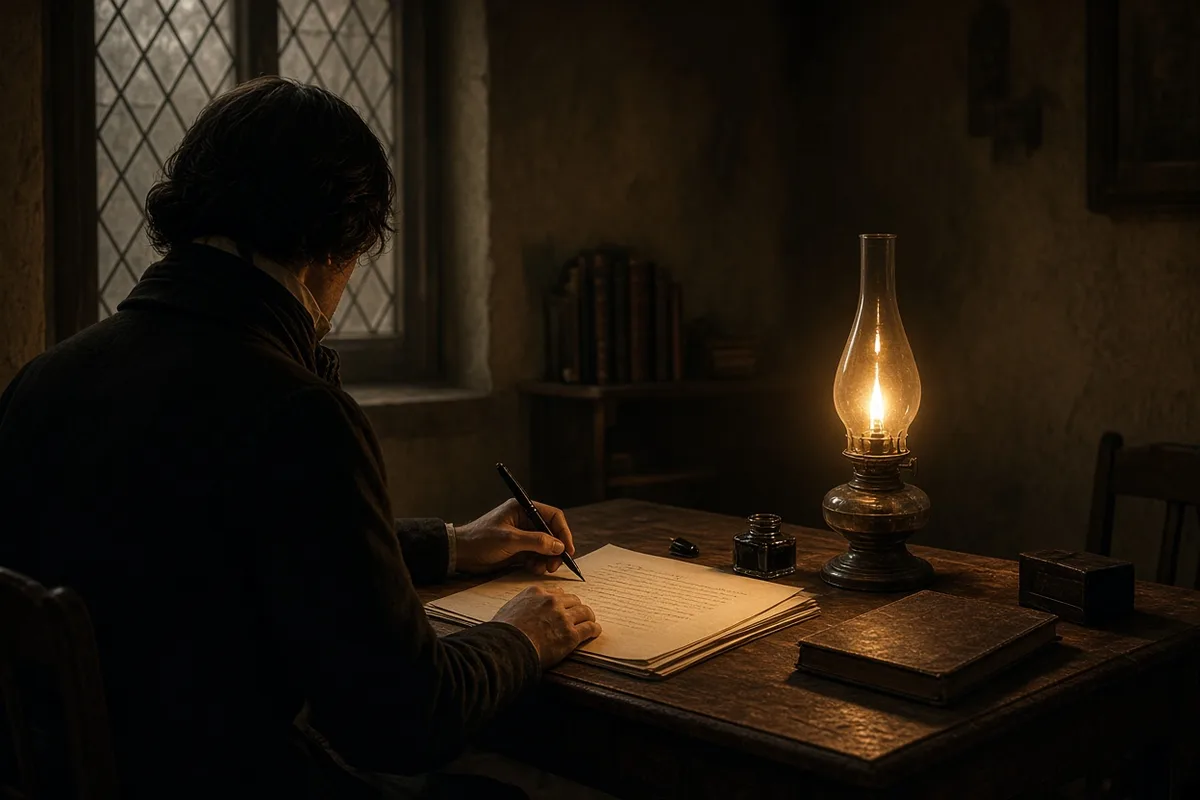
The church at Finstock remains small. The door is no longer kept locked during the day. Visitors sometimes ask about the baptism, though the record is brief. The water in the font is changed each week. The light still falls at the same angle through the clerestory when the afternoons are clear.
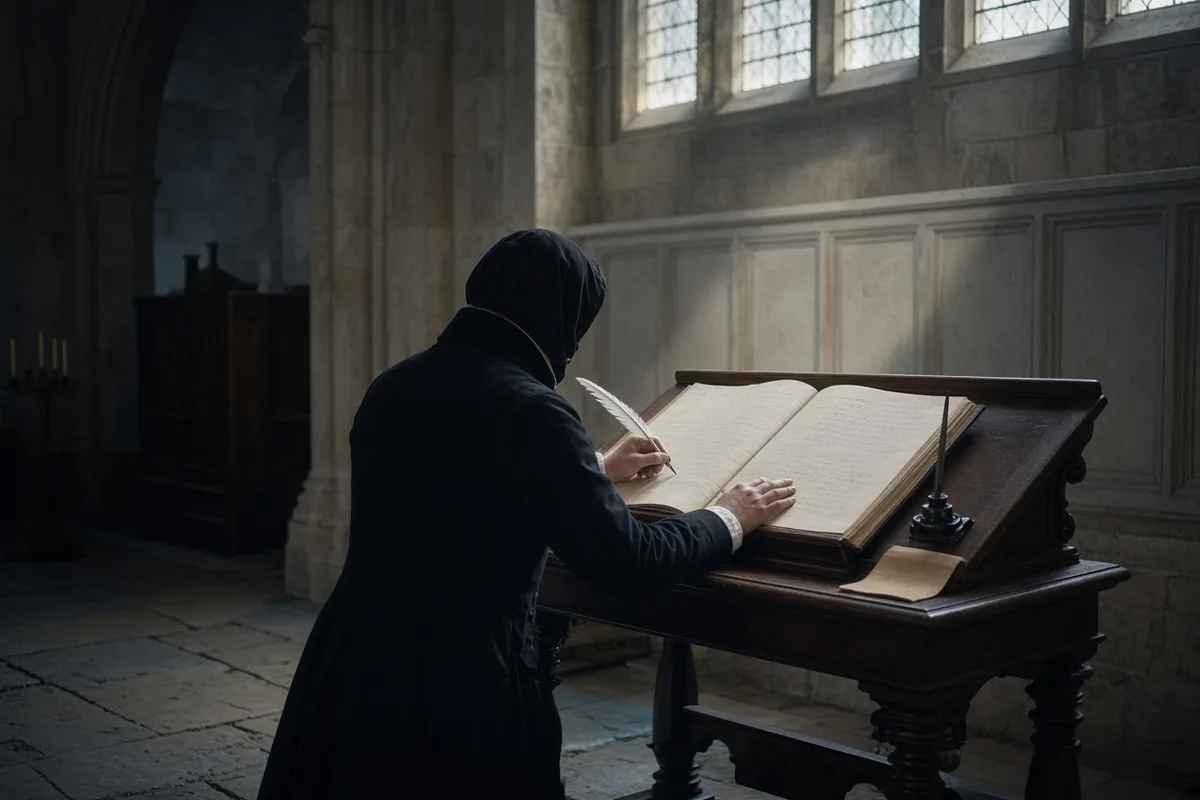
The font at Finstock still bears the same brass plate recording the 1927 baptism, though the engraving has worn thin from repeated polishing. On 29 June that year the parish register lists only the name Thomas Stearns Eliot, the sponsors Stead and the elderly witness whose signature appears as J. H. Morgan, and the officiant’s note that the rite followed the order in the 1662 Book of Common Prayer. Stead kept the entry brief because Eliot had asked that nothing further appear in the parish magazine. The same register shows the next baptism two weeks later, an infant from the nearby farm whose family had attended the church since the 1880s.
After the confirmation at Cuddesdon on 30 June, Eliot returned to the rooms above the Faber offices at 24 Russell Square. The daily log he kept for the firm records that on 3 July he read through the proofs of Marianne Moore’s Observations and initialed the printer’s instructions in the margin. On Sundays he walked the half-mile from his flat in Burleigh Street to St Stephen’s for the eight o’clock Mass. The service register for 10 July notes his presence among the twenty-three communicants; the sidesman that morning was a retired civil servant named Arthur W. F. Edwards who later wrote in his diary that Eliot “placed the collection plate on the credence without a word.” By 1932 Eliot had been elected churchwarden, a post he held until 1957. The annual accounts for 1934 list his signature beside the figure £47 3s 4d collected at the Easter offering.
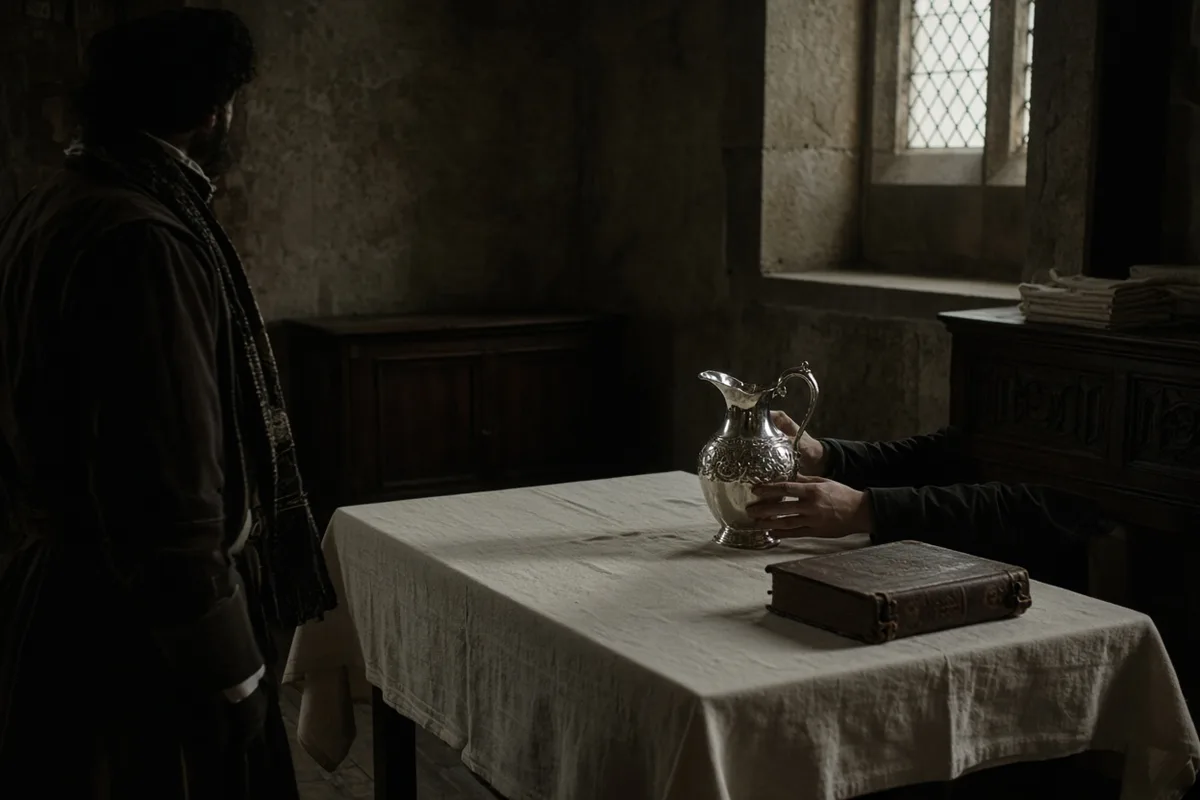
In 1935 the first performance of Murder in the Cathedral took place in the chapter house at Canterbury on 15 June. Eliot had written the text in six weeks while staying at the clergy house in Chichester. The program printed by the Friends of Canterbury Cathedral records that he received no fee beyond the cost of his train fare from London. After the run he returned to his weekday duties at St Stephen’s, where the vicar, Eric Milner-White, noted in the chapter book that Eliot had repaired the broken catch on the north door using a hinge salvaged from a discarded bookcase. The same year the parish purchased new cassocks for the choir at a cost of £18 15s, an entry Eliot countersigned as warden.
The Nobel Prize announcement reached him at Faber on 4 November 1948. The telegram from Stockholm is preserved in the Eliot archive at Harvard and bears the time stamp 11:47 a.m. He attended the ceremony on 10 December wearing the same black overcoat he used for weekday evenings at the church. The citation praised “his outstanding, pioneer contribution to present-day poetry,” yet the acceptance speech he delivered contains only one sentence on his own work: “It is part of the poet’s business to keep the English language up to date.” Two days later he was back in London in time for the Advent ember days.
Valerie Fletcher began work at Faber in 1949 as his secretary. Their marriage took place at St Stephen’s on 10 January 1957 with the vicar, George D. Smith, officiating. The register records two witnesses: Eliot’s sister Margaret and the publisher Richard de la Mare. After the service they walked the short distance to the clergy house for tea. Eliot continued as warden until the marriage, then served as sidesman until his death. The 1964 Easter accounts still carry his initials beside the total of £112 8s 9d.
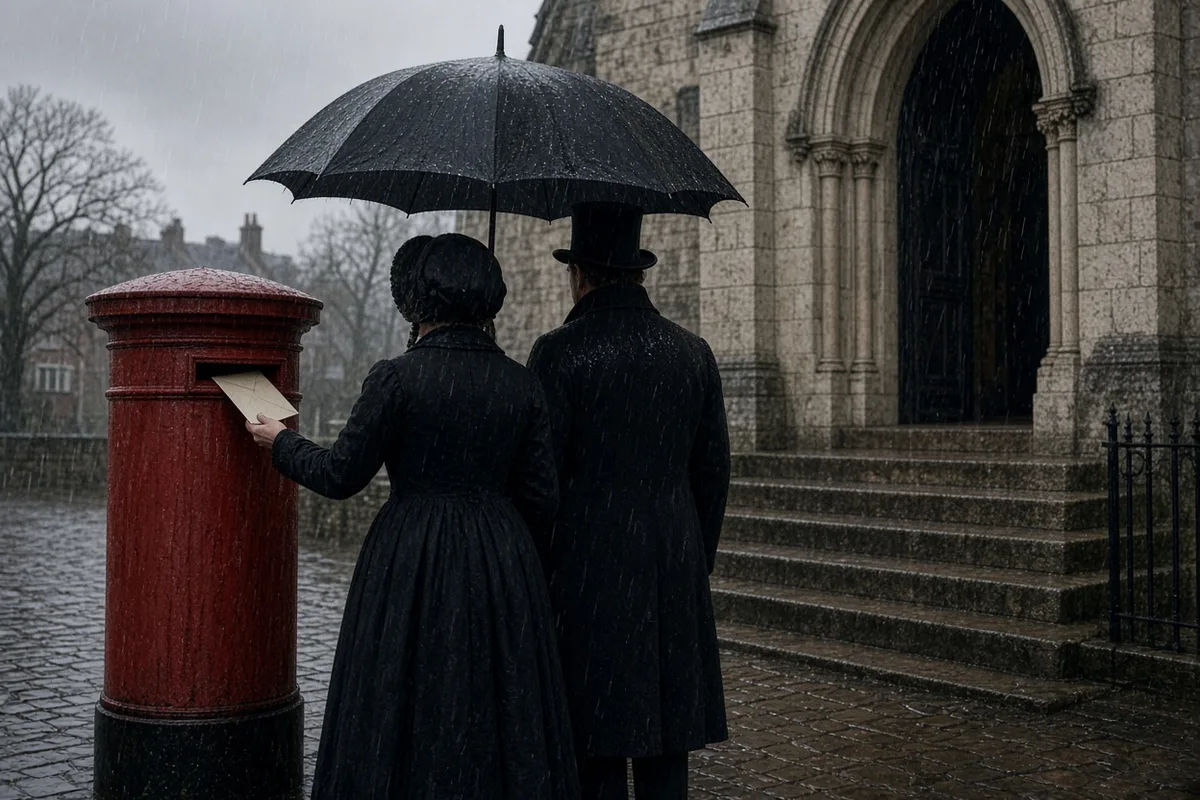
Eliot died at his home at 3 Kensington Court Gardens on 4 January 1965. The death certificate lists the cause as emphysema and gives the time as 5:18 p.m. His funeral was held at St Stephen’s on 7 January; the order of service printed by the parish lists the hymns “Praise to the Holiest” and “The King of Love My Shepherd Is.” The body was taken afterward to East Coker for burial in the churchyard beside the south porch. Valerie survived him by forty-seven years. She died on 9 November 2012 at her flat in Kensington and was buried in the same grave. The parish register at East Coker records both interments under the single plot number 147.
Today the west door at Finstock stands open from nine until four each weekday. A small brass plate fixed to the wall beside the font in 1988 by the Eliot Society notes only the date and the names of the three men present. The current vicar, the Reverend Sarah R. Jones, replaces the water every Monday morning using a copper jug kept in the vestry cupboard. On clear afternoons the light through the clerestory still reaches the same stone slab where Eliot stood. The last regular visitor I met there was a retired schoolmaster from Oxford who comes once a month to check the register against his own notes on the 1927 entries. He arrives by the 11:17 train, walks the lane, and leaves before the door is locked again at four.
The font at Finstock still bears the same brass plate recording the 1927 baptism, though the engraving has worn thin from repeated polishing. On 29 June that year the parish register lists only the name Thomas Stearns Eliot, the sponsors Stead and the elderly witness whose signature appears as J. H. Morgan, and the officiant’s note that the rite followed the order in the 1662 Book of Common Prayer. Stead kept the entry brief because Eliot had asked that nothing further appear in the parish magazine. The same register shows the next baptism two weeks later, an infant from the nearby farm whose family had attended the church since the 1880s.
After the confirmation at Cuddesdon on 30 June, Eliot returned to the rooms above the Faber offices at 24 Russell Square. The daily log he kept for the firm records that on 3 July he read through the proofs of Marianne Moore’s Observations and initialed the printer’s instructions in the margin. On Sundays he walked the half-mile from his flat in Burleigh Street to St Stephen’s for the eight o’clock Mass. The service register for 10 July notes his presence among the twenty-three communicants; the sidesman that morning was a retired civil servant named Arthur W. F. Edwards who later wrote in his diary that Eliot “placed the collection plate on the credence without a word.” By 1932 Eliot had been elected churchwarden, a post he held until 1957. The annual accounts for 1934 list his signature beside the figure £47 3s 4d collected at the Easter offering.
In 1935 the first performance of Murder in the Cathedral took place in the chapter house at Canterbury on 15 June. Eliot had written the text in six weeks while staying at the clergy house in Chichester. The program printed by the Friends of Canterbury Cathedral records that he received no fee beyond the cost of his train fare from London. After the run he returned to his weekday duties at St Stephen’s, where the vicar, Eric Milner-White, noted in the chapter book that Eliot had repaired the broken catch on the north door using a hinge salvaged from a discarded bookcase. The same year the parish purchased new cassocks for the choir at a cost of £18 15s, an entry Eliot countersigned as warden.
The Nobel Prize announcement reached him at Faber on 4 November 1948. The telegram from Stockholm is preserved in the Eliot archive at Harvard and bears the time stamp 11:47 a.m. He attended the ceremony on 10 December wearing the same black overcoat he used for weekday evenings at the church. The citation praised “his outstanding, pioneer contribution to present-day poetry,” yet the acceptance speech he delivered contains only one sentence on his own work: “It is part of the poet’s business to keep the English language up to date.” Two days later he was back in London in time for the Advent ember days.

Valerie Fletcher began work at Faber in 1949 as his secretary. Their marriage took place at St Stephen’s on 10 January 1957 with the vicar, George D. Smith, officiating. The register records two witnesses: Eliot’s sister Margaret and the publisher Richard de la Mare. After the service they walked the short distance to the clergy house for tea. Eliot continued as warden until the marriage, then served as sidesman until his death. The 1964 Easter accounts still carry his initials beside the total of £112 8s 9d.
Eliot died at his home at 3 Kensington Court Gardens on 4 January 1965. The death certificate lists the cause as emphysema and gives the time as 5:18 p.m. His funeral was held at St Stephen’s on 7 January; the order of service printed by the parish lists the hymns “Praise to the Holiest” and “The King of Love My Shepherd Is.” The body was taken afterward to East Coker for burial in the churchyard beside the south porch. Valerie survived him by forty-seven years. She died on 9 November 2012 at her flat in Kensington and was buried in the same grave. The parish register at East Coker records both interments under the single plot number 147.
Today the west door at Finstock stands open from nine until four each weekday. A small brass plate fixed to the wall beside the font in 1988 by the Eliot Society notes only the date and the names of the three men present. The current vicar, the Reverend Sarah R. Jones, replaces the water every Monday morning using a copper jug kept in the vestry cupboard. On clear afternoons the light through the clerestory still reaches the same stone slab where Eliot stood. The last regular visitor I met there was a retired schoolmaster from Oxford who comes once a month to check the register against his own notes on the 1927 entries. He arrives by the 11:17 train, walks the lane, and leaves before the door is locked again at four.