


Terry Fox Runs a Marathon a Day
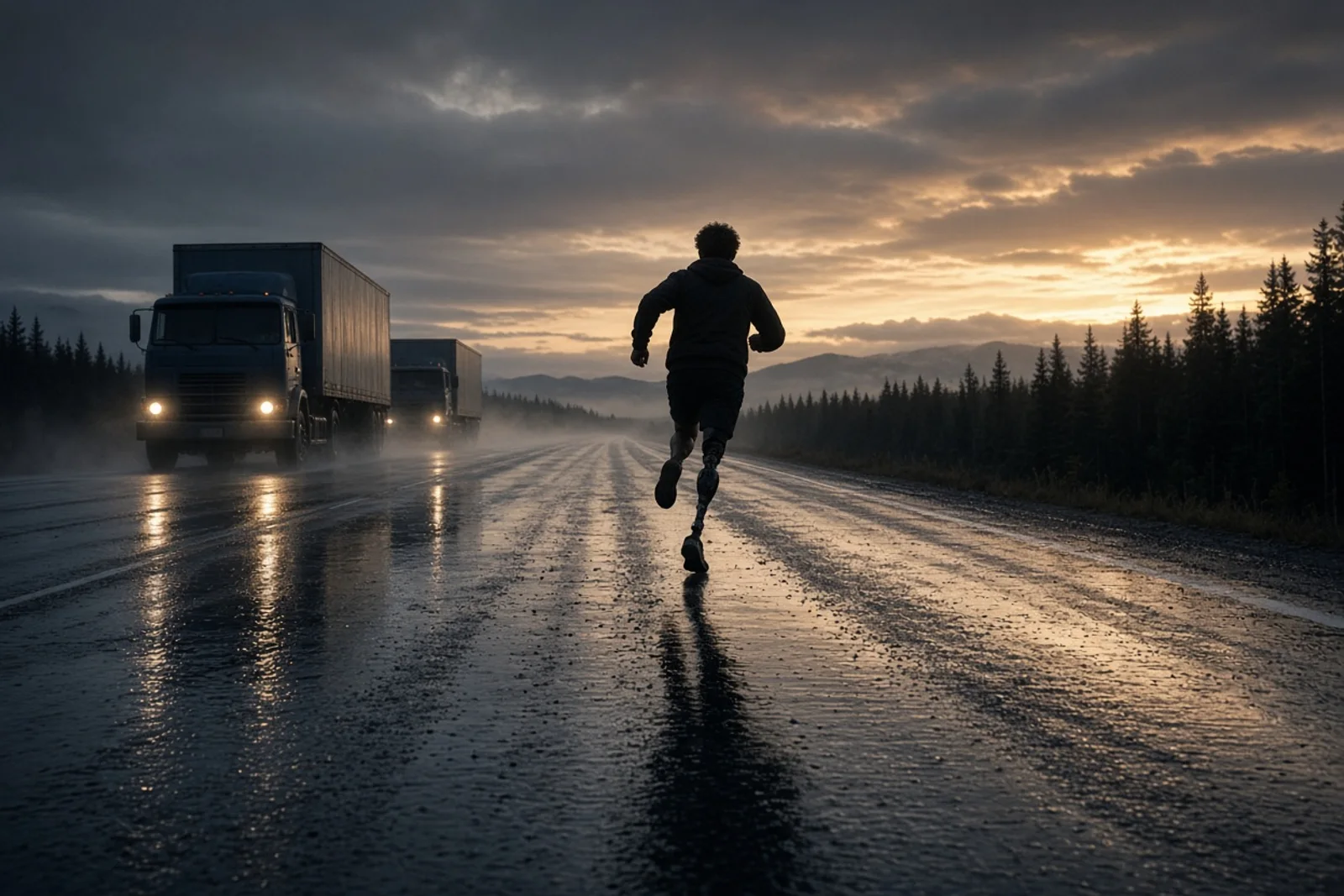
The water in St. John's harbor that April morning had a bite to it that got into your teeth. I stood back with my clipboard and my list of towns, the whole itinerary for the next five months folded into a manila envelope under my arm, and I watched a twenty-one-year-old kid in a Marathon of Hope t-shirt wade out past his ankles into the Atlantic. He bent down. He filled a plastic bottle with ocean water to carry with him, and he dipped the steel and fiberglass foot of his artificial leg into the surf like he was baptizing it for the work ahead. There were maybe a dozen of us on the beach. Nobody clapped. Nobody thought, watching that, that we were looking at the beginning of something that would still be running decades after he was gone.
I'd been hired on with the Canadian Cancer Society to scout ahead of him, town by town, arranging school gymnasiums and church basements where he could stop and speak, and so I knew his file before I ever shook his hand. Osteogenic sarcoma, diagnosed at eighteen, cancer above the right knee. Amputation. Sixteen months of treatment. He'd been a basketball player at Simon Fraser, the kind of kid who in junior high was five feet tall with no natural talent and still willed his way onto a school team through sheer repetition, practicing every morning before the sun was properly up. That was the shape of him, I came to understand. Whatever he lacked, he made up for by refusing to stop.
The wards were what did it, he told me once, sitting on the tailgate of the van eating a sandwich somewhere outside Gander. Sixteen months of watching other cancer patients, some of them children, suffering in ways that made his own amputation feel almost lucky by comparison. He said he couldn't un-see it. He said more money had to go into research, and since nobody else seemed to be running across the country to get it, he decided he would.

So April 12th, 1980, that was the start of it: one leg, one prosthesis he'd built up the strength to run on, and a plan to cross the entire country to the Pacific. Doug Alward, his oldest friend from those basketball days, drove the van. Some nights, when there wasn't money for a motel, the two of them slept in it on the shoulder of the highway, engine off, breath fogging the windows.
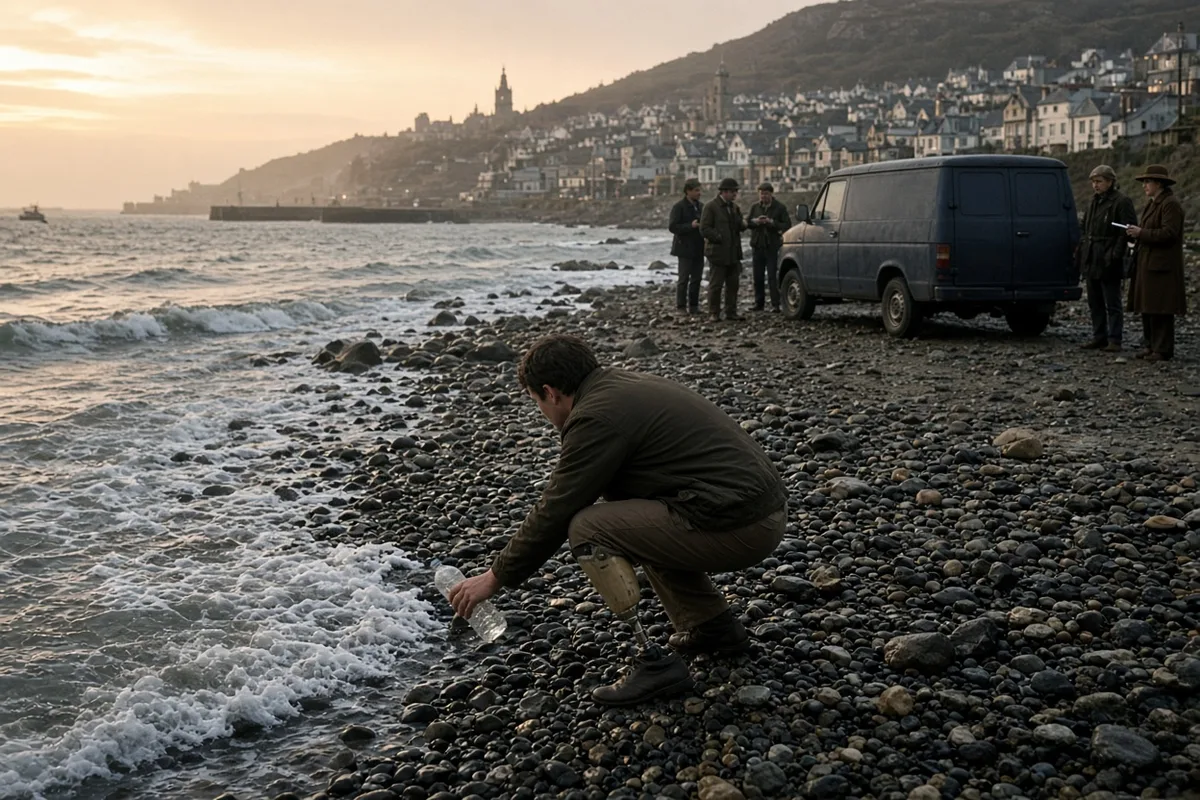
His mornings started at four-thirty. I know because I was sometimes there for them, holding a flashlight while he strapped the leg on in the dark, the Velcro and buckles loud in the cold quiet before any bird had started up. He ran close to forty-two kilometres a day, a full marathon, every single day, which is a number that sounds reasonable on paper and is in fact almost impossible, and he did it on a limb that chafed and blistered and once developed cysts that left blood in his shoe by the end of an afternoon. He never told me the pain wasn't real. He told me it wasn't the point.
Newfoundland in April was not kind to him. Snow came sideways off the water some mornings. Wind pushed him sideways on the road. There were stretches — long ones — where nobody came out to watch, where no donation landed in the fishbowl we kept by the van, where it was just Terry's peculiar hopping stride, thud and swing, thud and swing, echoing off the rock cuts with nobody but Doug and me and the gulls to hear it.
I used to worry those empty stretches would break him before the country ever got the chance to notice him. He didn't seem worried. He'd say, more or less, that people would come around if they knew, and the job in front of us was to make sure they knew. So I kept driving ahead, calling radio stations, walking into Legion halls and Rotary lunches with photographs of a smiling kid running on a metal leg, telling anyone who'd listen that he was coming through their town on such-and-such a date and could they please be there.
Prince Edward Island was gentler. Nova Scotia found its voice. By New Brunswick the fishbowl in the van wasn't a fishbowl anymore, it was buckets, and there were mornings I'd arrive in a town two days ahead of him and already find hand-painted signs nailed to telephone poles. Something was catching. You could feel it building the way you feel weather change before you can name it.
He turned down every offer that came with a logo attached. Companies wanted their name on his shirt, on the van, on banners strung across small-town main streets, and he said no to every one of them, because the day this became an advertisement was the day people stopped seeing him and started seeing a product. I watched him refuse money more than once, money we genuinely needed, because he'd rather run broke and clean than well-funded and compromised. That refusal became its own kind of legend before the run was even finished.
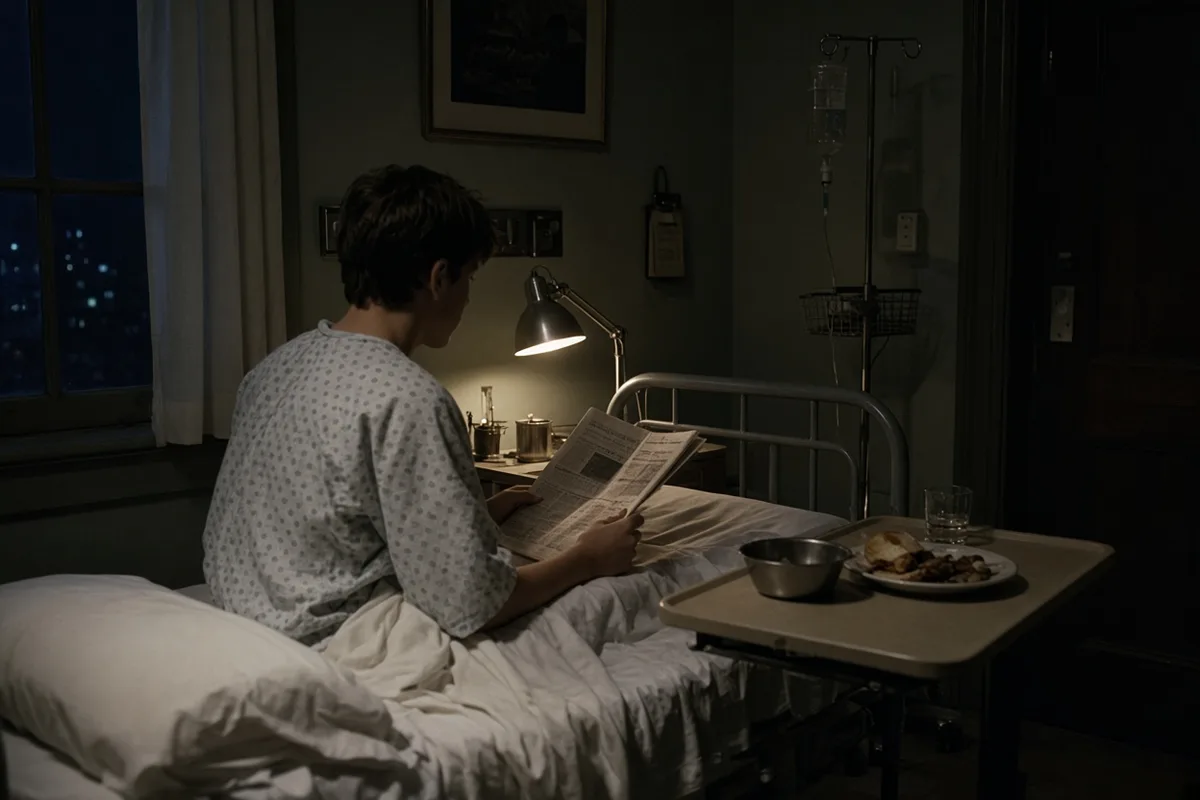
Quebec tested him in a different way — the language, the unfamiliar towns, some quiet indifference in places where his story hadn't traveled yet — but he kept the same pace, the same four-thirty mornings, the same nightly collapse into whatever bed or bench or van seat was available. Then on the twenty-eighth of June he crossed into Ontario, and I have never, before or since, watched a province turn like that one turned.
Crowds started gathering that weren't organized by me or by anybody on a clipboard. People lined the shoulders of highways outside towns I'd never scheduled a stop in. Kids ran alongside him for a kilometre at a time in their school clothes. Cheques and coins and folded bills went into buckets faster than volunteers could count them, and radio hosts who'd never mentioned his name started leading their broadcasts with updates on where exactly on the map he was that hour. He stopped in more than four hundred towns and schools over the length of the run, and it felt, by midsummer in Ontario, as though half the country had personally decided to walk a few hundred meters beside him.
The heat was brutal that summer, humid Ontario heat that soaked through his shirt by nine in the morning, and still he was out there before dawn, still finishing some evenings as late as seven at night, the stump raw under the socket, his hip aching from the unnatural gait he'd trained his body into. I asked him once if he ever thought about stopping short of the coast. He looked at me like the question didn't compute. Stopping wasn't part of the vocabulary he was working with.
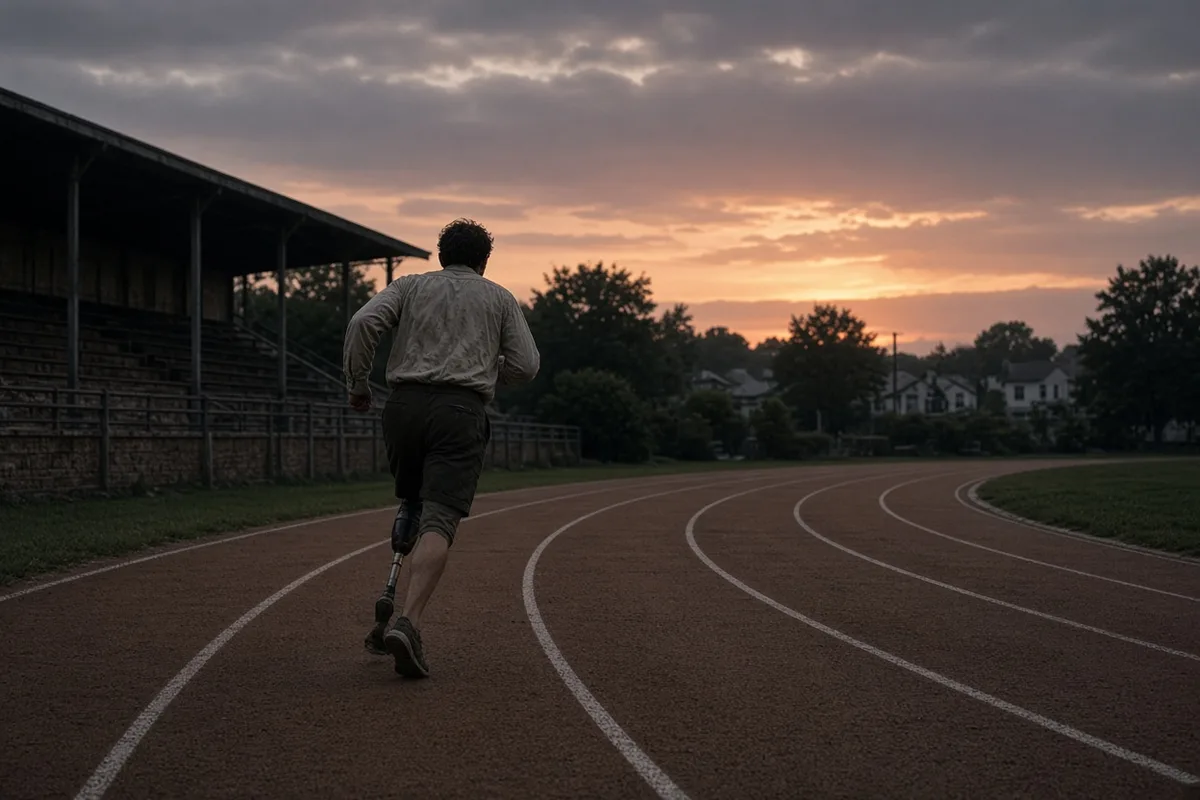
By late August he'd covered more than five thousand kilometres. The number climbing behind him — the money, not just the miles — had reached something like twenty-four million dollars, a figure that would have seemed like a joke to either of us standing on that cold Newfoundland beach in April. He was closing in on Thunder Bay.
I was there the morning it stopped. September first. He started the way he always started, before the light, and got a short distance out of town, and something in his chest wasn't right — a cough that wouldn't clear, a tightness he couldn't run through the way he'd run through everything else for a hundred and forty-three days. He stopped the van himself. That detail has stayed with me longer than almost anything else from that whole summer: he was the one who called it, because even Terry Fox knew the difference between pain he could outrun and something else.
They got him to hospital, and the word came back within hours, and it went through the crowd that had gathered outside the building like cold water down a collar. The cancer was in his lungs now. Five thousand three hundred and seventy-three kilometres behind him, and the one thing that could stop him had reached up and done exactly that.
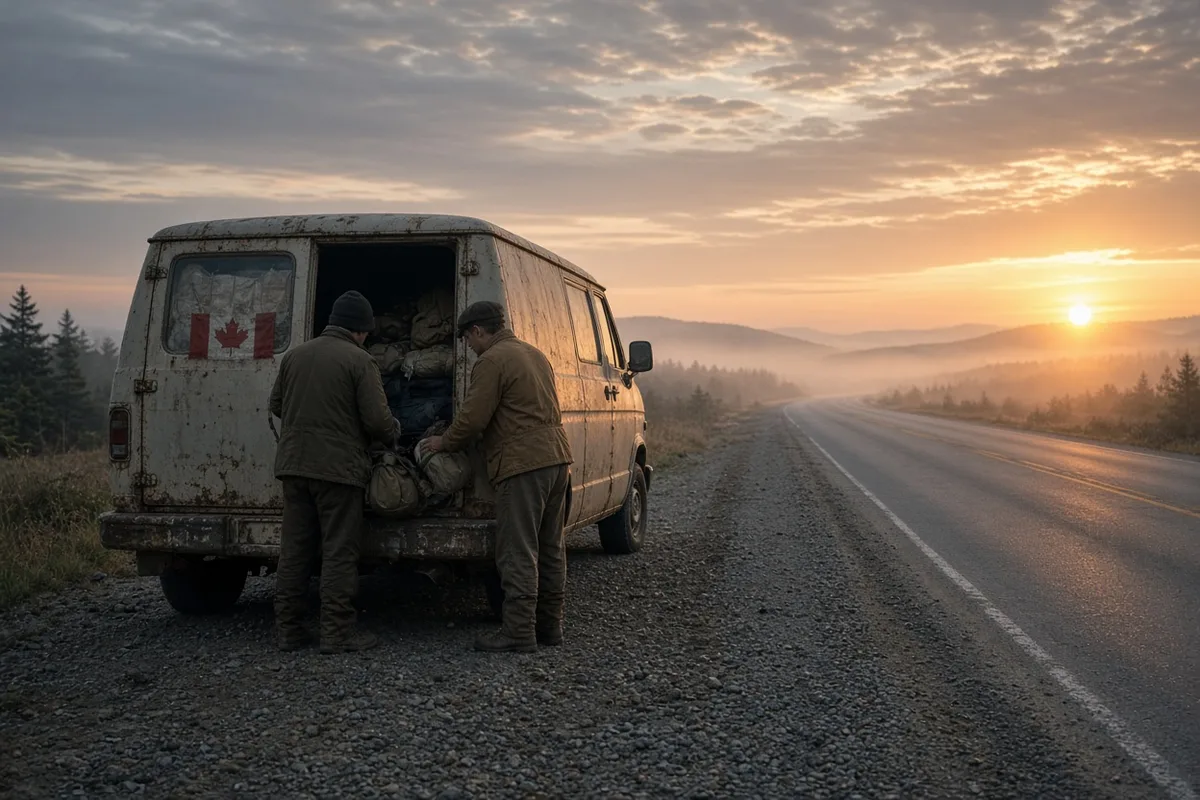
He held a press conference from that hospital, sitting there in a gown with tubes in his arm, and he did not apologize and he did not weep in front of the cameras, he asked Canadians to keep giving anyway, to understand that the money mattered more than the legs that had carried it that far. I stood at the back of that room with people I'd never seen cry in public crying openly, and I remember thinking that whatever he'd started on that Newfoundland beach in April had stopped needing him to run in order to keep moving.
By February of 1981 the fund had passed twenty-four million dollars, a dollar for every Canadian, which had been the quiet, almost embarrassed goal he'd set for himself back when nobody outside a few small towns knew his name. He spent that winter in and out of hospital in New Westminster, still talking to reporters, still pushing the cause from a bed when his legs — leg — couldn't push it down a highway anymore.
He died on the twenty-eighth of June, 1981, one month shy of his twenty-third birthday. I heard about it on a car radio, pulled over on a shoulder much like the ones he used to sleep beside, and I sat there a long while before I could make myself drive again.
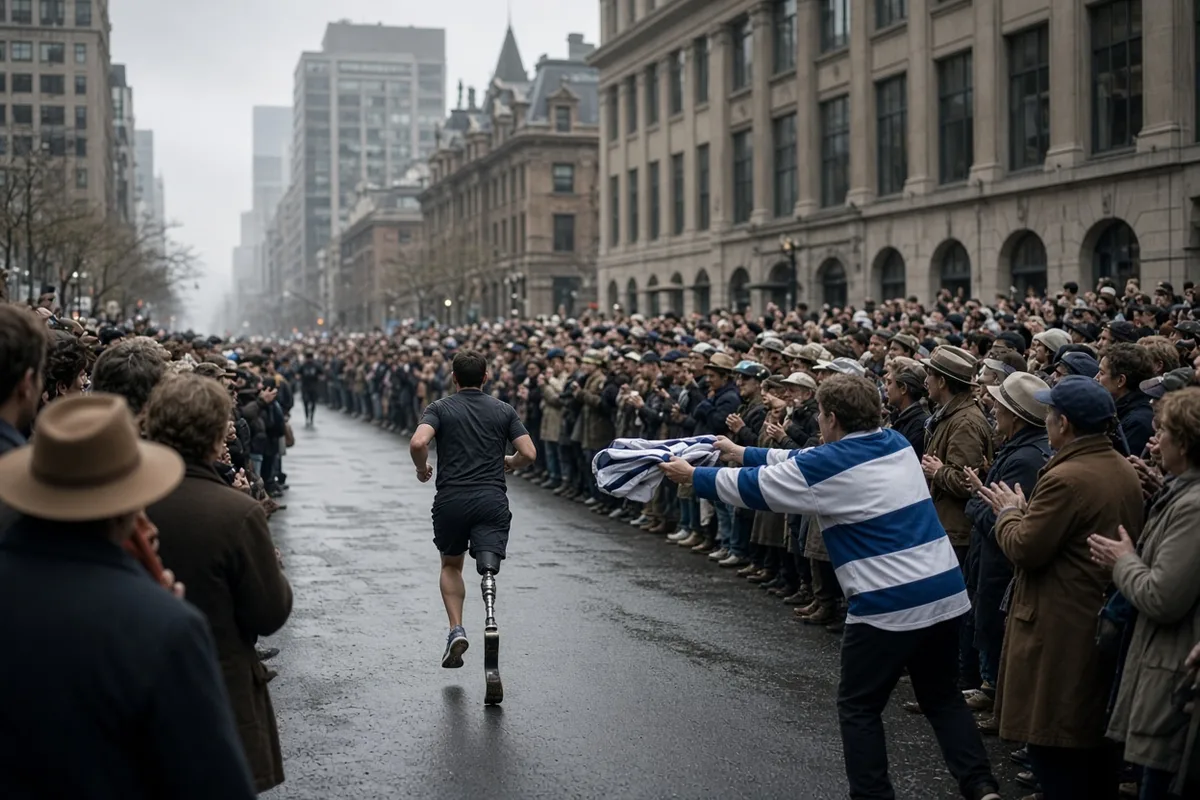
Before that, though, in the last months of his life, a letter had reached him in the hospital — a telegram, really — from a hotel executive named Isadore Sharp, a man who'd lost his own son to cancer two years earlier and wanted, in Terry's name, to build something that would outlast the run itself: an annual event, held every September, where ordinary people who couldn't run a marathon a day could still show up and walk or jog a few kilometres and give what they could. Terry knew about it before he died. I like to think that mattered to him more than any of the medals that came after.
They gave him the Order of Canada, made him its youngest Companion, named him Canada's athlete of the year, and none of it, I suspect, would have moved him half as much as what happened that September, the thirteenth day, 1981 — the first Terry Fox Run, held simultaneously at seven hundred and sixty sites from one end of the country to the other. I went to one of them, a park not far from where I'd once stood with a clipboard and an envelope of hotel bookings, and I watched strangers of every age walk a route that owed nothing to sponsorship, nothing to competition, no finish-line clock, no logo on a single shirt — exactly as he'd have wanted it, because participation, not completion, was the entire point.
That single Sunday multiplied itself. It went to Australia in 1988, to Syria in 1991, to Vietnam, to Cuba, where by the middle of the next decade nearly two million people were lacing up on the same weekend in September. It reached Oman, Hong Kong, New Zealand — towns and schools on continents Terry never set foot on, all of them observing the same modest rule he'd set from a hospital bed: no corporate names on the banners, no minimum donation required, just people moving forward for however far they chose to go.
More than a billion dollars, Canadian, has passed through that foundation since a cold morning when a kid with one leg waded into the Atlantic and filled a bottle with its water. I still have that image clearer than almost anything else from that year — not the crowds in Ontario, not the hospital room, not even the last morning outside Thunder Bay, but the sound of the surf and the particular thud of a steel foot finding the sand, testing its footing, before it turned north toward the whole unknown length of the country and started walking.