


The Amish Forgive at Nickel Mines
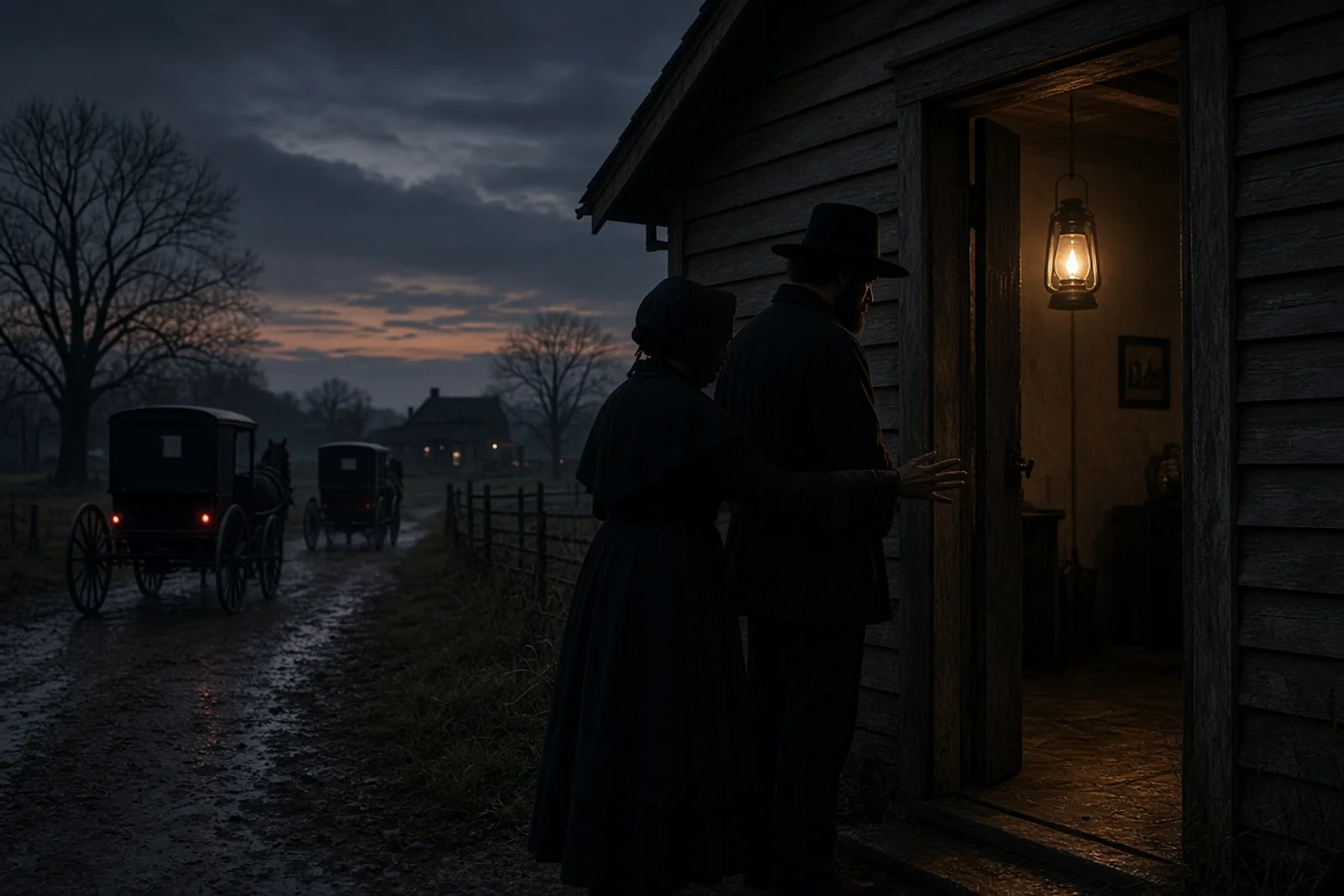
The pager went off at 10:36 that morning, and I remember thinking it was probably nothing — a fender-bender out on Mine Road, maybe a barn fire. I grabbed my boots by the door and drove the mile and a half with gravel dust rising behind the truck like smoke. By the time I turned onto the lane toward the West Nickel Mines School, there were already two state police cruisers blocking the road, lights turning without sirens, and that silence you only get in farm country when something has gone terribly wrong and everyone is too afraid to make noise.
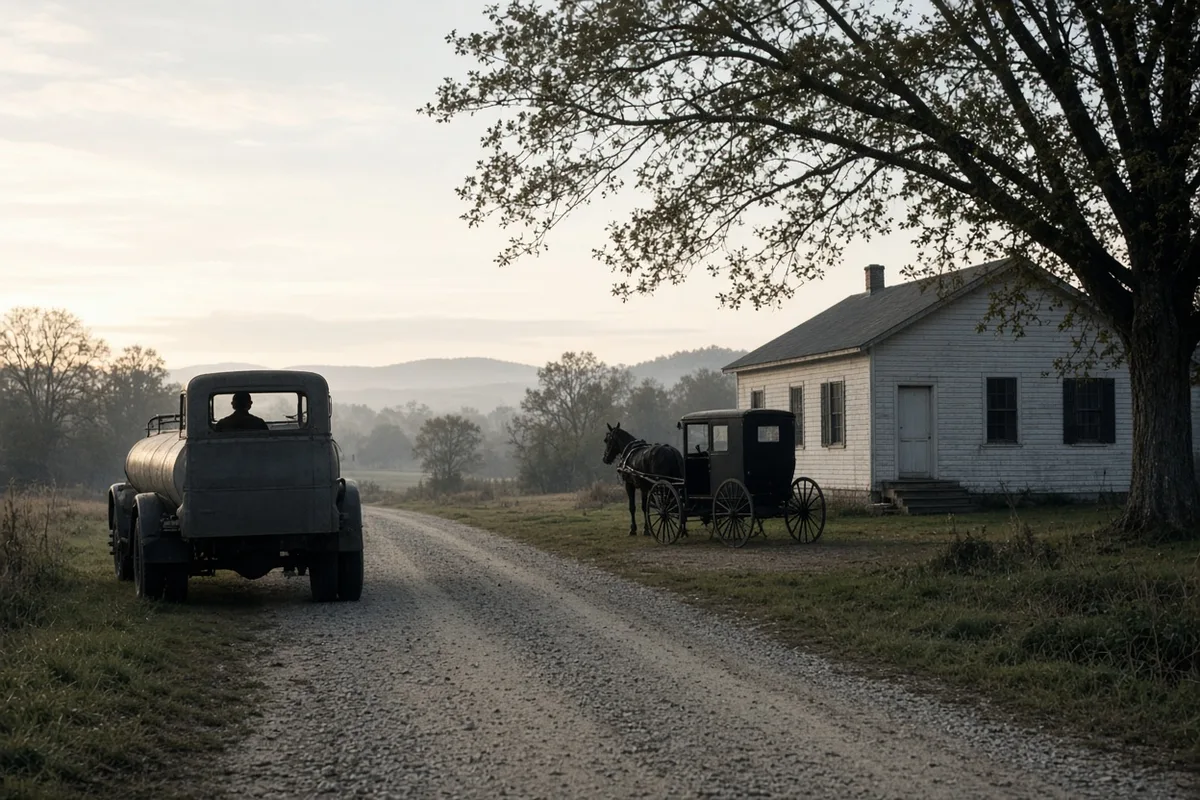
The schoolhouse sat small and white against the cornfields, the kind of one-room building that had stood for generations, the kind you'd drive past a hundred times without a second look. That morning it looked like the inside of a wound. I had known Charlie Roberts for years — everybody had. He drove the milk truck. He waved at buggies on the road, stopped for coffee at the corner store, seemed like any other man doing an ordinary job among people who trusted him enough to let him onto their farms every morning before light. None of us had the first idea what he carried in the back of that truck when he pulled up to the school that day.
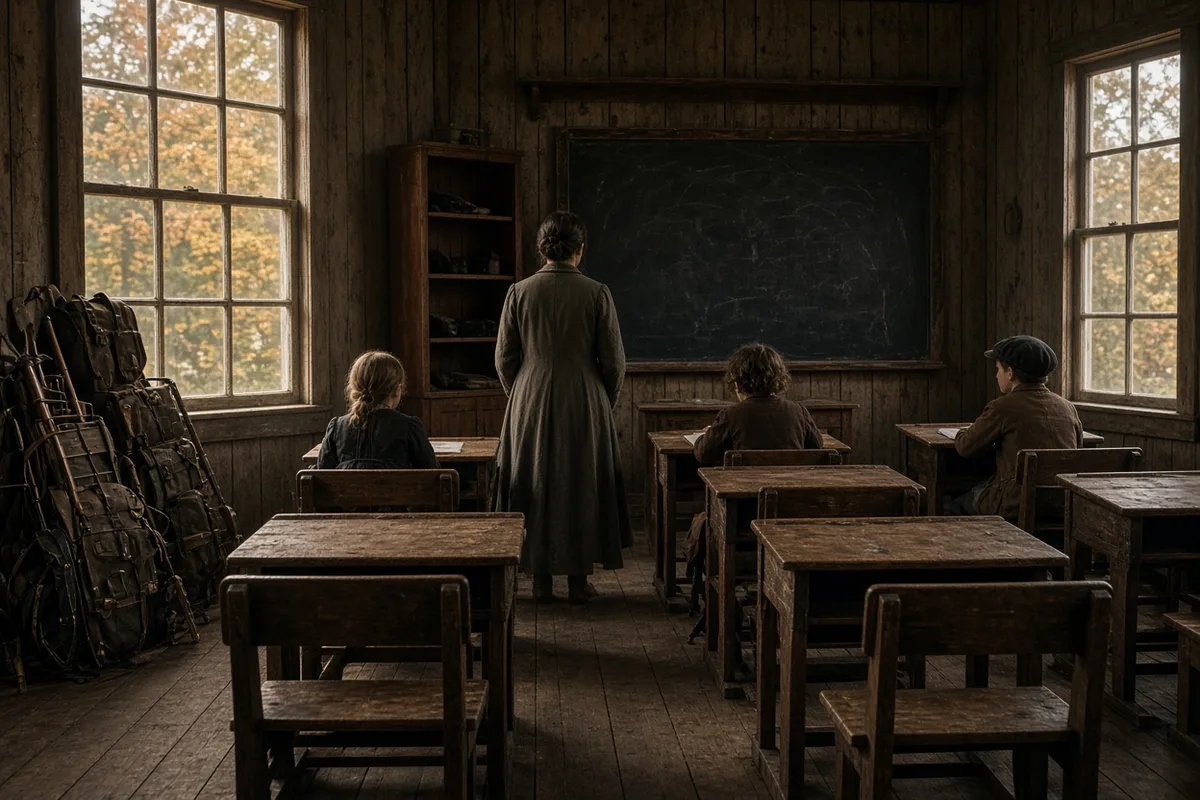
By the time state troopers moved in, he had already tied ten girls with wire and tape along the chalkboard wall, girls between seven and thirteen years old, and he turned his weapon on them and then on himself as the door came down. He had let the boys go. He had let the teacher go. He kept the girls. Five did not survive. Five did, carrying wounds that would follow them the rest of their lives. I was not inside those walls, but I carried stretchers out from that yard, and I have never in my life heard a quiet like the one that pressed down over that schoolyard once the ambulances left with their lights spinning silently down the lane, because sound itself seemed to have gone out of the world along with those children.
At the hospital in Lancaster, families arrived in gray and black, bonnet ribbons trembling, faces scrubbed raw with disbelief. Nobody screamed. That was the thing that undid me more than anything — the discipline of grief, held so tightly it looked at first like calm. Fathers stood with their hats in their hands. Mothers held each other's forearms. I had seen plenty of accident scenes by then, buggy collisions, barn falls, but I had never stood in a hallway that held that much sorrow without a single raised voice.
Word moved through the Amish community the way it always does out there — not by television, which most of the families didn't own, but by neighbor knocking on neighbor's door, by messenger on foot and by buggy. And what moved through those farms in the hours after the shooting was not only grief. It was instruction. Cows needed milking. Meals needed cooking for households too shattered to stand at a stove. Within hours, before some of the wounded had even come out of surgery, neighbors were already in barns doing chores for families who could not lift a pail, because in that world caring for each other's animals is not charity, it is simply what a neighbor does on the worst day of another neighbor's life.
I did not expect what came next, and I do not think anyone outside that community expected it either. Word went out — quietly, the way everything moved there — that the Amish held nothing against Charlie Roberts' widow or his children. Some of the same families who had buried a daughter the day before sent messages of forgiveness toward the house where his widow sat with her own three children, trying to understand what her husband had done.
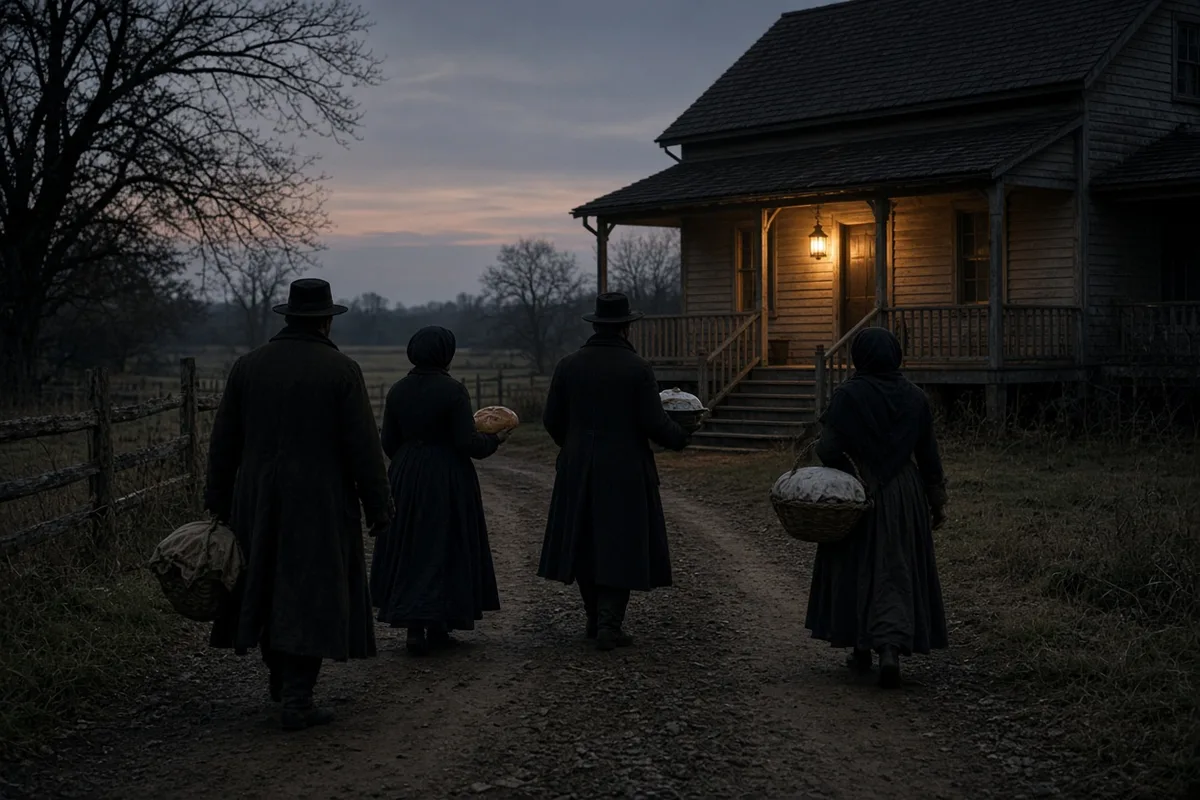
I heard later, from people who were there, how it happened at the Roberts house itself. Chuck Roberts, the killer's father, could not lift his head that day. He kept saying the family would have to leave the area, that they could never again look their Amish neighbors in the eye. And then a knock came at the door. It was Henry, an Amish neighbor from across the street, a man Chuck had known for years the way you know someone who lives close enough to wave to every morning. Henry walked in and put his hands on Chuck's shoulders and told him plainly that they loved him, that they held nothing against him, that they wanted him to stay. Terri Roberts would later call him her angel in black, for the plain dark clothing the Amish wear, and for what he carried into that house on the worst day of their lives too.
The funerals for the five girls came within days, small caskets carried down farm lanes in long processions of black buggies, the horses moving at a walk, the only sound the creak of wheels on gravel and wind moving through corn stubble not yet turned under for winter. I stood along the road for one of them, hat off, and watched children no older than the girls being buried walk behind the buggies in dark clothing, because in that community mourning is worn, not merely felt — women who lose someone close wear black in public for as long as a year afterward, a visible signal to every neighbor that grief still lives in that house and support is still needed there.
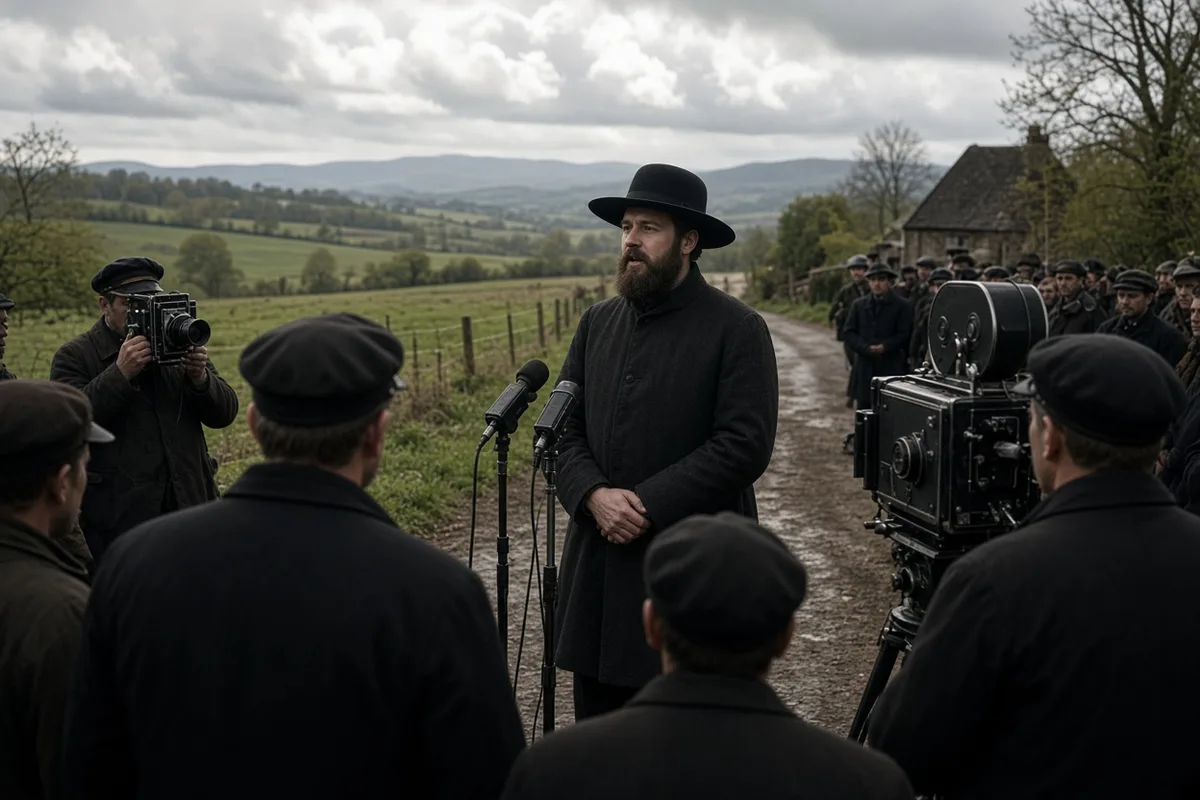
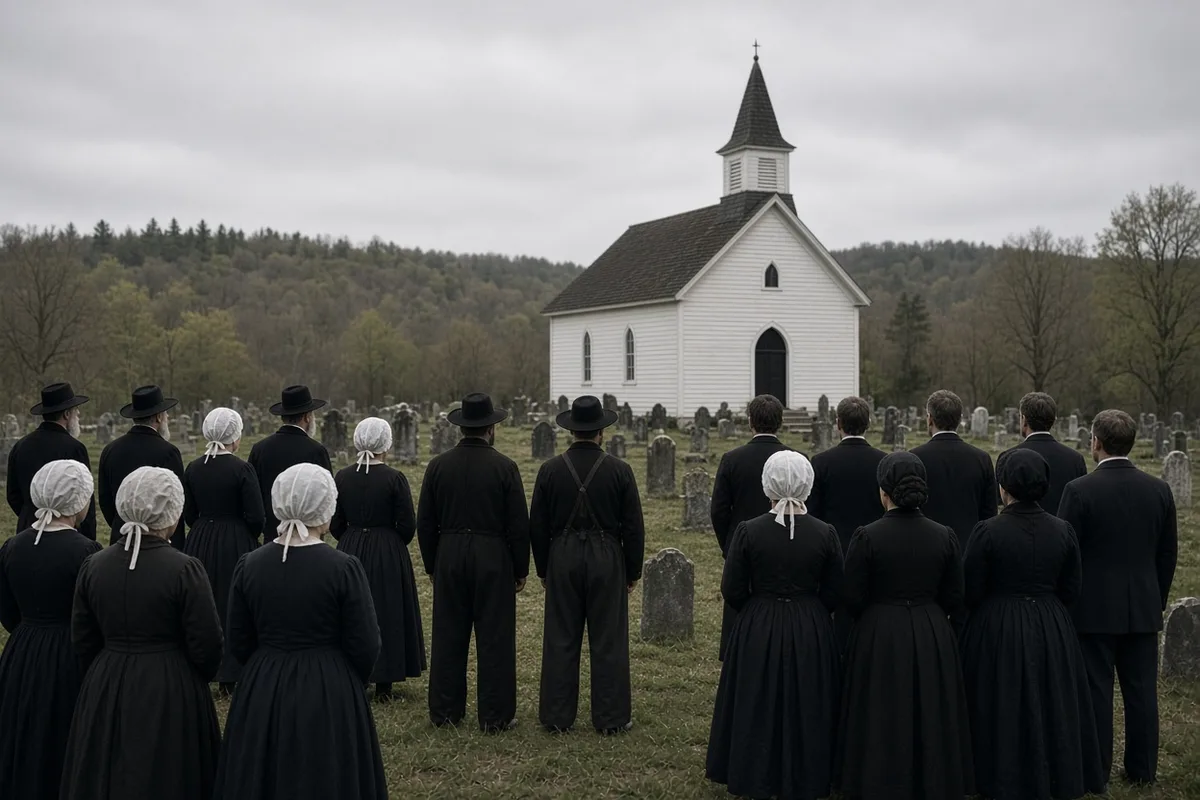
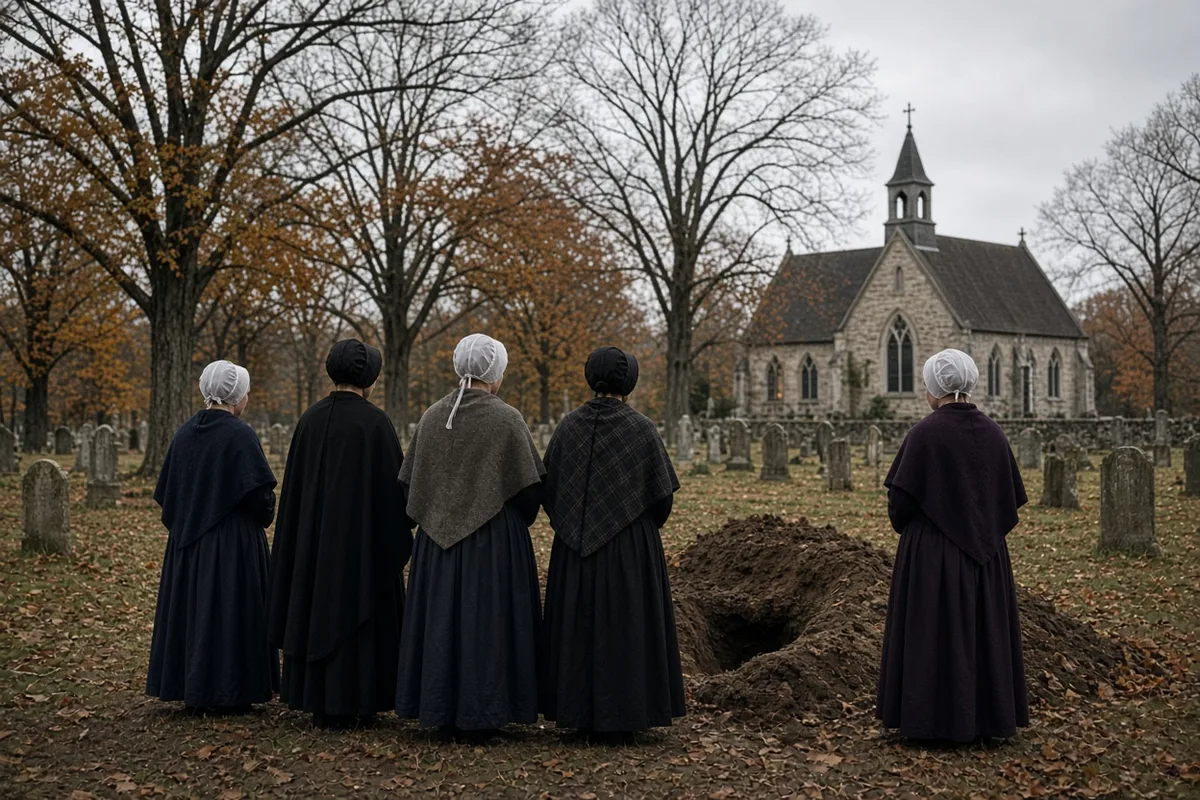
Then came the burial for Charlie Roberts himself, and I remember the dread in the air before it even began. Media trucks lined the road outside the cemetery with telescoping lenses aimed over the fence, waiting, as if grief were a performance to be filmed. The family expected hostility. They expected, at best, to be left alone. What arrived instead were the Amish parents. Some of the very fathers and mothers who had lowered their own daughters into the ground a day earlier walked across that cemetery grass and formed a half circle around Marie Roberts and her children, some of them reaching out to hug her, to hug members of the family that had produced the man who killed their girls.
I have turned that image over in my mind more times than I can count, because I do not think I could have done it. I do not know many people who could have. Donald Kraybill, who studies these communities and later wrote about what happened at Nickel Mines, called it the most powerful demonstration of the depth of that forgiveness, and having stood near enough to feel the weight of that afternoon myself, I would not argue with him.
It is tempting, from outside, to treat that forgiveness as something sudden, a kind of grace that fell out of the sky onto people too devastated to know better. It was not sudden. It came out of something old. The Amish trace their roots back to the Anabaptists of sixteenth-century Europe, men and women burned at the stake and beheaded for insisting that faith could not be compelled by the state. Their hymnal, the Ausbund, is filled with songs written by prisoners awaiting execution for that belief, and many Amish households still keep a copy of the Martyrs Mirror, a thousand pages of those old stories, cited from the pulpit generation after generation. When a bishop stands up and speaks about forgiving those who kill you, he is not reaching for a new idea. He is reaching for something his people have carried in their bones for four hundred years.
There is also a belief, spoken plainly among them, that no tragedy happens outside the hand of providence, that even a horror like this one carries a purpose hidden from human sight. I do not know if that belief made the grief lighter. I never once saw evidence that it did. What I saw was people who did not argue with God even while their hearts were breaking, who let go of the endless circling question of why in a way that looked, from where I stood, less like resignation and more like a discipline practiced over a lifetime and called upon now at the worst possible moment.
None of that meant the pain went quiet. I want to be clear about that, because in the weeks after the story spread around the world, plenty of people decided that forgiveness meant the Amish had simply moved past what happened, closed the book, gone back to milking and quilting as though nothing had touched them. That was never true. The old schoolhouse was torn down before winter, the ground where it stood left open, and a new one was built elsewhere, because no child could be asked to sit and do arithmetic in that same room again.
A year later, on the anniversary, the new school closed its doors and families gathered privately to pray rather than to speak with reporters, which was itself a kind of answer to anyone who thought the wound had closed on its own schedule. Jonas Beiler, who ran a counseling center nearby and had spent that year working with families from the community, said some of the mothers were still startled a full year on by the sound of a helicopter passing overhead, the same sound that had circled that schoolyard the morning of the shooting. Some of the boys who had been let out of that classroom before the shots were fired were still asking themselves, a year later, whether there had been something they could have done.
It surprised outsiders to learn the Amish sought counseling at all, since so much of what people assume about that community involves the absence of modern conveniences — no electricity, no cars, no telephones in the house. But Beiler was blunt about it: the idea that Amish families wouldn't seek therapy was simply wrong, and had been wrong for longer than most people realized. He and his own wife had gone through counseling themselves years before. In the aftermath of Nickel Mines his office became one of a handful that Amish families turned to, quietly, the same way they turned to a neighbor for a barn raising, because grief this large did not respect the boundaries of what a community could carry alone.
Roughly a year after the shooting, word came that the Amish community had raised money and given it to Marie Roberts and her three children, a final, plain gesture layered on top of everything that had come before it — the hug at the cemetery, the meals carried to her door, the words spoken by Henry across the street. It was not a single act of forgiveness. It was a chain of them, repeated in small ways over months, the kind of forgiveness that has to be renewed the way a fire has to be fed, because grief does not go out just because you have decided not to hate the man who caused it.
I still drive past that stretch of road sometimes, past the fields where the schoolhouse once stood, past the small trees that were planted there afterward, one for each of the five girls who did not survive that morning — girls who had been learning to write, to do sums, to sing the hymns their families had sung for generations before them. The trees are taller now than they were the year they went into the ground. I think about the age those girls would be, what they might have grown into, and I think about a milk truck driver none of us ever suspected, and about an Amish neighbor named Henry crossing a street with nothing but his hands and a handful of words, and about parents who buried their daughters one day and stood in a circle around their killer's widow the next, holding her the way you hold someone who is drowning, because in that moment, by every account I have ever heard, that is exactly what she was.