


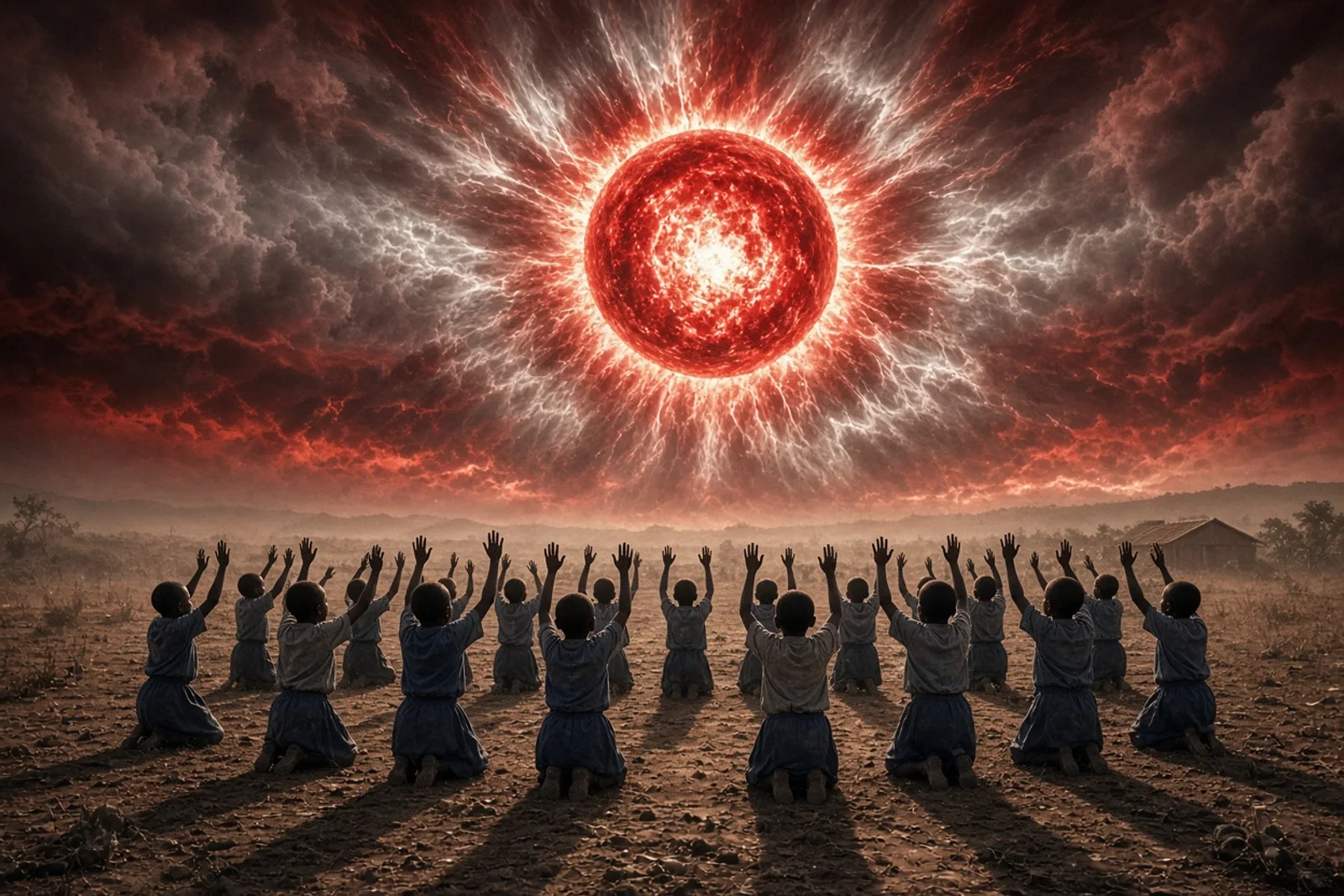
The Miracle of the Sun at Kibeho
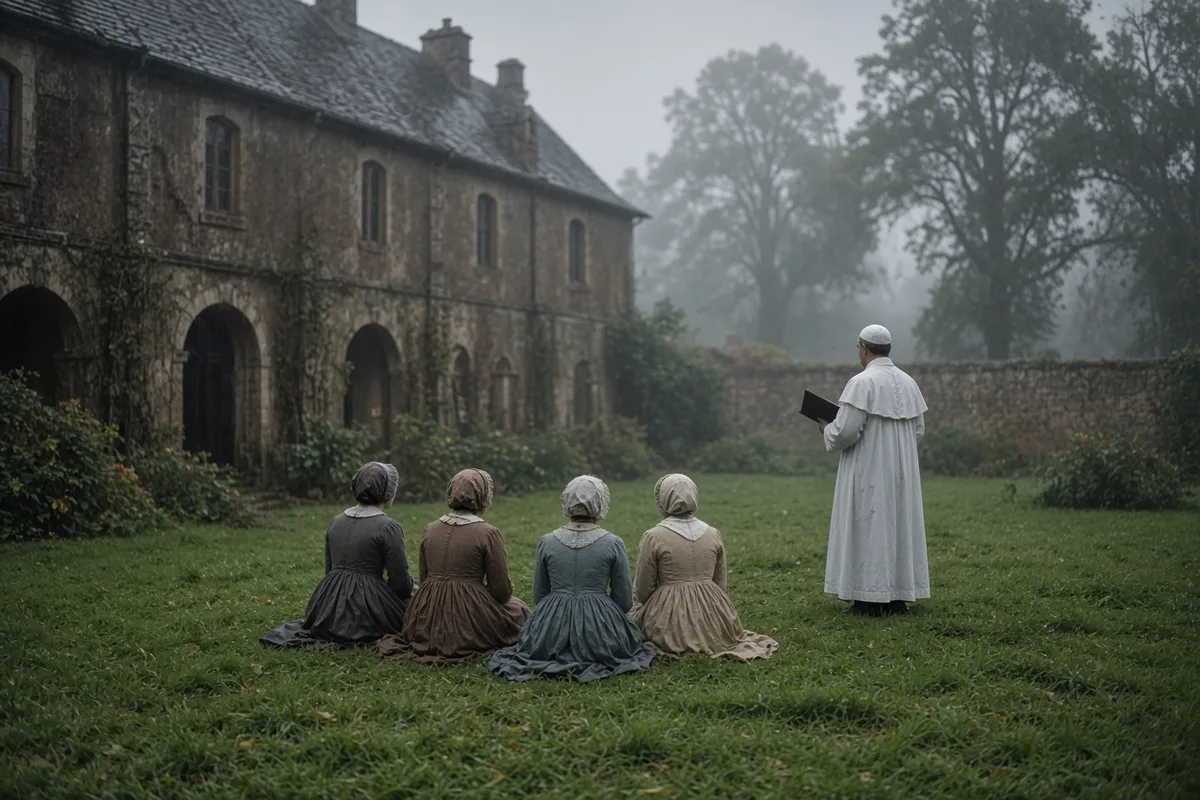
The dining hall still smelled of boiled cassava and wet concrete when Alphonsine Mumureke stood up from her bench. She walked toward the corridor as if someone had called her name. I watched from the side table where I had stayed to finish a letter home. Her steps were steady, but her hands shook once before she reached the doorway.
Outside the windows the light had not changed. It was just after midday on a Saturday in late November. A few girls followed her out, curious more than afraid. I folded the letter and went with them.
Alphonsine stopped in the open space between the classrooms. She looked upward, not at the sun but slightly to the left of it. Her lips moved. No sound reached us at first. Then we heard her say the name the Lady gave: Nyina wa Jambo. She repeated it twice, as if confirming she had heard correctly.
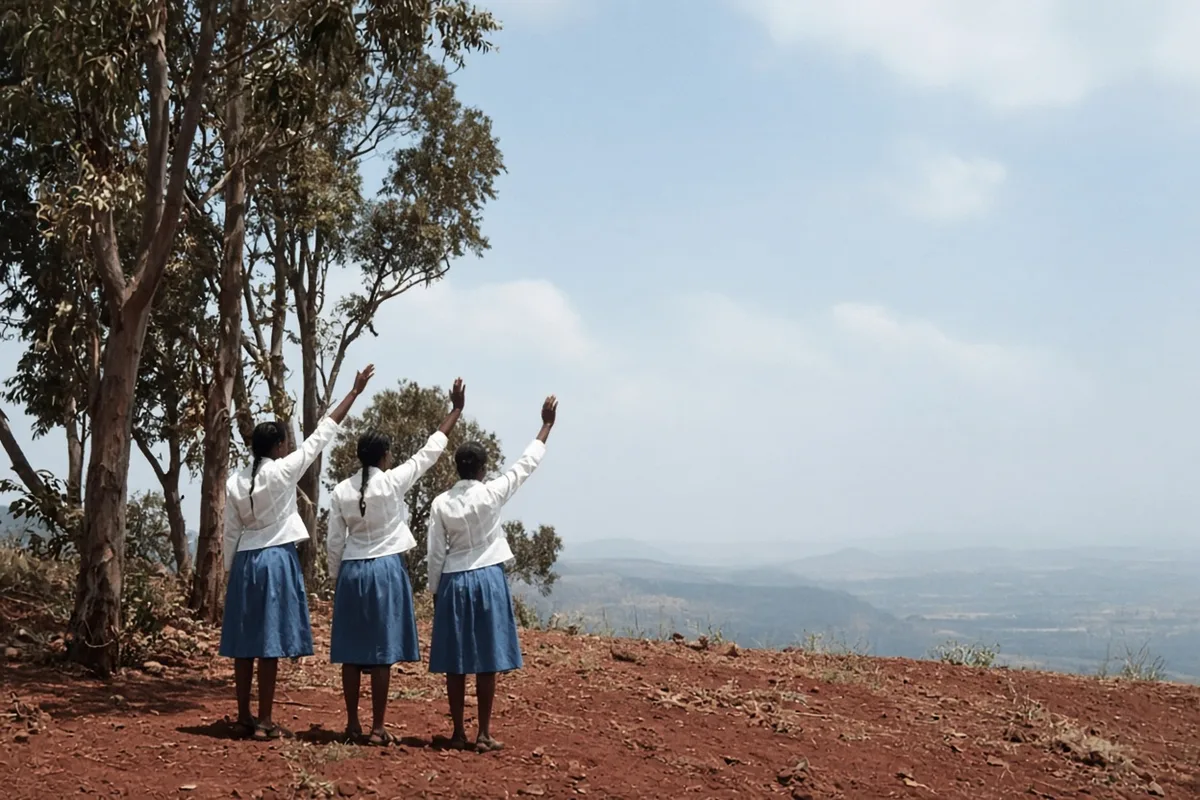
The other students began to press closer. Someone laughed, short and nervous. Alphonsine did not turn her head. Her fingers stayed pressed together at her chest the way she later described the Lady’s hands. We waited. The bell for afternoon classes rang and no one moved.
Two days later the same thing happened again, this time in front of more witnesses. A sister from the Benebikira order stood with her arms folded and timed the silence on her watch. Alphonsine’s eyes stayed fixed. When she came back to herself she answered questions in a low voice, repeating only what she had been told: the Lady had heard the prayers of the school and wanted more faith from the others.
By the first week of December the story had left the campus. People from the parish walked up the road carrying rosaries and small radios. They asked to see the place where she stood. The headmistress posted a notice that classes would continue as usual. Inside the dormitories the girls argued in whispers. Some said Alphonsine wanted attention. Others said the Lady would prove herself by appearing to someone else.
In January the second girl, Nathalie Mukamazimpaka, began to see. She was older, already twenty, and known for keeping to herself. The two of them now stood together on the same patch of ground behind the chapel. Their postures matched exactly for long stretches. When they returned they both spoke of the same request: prayer, fasting, and penance. No one had told them to say those words.
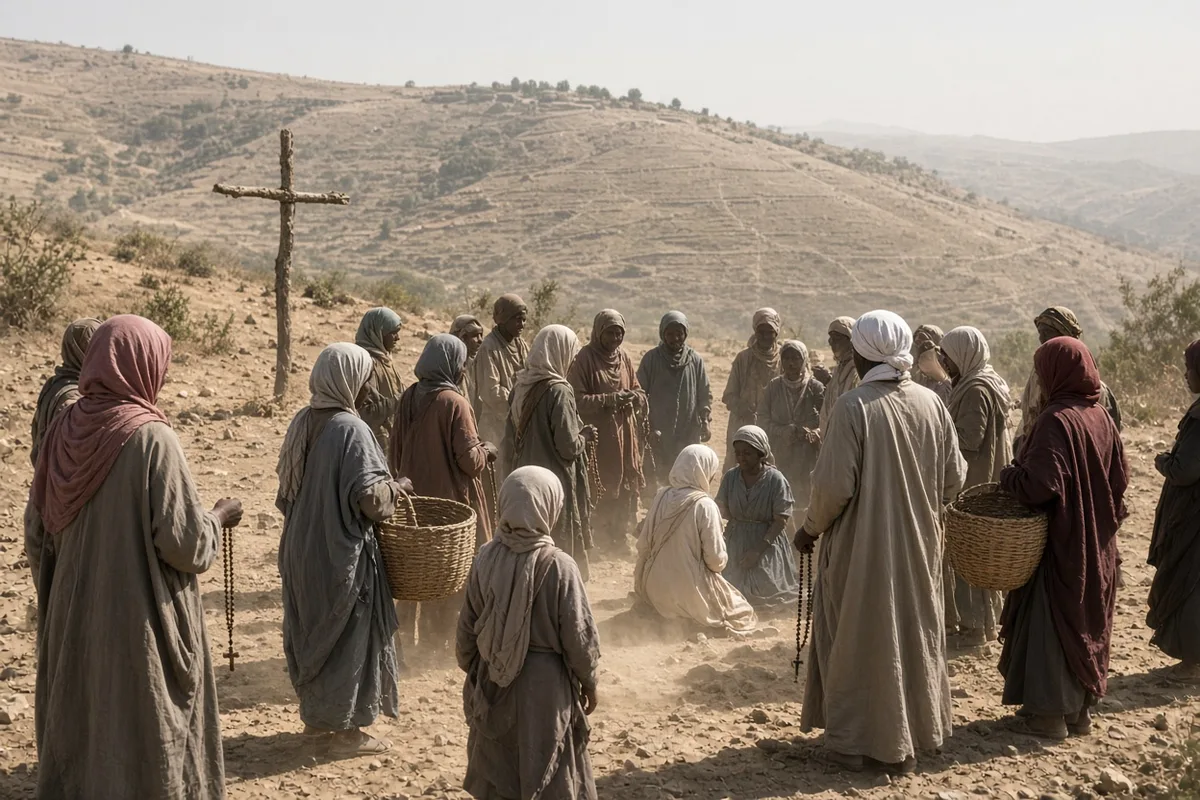
March brought Marie Claire Mukangango. She had been the loudest skeptic, the one who organized the tests and the novena asking for a sign. When she fell to her knees on the second of the month the crowd went still. She stayed that way until evening. Afterward she told anyone who asked that she had seen the same Lady and had been shown things she did not want to repeat.
The three of them continued at irregular intervals through the rest of that year. On certain afternoons the space in front of the school filled with several hundred people. Some carried sick children. Others brought notebooks to write down whatever the visionaries said upon waking. The medical commission sent doctors from Butare. They checked pulses, shined lights into eyes, and measured how long the girls remained unresponsive. The reports noted normal breathing and no signs of injury afterward.
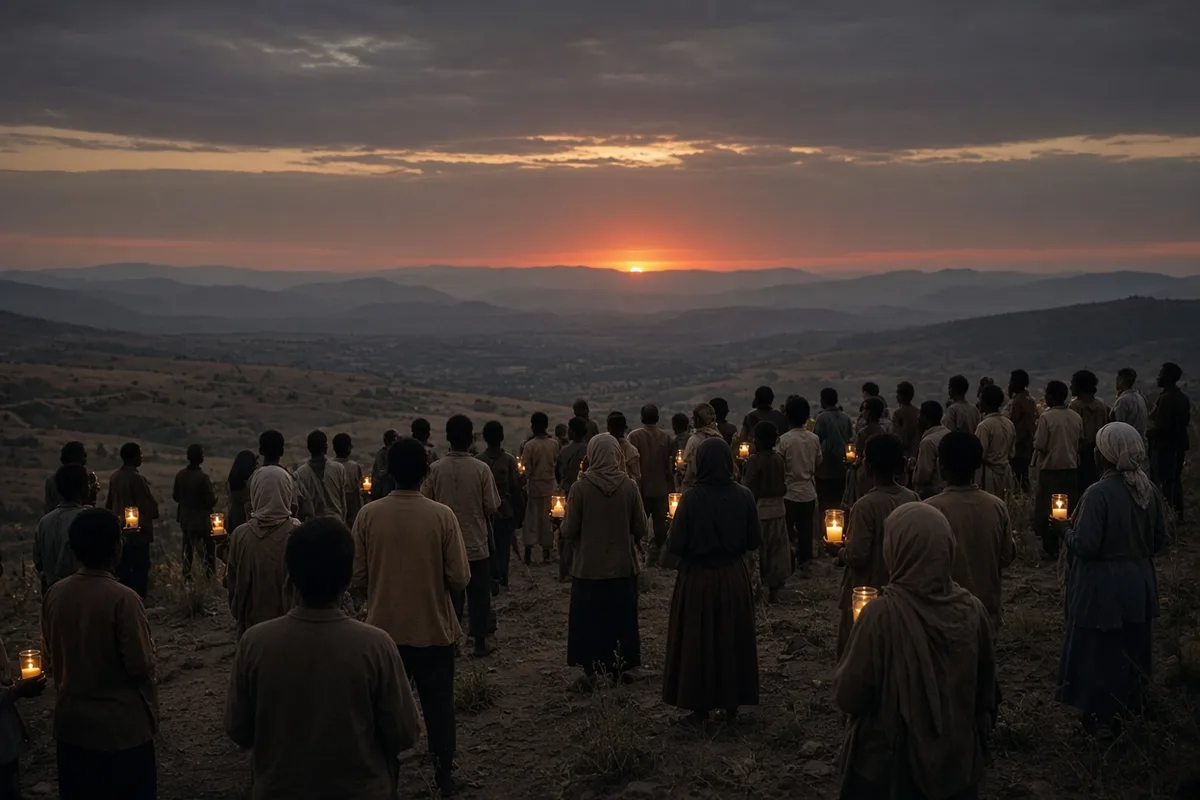
The largest gathering came on the day the three described the same sequence at the same moment. They spoke of a river running red, bodies left along the banks, a tree burning, and heads without names. The words passed through the crowd in murmurs. No one wrote them down that afternoon. Later the theological commission recorded them exactly as the visionaries repeated them.
By the end of 1982 the number of claimed visionaries had grown beyond the original three. The commissions continued their work but limited public statements to the facts they could verify. Alphonsine’s last reported apparition fell on the same date eight years later, 28 November 1989. Nathalie’s ended in December 1983. Marie Claire’s stopped on the feast of Our Lady of Sorrows in 1982.
The bishop of the new diocese of Gikongoro reviewed the files for nearly twenty years. In 2001 he issued the declaration naming only the three original students as authentic. The others, he noted, showed inconsistencies after the apparitions ceased. He left the approved devotion in place at the shrine that had already been built on the slope above the school.
I returned once more in the dry season after the declaration. The path from the road to the chapel was lined with small white stones. A few pilgrims stood where the girls had once stood. They faced the same stretch of sky. No one spoke above a whisper. The light that afternoon was ordinary, the same light that had fallen across the dining hall on the first day.
The path led past the original classroom block where the headmistress had posted the 1982 notice, now replaced by a bronze plaque listing the three names and the exact dates their visions ended. Near that plaque stood a small granite marker recording the 15 April 1994 killing of Marie Claire Mukangango at a roadblock outside Kibeho parish, the same spot where she had once described the burning tree to the theological commission. The marker carried the single line she had repeated to the crowd on 15 August 1982: “The Lady showed me blood flowing like a river and bodies without number.” Pilgrims placed folded notes against the stone each morning before the first Mass.
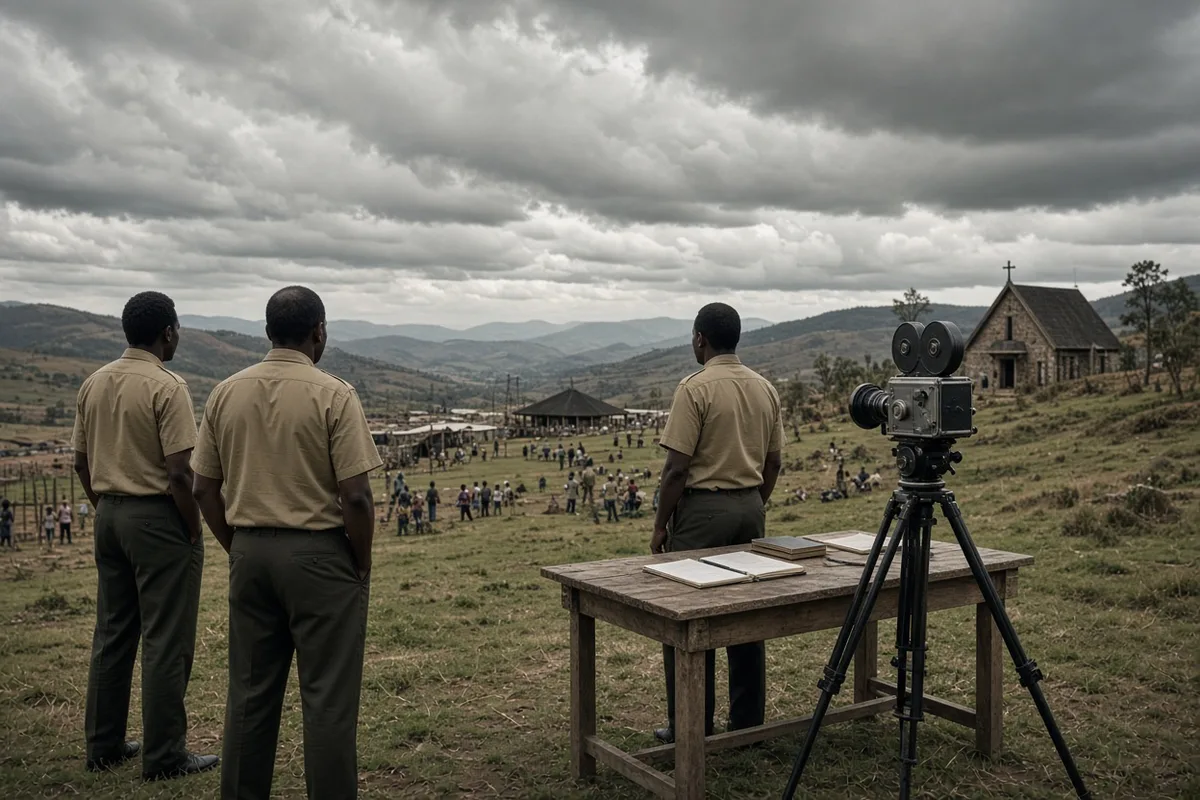
Construction of the present concrete basilica began in 1995 under the direction of Bishop Augustin Misago, using local labor and funds collected from parishes in Butare and Gikongoro. The structure seats 1,200 on wooden benches and holds an additional 4,000 standing in the side aisles. Its cornerstone bears the date 19 June 1995 and the Latin inscription “Regina Pacis, ora pro nobis.” Inside, fourteen large paintings by the Rwandan artist Emmanuel Nkuranga depict the sequence of visions from 28 November 1981 through 28 November 1989, each canvas labeled with the time of day and the number of witnesses recorded by the medical team that day. The side chapel contains the original wooden bench from the dining hall where Alphonsine first rose.
On 29 June 2001 the Congregation for the Doctrine of the Faith confirmed the Gikongoro decree after reviewing the 23 volumes of testimony collected between 1982 and 1987. The confirmation letter, signed by Cardinal Joseph Ratzinger, listed only the three original visionaries and quoted the commission’s finding that their descriptions of the Lady’s hands and the exact phrase “Nyina wa Jambo” remained consistent across 47 separate interrogations. No further apparitions have been recorded at the site since that date.
Alphonsine Mumureke, who entered the Benebikira congregation in 1990, now resides at their motherhouse in Kigali and returns to Kibeho each 28 November. On that date in 2019 she stood again at the original patch of ground for twenty-three minutes while the assembled crowd of 7,412 pilgrims remained silent. Her recorded statement afterward, given to Father Jean-Marie Niyoyita, repeated the same request first noted in December 1981: “Pray, fast, and do penance.” Nathalie Mukamazimpaka lives in the same convent and assists with the reception of pilgrims; she has given no public interviews since 2003.
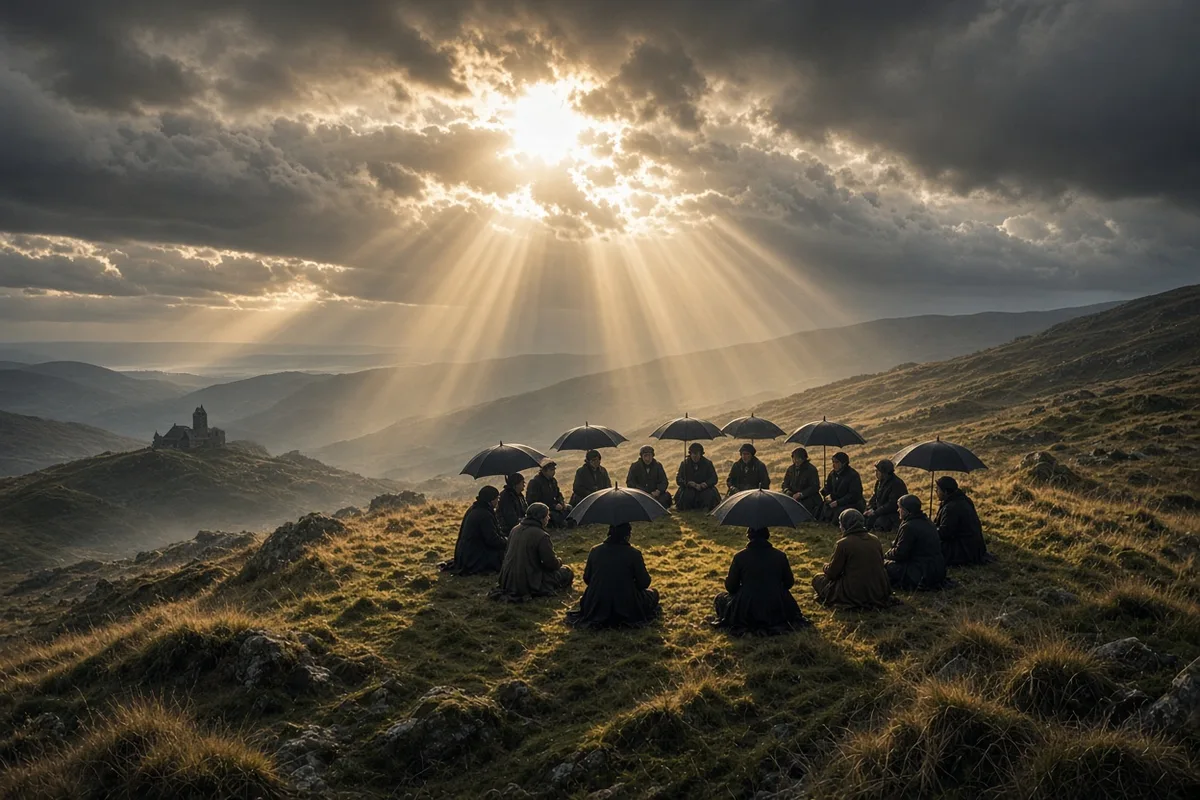
The slope above the school now holds a cemetery for the 1994 victims whose remains were recovered from shallow graves between 1996 and 2002. One marked grave belongs to a girl named Consolee Mukeshimana, aged fourteen, whose name appears on the 1982 student roll. A second grave holds the body of the medical commission’s own Dr. Joseph Ngirabatware, killed on 21 April 1994 while attempting to reach the school on foot from Butare. Annual requiem Masses are said at these graves on 15 April.
Current records kept by the shrine office show 312,000 registered pilgrims in 2022, with the largest single day drawing 28,400 visitors on 15 August. Each group is met by one of twelve trained guides who carry laminated sheets reproducing the 1982 pulse and eye-response measurements taken by Dr. Emmanuel Ndayisaba of the Butare hospital team. The guides point out the exact coordinates—2° 38′ 12″ S, 29° 33′ 47″ E—where the three girls stood, now marked by a low circular wall of whitewashed stone.
On the afternoon I walked the path a second time, a woman in a faded blue pinafore stood alone at the edge of the circle. She held a small notebook open to a page dated 2 March 1982 and read aloud the single sentence Marie Claire had spoken upon rising that day: “I have seen what I did not wish to see.” The woman closed the notebook, placed it on the low wall, and walked back toward the road without looking again at the sky.
On the afternoon I walked the path a second time, a woman in a faded blue pinafore stood alone at the edge of the circle. She held a small notebook open to a page dated 2 March 1982 and read aloud the single sentence Marie Claire had spoken upon rising that day: “I have seen what I did not wish to see.” The woman closed the notebook, placed it on the low wall, and walked back toward the road without looking again at the sky.
The shrine office ledger for 15 August 2023 records 31,872 visitors, each issued a laminated card printed with the 1982 pulse readings of Dr. Emmanuel Ndayisaba, who noted Alphonsine’s heart rate at 72 beats per minute during a 47-minute episode on 12 December 1981. Guides now direct groups to the circular wall at coordinates 2° 38′ 12″ S, 29° 33′ 47″ E, where they pause for exactly four minutes while a recorded loop plays the 1983 interrogation transcript in which Nathalie Mukamazimpaka repeated the phrase “the Lady asked for forty days of fasting” before the theological commission chaired by Father Jean-Baptiste Ntahobali.
Inside the basilica sacristy, a locked glass case holds the original wristwatch used by Sister Marie de la Croix on 30 November 1981; the second hand stopped at 14:17 during Alphonsine’s first prolonged silence. A handwritten note taped to the case back records that the watch was returned to the Benebikira motherhouse in Kigali on 4 January 1983 after verification by the medical team from Butare hospital. Pilgrims who request private prayer time in the side chapel are shown the bench from the dining hall, its left leg still bearing the carved initials “A.M.” dated 28 November 1981.
Alphonsine Mumureke, now Sister Marie Alphonsine of the Benebikira congregation, arrived at the shrine on 27 November 2022 and remained in the convent guesthouse for five days. On the morning of the 28th she walked unaccompanied to the circular wall at 14:03, stood facing the same azimuth recorded in the 1982 commission files, and remained motionless for nineteen minutes. Father Jean-Marie Niyoyita transcribed her statement at 14:25: “The Lady again asked that the Rosary be prayed each day at noon for the conversion of sinners.” She returned to Kigali by minibus the following afternoon.
Nathalie Mukamazimpaka, who has resided at the Kibeho convent since 1998, assists with the daily distribution of rosaries at the reception desk. On 3 December 2017 she answered a single question from a visiting delegation of the Pontifical Council for the Laity, stating only that the final apparition she witnessed occurred on 3 December 1983 at 15:42 and contained the instruction “Tell the bishop to build a chapel here.” No further public remarks have been recorded.
The cemetery slope contains 184 marked graves from the 1994 period. Grave 47 holds the remains of Consolee Mukeshimana, recovered on 11 June 1999 from a site 400 meters east of the original school gate. A small brass plate lists her birth date as 12 February 1979 and her death date as 15 April 1994. Annual maintenance of the graves is performed by a team of four local volunteers under contract with the diocese of Gikongoro; the 2023 budget entry shows 184,000 Rwandan francs allocated for whitewash and gravel.
On 19 June 2024, the cornerstone of the basilica received its annual inspection by Bishop Célestin Hakizimana. The Latin inscription remains legible. A new bronze plaque was added beside it listing the exact attendance figures for the 2001 confirmation ceremony: 8,914 pilgrims and 47 members of the medical and theological commissions. The plaque also records that Cardinal Joseph Ratzinger’s letter of 29 June 2001 was read aloud at 11:00 on that date by Father Emmanuel Rukambakure.
The final recorded image from the site is a photograph taken at 16:47 on 15 August 2023 by shrine volunteer Emmanuel Nsengiyumva. It shows a single elderly woman in a white headscarf standing at the circular wall, her right hand resting on the stone where the notebook had been placed the previous year. The woman is identified in the caption as Consolee Nyirahabimana, aged 78, who had traveled from Huye that morning and left the site at 17:05 without speaking to any of the twelve guides on duty.