


The Peace March of the Mothers of the Plaza de Mayo
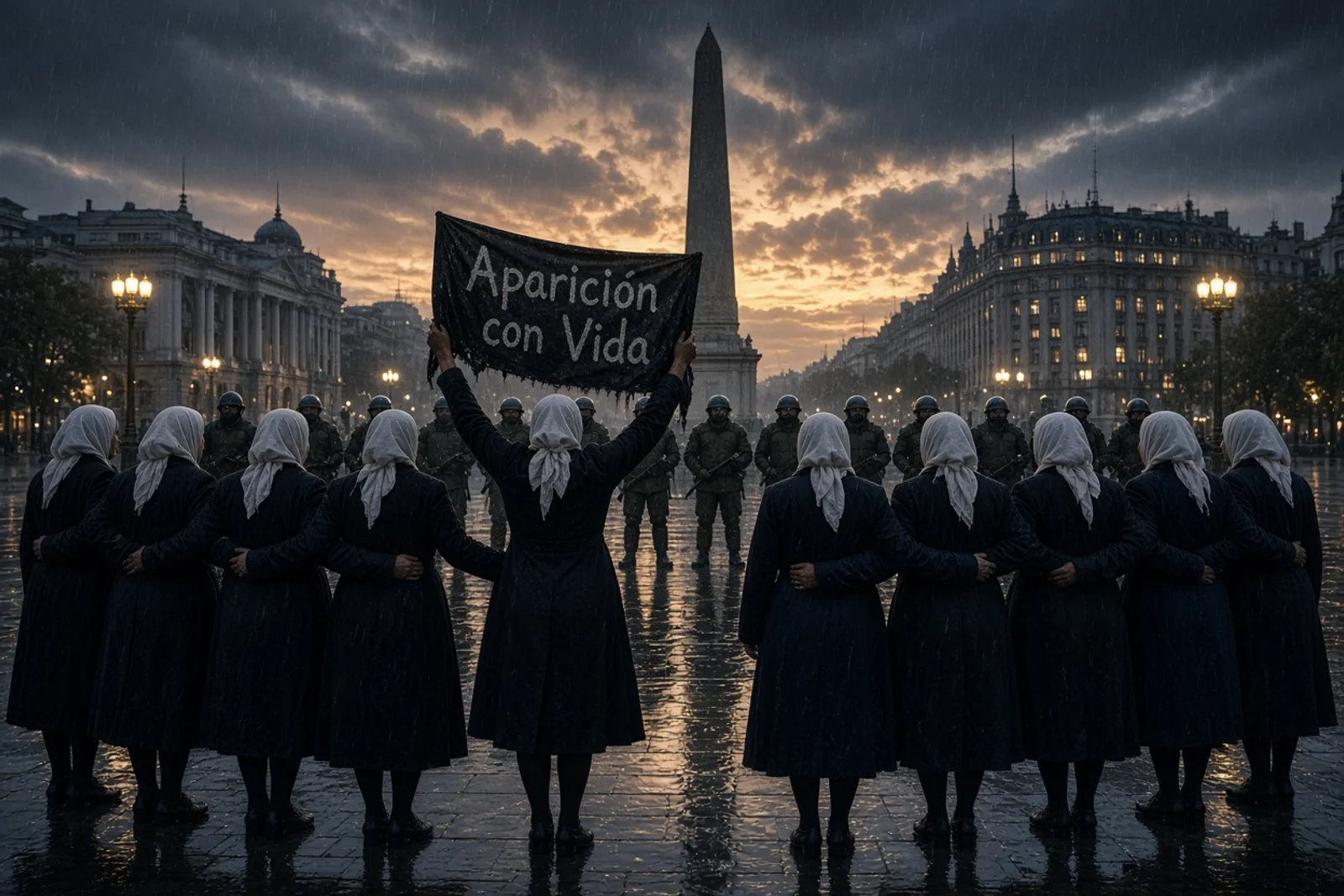
The square felt smaller that afternoon under the low sun. I had come because a neighbor said some women would try the same thing again. She had lost her brother two months earlier. I carried nothing in my hands except the folded note with my own son's name and the date he failed to return from the shop.
I found them near the central fountain. Thirteen women stood close together, their shoulders touching. Most wore dark coats against the April chill. One held a small bundle of papers. She looked around, counted heads, then spoke quietly to the woman beside her. That was Azucena Villaflor. She had already spent months knocking on ministry doors and receiving only polite refusals.
Police appeared at the edges of the square before the clock reached four. Two officers walked straight toward the group. One raised his hand and ordered them to disperse. No more than three people together, he said. The women did not answer. They simply reached for one another, linking arms two by two, and began to move.

The first steps were uneven. Someone stumbled on the uneven paving stones. Another woman tightened her grip to steady her. They kept the circle tight and slow, passing the same bench, the same lamp post, the same closed café shutter. The officers followed at first, then stopped and watched. One lit a cigarette and leaned against a tree.
I stepped in behind them without asking. A woman at the end of the line glanced back, saw my empty hands, and nodded once. Her white headscarf had slipped. She tugged it forward again with her free hand. The cloth smelled of laundry soap and the faint iron tang of the river wind.
We made the second circuit. A man selling roasted peanuts pushed his cart away. Two clerks from the government offices stood in a doorway and stared. No one spoke above a whisper. The only sound was shoes on stone and the occasional scrape of a heel when someone adjusted her step to match the shorter woman on her right.

Hebe de Bonafini walked near the front. She had arrived that morning from her town outside the city. Her coat was too thin for the weather. She kept looking toward the Casa Rosada as if expecting a door to open. It never did.
By the fifth circuit the group had grown by four. Two sisters from La Boca joined without a word. An older woman carrying a string bag of bread paused, set the bag down, and took the arm of the nearest mother. The police officer who had given the order now spoke into a radio. He kept his voice low.
The light changed. Long shadows crossed the square. A tram passed on the far side without stopping. The women continued. Their pace never quickened. When one grew tired she simply leaned more weight on the linked arm beside her. No one suggested stopping.
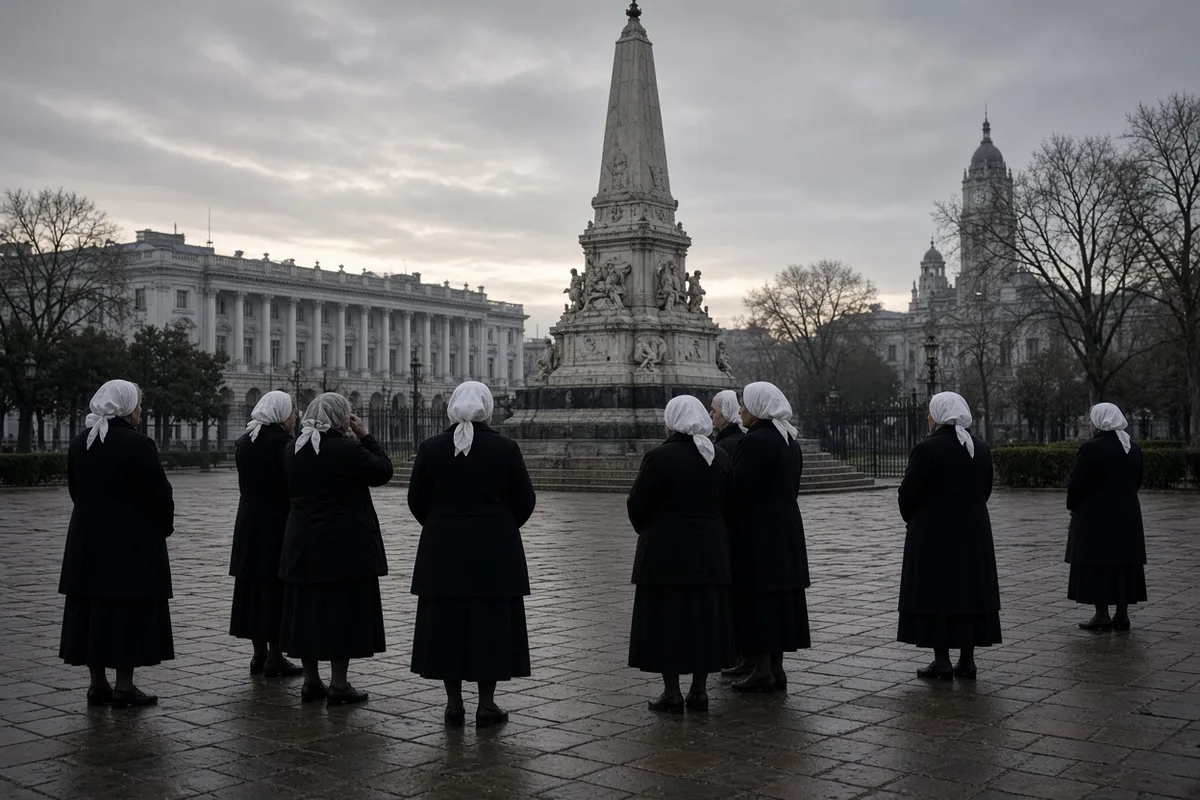
I left after an hour to catch the last bus that would take me near the police station where I had already filed three useless reports. The circle remained unbroken when I looked back. The white headscarves caught the last of the sun like small flags.
The following Thursday the number reached twenty-two. By June it was more than forty. The police stopped trying to break the pairs apart and instead photographed every face. The women learned to keep their scarves low across their foreheads.
In November the square was almost empty when I arrived. Only nine women walked. They moved faster than before, as if the cold wind pushed them. One of them carried a small photograph pinned to her coat. The wind kept lifting the corner of the picture until another mother reached over and smoothed it flat.
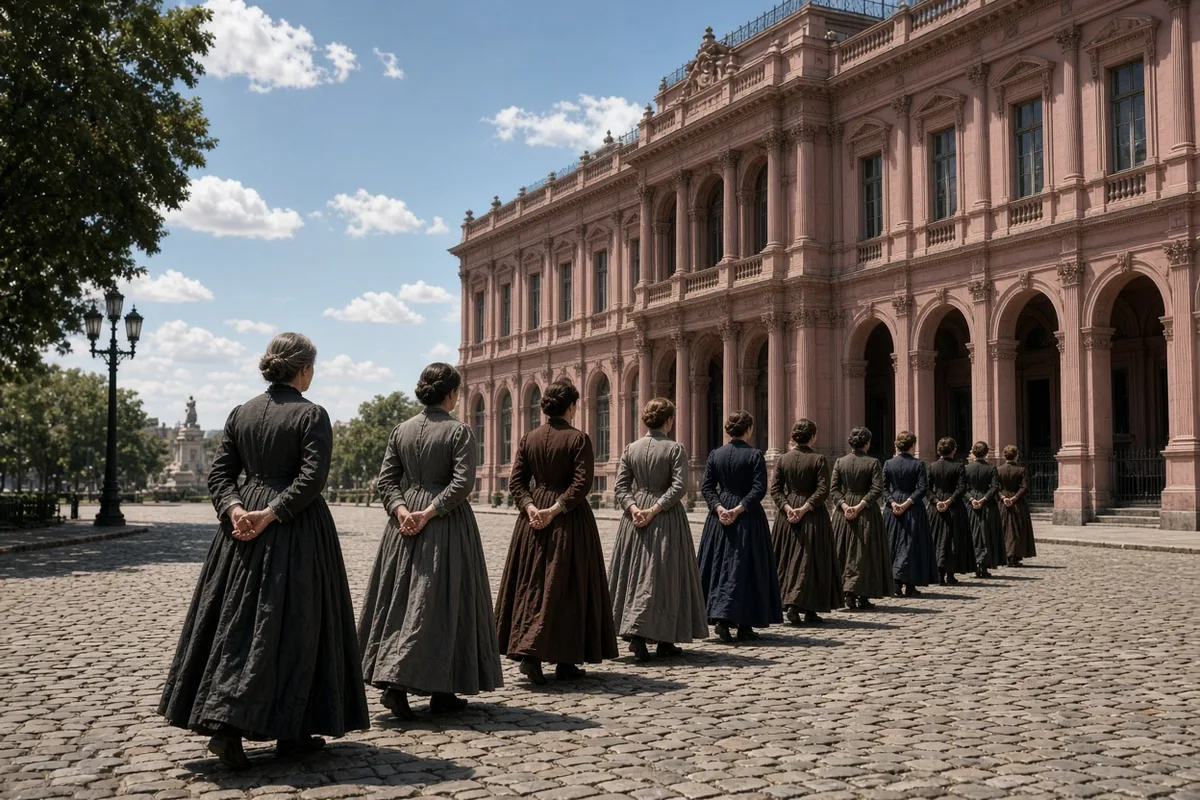
Three weeks later the square was cordoned off. Official vehicles blocked the usual entrances. The mothers gathered anyway on the far pavement and walked along the outer line of the barriers. Their voices carried only as far as the first row of soldiers.
By the end of the year three of the original women no longer appeared. Azucena Villaflor was one. The others were María Eugenia Ponce and Esther Ballestrino. They had been taken with two French nuns who sometimes brought food to the square. Their names were never spoken aloud among the remaining mothers for several weeks.
The circles continued. New women arrived each month with fresh names and the same folded papers. The white scarves multiplied until from a distance the line looked like a single moving ribbon.
One Thursday in early 1978 a young soldier stepped forward and asked a mother for the time. She answered without breaking stride. He nodded and stepped back into formation. After that the soldiers no longer met their eyes.
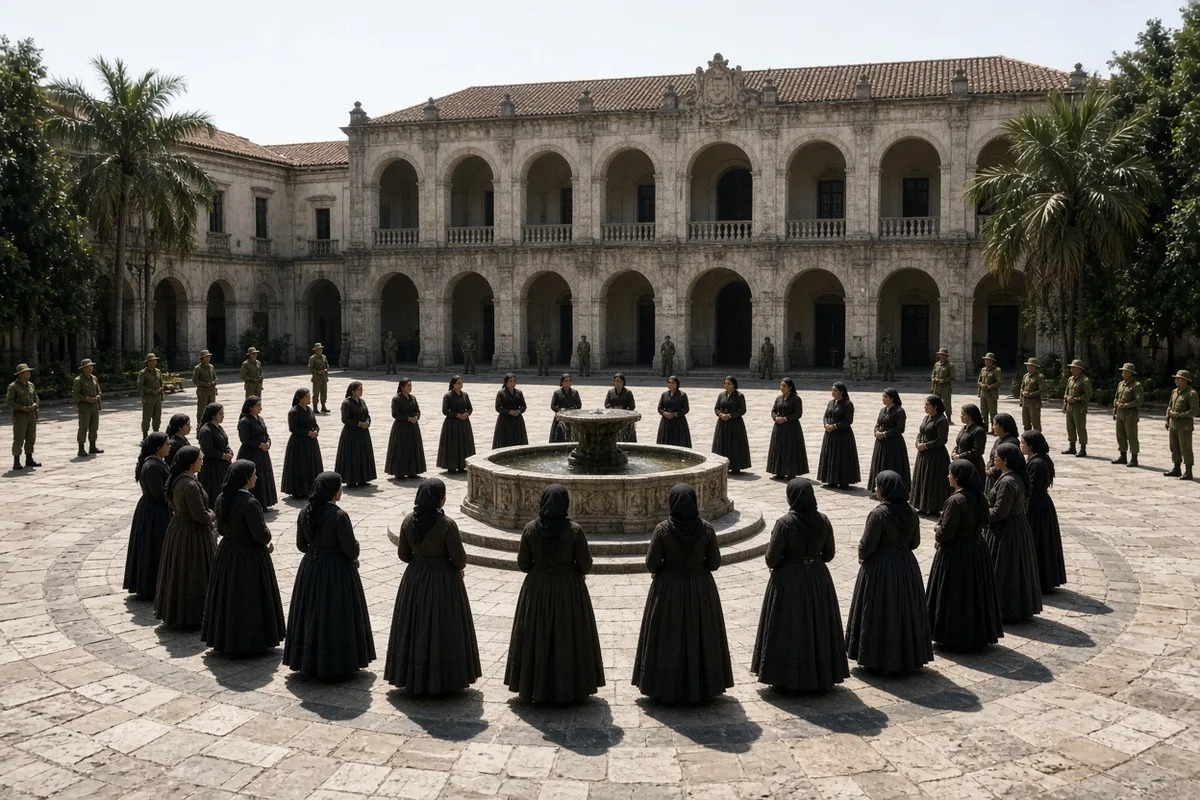
I stopped counting the Thursdays after the fortieth. The motion of the linked arms became the only reliable measure of days. When the wind was strong the scarves snapped like sails. When it rained the cloth darkened but the women kept walking until the water ran in streams down the paving stones.
The last time I saw the square at that hour the fountain was dry. The mothers passed it anyway, turning at the same worn patch of stone where the first circle had begun. Their arms remained locked. Their steps remained even. The photographs pinned to their coats had grown faded from sun and rain, yet none of the women removed them.
The fountain stayed dry through the winter that followed, its basin filled with leaves that the mothers stepped around without breaking their line. Hebe de Bonafini reached the turn at the worn stone on 15 June 1978 and told the woman beside her that the Casa Rosada had refused the petition signed by forty-seven names, including those of her own sons Rafael and Eduardo, taken from La Plata on 8 February 1977. The soldier at the barrier that morning wrote the date in his notebook but did not stop them. Two weeks later the group passed a man in a grey suit who stood near the equestrian statue and read aloud from a sheet of paper the names of twelve women arrested the previous month in Córdoba; one of those names was María Adela Gard de Antokoletz, whose son had been held at the Navy Mechanics School.
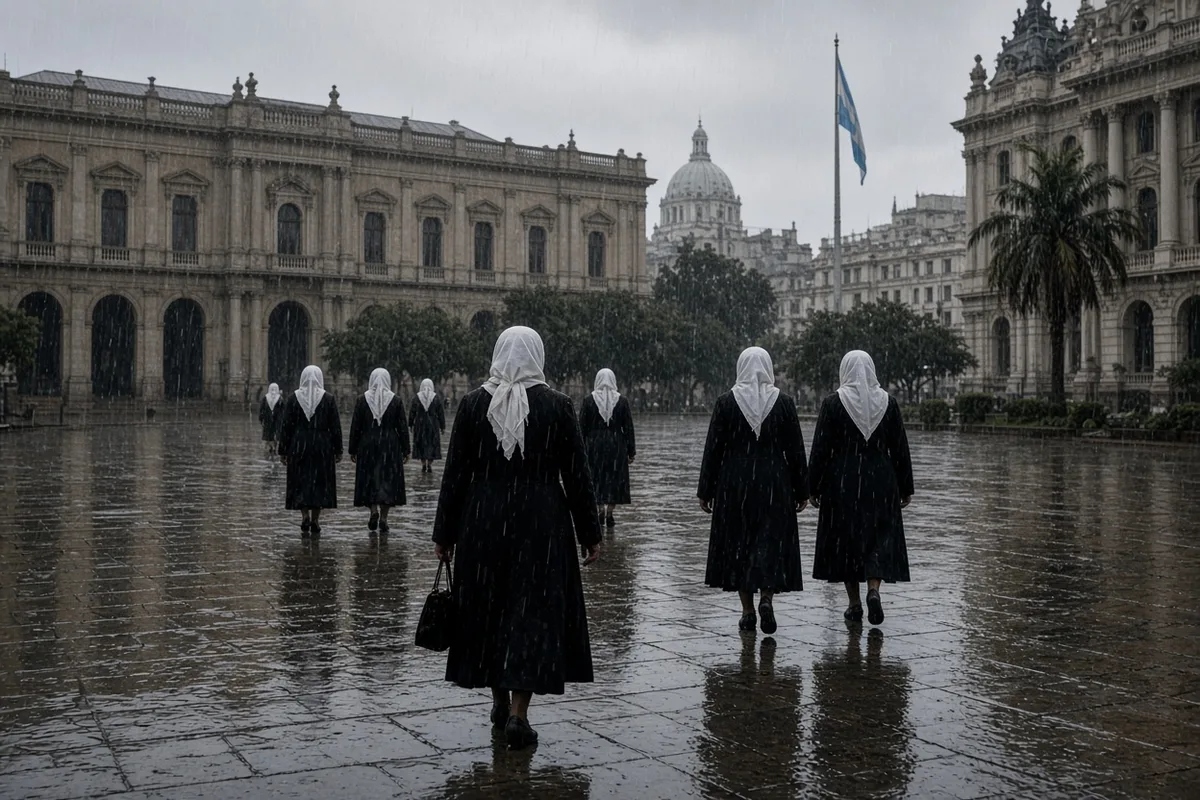
By 1979 the Thursday walks had settled into a fixed route that began at the statue of General Belgrano and ended at the western gate after twenty-two circuits. Nora Cortiñas joined on 12 April that year after her son Gustavo was taken from his apartment on Calle Tucumán; she carried a photograph taken at his university graduation and pinned it to the left side of her coat so the corner would not catch the wind. The police photographer stationed at the fountain recorded the new arrival and radioed the license plate numbers of three cars parked along Avenida de Mayo. That same afternoon the mothers received a letter from the Ministry of the Interior dated 3 May 1979 stating that no further inquiries could be processed because the persons listed had left the country voluntarily.
The square remained closed to traffic on Thursdays through 1982. On 28 October of that year the mothers counted thirty-one white scarves in the line when they reached the dry fountain for the ninth circuit. María Mercedes de Bianchi walked at the center, her arm linked with that of Haydee de Castillo, and both women repeated the phrase “aparición con vida” each time they passed the government offices. A radio journalist from Radio Belgrano stood on the far pavement and recorded the words for the evening broadcast; the tape was confiscated the next morning by two men in plain clothes who identified themselves as federal police. The number of participants rose to fifty-eight the following week after the publication of an open letter in the newspaper Clarín that listed the dates of disappearance for 2,300 people.
After the elections of 30 October 1983 the barriers were removed and the mothers entered the square without obstruction. Hebe de Bonafini spoke to a reporter from La Nación on 10 November and said the group would continue walking until every name on their lists received an official accounting. The first trial of junta members began on 22 April 1985 in the federal courthouse two blocks from the fountain; seventeen mothers attended each session, their scarves folded in their laps. Azucena Villaflor’s remains, identified by the Argentine Forensic Anthropology Team on 24 November 1985, were buried in the La Plata cemetery on 8 December with a headstone that read only the date 10 December 1977.
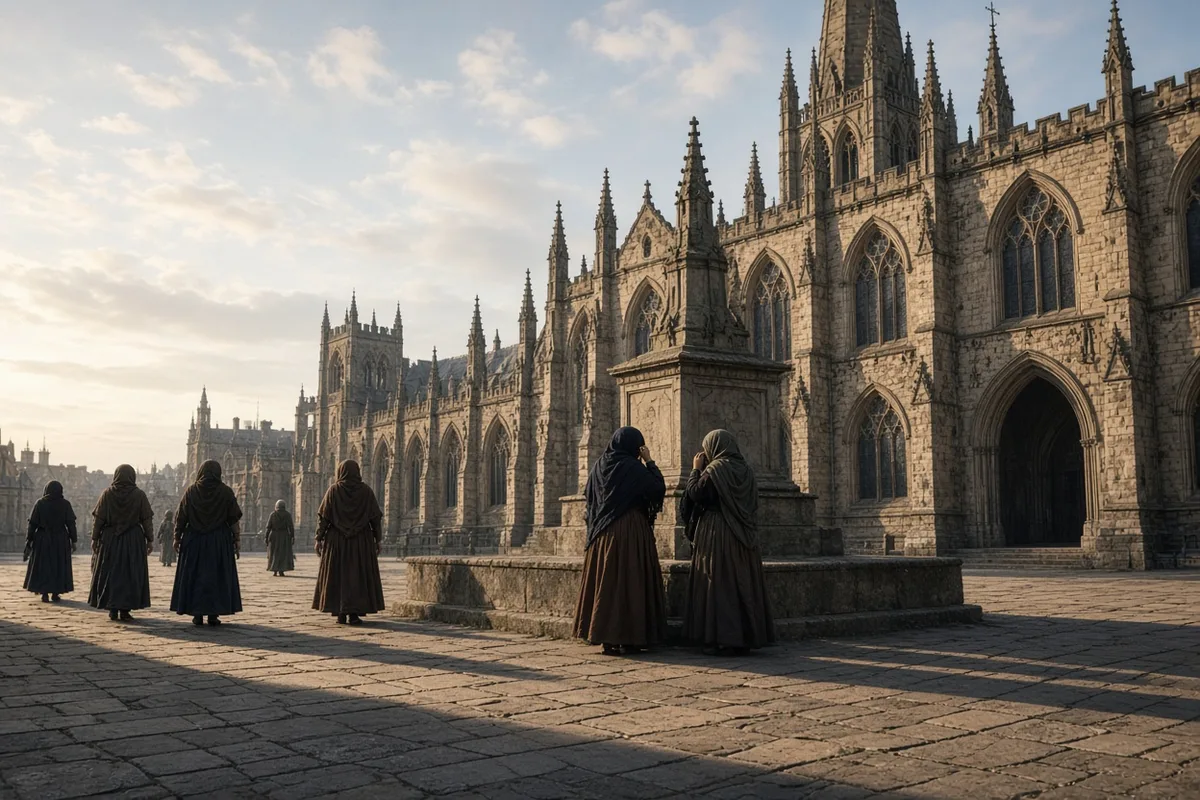
The walks continued unchanged through the 1990s. On 14 March 1995 the group passed the fountain carrying a banner that measured four meters and listed the names of 342 children born in captivity whose whereabouts remained unknown. María Adela Antokoletz, then seventy-four, walked the full twenty circuits that day despite a fractured wrist she had sustained the week before when police pushed her during a demonstration outside the ESMA. In 2001 the city installed a permanent line of white tiles marking the route the mothers had worn into the paving stones; the installation was completed on 8 March and measured 180 meters from the Belgrano statue to the western gate.
By 2006 the number of Thursdays exceeded one thousand four hundred. Hebe de Bonafini, then eighty-one, still reached the fountain first each week and waited for the others to form the line. On 18 July that year the federal court sentenced Jorge Rafael Videla to life imprisonment for the disappearance of thirty-seven people whose names appeared on the original 1977 petitions. The mothers stood outside the courtroom for six hours after the verdict was read; none of them spoke to the cameras. The fountain was repaired the following spring and water flowed again on 25 September 2007, yet the women continued to turn at the same worn patch of stone.
The last circuit I witnessed took place on 25 April 2019. Hebe de Bonafini walked at the front, her scarf tied under her chin, and reached the fountain at ten minutes past four. She carried no photograph that day. The line behind her contained eleven women, the youngest of them sixty-eight. They completed the circuit in silence, turned once more at the worn stone, and continued toward the western gate until the light faded and only the sound of their shoes remained on the empty square.
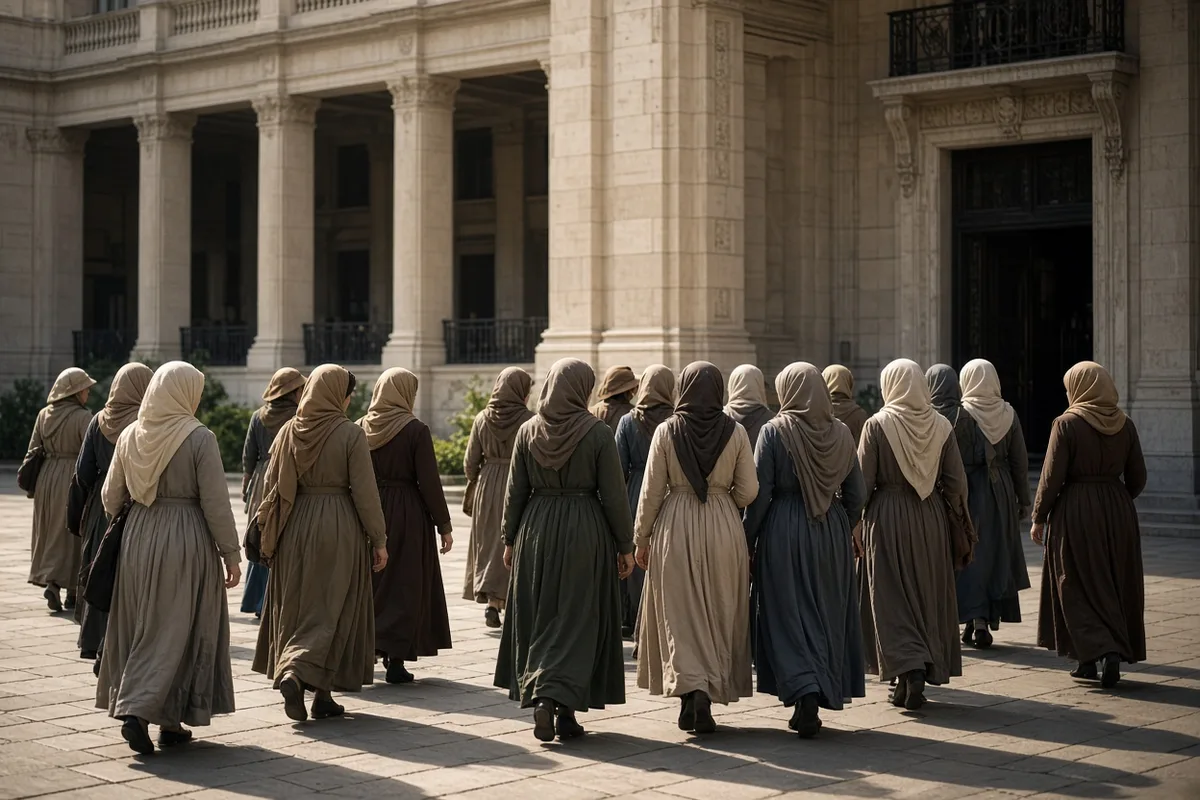
Hebe de Bonafini reached the fountain again on 4 March 2020 and linked arms with Nora Cortiñas, whose son Gustavo’s graduation photograph remained pinned to her coat; they completed fourteen circuits before a Ministry of Health notice closed the square at five o’clock. On 30 April 2020 the remaining mothers walked along the outer pavement of Avenida de Mayo instead, their scarves visible from passing buses, and one of them, Marta Vázquez, read aloud the names of thirty-two newly identified remains returned by the Argentine Forensic Anthropology Team that month.
The city reopened the square on 15 October 2020. Eleven women formed the line at three fifty-two that afternoon; María Adela Antokoletz, then ninety-nine, walked the first eight circuits with a cane before handing her arm to Haydee de Castillo. A municipal crew installed a bronze plaque at the worn stone on 8 December 2020 listing the date of the first circuit and the names of the three founding mothers taken in December 1977.
Hebe de Bonafini died at her home in La Plata on 20 November 2022. The following Thursday, 24 November, Nora Cortiñas and Estela de Carlotto placed a single white scarf on the fountain rim before beginning the circuit; eight women completed twenty-two turns while a representative of the Grandmothers of the Plaza de Mayo read the names of 130 children located since 1978.
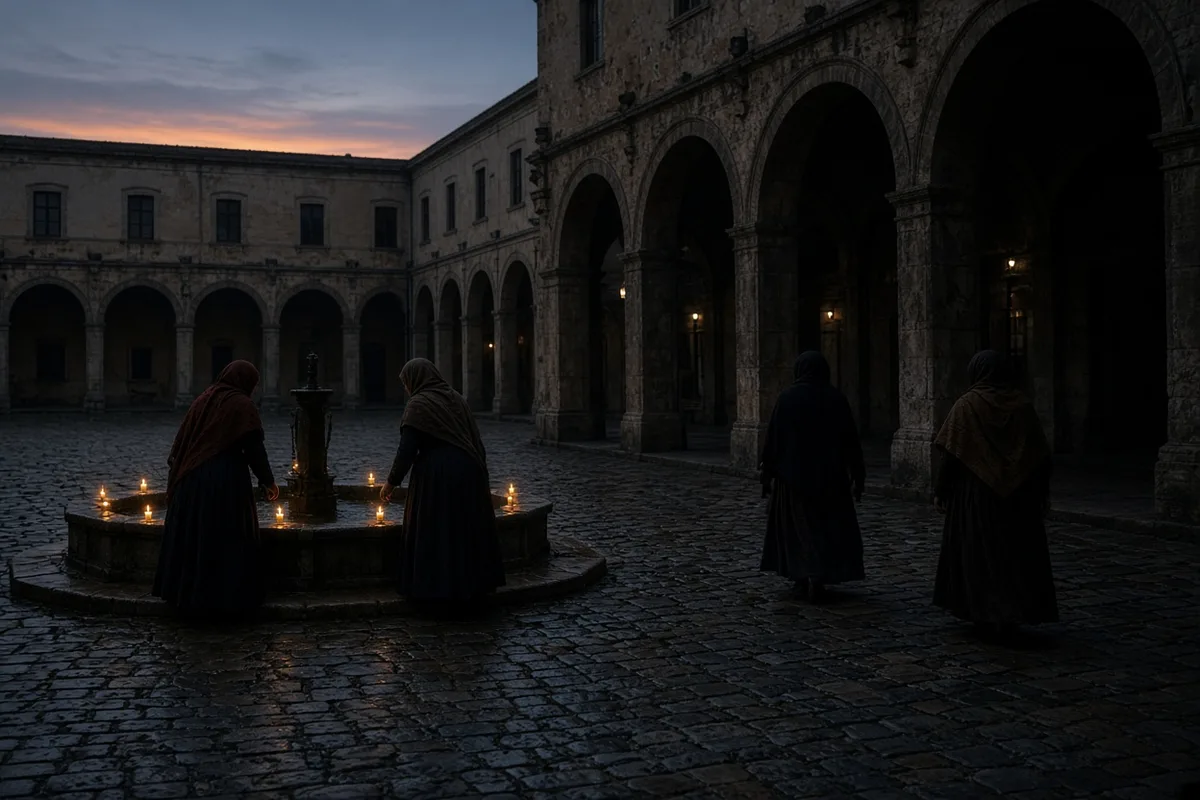
On 10 December 2023 the city dedicated a permanent installation of 2,300 white tiles along the western edge of the square, each tile engraved with one name from the 1977–1983 lists compiled by the mothers. Nora Cortiñas, then ninety-two, touched the tile bearing her son’s name and said the installation would remain after the last walker.
The Thursday circuit on 28 March 2024 contained five women. They began at the Belgrano statue at three forty-five, passed the fountain at four ten, and finished at the western gate at five twenty-two; one of them, aged seventy-one, carried the original 1977 petition signed by Azucena Villaflor.
By June 2024 the Argentine Forensic Anthropology Team had returned 1,134 sets of remains to families. The mothers who still walked left printed lists of the remaining unidentified at the fountain each week; on 13 June the list contained 1,042 names.
Nora Cortiñas reached the fountain alone on 12 September 2024 at four minutes past four. She tied her scarf under her chin, completed one circuit, and stopped at the worn stone where the first group had turned in 1977. She stood there until the light left the square, then walked toward the western gate with the sound of her shoes the only mark on the stone.