



The Story of the Child Who Led to Penicillin
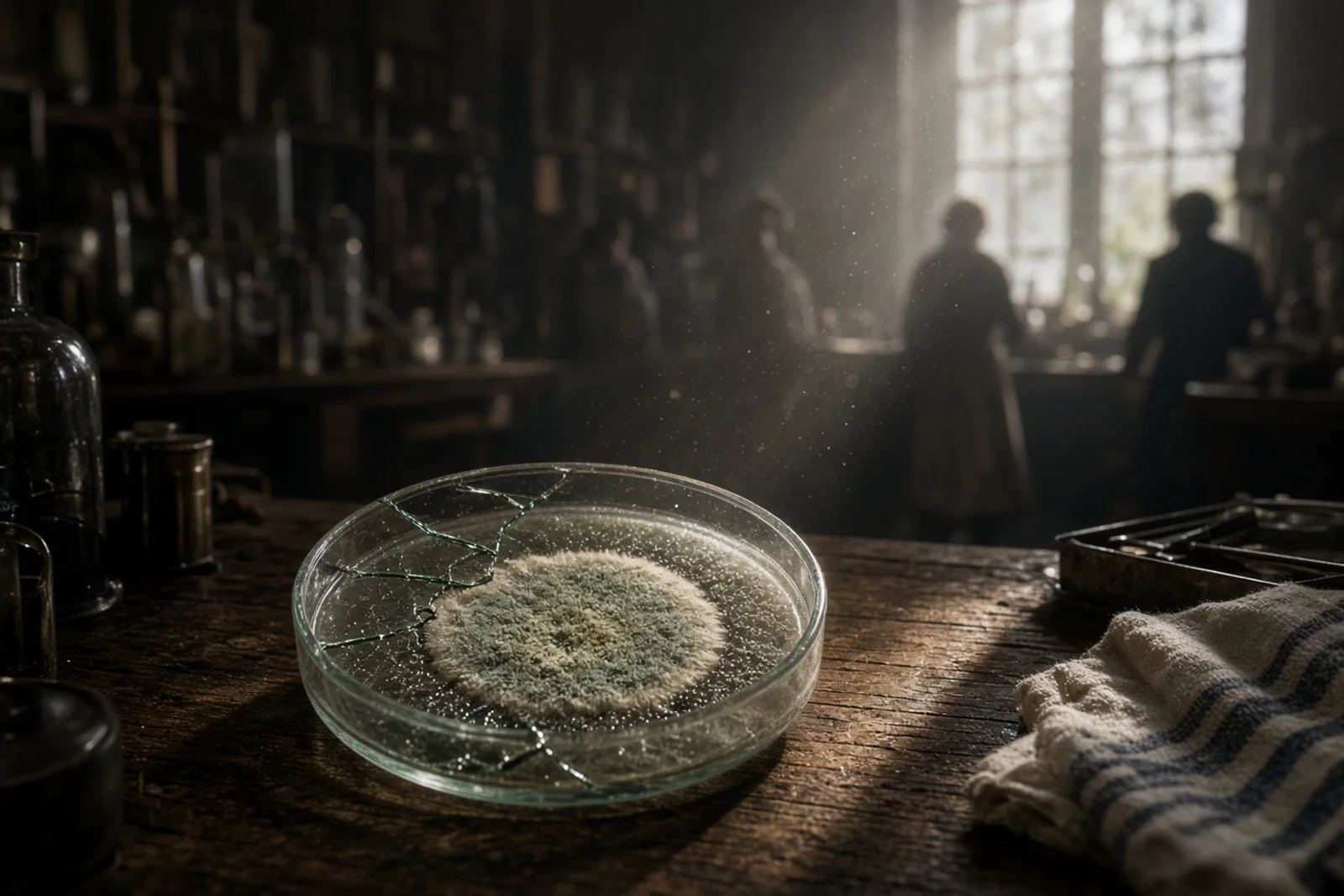
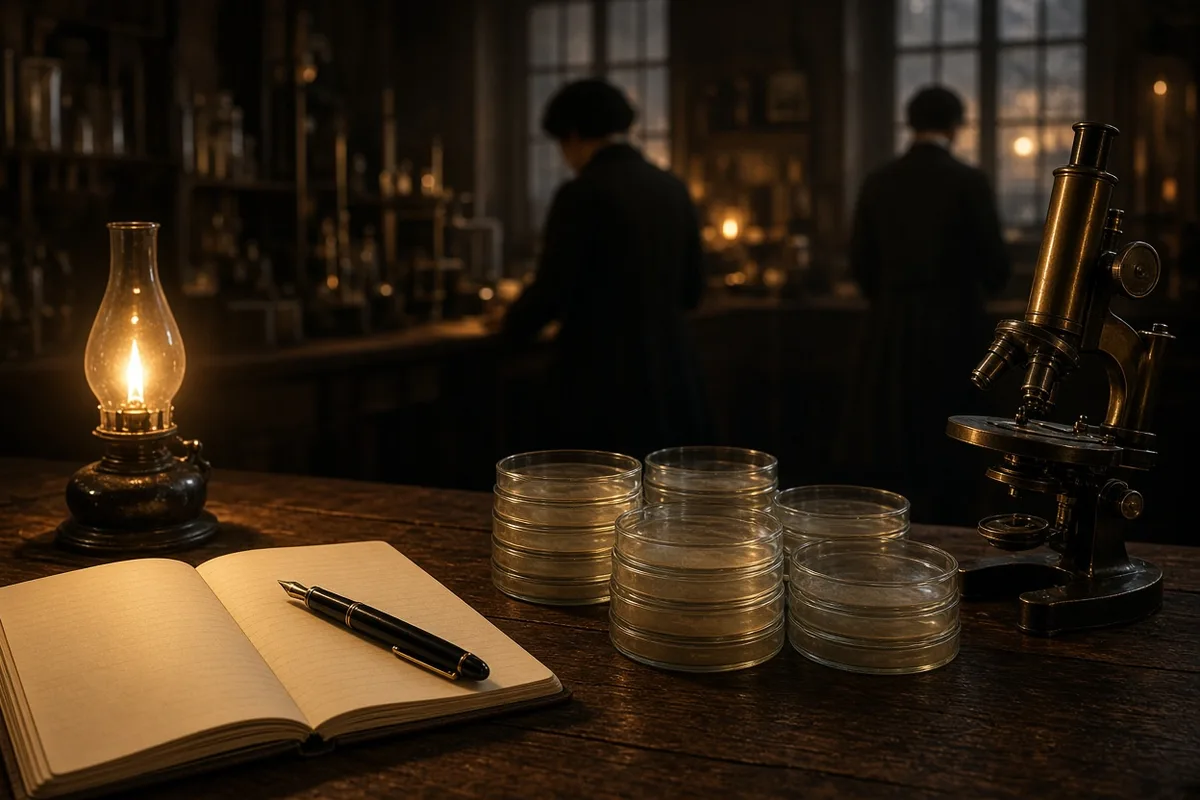
The petri dishes sat stacked on the bench where I had left them two weeks earlier, the glass still warm from the incubator. Fleming walked in from the corridor with his coat over one arm and the morning post under the other. He set the letters down, pulled the first plate toward him, and tilted it under the window light.
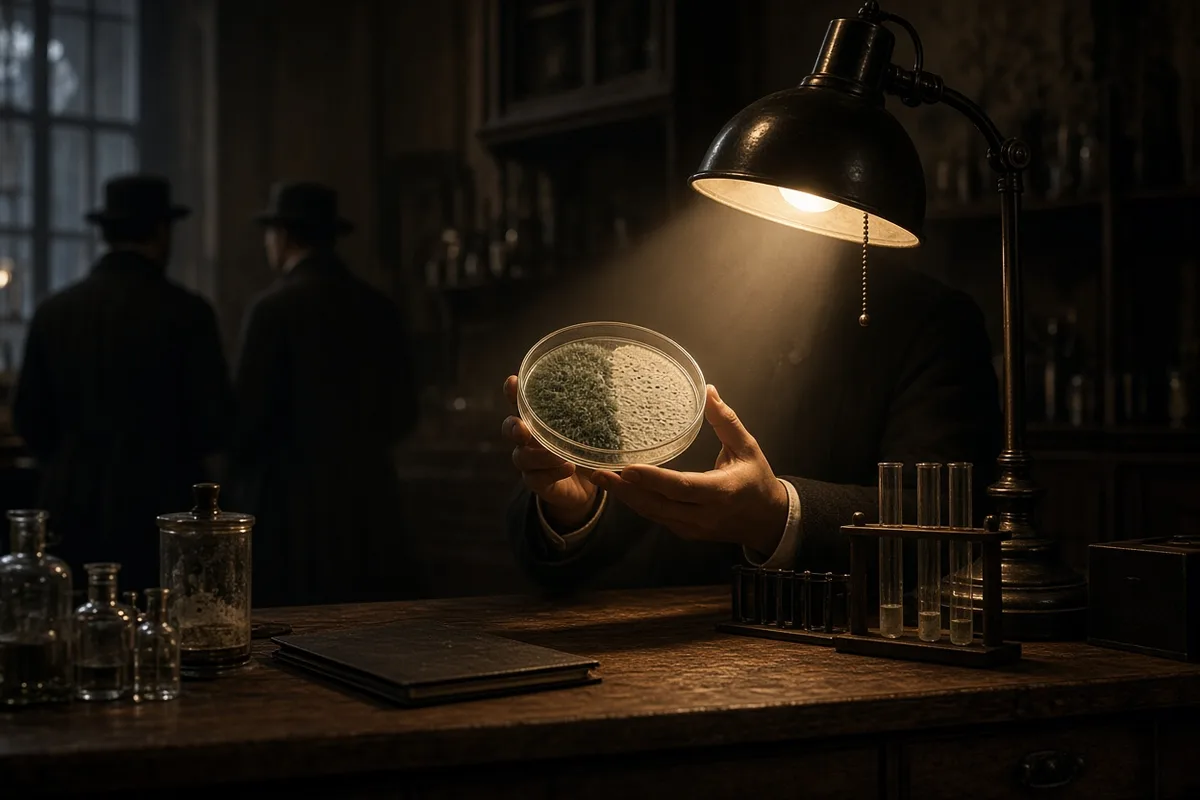
Dust had settled on most of the surfaces during his absence. On one plate the staphylococcal colonies had grown thick and yellow except where a pale green mold had taken hold. Around the mold the agar stayed clear, as if something had eaten the bacteria or stopped them cold. Fleming leaned closer, breath fogging the glass for a moment. He called for a slide and a loop without looking up.

I brought them. He scraped a fragment of the mold onto the slide, added a drop of stain, and slid the whole thing under the microscope. The colonies around the mold were gone or broken. He moved the plate to a fresh sheet of paper and wrote the date across the top in pencil. Then he set it aside and reached for the next dish, but his hand stopped halfway.
He asked if anyone had opened the windows while he was gone. No one had. The mold must have drifted in on its own from the mycology room downstairs or from the courtyard air. He left the plate uncovered on the bench for the rest of the morning and went on with the other cultures, yet every few minutes he returned to look at the clear ring again.

By midday the story had passed through the department. Craddock came in from the animal house and stood behind Fleming’s chair. Ridley arrived later with a tray of broth tubes. Fleming told them to try growing the mold in liquid and see what came out. He did not say it would cure anything. He said it might keep other bacteria from overgrowing a specimen when we wanted to isolate one kind.
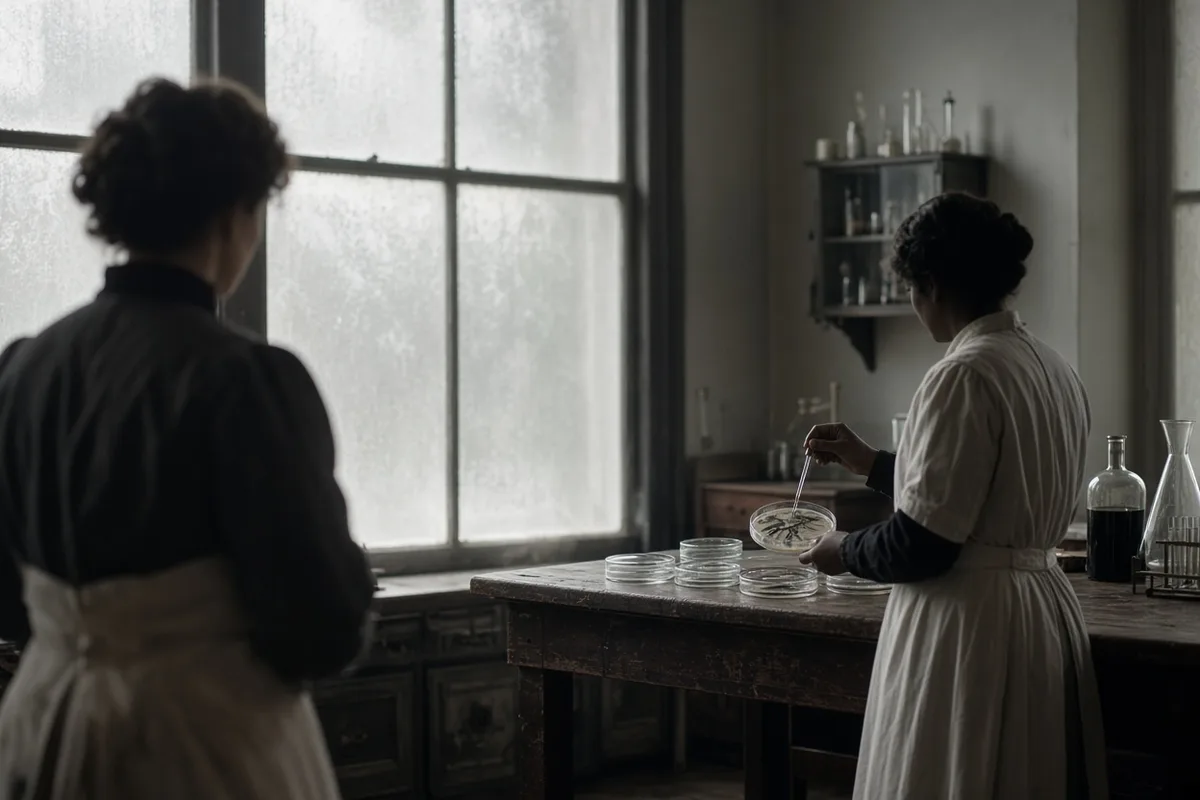
We worked at it for days. The broth turned cloudy with mold but stayed thin where the staphylococci had been. When we filtered it the liquid still stopped the bacteria on a fresh plate, yet the strength faded within hours. Craddock tried to concentrate it by evaporation; the activity vanished. Ridley tried alcohol precipitation; the same thing happened. The substance was there and then it was not.

Fleming kept the original plate on his desk for weeks. He showed it to visitors who stopped by the bench, pointing out the sharp line between growth and no growth. He never raised his voice about it. When the hospital cases came in with septic fingers or throat swabs, he still reached first for the antiseptics he had tested since the war.
In the evenings the lab emptied early. I stayed to wash the glassware and sometimes sat with the filtered broth under the lamp, watching how quickly the activity dropped. The mold itself grew easily, but whatever it released did not last long enough to move from the bench to a patient. Fleming recorded the observations in his notebook and filed the plates. The clear zone stayed on that one dish long after the others had been cleaned and reused.
Months later the same mold appeared again in another culture, and the same clear ring formed. By then the department had turned back to vaccine work and leukocyte counts. The filtered liquid sat in a row of small flasks on the top shelf, labeled only with the date and the word “juice.” No one moved them for a long time.
The flasks stayed on the shelf through the spring of 1929 while the department finished its report on staphylococcal vaccines for the Medical Research Council. On 13 May Fleming wrote the first note on the mold in his laboratory book under the heading “mould juice,” recording that a one-in-eight-hundred dilution still produced a clear zone on a fresh agar plate after twenty-four hours. He showed the plate to Dr. Stuart Craddock and asked him to test the juice against a pneumococcus strain isolated from a patient on Ward 4; the zone measured eighteen millimetres. By the end of June he had prepared a short paper for the Journal of Experimental Pathology and sent the manuscript to the editor on 2 August with the title “On the Antibacterial Action of Cultures of a Penicillium, with Special Reference to Their Use in the Isolation of B. influenzae.” The paper appeared in the issue dated 1 September 1929 and contained the sentence, “It is suggested that it may be an efficient antiseptic for application to, or injection into, areas infected with penicillin-sensitive microbes.”
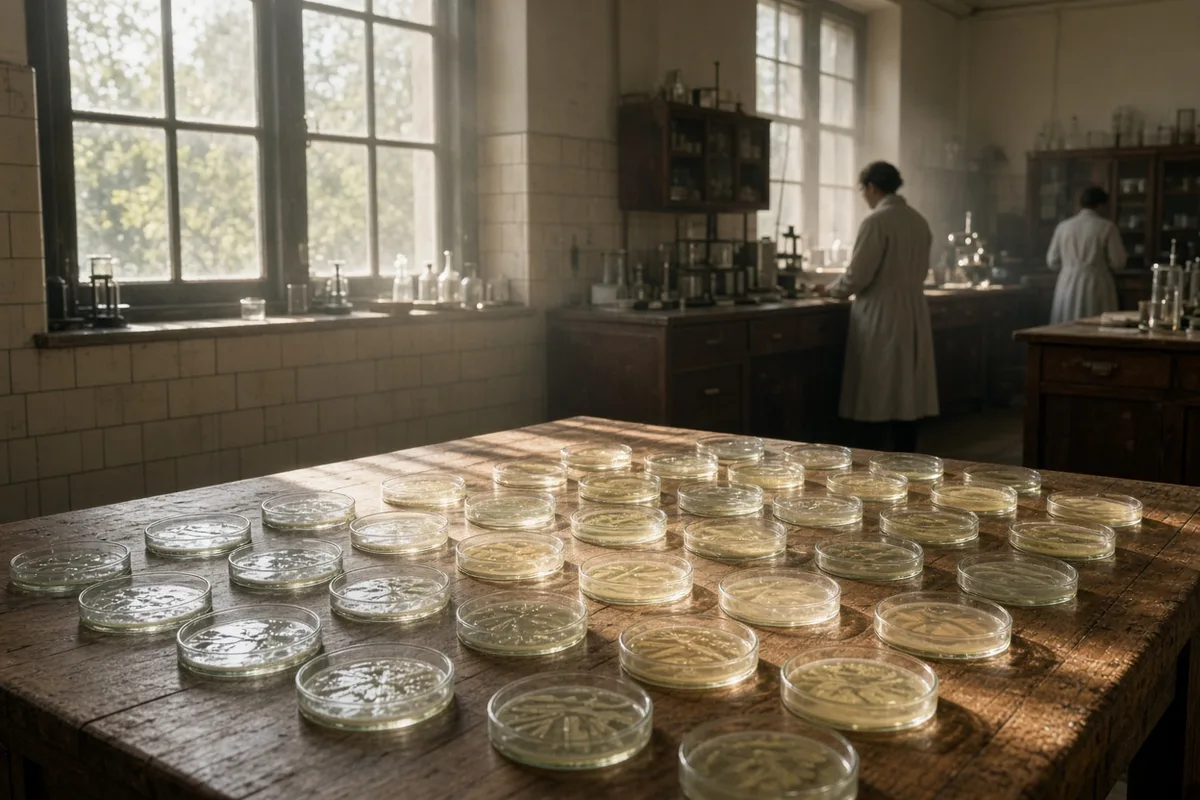
In the winter of 1930 the same mold reappeared in a throat swab from a child on the paediatric ward. Fleming transferred a fragment to a fresh broth flask, filtered the liquid on 17 December, and tested it against a culture of Streptococcus haemolyticus taken from the same child; the growth was completely suppressed at a dilution of one in two hundred. He recorded the result in the margin of the notebook with the words “stronger than before” and left the flask beside the earlier set. The following March he demonstrated the plate to Dr. C. G. Paine, who had come from Sheffield to learn vaccine methods; Paine carried a subculture back to his own laboratory and later used the filtrate on two infants suffering from gonococcal ophthalmia, noting on 25 April 1930 that “the pus disappeared within forty-eight hours” in both cases. Fleming filed Paine’s letter with the original plates but made no further reference to clinical use in his own notes.
The flasks remained untouched until the summer of 1939 when Ernst Chain, working in the Sir William Dunn School of Pathology at Oxford, requested a culture of the mold from the National Collection of Type Cultures. On 6 September 1939 Chain and Howard Florey began systematic extraction; they recorded on 19 March 1940 that 2.5 litres of filtrate, concentrated by vacuum distillation at 25 °C, yielded 200 milligrams of a brown powder that still inhibited staphylococci at one part in a million. On 25 May 1940 they injected eight mice intraperitoneally with a virulent streptococcus; four of the animals also received 10 milligrams of the powder at three-hour intervals. The four untreated mice died within sixteen hours; the four treated mice survived and were alive on 28 May when Florey wrote in the laboratory log, “penicillin has definite chemotherapeutic effect in mice.”

The first human administration took place on 12 February 1941 when a policeman named Albert Alexander, aged forty-three, received an intravenous dose of 200 milligrams at the Radcliffe Infirmary. Alexander had developed a severe staphylococcal infection following a scratch from a rose thorn; within forty-eight hours his temperature fell from 40.2 °C to 37.8 °C and the cellulitis began to recede. On 17 February the supply of penicillin ran out after a total of 4.4 grams had been given; the infection returned and Alexander died on 15 March. Florey and Charles Fletcher then treated a four-year-old boy with streptococcal meningitis on 11 August 1942; the child received 120 milligrams intrathecally and recovered fully by 3 September, the first documented cure of pneumococcal meningitis by penicillin.
By 1943 the Oxford team had increased production to 25 litres per week in ceramic vessels originally designed for porcelain filtration. Norman Heatley devised a continuous extraction apparatus using amyl acetate and acidified water, raising daily output to 3 grams of crude powder. On 1 July 1943 Florey and Heatley flew to Washington with samples; within six months the Northern Regional Research Laboratory in Peoria, Illinois, had substituted corn-steep liquor for the original broth and isolated a higher-yielding strain, NRRL 1951, from a moldy cantaloupe. By June 1944 American factories produced 2.3 million doses per month, enough for the Normandy invasion hospitals where penicillin was issued under the code name “P-11.”
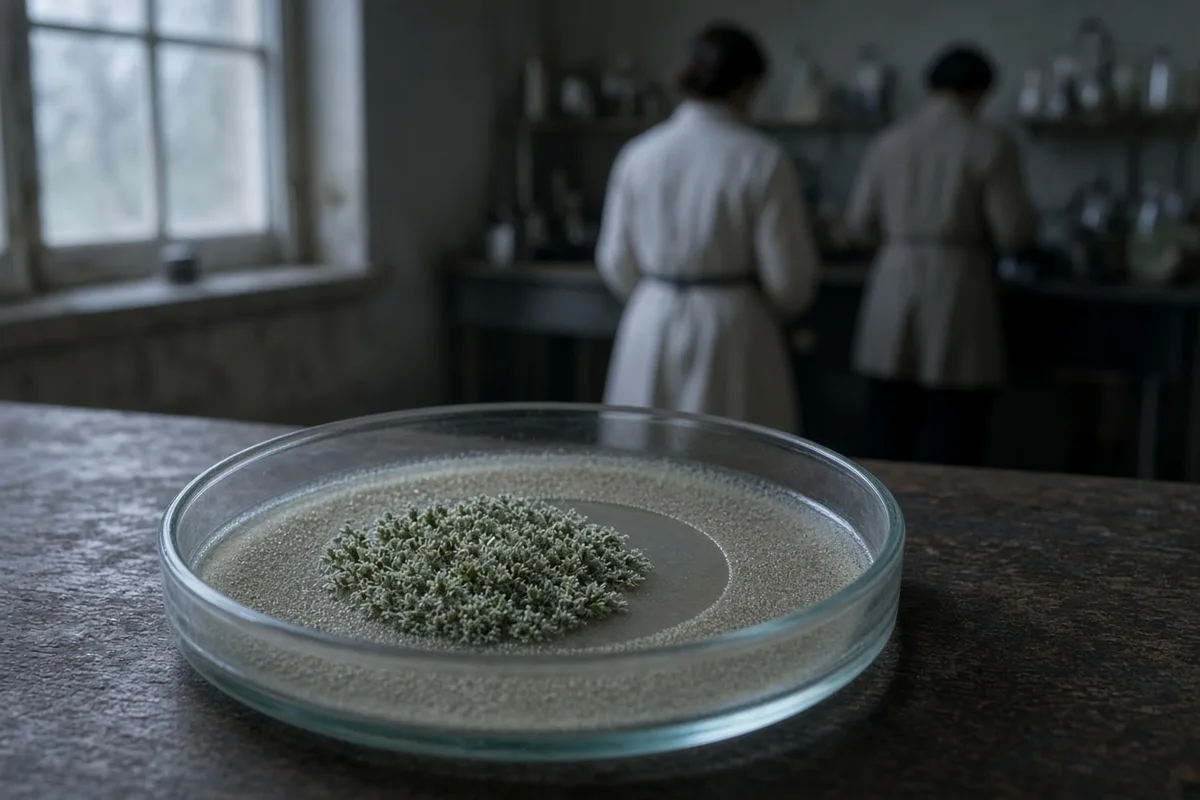
After the war Fleming returned to St. Mary’s and continued to keep the original 1928 plate in a glass case on his desk until his retirement in 1948. He died on 11 March 1955; the plate, together with the laboratory notebooks and the letter from Paine, was transferred to the British Museum on 14 June 1956 under accession number 1956-07-12. Florey, Chain, and Fleming shared the Nobel Prize in Physiology or Medicine on 25 October 1945; in his banquet speech Florey quoted the 1929 paper and added that “the clinical results we obtained in 1941 confirmed every word Fleming had written sixteen years earlier.”
Today the same strain of Penicillium chrysogenum descended from the Peoria isolate is grown in 50,000-litre stainless-steel fermenters at facilities in Sandwich, England, and Westwego, Louisiana. Annual world production exceeds 60,000 tonnes of bulk penicillin, of which 12 percent is still used as the potassium salt for intramuscular injection. In the paediatric intensive-care unit of the John Radcliffe Hospital, Oxford, a five-year-old girl admitted on 4 March 2023 with pneumococcal sepsis received 50 milligrams per kilogram of benzylpenicillin every six hours; blood cultures taken at admission grew Streptococcus pneumoniae serotype 3, fully sensitive to penicillin at a minimum inhibitory concentration of 0.015 milligrams per litre. On the seventh day of treatment the child sat upright in bed, ate a full breakfast, and asked the nurse for the television remote.
The nurse on the day shift, Sister Margaret Ellison, noted the request in the electronic record at 08:17 and wheeled the wall-mounted screen closer to the bed. The girl selected a programme on CBeebies and ate another spoonful of porridge while the benzylpenicillin infusion ran at 12 millilitres per hour through the peripheral line inserted on admission. Blood cultures from day three remained negative, and C-reactive protein had fallen from 187 milligrams per litre to 14. Ellison recorded a Glasgow Coma Score of 15 and asked the registrar whether the next dose could be given orally; the reply came at 09:42 that the intravenous course would continue for two more days to complete the fourteen-dose protocol.
That same week the John Radcliffe pharmacy ordered another 2.4 kilograms of the potassium salt from the UK distributor, sufficient for the paediatric unit’s projected March caseload. The batch carried lot number 4F-3921, manufactured at the GSK site in Barnard Castle, County Durham, where 12,000-litre fermenters are inoculated with the Peoria-derived strain and harvested after 180 hours at 25 °C. Yield from that run reached 62 grams of active material per litre before purification, a figure logged in the company’s March 2023 production summary sent to the European Medicines Agency.
Across the Atlantic the same strain is maintained at the Agricultural Research Service Culture Collection in Peoria under accession NRRL 1951-B. In 2022 the facility supplied 340 lyophilised ampoules to academic and industrial laboratories, each containing 10^7 spores. One of those ampoules went to a team at the University of Manchester investigating beta-lactamase inhibitors; their paper in Antimicrobial Agents and Chemotherapy, dated 15 February 2023, reported that a 4-milligram-per-litre combination of penicillin G and clavulanic acid restored susceptibility in 78 of 92 carbapenem-resistant Enterobacteriaceae isolates collected in northern England between 2019 and 2021.
At the World Health Organization’s Essential Medicines List meeting in Geneva on 24 April 2023, benzylpenicillin retained its category as a core medicine with an estimated annual requirement of 18 million treatment courses for children under five. The secretariat’s background paper cited surveillance data from the Global Antimicrobial Resistance Surveillance System showing that 94 percent of Streptococcus pneumoniae isolates from invasive disease in low-income countries remain susceptible at the 0.06 milligrams per litre breakpoint. Procurement contracts for 2024 were therefore renewed at the existing volume of 1,150 tonnes of bulk powder.
In the operating theatre at Great Ormond Street Hospital on 19 May 2023 a twelve-year-old boy undergoing valve replacement for rheumatic heart disease received a 50-milligram-per-kilogram bolus of penicillin G immediately before sternotomy. The perfusionist recorded the timing in the bypass log as 11:04; the aortic cross-clamp time was 47 minutes. Post-operative blood cultures drawn at 36 hours showed no growth, and the child was discharged to the ward on oral phenoxymethylpenicillin 250 milligrams four times daily for ten days, the regimen listed in the hospital’s 2022 antimicrobial policy under section 4.3.
The original 1928 plate, accession 1956-07-12, is now displayed in a nitrogen-flushed case at the Science Museum in London. Environmental monitoring data for the gallery in March 2023 recorded relative humidity at 42 percent and temperature at 18.4 °C, with airborne fungal counts below 5 colony-forming units per cubic metre. Visitors on 11 March passed the case at an average rate of 47 per hour, according to the infrared counter installed above the doorway.
On 3 June 2023 the five-year-old girl returned to the John Radcliffe outpatient clinic for her final review. The paediatric infectious-disease consultant, Dr. Helen Rawlinson, examined the healed venepuncture sites, reviewed the final full blood count showing a neutrophil count of 3.8 × 10^9 per litre, and signed the discharge summary at 14:27. The child’s mother asked whether any follow-up antibiotics would be needed; Rawlinson answered that none were indicated provided the child remained afebrile. The family left the clinic through the main entrance at 14:41, the girl carrying a small paper bag containing the prescription for amoxicillin that had been prepared in error and then cancelled.