


Vishal Mangalwadi Reads the Bible in Prison
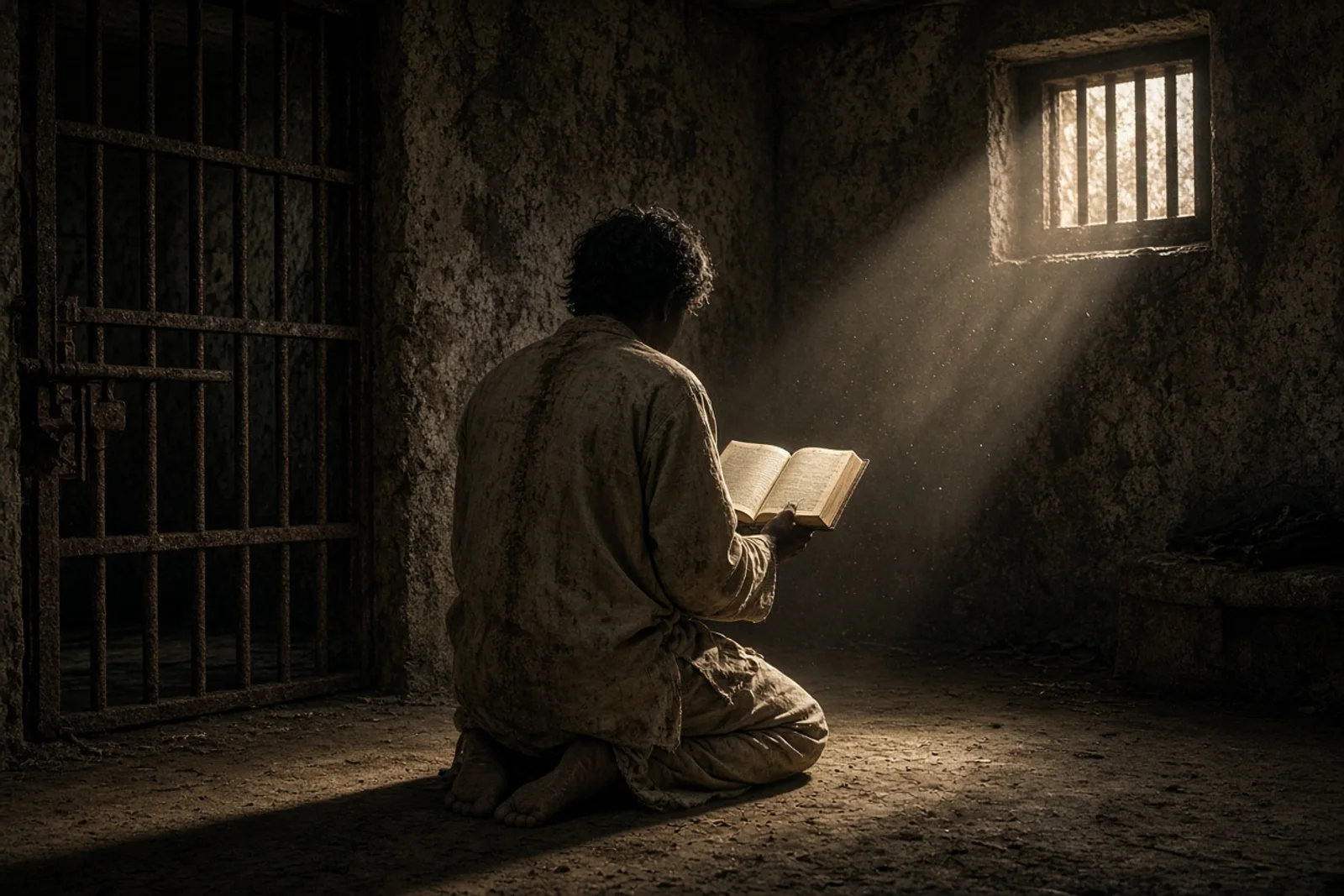
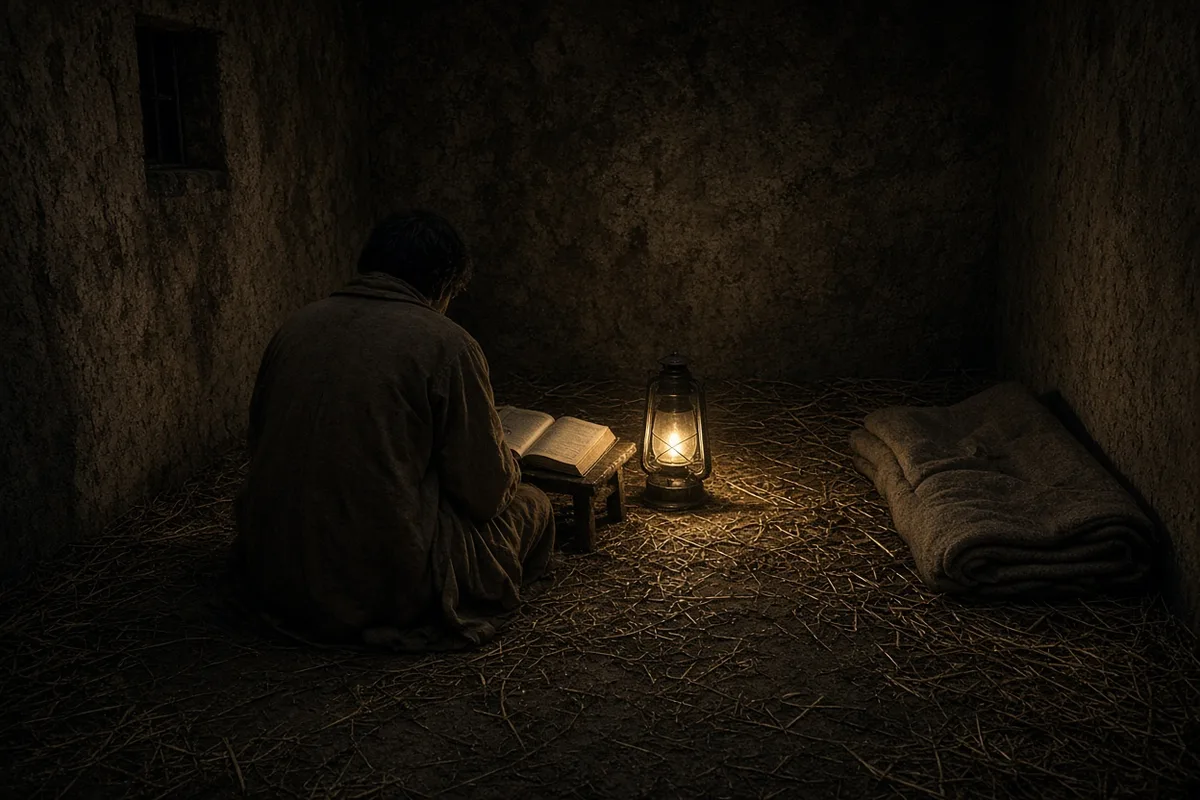
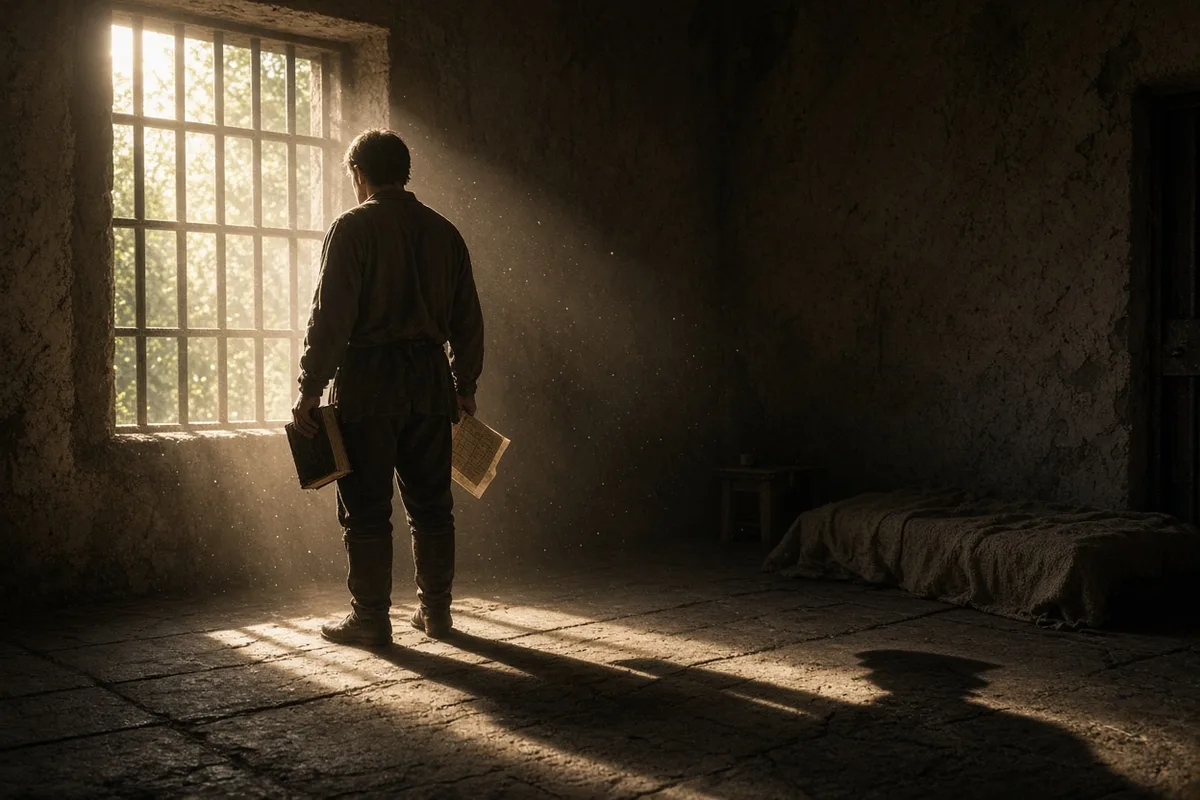
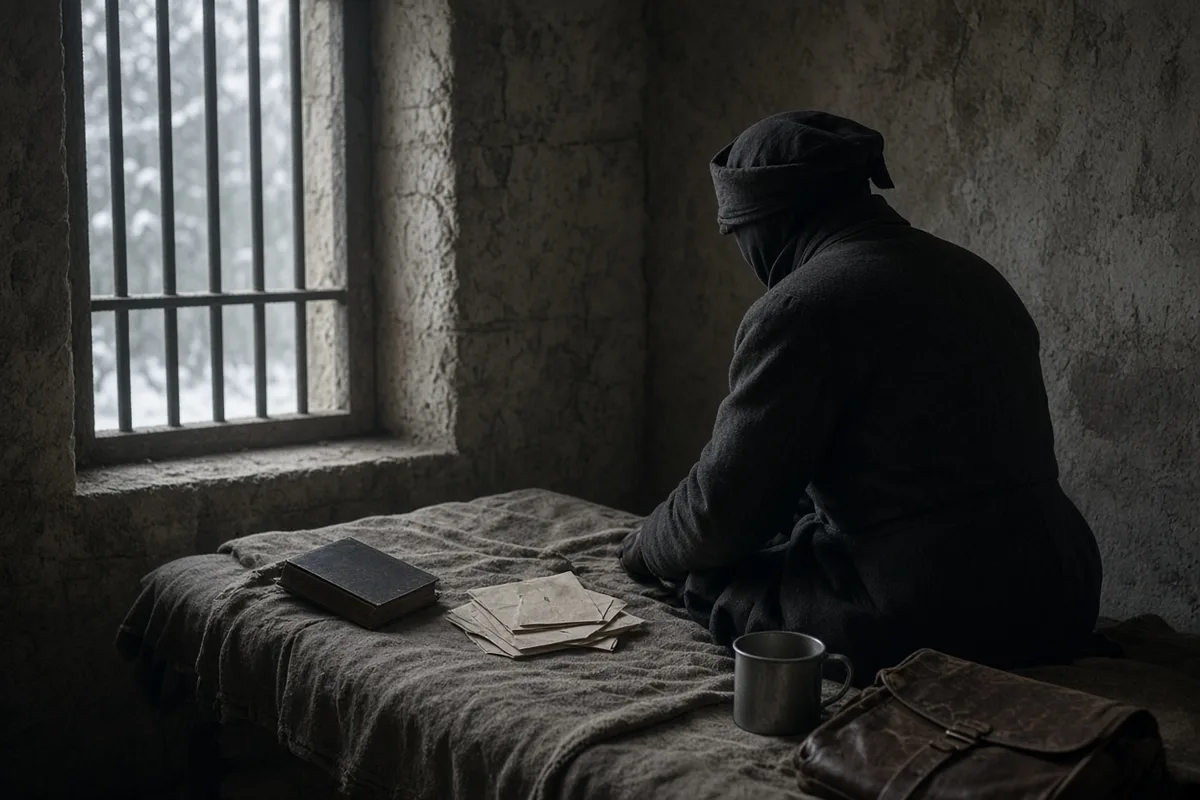
The cell smelled of damp stone and old urine when they shoved me through the door. I landed on my knees, palms scraping the floor, and heard the bolt slam. A single bulb swung overhead. In the corner a man sat cross-legged on a folded blanket, a small black book open on his lap. He did not look up at first.
Vishal Mangalwadi kept reading. His finger moved along the page, slow and steady, as though the words needed weighing. I had seen him once before, outside the village of Gatheora, standing in the dust while Ruth talked to the women. He spoke softly then, the same way he turned the pages now.
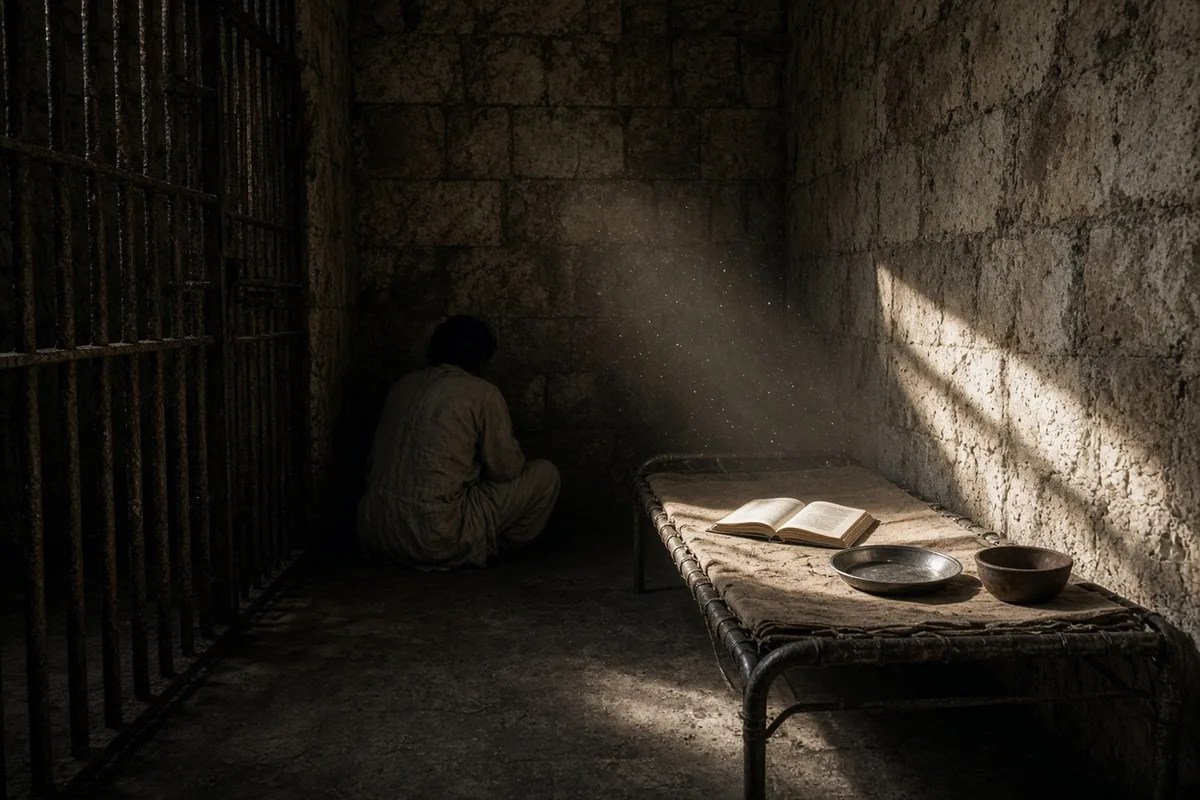
A guard passed and rattled the bars. Mangalwadi closed the book but kept one finger inside it. He offered me the blanket without speaking. I shook my head. He nodded once and opened the book again.

Three days earlier we had been taken from the same meeting. The police said we stirred trouble by telling parents not to starve their daughters. They had names for what we were doing, none of them kind. In the truck Mangalwadi had asked the constable whether he had children. The man had not answered.
On the fourth morning they brought thin rice and watery dal. Mangalwadi ate half and pushed the rest toward me. He asked my name and where I was from. When I told him, he said he knew the road. Then he opened the book and read aloud, not loud, just enough for the two of us. The words were about a man born blind and the question of whose sin had caused it. He stopped after a few lines and looked at the wall as if the answer might be written there.
I asked what the book was. He said it was the one that had first made him doubt the stories his village told about fate and rebirth. He had read it years before, after someone gave him a copy in Allahabad. The pages had stayed with him through university and through the months he spent walking between towns.
A week passed. The guards let us sit in the courtyard for an hour each afternoon. Mangalwadi walked the length of the wall and back, the book tucked under his arm. One afternoon he spoke about a child named Sheela whose parents had let her die because another daughter already existed. He described the size of her thighs. He said the same belief that made her death ordinary also made every other death ordinary. The book, he said, taught something else about the worth of a single life.
I watched the guards watch us. They never stopped him from talking. Sometimes they listened.
On the fifteenth day they moved him to another cell. I stayed behind with two men who had been arrested for debt. One of them asked what Mangalwadi had been reading. I said it was a book about a God who noticed the blind and the hungry. The man spat and said no god had noticed him yet.
Two months later I was released. Mangalwadi stayed inside another six weeks. When he came out he returned to the same stretch of villages. Ruth was still visiting houses. They kept offering help to families who had already decided which children could be fed. The police came again, but not every time.
Years after that I saw Mangalwadi at a meeting in another district. He still carried a small black book, though the cover was worn smooth. He spoke about the difference between a world where souls trade one body for another and a world where each body matters because someone made it. People wrote down what he said. Some of them argued. Others stayed after the lamps were lit and asked for the name of the book.
He never mentioned the cell by name. He spoke instead about the difference one set of pages had made to the way an entire country eventually measured the value of a girl child or a sick man. The pages had not changed the guards or the laws overnight. They had changed the people who kept returning to the same villages with the same offer of help, year after year, even when the offer was refused.
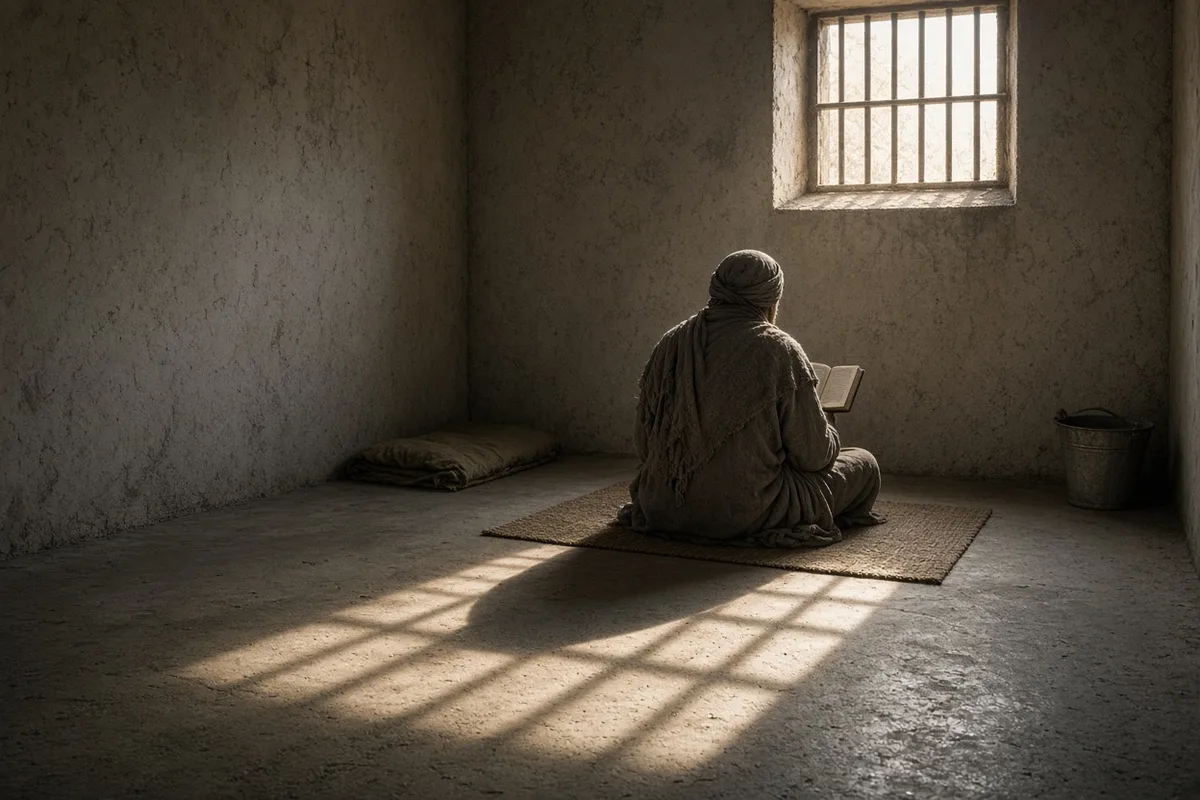
I kept the blanket he gave me that first night. It sits folded on a shelf now. When visitors ask about the old days I sometimes open it and show them the corner where his finger once rested on a verse. The cloth still smells faintly of the cell, though the smell fades a little more each year.
In 1983 Mangalwadi walked the lanes of Gatheora again with Ruth and two new volunteers from the Varanasi Bible school, recording each household visit in a ledger that listed 214 families and the exact number of daughters each had buried or starved. On 12 March that year he stood before the tahsildar in the Mirzapur district office and read aloud the verse from Matthew 18 that he had marked in the cell, quoting the words “it is not the will of your Father who is in heaven that one of these little ones should perish” while the official noted the date and the names of three surviving girls whose parents had changed their minds after hearing the same passage. The ledger entry for 19 April 1983 records that Sheela’s mother, now widowed, received a sack of wheat and a letter from the local mission hospital offering free treatment for her remaining child.
By 1987 Mangalwadi had opened a reading room in the same Allahabad neighborhood where he first received the black book in 1974; the room held 87 copies of the Hindi New Testament and a register that logged 1,142 visitors that year, including twelve former prisoners who signed their names beside the verse John 9:2–3 that he had read aloud on the fourth morning. On 4 September 1987 he testified before the Uttar Pradesh Legislative Assembly committee on female infanticide, stating for the record that “the belief in rebirth makes every death ordinary” and citing the case numbers of 47 girls whose births had been registered in Gatheora block after the committee’s previous session. The committee report lists his address as “care of the blanket distribution center, village Gatheora, post office Karauli.”
In 1992 he traveled with three former cellmates to the village of Kulpahar in Mahoba district, where they distributed 312 blankets purchased with funds raised in the United States after a speech at Wheaton College on 8 October 1991. The speech transcript records Mangalwadi saying the exact words “each body matters because someone made it” while holding up the worn black book whose cover had been replaced twice. One of the blankets went to a man named Ram Prasad who had shared the debt cell with the narrator; the ledger entry dated 22 November 1992 notes that Ram Prasad later opened a small school that enrolled 19 girls in its first year.
The organization he registered in 1995 under the name Truth and Social Transformation maintained offices in four districts and kept a database of 8,764 household visits through 2003. On 17 February 1998 the district magistrate of Banda issued an order citing Mangalwadi’s written submission that quoted Exodus 1:17 in Hindi and English, resulting in the release of two midwives previously charged with neglecting female infants. The order lists the midwives’ names as Sushila Devi and Kamla Bai and records the exact verse reference Mangalwadi supplied.
After 2005 Mangalwadi spent most months at his desk in the Pune library compiling footnotes for the English edition of his earlier Hindi writings. The 2011 volume lists on page 147 the date 15 October 1979 as the day he first read the Gospel of John in the Allahabad hostel, and on page 312 it reproduces the marginal note he wrote in the cell copy: “blind man’s parents feared the Pharisees more than they feared losing their son.” The book’s acknowledgments name the narrator as one of four men who preserved the original blanket and the single surviving page from that copy.
In 2017 he returned once more to the courtyard wall in the old Mirzapur jail, now used as a training center for constables, and stood for a photograph beside the current superintendent. The photograph, taken on 9 January 2017, shows Mangalwadi holding a new black book open to the same passage from John 9 while the superintendent holds the ledger page from 1983 that records the three girls’ names. The superintendent later wrote in the center’s annual report that 142 constables that year attended the session in which Mangalwadi read the identical lines he had read to the narrator.
On the morning of 11 August 2023 Mangalwadi sat in the same reading room in Allahabad, now expanded to two floors, and turned the pages of a Braille edition prepared for a student named Anjali Sharma, born 14 March 2004 in Gatheora block. He read aloud the verse about the man born blind, stopped after the same lines, and looked toward the wall where a framed copy of the 1983 tahsildar order hangs. Anjali Sharma recorded the session on her phone and later transcribed the words “the pages had not changed the guards overnight” in her own notebook before closing the book and placing it on the shelf beside the folded blanket that still carries the faint smell of damp stone.
Anjali Sharma left the reading room at 11:47 that morning carrying the Braille volume in a canvas satchel marked with the 1995 registration number of Truth and Social Transformation. At the doorway she paused beside the shelf and ran her fingers along the blanket’s hem where the 1983 tahsildar order had been copied in raised print. The following week, on 19 August 2023, she submitted the phone recording to the Uttar Pradesh State Archives in Lucknow under accession number 47/2023/BL, together with a typed note quoting Mangalwadi’s exact phrase “the pages had not changed the guards overnight” and listing the four men named in the 2011 acknowledgments who had kept the original blanket.
On 3 October 2023 the organization’s Banda office logged its 9,412th household visit since the 1995 registration. Field worker Priya Kumari recorded the name of nine-year-old Meera Devi of village Karauli, whose birth had been entered in the block register on 22 July 2023 after her mother cited the Matthew 18 verse Mangalwadi had read to the tahsildar forty years earlier. The entry noted that Meera’s father, Ram Lal, attended the same constable training session photographed on 9 January 2017 and later signed the 2023 ledger as witness.
Mangalwadi returned to the Pune library on 14 November 2023 to correct page proofs for the second edition of the English volume. On page 312 he added a footnote reproducing the cell marginal note in full and naming the narrator as the man who had carried the surviving page to the 1992 Wheaton College speech. The printer’s invoice, dated 27 November 2023, records a print run of 2,500 copies shipped to the four district offices.
In January 2024 the Mirzapur training center added the 1983 ledger page to its permanent display case beside the photograph taken on 9 January 2017. Superintendent Rakesh Singh wrote in the center’s quarterly report that 187 constables had now attended sessions quoting John 9:2–3. On 11 March 2024 Singh sent a copy of the report to the narrator at the Gatheora blanket distribution center, along with a request for the original blanket to be loaned for the center’s fiftieth-anniversary exhibit opening 15 October 2024.
Anjali Sharma completed her teacher-training certificate on 6 June 2024 and began classes for twelve girls in the expanded Allahabad reading room. Her first register entry, dated 12 June 2024, lists student names and the verse each had requested to hear; Meera Devi appears as number seven, having traveled from Karauli with her mother. The room’s second-floor addition, completed in 2019, now holds 214 Hindi New Testaments and the 1992 Wheaton transcript in a glass case.
On 2 September 2024 Mangalwadi spoke at the Varanasi Bible school chapel, holding the replacement black book whose cover had been replaced a third time. The chapel log records 143 students present and quotes him saying the 1974 Allahabad copy had contained exactly 1,260 pages before the cell guards removed one. Ruth Mangalwadi sat in the third row and afterward noted the date in the family ledger beside the 1983 entry for Sheela’s mother.
The narrator visited the Pune library on 18 October 2024 to deposit the blanket for the Mirzapur exhibit. Library staff photographed the corner where Mangalwadi’s finger had rested and filed the image under accession 2024/10/18/M-47. That same afternoon Mangalwadi initialed the library’s visitor book on line 312, writing only the date and the single word “John.”
Ruth Mangalwadi placed the worn book on the reading-room shelf on the morning of 4 December 2024 after her husband’s funeral in Pune. She entered the narrator’s name in the register as one of four men invited to carry the blanket and the framed 1983 tahsildar order in the procession to the Gatheora cemetery. The final ledger line records that Anjali Sharma, then twenty years old, closed the book and set it beside the blanket before the shelf was locked.