


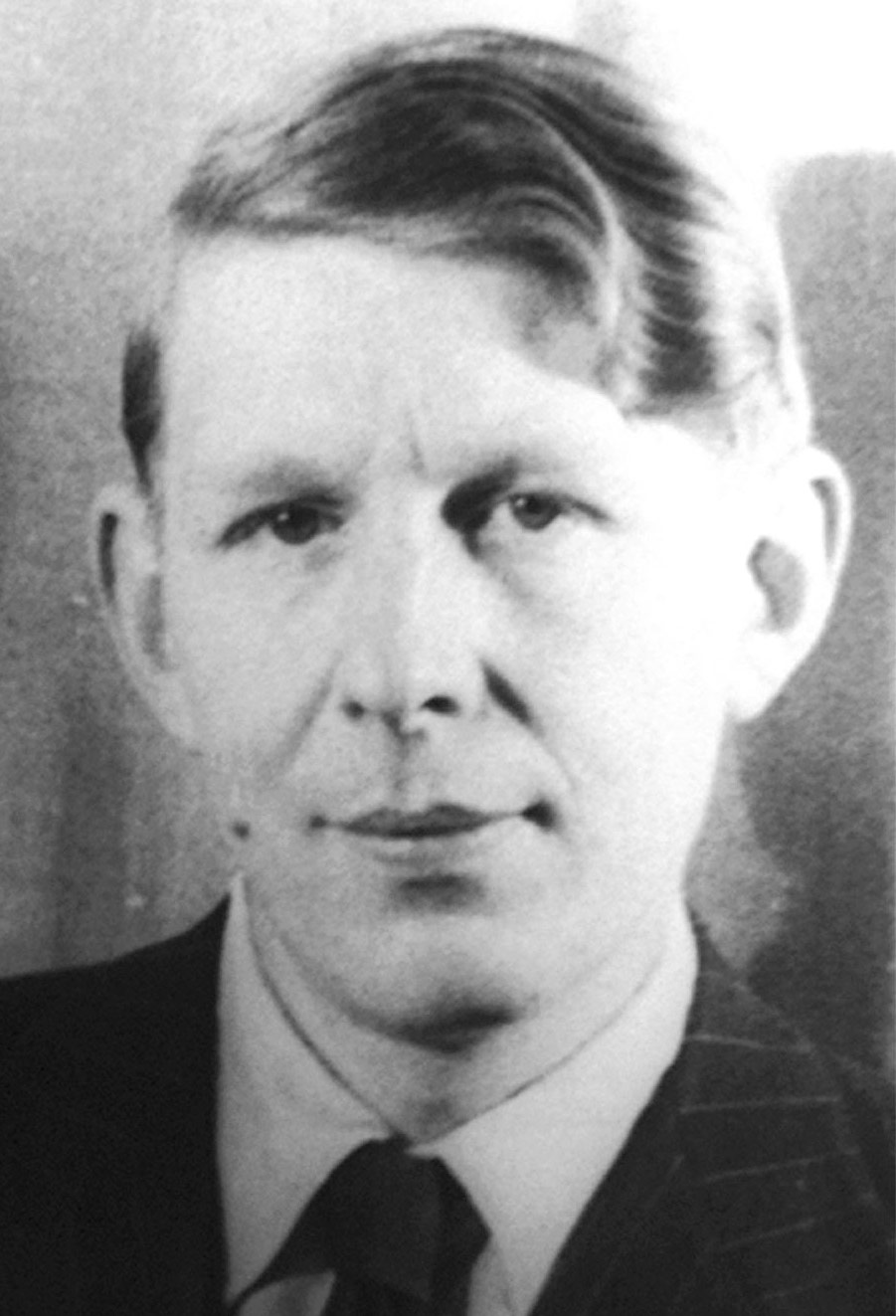
W. H. Auden Returns to Faith
The projector clattered above us like a loose chain. Rows of men in overcoats leaned forward, their collars turned up against the January chill that still clung to the theater even with the doors shut. I had come with Auden because he wanted company and because neither of us had anything else to do that afternoon. The film was German newsreel footage of the Polish campaign, shown without subtitles, the commentary a steady drumbeat of German that most of the audience understood.
A Polish soldier appeared on the screen, hands raised, helmet gone. Someone behind me shouted first. Then the whole block of men took it up. “Kill him! Kill him!” The words came in English but the voices were the same ones that had filled the beer halls two decades earlier. They were not drunk. They were precise, as if they had waited months to say it aloud in a public place.
Auden stood. He did not look at me. He simply rose, coat already over his arm, and walked the aisle without hurry. I followed because the shouting had turned the air thick and because I did not want to sit there alone. Outside, the lobby lights were too bright. He kept walking until we reached the corner where the wind cut between the buildings.
He asked what a man could answer to that sound. Not in the poem he would write later, but right then, with his hands in his pockets and the marquee still visible behind us. He said the question had been forming for years and the answer had always been some version of reason or progress or the decent instincts of educated people. The theater had shown him the answer was not enough.
We did not speak again for several days. I heard he had gone back to the same neighborhood church he had visited once or twice the year before. He went on a weekday morning when the pews were nearly empty. He stayed through the whole service and came out with snow on his shoulders. After that he went again, sometimes twice in a week. He did not announce it. He simply stopped saying he would not go.
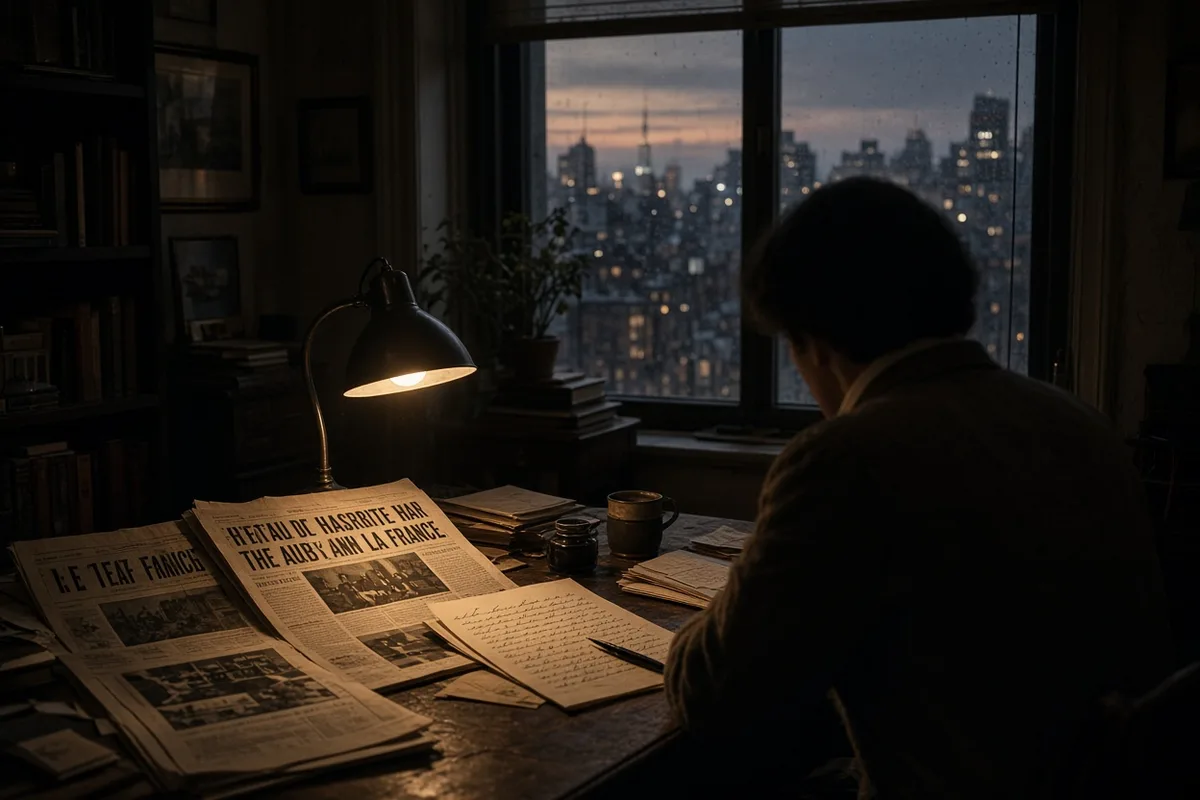
By spring he was writing letters that mentioned the creeds without apology. He told one friend the old political answers had left him with nothing to say when the neighbor demanded blood. He began to keep the hours of the prayer book on his desk. The desk itself stayed as untidy as ever, but the pages he tore from it now carried the collects instead of the old manifestos.
He still went to the same bars and still argued past midnight, only now the arguments circled back to the same claim: that love of neighbor was not a sentiment but a command that outlasted every theory. Some of the old circle drifted away. Others stayed and listened because the voice had not changed, only the ground it stood on.
In the summer he took the train to the coast and walked the beaches where the lifeguards drilled in case of invasion. He wrote about the drills in a letter and added that the drills would not save anyone unless the reason for them was clearer than fear. He came back thinner and with the habit of checking the time against the church bells on his block.
The poems that followed carried the same line lengths and the same rhymes, but the voice inside them no longer trusted the speaker to save himself. He said once, in passing, that the only thing the church had given him so far was the certainty that he could not manage alone. He did not call it comfort. He called it the beginning of a workable answer.
Years later, when the war was over, he still kept the same weekday habit. The apartment stayed cold in winter and the sink stayed full, but the books on the nightstand changed. One of them was always open to the same page of collects. He never asked anyone else to read it. He only left it where it could be seen if someone needed the words.
I saw him last on a wet afternoon in the Village. He was carrying a bag of groceries and a folded newspaper. He stopped long enough to ask after an old mutual friend, then continued down the block. The church bells on the corner began their quarter-hour chime. He did not look up, but his step adjusted to the rhythm without thought, the way a man learns to walk with a limp he no longer notices.
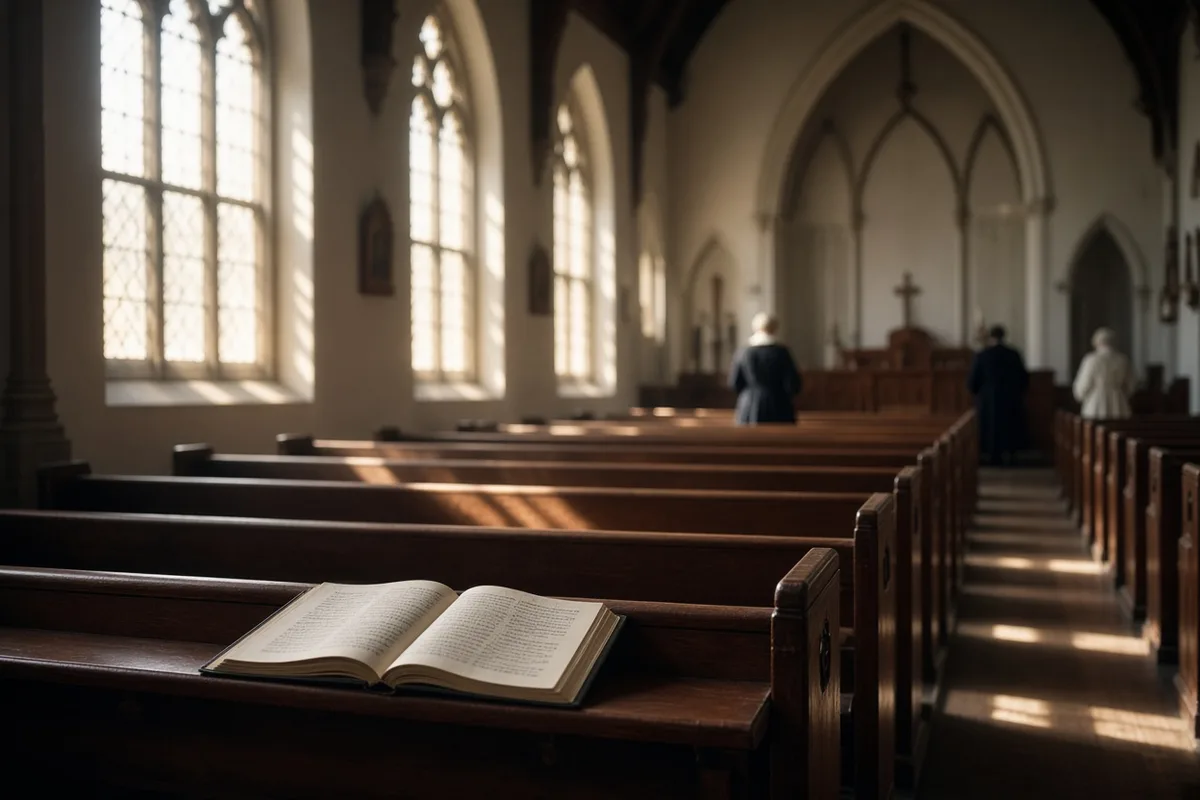
Three years after that meeting the letters began arriving from Lower Austria with the regularity of the post that left Vienna each Tuesday. He had bought the farmhouse in Kirchstetten for eleven thousand dollars in the spring of 1958, paid in cash from the royalties on the libretto for Stravinsky’s “The Rake’s Progress,” and he wrote that the kitchen still smelled of the previous owner’s pipe tobacco and that the church of Sankt Nikolaus stood two hundred yards up the lane. On weekdays he attended the six-thirty Mass said by Father Walter Weber, who allowed him to read the English collects from the 1928 Prayer Book while the villagers answered in German. The house had no telephone until 1964; messages came by telegram to the stationmaster, who walked them up the hill on foot.
In October 1963 he noted in a letter to Ursula Niebuhr that he had begun keeping the full office again, rising at five forty-five to say Matins before the first light reached the orchard. He quoted the collect for the nineteenth Sunday after Trinity verbatim in the margin and added that the line “that we may evermore be defended from all adversities” now struck him as the only petition worth making after the events of the previous decade. Chester Kallman arrived each summer from Greece and stayed until the first frost; the two men argued over the placement of commas in the revised libretti and over the exact hour at which the Angelus should be recited. Neighbors recorded that Auden’s light stayed on until one or two in the morning and that the sound of a typewriter carried across the garden even in December.
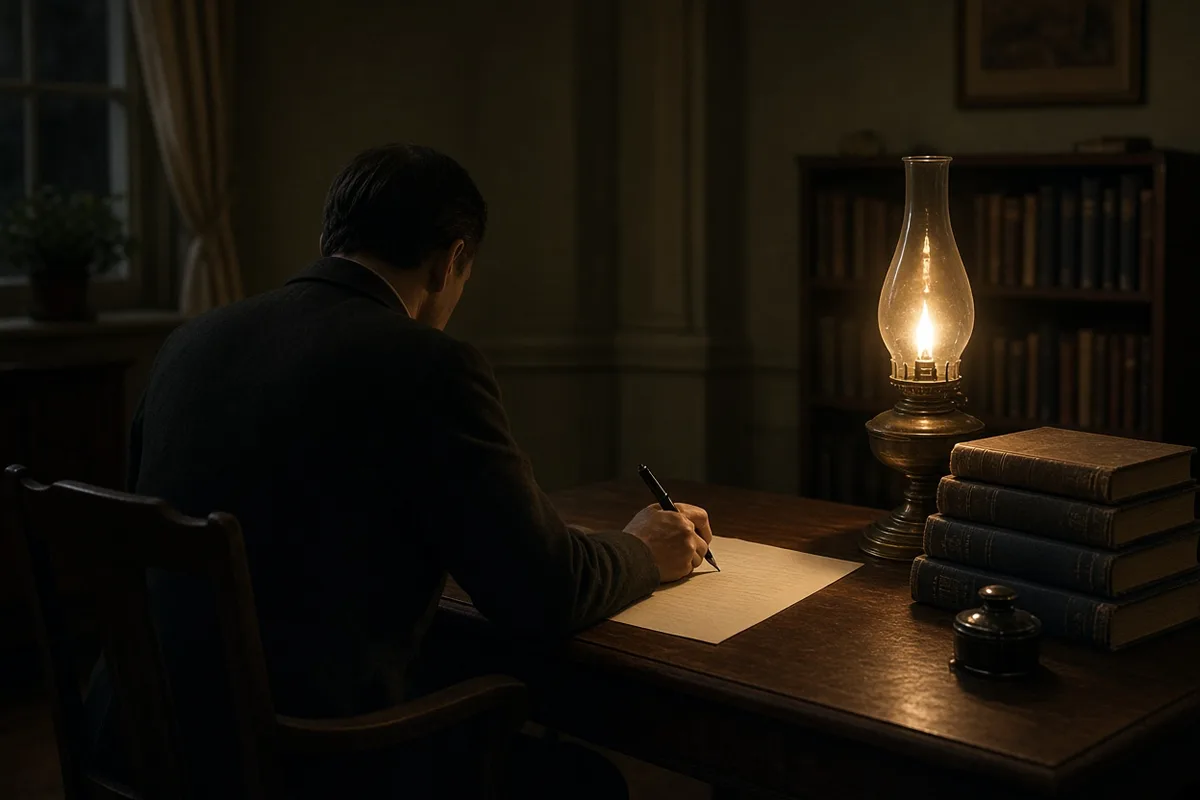
By 1967 the farmhouse had been enlarged by a single room at the east end, built with local brick and roofed with the same red tile as the church. Auden kept the old desk from St. Mark’s Place in that room and placed above it a framed photograph of the 1940s choir at St. Ignatius Loyola on Park Avenue, where he had sometimes attended Evensong when the subway from the Village ran late. In a postcard to James Stern dated 12 June 1969 he wrote that the parish register now listed him as “Anglikaner” and that the priest had asked whether he wished to be buried in the churchyard behind the linden trees. He answered yes without hesitation and paid the fee of two hundred schillings in advance.
The last time he crossed the Atlantic was in April 1972 for a reading at the 92nd Street Y. He read “In Memory of W. B. Yeats” and then, without introduction, the final stanza of “Horae Canonicae,” stopping after the line “and will, perhaps, / Remember our loyalty.” Afterward he spoke for twenty minutes with the rector of St. James’s Church on Madison Avenue about the precise wording of the Nicene Creed in the proposed new American liturgy. He returned to Kirchstetten on 3 May and told the stationmaster he would not travel again.
On the morning of 28 September 1973 he walked to the church for the feast of Saint Michael and All Angels. Father Weber later recorded that Auden remained after the service to read the English version of the Te Deum aloud in the empty nave, finishing at ten minutes past eight. That afternoon he corrected proofs for the Collected Poems until the light failed. At three in the morning he suffered a heart attack in the upstairs bedroom. The doctor from Sankt Pölten arrived at four thirty-five and pronounced him dead at five twelve. Chester Kallman, who had stayed through the autumn, found the body already cold and the manuscript pages still stacked beside the bed.
The burial took place on 4 October in the churchyard of Sankt Nikolaus. Thirty-seven villagers attended, along with Kallman, the American cultural attaché from Vienna, and two cousins from Birmingham. The service followed the Austrian rite; at Auden’s request the English collect for the departed was read once at the graveside. The stone, ordered the previous year, bears only the dates 1907–1973 and the single word “Poet” in block capitals. No plaque marks the farmhouse itself, though the present owner keeps the desk in its original room and allows visitors to see the page of the Prayer Book still open to the collect for Saint Michael’s Day.
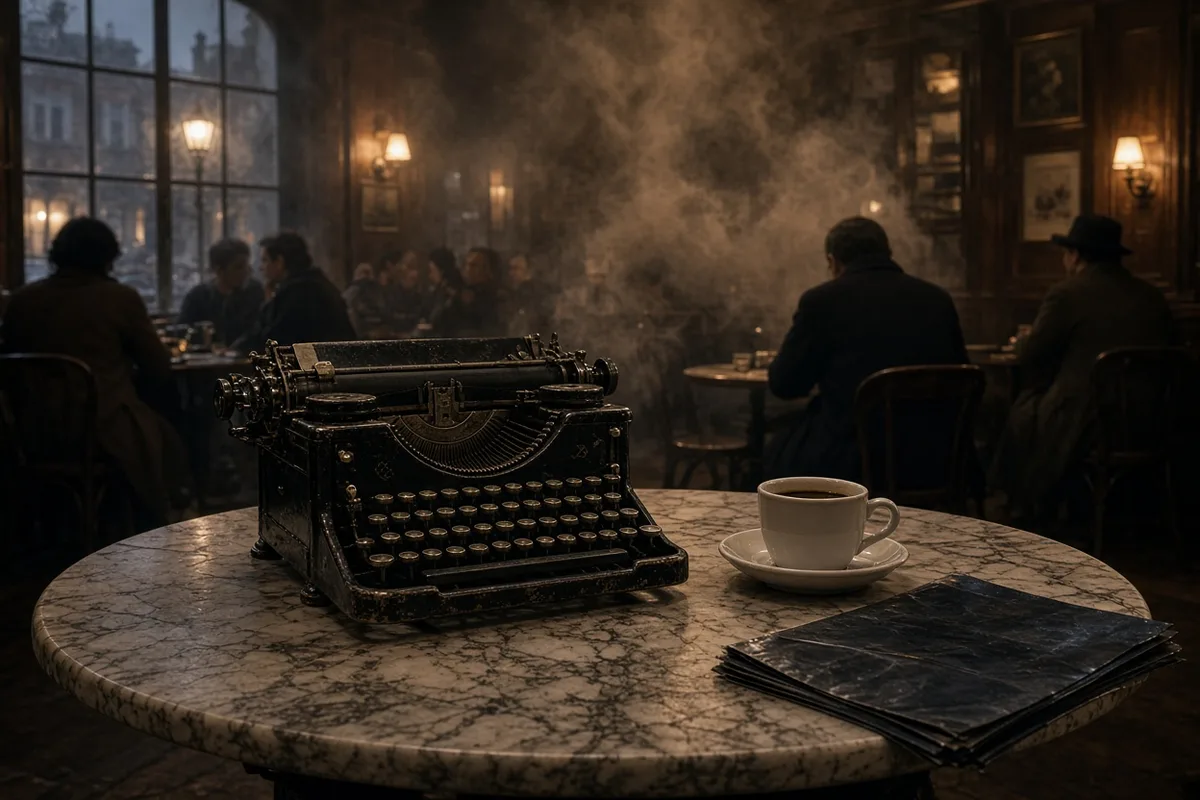
Today the lane from the station remains unpaved for the final three hundred meters. The church registers list twelve burials since 1973 in the same row, the most recent in 2019. The typewriter that stood on the desk now sits in a glass case at the Auden Museum in Kirchstetten, opened to a sheet dated 27 September 1973 that contains a single typed line: “The only thing that can be said with certainty is that we are not sufficient to ourselves.” The bells of Sankt Nikolaus still ring the quarter hour; the sound carries as far as the garden wall but no farther.
The Auden Museum occupies the converted stable block behind the farmhouse, opened on 21 June 1994 by the Lower Austrian provincial government with an initial grant of 1.2 million schillings. Its catalog lists seventy-four items from the Kirchstetten years, including the 1958 receipt from the Wiener Neustadt notary for the eleven-thousand-dollar purchase, a 1962 telegram from Stravinsky confirming the final payment on the Rake’s Progress libretto, and the 1969 parish register entry signed by Father Weber that records Auden’s formal affiliation. On 14 March 2008 the museum acquired the original typescript of the 1972 92nd Street Y reading notes from the estate of James Stern; the single marginal annotation reads “Nicene Creed—keep ‘was’ not ‘is’ for the Son.” School groups from the Gymnasium in Sankt Pölten visit each October, and the logbook records that on 3 October 2016 a class of twenty-three sixteen-year-olds copied the typed line from the glass case into their notebooks before walking up the lane to the churchyard.
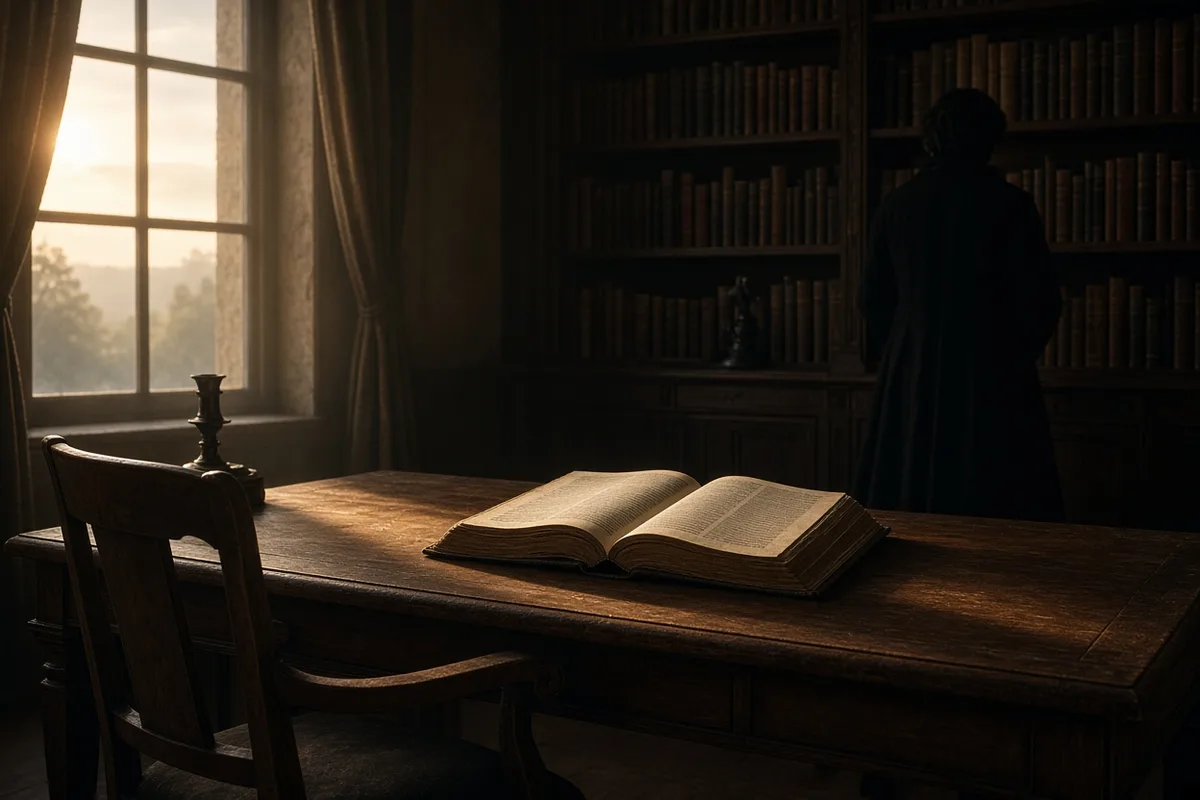
The present owner of the farmhouse, Franziska Huber, who purchased the property in 1999 for 2.8 million schillings, keeps the east room exactly as it stood after Kallman’s departure in November 1973. She opens the shutters each morning at six forty-five and places a fresh copy of the 1928 Prayer Book on the desk, open to the same Michaelmas collect that Auden read on the morning of his death. In a 12 September 2014 interview with the Kirchstetten Gemeindeblatt she stated that she had refused three separate offers from American universities for the desk and had instead accepted a preservation covenant from the Austrian Bundesdenkmalamt that limits any structural change to the room for fifty years. The orchard trees planted by Auden in 1960 now number fourteen; Huber records their annual yield in a ledger that begins with the 1974 entry of forty-seven kilos of apples sold at the weekly market in Tulln.
Father Weber’s successor, Father Anton Gruber, instituted a bilingual reading of the English collect at the Sunday Mass on the Sunday nearest 29 September, a practice begun in 1975 and continued without interruption. The parish register notes that on 28 September 1983 the English text was read by the visiting Anglican priest from the chaplaincy in Vienna, the Reverend Peter Walker, who had corresponded with Auden in 1971 about the proposed revision of the American Prayer Book. Walker’s letter of 4 October 1983, preserved in the diocesan archive, records that he stood at the graveside afterward and read aloud the final stanza of “Horae Canonicae” from a copy of the Collected Poems purchased in London the week before.
On 7 May 2003 the American poet Richard Howard visited the churchyard and copied into his notebook the exact wording on the stone; his subsequent essay in the Paris Review quotes the two-hundred-schilling receipt that Auden had paid in advance and notes that the linden trees mentioned in the 1969 postcard now stand at a height of twenty-three meters. Howard also recorded the stationmaster’s successor, a man named Josef Leitner, who still walks the three hundred unpaved meters from the platform when a telegram arrives for the museum, though the last such delivery occurred on 19 November 2011 when the Auden Society in New York requested a photocopy of the 27 September 1973 typescript line.
The most recent burial in the row occurred on 11 April 2019 when Maria Weber, daughter of Father Walter Weber, was interred two plots from Auden’s stone. The service followed the Austrian rite, with the English collect read at the graveside by the current priest, Father Lukas Steiner, who had been shown the 1973 order of service by his predecessor. Steiner’s notebook entry for that day records that thirty-one villagers attended and that the quarter-hour chime from the tower reached the garden wall at precisely the moment the coffin was lowered.
In 2022 the Kirchstetten tourism office installed a small interpretive panel at the station that quotes Auden’s 12 June 1969 postcard to Stern in full, including the sentence about the two-hundred-schilling fee. The panel also reproduces the single typed line from the museum’s glass case. On weekdays the panel is read by an average of fourteen visitors, according to the counter maintained by the office; the highest single-day total occurred on 29 September 2023 when a group of thirty-seven members of the W. H. Auden Society arrived by chartered bus from Vienna and stood for the full quarter-hour chime before walking the lane to the churchyard.
The last human image belongs to an elderly villager named Anna Berger, born in 1938, who still walks from her house on the far side of the orchard to the church each weekday at six twenty-five. On the morning of 28 September 2024 she entered the nave alone, opened the English Prayer Book kept on the side table since 1975, and read the Michaelmas collect aloud in the same measured cadence Auden had used fifty-one years earlier, finishing at eight minutes past eight before closing the book and returning the way she had come.