



William Wilberforce Begins Abolition Campaign
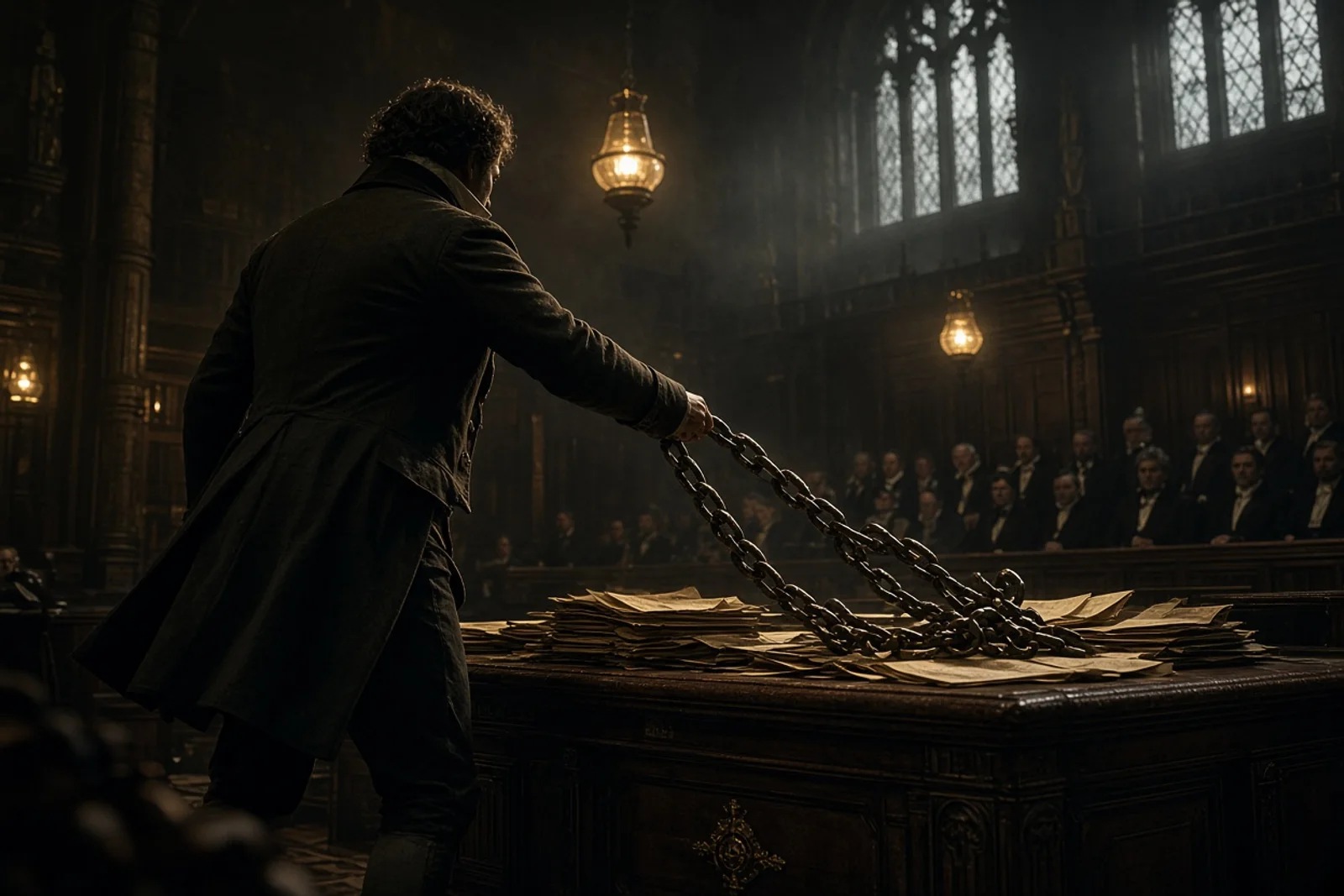
The carriage wheels struck a loose cobble outside the house in Old Palace Yard and the jolt carried through the floorboards into my knees. I steadied the bundle of letters against my coat and waited while the driver called down. Inside, the shutters stood half open against the late winter light. Wilberforce sat at the table with the same letter he had read twice already that morning, its seal broken and the paper smoothed flat under his palm.
He looked smaller than the men who had sent him here. The fire had burned low and the room held the smell of coal dust and the ink drying on yesterday’s notes. I set the new correspondence on the corner and stepped back against the wall. He did not glance up. His finger traced a line near the bottom of the page where Middleton had written of the ships leaving the African coast each season.
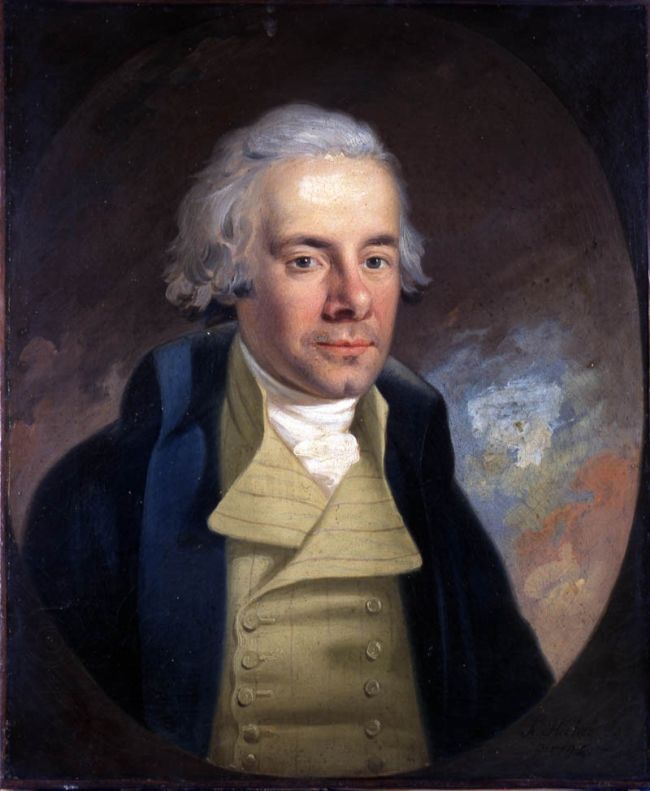
Two days later the same letter lay open on the desk when John Newton arrived. The old man moved slowly now, one hand on the back of a chair, but his voice carried the quarterdeck still. Wilberforce asked whether a man could remain in Parliament and still answer what he believed was required of him. Newton answered that the place had been given and should not be left without cause. Wilberforce listened without interrupting. When the visitor left, the room stayed quiet long enough for the clock on the mantel to strike the quarter hour.
By spring the meetings began to gather in the same room. Middleton came himself once, bringing papers that listed the ports and the numbers of vessels cleared for the coast. The figures ran down the margin in a clerk’s hand. Wilberforce asked how many of those vessels returned with full cargoes and how many were lost before they reached the islands. Middleton gave the numbers he had. No one in the room added anything further.

I carried messages between the house and the members who had agreed to speak with him. Some answered at once. Others required two or three visits before they would set a time. The afternoons lengthened. Wilberforce walked the short distance to the river more often, sometimes alone, sometimes with one or two others whose names I learned only by the directions I was given. He returned with his coat damp from the wind off the water and his notes folded small in one pocket.
In May he stood in the Commons for the first time on the subject. The benches were not full. He spoke for less than twenty minutes and sat down while members on the far side were still turning to ask one another what had been said. The following week the same motion was mentioned again, this time with more voices answering. I waited outside the chamber door with the other attendants and watched the members file past. Some nodded as they passed. Others kept their eyes forward.

That summer the correspondence increased. Letters arrived from merchants in Liverpool and Bristol, from captains who had sailed the route, from planters who wrote that any change would ruin the islands. Wilberforce read each one at the table, marking passages with a pencil before setting them aside. I sorted them into piles according to the place named at the top. The stack from the ports grew fastest.
By autumn he had begun to keep a separate book for the evidence he meant to use. Each evening he copied lines from the letters into it, the dates and the names of the writers beside them. The pages filled quickly. When the ink ran low he sent me for more and continued by the light of the single lamp until the street outside grew quiet.
One evening in early winter he stopped writing and looked across the table at the fire. The book lay open at the last entry, the ink still wet. He closed it without blotting the page and set it on the shelf with the others. Outside, the lamps along the street had already been lit. He asked whether the carriage was ready. I said it was. He took his hat and went out into the cold without another word.

The next session opened with the same motion on the order paper. This time more members stayed to hear the end. When he finished speaking the division was called. The numbers were closer than they had been the year before. After the doors opened again he walked back through the lobby without stopping to speak to anyone. I followed with the papers he had left on the bench.
In the months that followed the house in Old Palace Yard became a place where men came at all hours. Some stayed only long enough to leave a letter. Others remained through the evening, their voices low over the maps spread on the table. Wilberforce listened more than he spoke. When he did speak it was to ask for a name or a date that had not yet been written down.
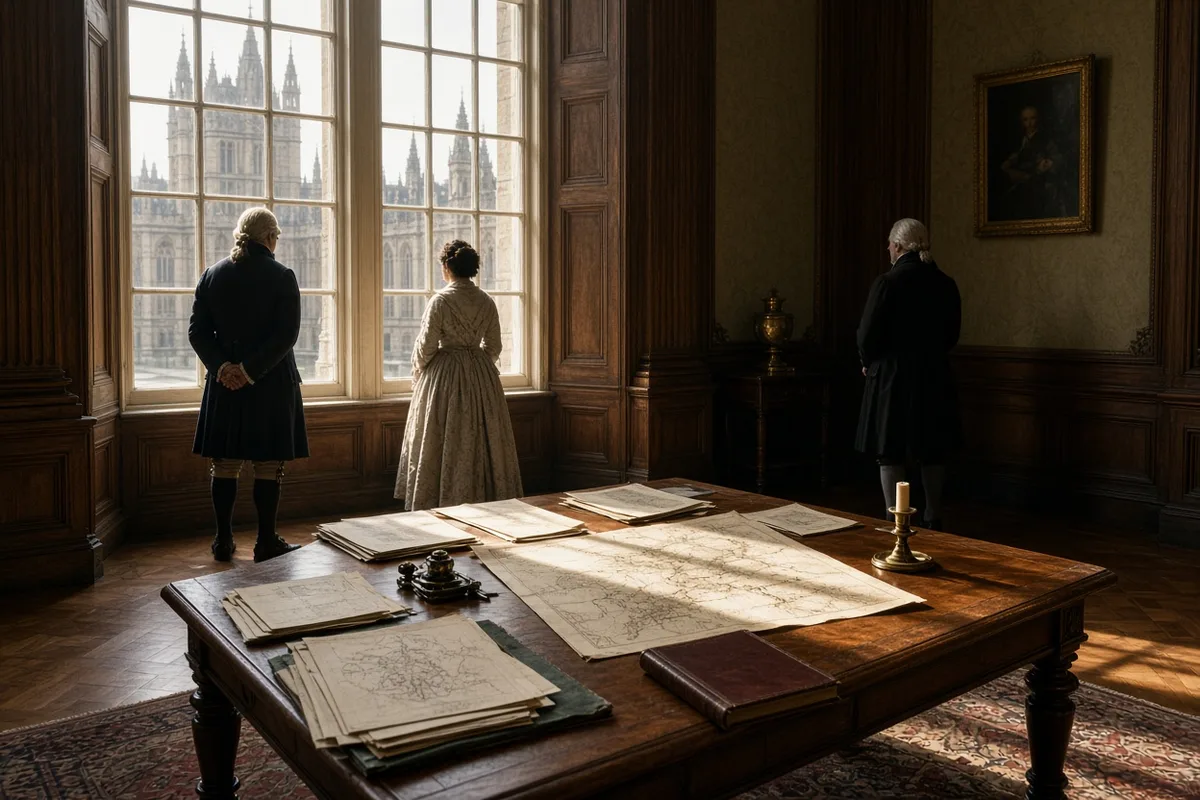
By the close of that year the book on the shelf held more entries than the first volume on the trade itself. The pages were numbered in his hand. He added the last line of the day and closed the cover. The fire had burned to ash. He left the lamp burning and stepped into the passage. I heard the outer door close behind him and the sound of his steps on the stones outside.
The following morning brought Thomas Clarkson to the door with a bundle of affidavits taken at Liverpool the month before, each sworn before a magistrate and bearing the mark of a seaman who had served on the Zong. Wilberforce read the statements aloud in sections, pausing at the line that described one hundred and thirty-three Africans thrown overboard on the claim of short water, the date given as 29 November 1781. Clarkson produced a second paper listing the insurance claim of thirty pounds per head paid by the underwriters at Lloyd’s, then asked whether the same figures could be placed before the Privy Council committee that Pitt had agreed to form. Wilberforce copied the insurance amount into the margin of his own ledger beside the entry for the Brooks, whose diagram Clarkson unrolled across the table showing four hundred and eighty-seven captives packed between decks on a vessel measured at two hundred and ninety-seven tons.

By the second week of March the same ledger carried an additional column headed “Petitions Received,” and the totals mounted each day from the towns that had formed committees. Manchester sent one bearing eight thousand names on a single roll delivered by a delegation that included the cotton merchant Thomas Walker. Bristol forwarded its own list of two hundred and forty-three signatures collected at the Guildhall on 13 February, together with a letter from the merchant Richard Miles stating that any restriction would cut the annual clearance of vessels from that port below the seventy-three recorded in the customs books for 1787. Wilberforce asked the delegation from Manchester whether they could supply sworn testimony from any master who had refused to sail once the cargo was known to be human, and Walker answered that two such masters were willing to appear if their names were not printed in the minutes.
On 12 May the motion was moved in the language Wilberforce had settled the night before, the words “that the trade carried on by British subjects for the purpose of obtaining slaves on the coast of Africa ought to be abolished” entered in the journal at twenty minutes past nine in the evening. The speech itself occupied three hours and twenty-seven minutes by the clock above the Speaker’s chair, during which he read aloud the deposition of the surgeon James Arnold describing the mortality on the Ruby between 3 June and 12 August 1786. When the division was called at half past one, one hundred and thirty-three members remained to vote, and the question was carried without a count. The following morning the committee stage was set for 19 May, and Wilberforce wrote to his sister that the first reading had passed “by the mere force of statement, without a single word of reply from the other side.”
Eleven years later, on 22 February 1806, the new Prime Minister Lord Grenville introduced the bill in the Lords with the clause that no British ship should clear for the African coast after 1 May 1807. The vote there stood one hundred to sixteen after the third reading on 5 February 1807. In the Commons the second reading occurred on 23 February, and the final division on 16 March produced two hundred and eighty-three in favour and sixteen against. Royal assent was given on 25 March 1807 under the title “An Act for the Abolition of the Slave Trade,” the statute number 47 Geo. III sess. 1 cap. 36. Wilberforce entered the date in the ledger that had begun with Middleton’s letter, then added the margin note “total clearances from Liverpool in the last year of legal trade: one hundred and eighty-five vessels.”
After the act took effect he turned at once to the registration of existing slaves in the colonies, corresponding with James Stephen on the details of the Trinidad ordinance of 1812 that required every proprietor to submit a return of names, ages, and occupations by 1 January 1814. The returns from that island listed forty-one thousand two hundred and eight persons, of whom seven thousand nine hundred and twelve were recorded as born in Africa. Wilberforce pressed the same system on the other islands through successive motions in 1815 and 1816, each time citing the discrepancy between the Trinidad figures and the customs returns from the African coast for the years 1804 through 1807.
In the session of 1823 he moved the first resolution that called for the gradual emancipation of all persons held in slavery within the British dominions, the text specifying that the condition of slavery should cease after the lapse of a fixed term to be named by Parliament. The debate lasted four nights, and the division on 15 May gave one hundred and twenty-five votes for the resolution and one hundred and forty-two against. Two years later, on 31 July 1833, the bill for the abolition of slavery received royal assent as 3 & 4 Will. IV cap. 73, providing for apprenticeship to end on 1 August 1838 in most colonies and on 1 August 1840 in the others, together with twenty million pounds sterling in compensation to be distributed among the proprietors according to the number of persons registered on each estate.
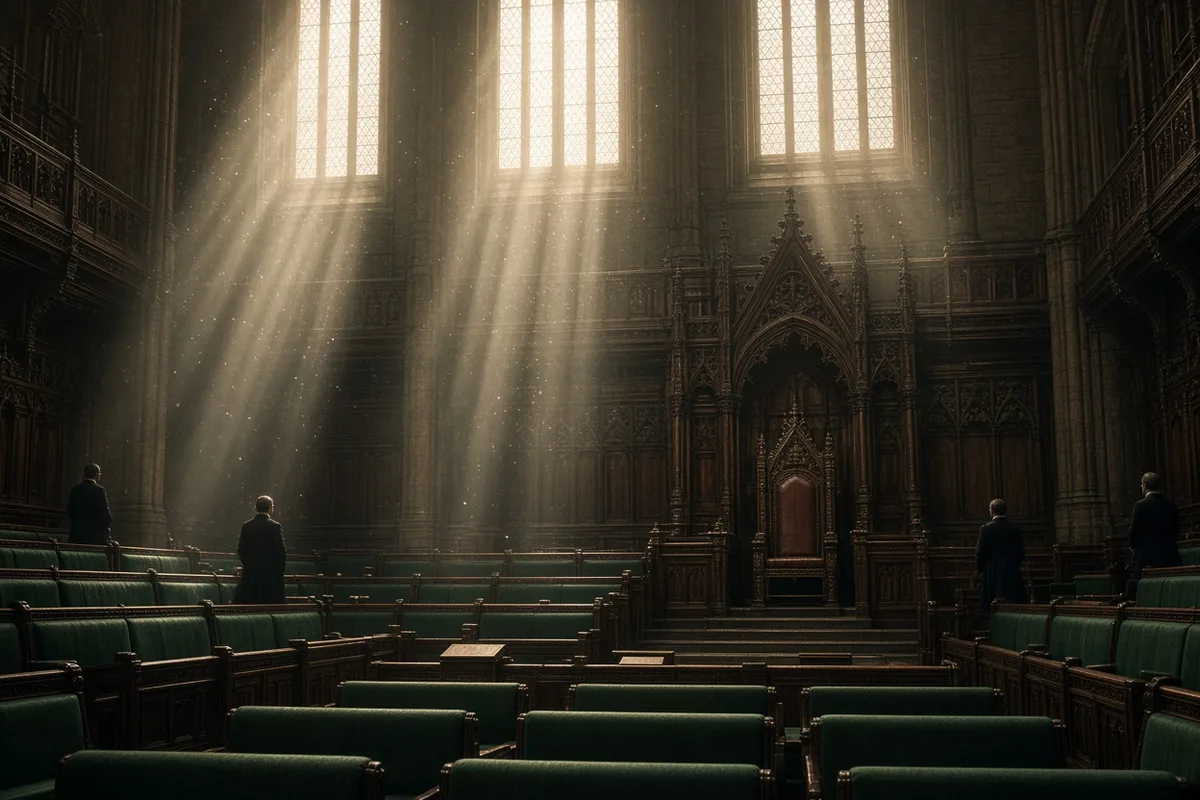
On the morning of 29 July 1833 the same ledger that had recorded the first Middleton letter lay open on the table in the house at Cadogan Place where Wilberforce had removed the previous autumn. He asked the physician who attended him whether the apprenticeship clause would be enforced by the colonial legislatures or by Parliament itself, then dictated a final letter to Thomas Fowell Buxton directing that the remaining evidence on the Mauritius slave trade be placed before the commissioners already appointed. The funeral procession left the house at eleven o’clock on 3 August and moved by way of Parliament Street to Westminster Abbey, where the coffin was placed in the north transept beside the grave of Pitt. The pall-bearers included the Duke of Wellington, Sir Robert Peel, and the Bishop of Calcutta, and the anthem sung was taken from the thirty-ninth chapter of Job.
The ledger remained on the table at Cadogan Place through the autumn of 1833 while the executors settled the estate. On 12 October the volumes were removed to the house in Kensington Gore where Samuel Wilberforce, the eldest son, had taken up residence. He opened the first book at the Middleton entry and added a note dated 14 October recording that the Trinidad slave registry of 1813 had been followed by a second return in 1816 that listed forty-three thousand one hundred and seventy-nine persons, an increase of one thousand nine hundred and seventy-one over the earlier count.
In the years that followed, the same volumes were consulted by the commissioners appointed under the 1833 act to distribute the twenty million pounds in compensation. On 1 August 1838 the apprenticeship period ended in Jamaica, Barbados, and the Leeward Islands, and the Colonial Office registers showed that two hundred and seventy-four thousand six hundred and twenty-eight persons had been recorded as free in those colonies alone. The Mauritius returns, forwarded by the commissioners in 1841, listed sixty-six thousand four hundred and twelve apprentices whose names matched the 1832 registry compiled under the earlier ordinance.
Thomas Fowell Buxton continued to place papers before Parliament until his death in 1845. On 24 June 1842 he moved for a select committee on the slave trade to the east coast of Africa, citing the capture figures of the Royal Navy’s West Africa Squadron: one hundred and forty-three vessels detained between 1839 and 1841 with twenty-nine thousand four hundred and seventeen Africans landed at Sierra Leone. The committee’s report, ordered to be printed on 10 August 1842, included the testimony of Captain Joseph Denman that the equipment clause of the 1839 treaty with Portugal had reduced clearances from the Bissagos Islands by forty-two vessels in a single season.
The house at Old Palace Yard was pulled down in 1850 to make way for the new Palace of Westminster. The site is now marked by a brass plate set in the pavement of the Commons courtyard, inscribed with the date 1807 and the statute number. On 24 July 1862 a statue of Wilberforce by William Theed was unveiled in the north transept of Westminster Abbey, three feet to the east of the Pitt grave; the inscription records the dates 1759–1833 and the single word “Abolition.”
In 1892 the last surviving member of the original 1787 committee, James Ramsay’s son, deposited the remaining affidavits with the British Museum. Among them was the sworn statement of seaman John Dean taken at Liverpool on 17 March 1788, describing the dimensions of the Brooks as two hundred and ninety-seven tons and the number of captives stowed as four hundred and eighty-seven on the voyage that sailed 3 May 1787. The document carries Dean’s mark and the signature of the magistrate, Thomas Staniforth.
The final entry in Wilberforce’s own hand, written on the morning of 29 July 1833, lists the name of the last vessel cleared from Liverpool under licence: the Kitty, one hundred and eighty-seven tons, master Robert Tyrer, bound for the Gold Coast with instructions dated 24 March 1807. The page ends with the words “cleared 28 March” followed by a ruled line.