




Would Supreme Court Protect Your Lightsaber In A Time Far, Far Away?
The Supreme Court is expected to rule in Viramontes v. Cook County by June 2027, but the case could end up protecting more than modern semiautomatic firearms.
Harold Hutchison · Oct 13, 2026 · 5 min read
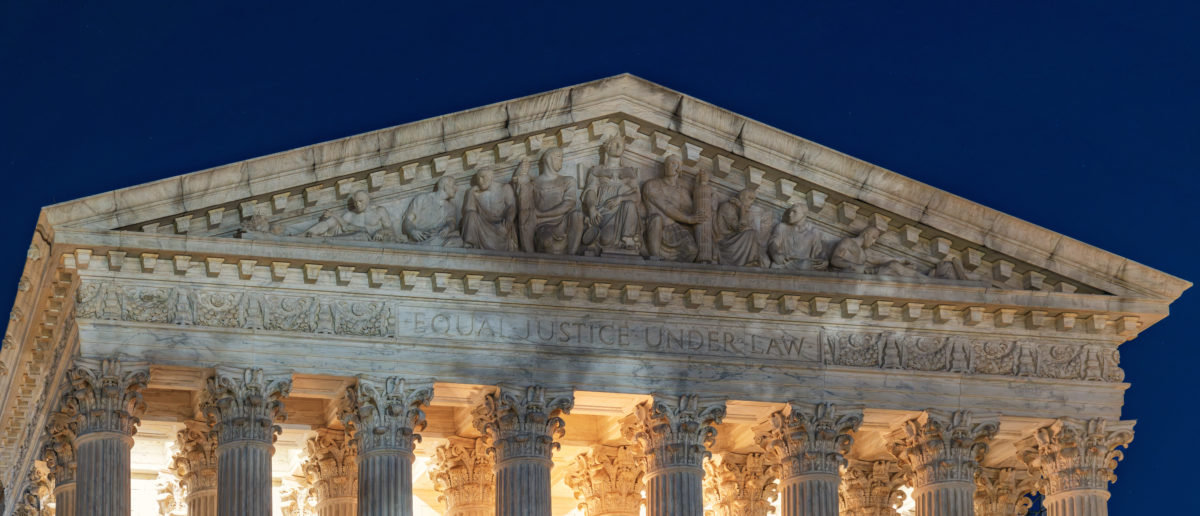

The Supreme Court is expected to rule in Viramontes v. Cook County by June 2027, but the case could end up protecting more than modern semiautomatic firearms.
The justices agreed on June 30 to hear the case, a Second Amendment challenge to the Illinois locality’s ban on modern semiautomatic firearms, which supporters of banning the so-called “assault weapons” claim were never foreseen by the Founding Fathers. The Daily Caller News Foundation asked Second Amendment legal experts whether advanced technology in the form of science-fiction weapons like the lightsaber wielded by Luke Skywalker or the phaser fired by Captain Kirk could be protected by the Second Amendment.
“The Supreme Court has explained that the history and tradition of gun regulation at the time of the founding informs the principles of what we understand the right to protect,” Second Amendment Foundation (SAF) Senior Director of Litigation Bill Sack told the DCNF. “So theoretically, in a galaxy far, far away, if under the jurisdiction of our Constitution, and if phasers and lightsabers were commonly owned for lawful purposes, then absolutely, they too would be protected.”
One case that could play an outsized role in Viramontes is Caetano v. Massachusetts, a 2016 case in which the Supreme Court issued an unsigned opinion that overturned the Massachusetts Supreme Court’s ruling upholding the state’s ban on stun guns.
“The court explained that stun guns are not protected because they ‘were not in common use at the time of the Second Amendment’s enactment,’” the unsigned opinion says. “This is inconsistent with Heller’s clear statement that the Second Amendment ‘extends . . . to . . . arms . . . that were not in existence at the time of the founding.’”
Benjamin Franklin, who signed both the Constitution and Declaration of Independence, was renowned as an inventor, having created the Franklin stove and bifocal lenses for glasses. Franklin also expressed excitement at the thought of technological innovations.
“Furnish’d as all Europe now is with Academies of Science, with nice Instruments and the Spirit of Experiment, the Progress of human Knowledge will be rapid, and Discoveries made of which we have at present no Conception,” Franklin wrote in a 1783 letter to Sir Joseph Banks. “I begin to be almost sorry I was born so soon, since I cannot have the Happiness of knowing what will be known 100 Years hence.”
CATO Senior Vice President for Legal Studies Clark Neily said that the Caetano ruling would likely protect future innovations in technology – even if they were versions of sci-fi weapons, while the court’s past Second Amendment jurisprudence would “evolve.”
“What if it turns out to be the case that some new class of weapon is actually socially optimal in the sense of maybe self-defense in the sense that it is a less than lethal weapon, like a weapon that can sort of discharge some sort of energy, like a sound wave or some other form of non-lethal energy that can incapacitate an attacker reliably without killing them?” Neily said. “That would seem to be something we would want people to be able to have as an alternative to a firearm. And the Caetano decision that we talked about a few minutes ago from 2016 would seem to at least raise the possibility that a new weapon like that would be protected by the Second Amendment, even though it wouldn’t seem on its face to pass the test that it needs to be not unusual. I mean, it’s a double negative, but right, it needs to be common in order to be outside of this sort of dangerous and unusual exception.”