




Alcuin Reforms Carolingian Education and Scripture
Scholar revives learning and accurate Bible copying.
FaithTap · Sep 25, 2026 · 10 min read
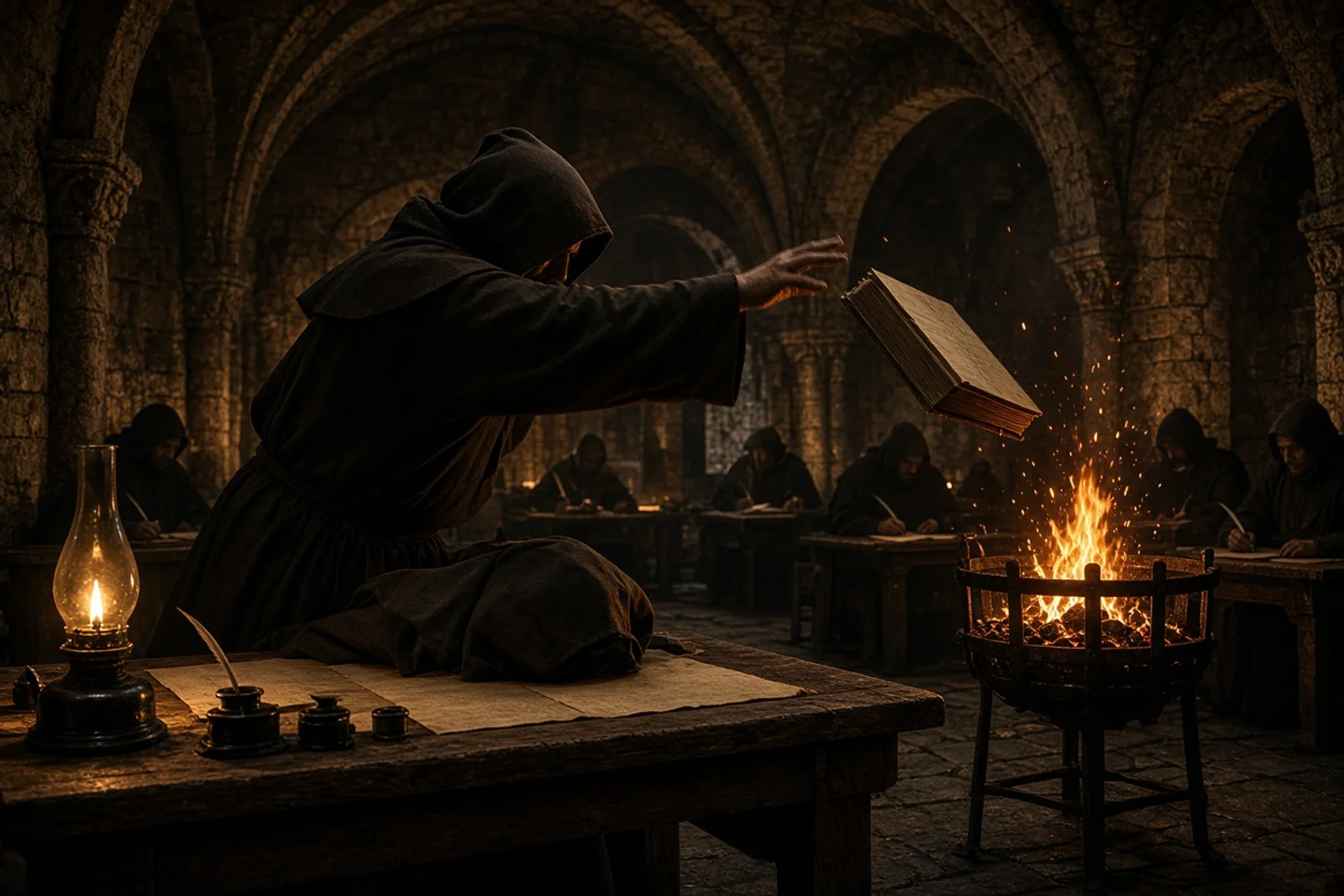
The road from Parma had left dust in every fold of my cloak and a raw ache in my shoulders from the weight of the saddlebags. We reached Aachen in the late summer light, the wooden halls of the palace still smelling of fresh pine and hearth smoke. Charlemagne stood waiting on the steps, taller than the men around him, his beard already threaded with gray. He greeted Alcuin by the hand and spoke of York’s books as if they were reinforcements for a campaign already under way.
Inside, the palace school occupied two long rooms above the stables. Before Alcuin came, the benches held only a handful of boys and two elderly priests who mumbled through the Psalms with the same mistakes each morning. Latin sat on their tongues like a borrowed coat. I had copied a Gospel page the week before and watched the letters crowd together until one word bled into the next.
Alcuin set us to work at once. He asked for every manuscript in the treasury and had them carried to a table near the window where the light held longest. A monk from Ravenna arrived with a bundle tied in oiled cloth; another came from Monte Cassino carrying a battered codex whose margins were already crowded with corrections. We spread them open and began to read aloud, line by line, while Alcuin marked the places where the words had wandered.
Charlemagne visited most evenings after the council. He could read the corrected pages now, though he still held the quill awkwardly when he tried to shape a letter himself. He listened while Alcuin explained the difference between what the old copy said and what the sense required. One night he stayed until the lamps guttered and asked whether the same care could be given to every church in the realm.
We began with the palace itself. Alcuin divided the boys into groups, one for grammar, one for the slow labor of copying. He walked between the benches, correcting posture and breathing, reminding each scribe to lift the pen at the end of a clause so the next word could stand clear. The new script he favored left space between words and kept the capitals upright. My own hand, trained on the old cramped letters, felt clumsy at first, but the lines grew straighter after a fortnight.
Errors surfaced daily. A baptismal formula from a southern monastery had turned “patria” into “patria et filia.” Another manuscript named Venus among the saints. Alcuin had us strike the names and write the proper readings above them in a smaller, careful hand. The work was slow; each page demanded two readers, one to speak and one to compare. When the light failed we continued by the hearth, the smoke stinging our eyes while the words settled into their right order.
Charlemagne ordered fresh vellum from the markets at Mainz. It arrived in stiff rolls that we cut and stretched across frames. The younger scribes complained of the cost, but Alcuin answered that a single mistaken line could travel farther than any army. He kept a list of the books still missing and sent riders to ask for them by name.
By mid-autumn the first corrected Psalter lay finished on the table. We bound it in boards covered with linen and carried it to the chapel for the morning office. The priests read without stumbling. One of them, an old man from the court chapel, traced a finger beneath each word as if the spaces themselves were a new language.
Winter closed in. Snow drifted against the outer walls, and the school room grew colder, yet the copying continued. Alcuin had us prepare quires for a complete Bible, beginning with Genesis. Each gathering was checked twice before it was sewn. When a page showed an uncertain reading we left a blank line rather than guess. Charlemagne examined the unfinished sheets one Sunday after Mass, running his thumb along the ruled lines.