




Alfred the Great Translates Psalms
King studies Scripture amid war
FaithTap · Oct 1, 2026 · 11 min read
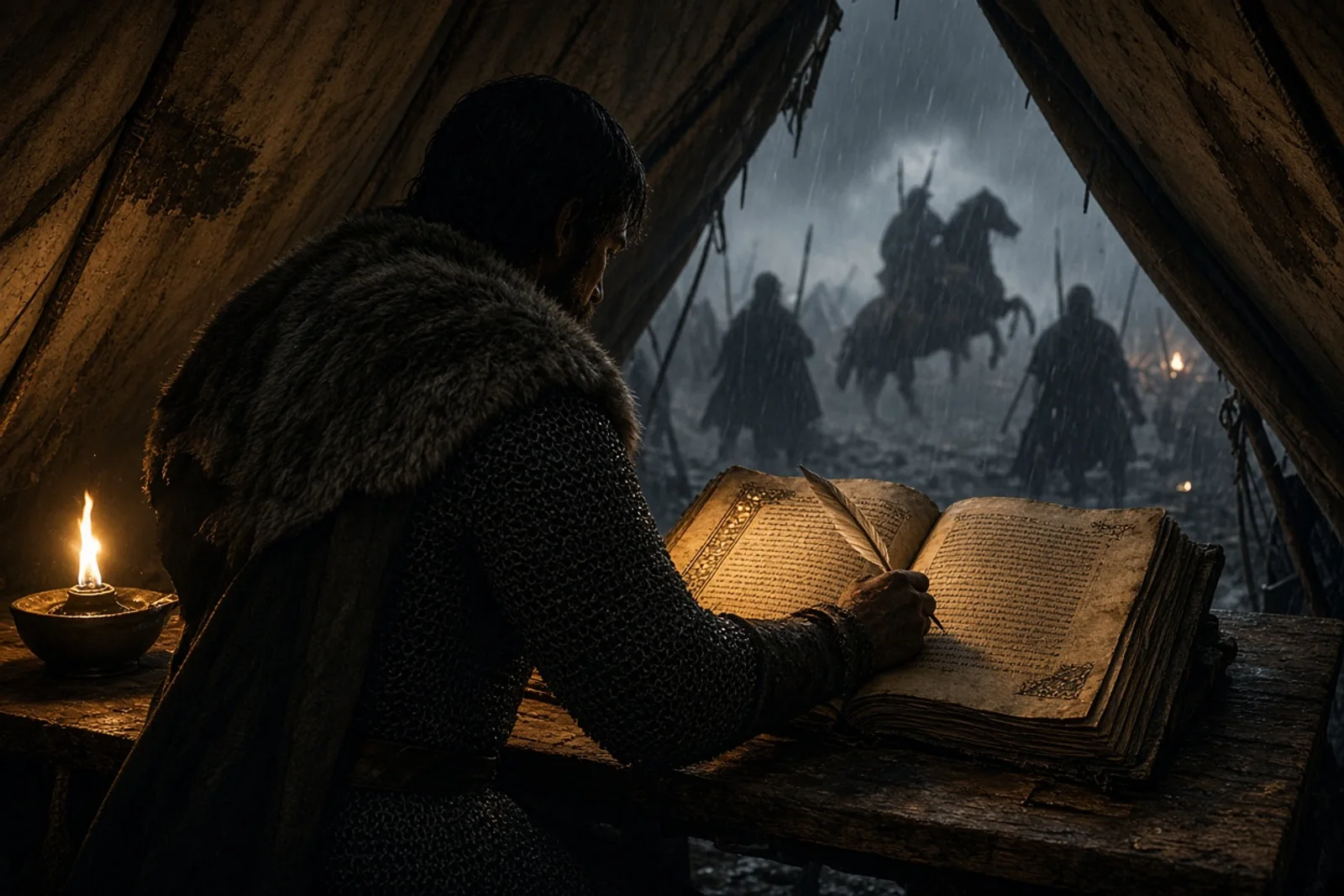
The fire popped and a spark jumped onto the edge of the hide where the king sat. He brushed it away without looking up. His left hand held the Latin psalter open, the right moved the quill in short strokes across the new sheet. Outside the hut the marsh water made its steady sucking sound against the poles. Two of the thegns kept watch by the boat. They had come in after dark with word that the Danes still held the ridge above Chippenham.
I trimmed the lamp wick lower so the smoke would not sting his eyes. He had already worked through the first six verses of the psalm he wanted that night. When he reached a hard line he stopped, read it aloud in Latin once more, then tried the English words under his breath. Sometimes he asked for the meaning of a single Latin term. I gave what I knew. He would nod or shake his head and try again until the sentence sat right in his own tongue.
The marsh air was cold. He kept the cloak pulled close at the throat but never complained of it. His fingers were ink-stained to the second knuckle. Every few lines he lifted the sheet to check the light and the letters. If one looked too thick he scraped it clean with the small knife and started that part over. He did not rush. The thegns outside changed guard once while he was still on the same psalm.
Near midnight he set the quill down and rubbed his eyes with the heel of his hand. He asked whether the next psalm should begin with the same opening phrase we had used the night before. I said it had worked well enough for the men who heard the last one read aloud. He thought about that, then wrote the phrase anyway. The parchment crackled under the quill. He kept the same measured pace until the lamp oil began to smell thin.
One of the thegns came to the doorway and spoke low. Riders had been seen on the higher ground to the east at dusk. Alfred listened without turning his head. He told the man to keep the boat ready and the horses saddled, then went back to the sheet. The quill started again. The only sound inside the hut was the scratch of it and the small movements of his shoulders when he reached for the ink horn.
By the time the sky showed grey through the smoke hole he had finished the psalm and ruled the lines for the next. He left the quill standing in the horn and stood up slowly, working the stiffness from his knees. Outside the water had risen with the tide. The thegns were already loading the smaller chests into the boat. Alfred rolled the finished sheet and tied it with a strip of linen. He handed it to me without comment and stepped into the boat.
We moved north along the channels for most of the morning. The king sat in the stern with the psalter on his knees, wrapped in oilcloth against the spray. He did not open it again until we reached the next hiding place, a cluster of huts on a firmer island where the women had bread ready. While the men ate he asked for clean water and a fresh sheet. The same work began once more, the Latin read aloud first, then the English tried and corrected until it matched the sense he wanted.
A scout came in at noon with news that Guthrum’s men had burned two more villages on the far side of the ridge. Alfred listened, nodded once, and kept writing. The men around him spoke of the next move and the need for more spears. He answered when they asked, but the quill did not stop. When the light began to fade he had another psalm finished and the start of a third marked out.
That evening he read the finished work aloud to the small group that had gathered. The words were plain, the sentences short enough for the thegns to follow without stumbling. One of them asked what the Latin had said in a certain place. Alfred explained it once, then read the English line again so they could hear how it stood on its own. No one spoke after that. The only movement was the fire settling.