




Alister McGrath Abandons Atheism
Irish scientist reads New Testament at Oxford.
FaithTap · Sep 27, 2026 · 10 min read
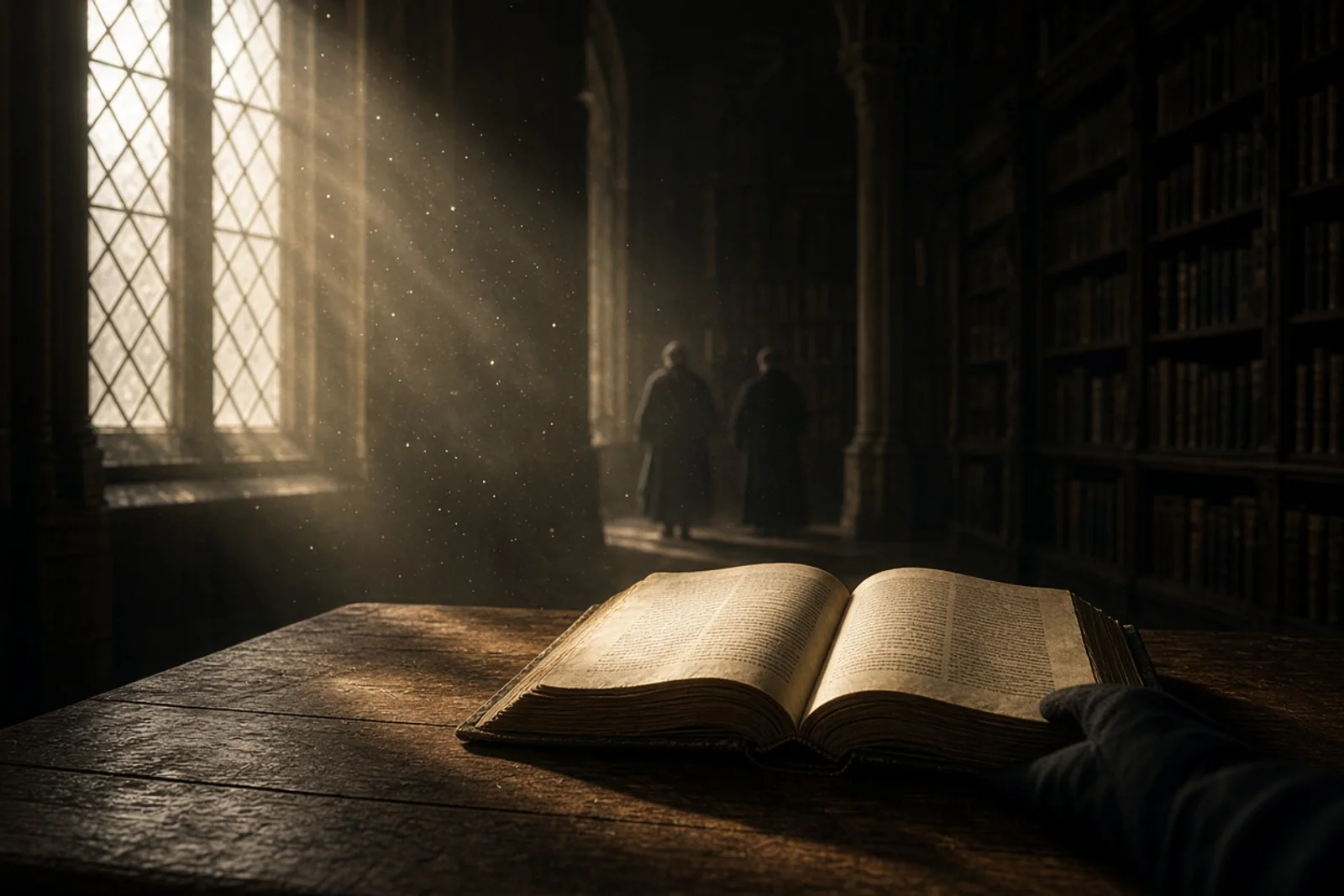
The bell for the last period had already rung when I found him still at the long table by the window. Rain streaked the glass and the radiators ticked. McGrath had a copy of Plato open, the Republic, its pages marked with a strip of card from the school library. He read without taking notes, something he never did with chemistry texts.
I pulled out the chair across from him. We had both stayed on after the scholarship results came through in December, he for Oxford chemistry and I for an extra term of physics before my own place elsewhere. Most afternoons the room emptied by four. That day the only sound was the occasional turn of a page and the rain against the panes.
He looked up once, not quite seeing me, then back down. A line in the text held him. I knew the passage because we had both been assigned it months earlier. The cave, the shadows, the fire. He closed the book after a while but kept his hand on the cover. Outside the light was already failing.
The next week he began bringing other volumes from the same shelf. Books on the history of science, on methods and theories. One afternoon he read aloud a sentence about how scientific ideas change when new data arrives, then stopped as if the words had surprised him. He did not ask me what I thought. He simply marked the page and moved on.
By March the stack on the table had grown. He worked through them between his own chemistry problems, sometimes leaving a text open beside the periodic table. I watched him reread sections on how experiments are interpreted, how observations depend on the questions asked beforehand. He never spoke of it as doubt. He spoke of it as unfinished work.
One evening the caretaker switched off the main lights and we sat under the desk lamp. McGrath leaned back, eyes on the ceiling. He said the account of science he had carried since he was fourteen no longer matched what these pages described. The words were quiet, almost to himself. I asked what that left. He did not answer.
He began to borrow books from the theology section after that. Not many at first, only one or two at a time, always returned the same week. I saw the New Testament among them once, its spine still stiff. He read it the way he read everything else, slowly, stopping often. When I passed him in the corridor he looked the same as ever, but the margins of his notebooks carried small questions in pencil that had nothing to do with titration or molecular weights.
Summer term brought warmer air through the open windows. McGrath had started attending the occasional evening discussion at a local church hall, though he never mentioned why. I went with him once. The room was plain, the talk ordinary. He listened without speaking. On the walk back he said only that the arguments were older and more careful than he had expected.
By July he had decided. He told me on the steps outside the science block after a late laboratory session. The sky was still light. He said the Christian account now seemed the one that held the most of what he already knew about the world, not less. No sudden feeling, he added, just a recognition that kept returning. He would keep studying chemistry. That part had not changed.