




All 33 Chilean Miners Come Up Alive
'Estamos bien en el refugio los 33' — 69 days under a collapsed mountain, and one by one, every miner rose into daylight.
FaithTap · Sep 23, 2026 · 9 min read
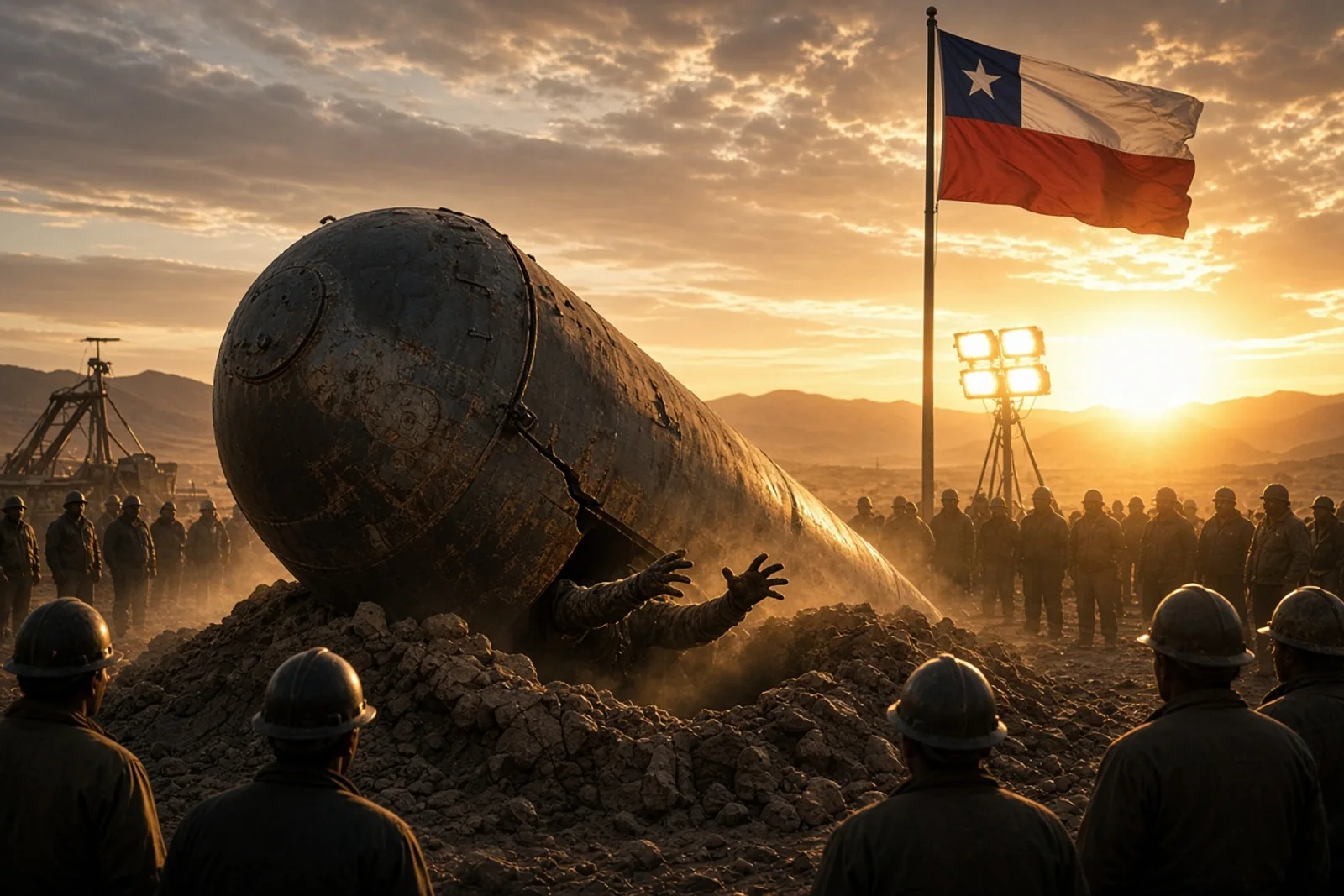
The capsule broke the surface at ten past midnight, and I remember thinking the sound came before the light — a low metal groan, then the floodlights catching the top of the cage like something being born out of rock. My gloves were already wet from sweat inside the cold. I had a stretcher gripped at both handles, waiting at the mouth of the shaft with three other medics, and none of us breathed right until the door of that capsule swung open and Florencio Ávalos stepped out blinking into the desert night.
I had been on the mountain since the second week, one of the medical staff pulled into the operation after word went out that this was no ordinary mine accident. The San José mine sat in the Atacama Desert outside Copiapó, gold and copper ground, and on August 5th a section of it had come down — a collapse that sealed thirty-three men somewhere near seven hundred meters below the surface. I had heard the number repeated so many times by then that it had stopped sounding like a number and started sounding like a wall.
For seventeen days we did not know if there was anyone alive to save. Families set up along the road above the mine, blankets and folding chairs and small altars of candles, and every evening the wind off the desert came through cold enough to make your teeth ache, and every morning the sun came back hard enough to crack your lips. Drills went down again and again, searching, and came back with nothing. I remember watching a woman kneeling by a fence post with her rosary, not moving, for what felt like an entire afternoon.
Then on August 22nd, one of the narrow bore probes came back up carrying something taped to its tip — a note, folded small, the ink smudged from the trip. Someone unfolded it right there in the drill shed, and I was close enough to see the handwriting before anyone read it aloud. Estamos bien en el refugio los 33. All thirty-three of us are safe in the shelter. I have stood in emergency rooms and heard people scream and I have never heard anything like the sound that went up the hillside when those words traveled from person to person. The man who wrote it, I would learn later, was José Ojeda.
After that, everything on the surface changed shape. Narrow supply lines went down the boreholes — water, glucose, medicine, letters. One of the letters came from Mario Gómez, the oldest miner at sixty-three, and it said, plainly, that the company running that mine had to modernize. I read it, or heard it read, standing in the medical tent with my arms folded, and it struck me that a man buried alive under a mountain still had the presence of mind to demand better for the men who would come after him.
Word filtered up in pieces about how they were surviving down there. It was Luis Urzúa, the shift supervisor, who had rationed what tuna they had into portions that stretched seventeen days, who had organized the thirty-two others into shifts so the darkness wouldn't undo their minds, who pored over the mine's own diagrams to help the engineers above understand where they were. I never met him until the last hour of the whole operation, but by the time I did, I already felt as if I'd been working under his direction the entire time.
Three separate drilling efforts pushed downward through rock that kept shifting under the bits, weeks stacking on weeks while the camp above grew a kind of permanent skin — generators, portable toilets, a chapel of sorts, a schedule of press briefings that families stopped attending because they had heard every version of hope already. When one of the shafts finally broke through clean, the sound in the drill yard was almost embarrassing in its size, engineers hugging in hard hats, and I remember someone telling me the finished rescue shaft ran just over six hundred meters, six hundred and twenty-some, narrow enough that a grown man would have to keep his arms tucked the entire ride.
They called the capsule the Phoenix. Red, white, blue, barely wider than a man's shoulders, and I watched it lowered and tested more times than I could count in the final days, technicians running their hands along the seams like men checking a parachute they intended to jump with themselves.
On the night of October 12th, close to a quarter past eleven, they lowered Manuel González first — not a miner but a rescue specialist, sent down to check the shaft's integrity before anyone else committed to it. I stood at the winch housing with the cold coming up through my boots and watched the cable spool out and out, thinking about seven hundred meters of stone between us and the men waiting under it.