




Amy Carmichael and the Temple Children
When a seven-year-old runaway reached her in 1901, an Irish missionary began a rescue that grew into a family of hundreds — and she never took a furlough again.
FaithTap · Oct 6, 2026 · 9 min read
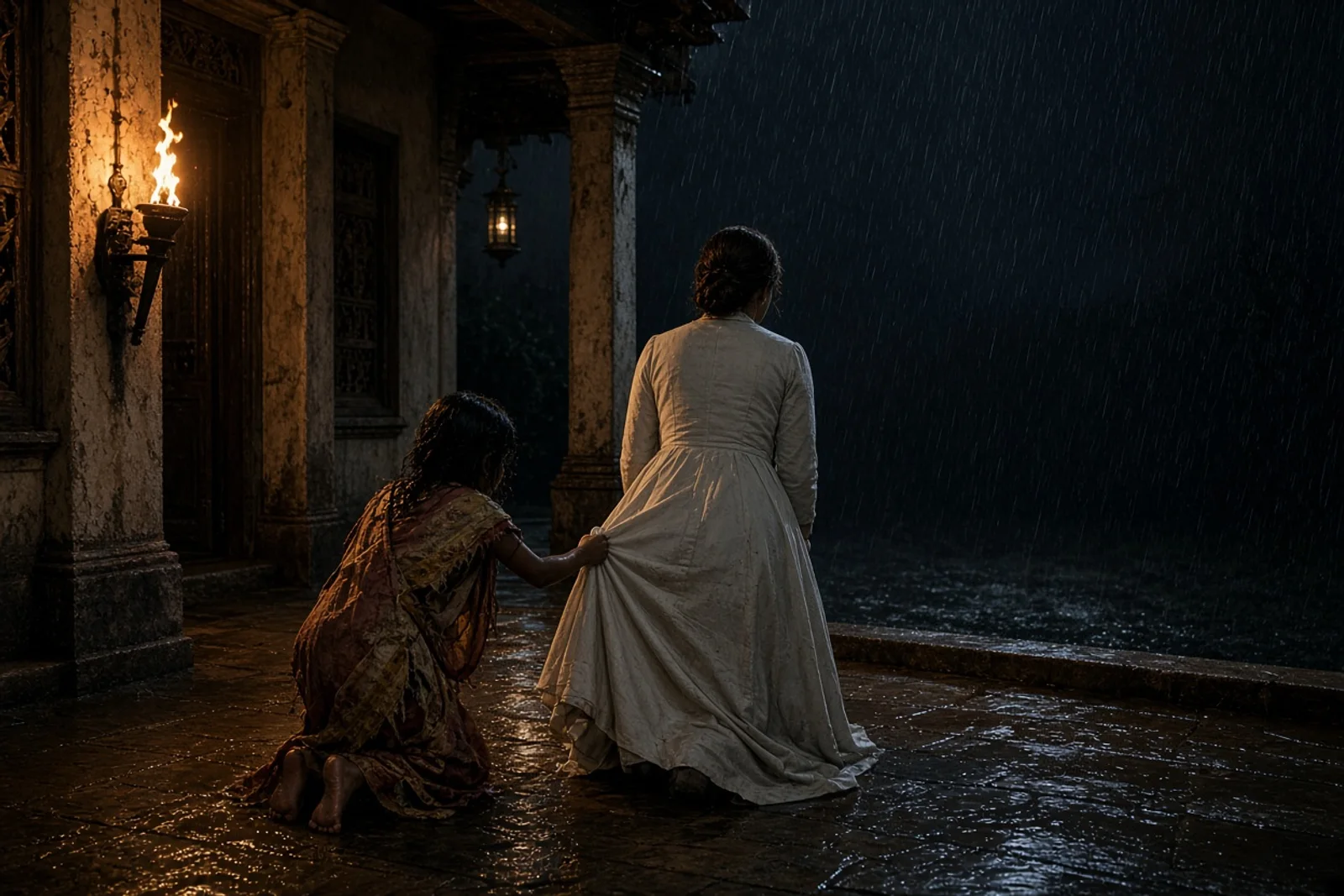
The lamp in the mission bungalow was still lit when I heard the dogs start up on the road, and I remember thinking, at that hour, it could only be trouble. I had been folding linens for Miss Carmichael since the light began to fail, and my hands went still. Someone was running. Not walking — running, small feet slapping wet earth, and a voice behind the gate calling for the Ammal, the child-stealing Ammal, as if the words themselves were a password she had rehearsed the whole way from wherever she had come.
We opened the door to a girl who could not have been more than seven, soaked to the knees, her hair undone, and her eyes doing something I had not seen a child's eyes do before — searching a stranger's face for permission to hope. She said her name was Pearl-eyes. She said it the way you'd announce something you were proud of, not something you were ashamed to carry. And then, before anyone could ask what she wanted or where her people were, she told us plainly: I have come to stay.
It was the sixth of March in 1901, and I did not yet understand that I was standing at the beginning of something that would outlast every one of us in that room.
Miss Carmichael knelt to the girl's height — she always did that, I noticed it again and again over the years, she would not speak down to a child if she could help it — and she asked her, gently, what had happened to her hands. There were burn marks on them, old enough to have scarred, fresh enough to still shine in lamplight. The girl answered without flinching, the way children sometimes report the worst things as though reciting a lesson. She had run once before. She had gone looking for her mother, hoping to be taken back, and her mother had turned her away a second time, and the women of the temple had pressed hot irons to her palms for the leaving.
I did not know yet what a temple child was, not in the fullness of it. I had grown up hearing the word devadasi spoken the way you speak of weather — a fact of the district, neither praised nor cursed by most who said it. Girls given in "marriage" to the temple gods, dedicated before they could consent to anything, raised toward a service that had nothing holy left in it by the time it reached them. I had heard the word. I had not yet held the hand that wore its scars.
Miss Carmichael was thirty-four that year, six years already in India, an Irishwoman with the Church of England Zenana Missionary Society, working the Tinnevelly district with a stubbornness that the older missionaries sometimes found trying and sometimes found necessary. She had come out under the Keswick banner, sent by conviction more than by comfort, and she had already given up any illusion that this calling would be tidy. She looked at Pearl-eyes' hands that night and did not say much. But something in her jaw set, the way it did, I would learn, whenever she had decided a thing and would not be argued out of it.
We fed the girl. We dried her. We did not send her back.
Word travels strangely in a mission district — half whisper, half proclamation — and within days it seemed the whole region knew that the Ammal at Dohnavur had taken in a temple child and meant to keep her. Some of the local Christians nodded as if this were simply what missionaries did. Others went quiet in a way that told me they understood exactly what kind of enemy had just been made. Temple economies did not surrender their property without asking who had taken it, and why, and what could be done to have it back.
I watched Miss Carmichael begin to ask questions she had perhaps not meant to spend her ministry asking. Where do these children come from? Who brings them, and for what price, and under what name is the giving disguised — devotion, adoption, rescue from a worse poverty? She had come to South India to preach, to itinerate from village to village with the gospel in her mouth and dust on her sandals, and here was a girl on her doorstep turning all of that toward one soul-sized, unbearably specific question. She wrote afterward, in the years that followed, of how the deeper they went looking for the truth of it, the more they came upon things hateful even to know. I believed her. I had begun, by then, to see some of those things myself.