




Amy Carmichael Hears Call to Missions
Young Irish woman dedicates life after Keswick convention.
FaithTap · Oct 3, 2026 · 10 min read
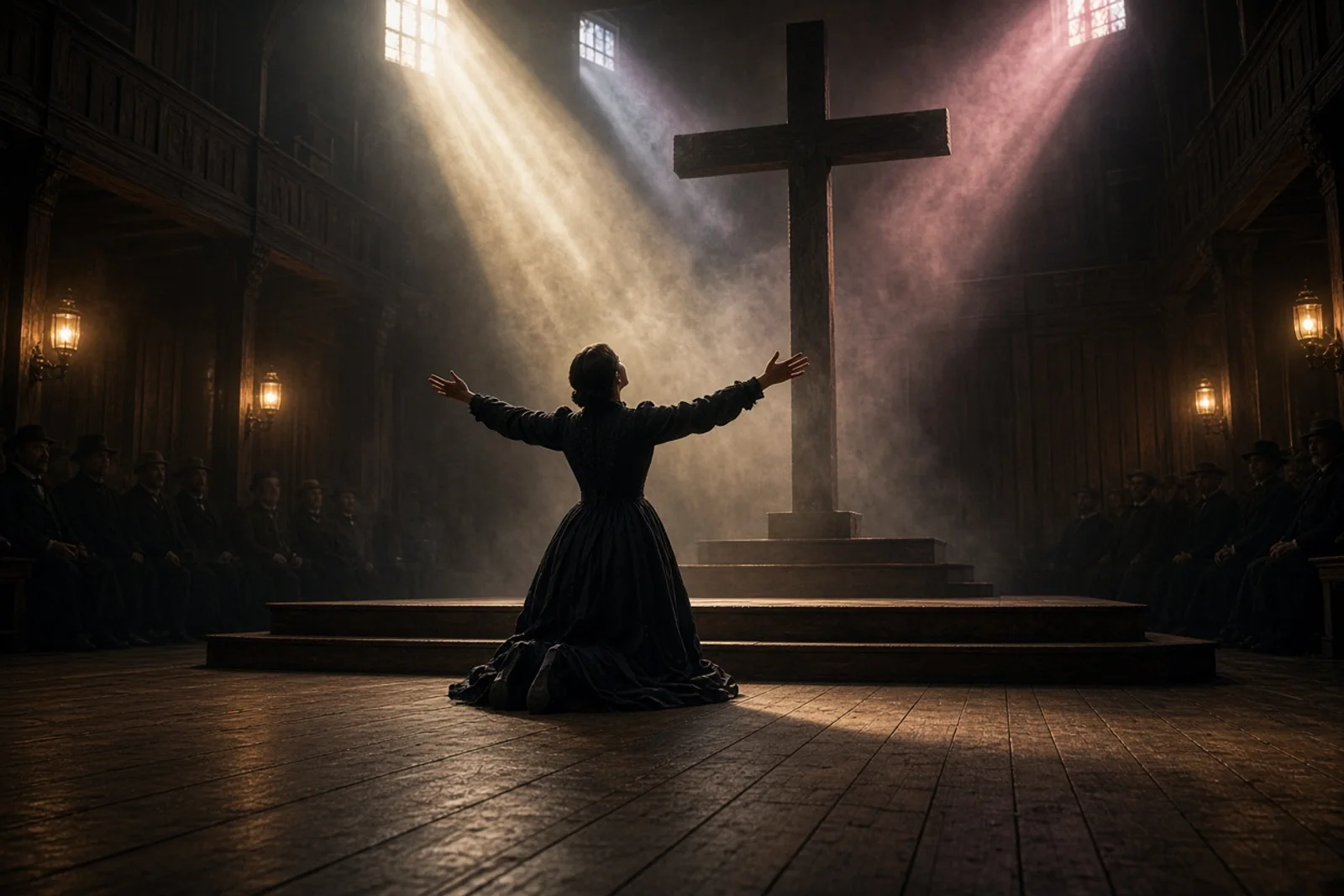
The hall smelled of wet wool and coal smoke when the singing began. I had come down from the north with a group from the Wilson household, carrying extra hymnals and a satchel of notes for the platform. Amy sat two rows ahead, her shoulders straight under a plain gray jacket. She had arrived the night before on the train from Belfast, quiet after the long ride.
Outside the tent flaps the lake lay flat under a gray sky. Inside, the voices rose on the last verse of the evening hymn. The speaker, a man lately returned from the East, spoke without notes. He described villages where no one had ever heard the name of Christ. He did not raise his voice. When he finished he simply asked those present to consider whether the Lord might be calling them to go.
Amy did not move at first. Then her hands, which had been folded on her lap, opened flat against her skirt. I saw her lips form words, though no sound reached me. Later she would write only that the cry of the heathen had become impossible to set aside. That night she stayed in her seat long after the meeting ended. Most of the crowd had filed out into the damp grass before she stood.
Robert Wilson found her at the back of the hall. He was already past seventy, moving slowly with a stick. He asked nothing. She answered nothing aloud. They walked together toward the lodging house under the line of gas lamps. I followed at a distance with the other helpers, carrying the leftover books.
Two mornings later she joined a smaller prayer circle held in the garden behind the main house. The grass was still wet. She knelt without a cushion. When the others rose she remained a moment longer, then stood and brushed the damp from her hem. That same week she wrote a letter to the China Inland Mission offering herself. The answer came months afterward, a polite refusal on grounds of health. She accepted it without complaint and kept the letter folded inside her Bible.
She returned to Belfast and took up the work among the mill girls again. The Welcome Hall filled every Sunday. She taught from a plain wooden bench because there were never enough chairs. One afternoon she told me she had begun keeping a small notebook of verses that seemed to press on her. She did not say what she expected them to mean.
In the spring of 1890 she was sitting at the kitchen table in the Wilson house, turning the pages of that notebook. The room was quiet except for the clock. She looked up and said the words had come to her as clearly as if spoken: Go ye. She did not describe any vision or feeling beyond that. Within weeks she had packed a trunk and booked passage.
The ship left from Liverpool on a cold morning. I stood on the quay with Wilson and two of the mill girls who had come to see her off. Amy wore the same gray jacket. She did not wave. The vessel moved out into the channel and the smoke from its stack thinned against the sky. We turned back toward the train.
She reached Japan in the autumn of that year. Letters came every few weeks, written on thin paper and folded small. She described learning to wear a kimono and the sound of the language lessons. Health troubles forced her home again before two years had passed. She recovered enough to accept another assignment, this time with the Zenana Society in India.