




Anselm Writes Cur Deus Homo
Theologian explains atonement
FaithTap · Oct 4, 2026 · 12 min read
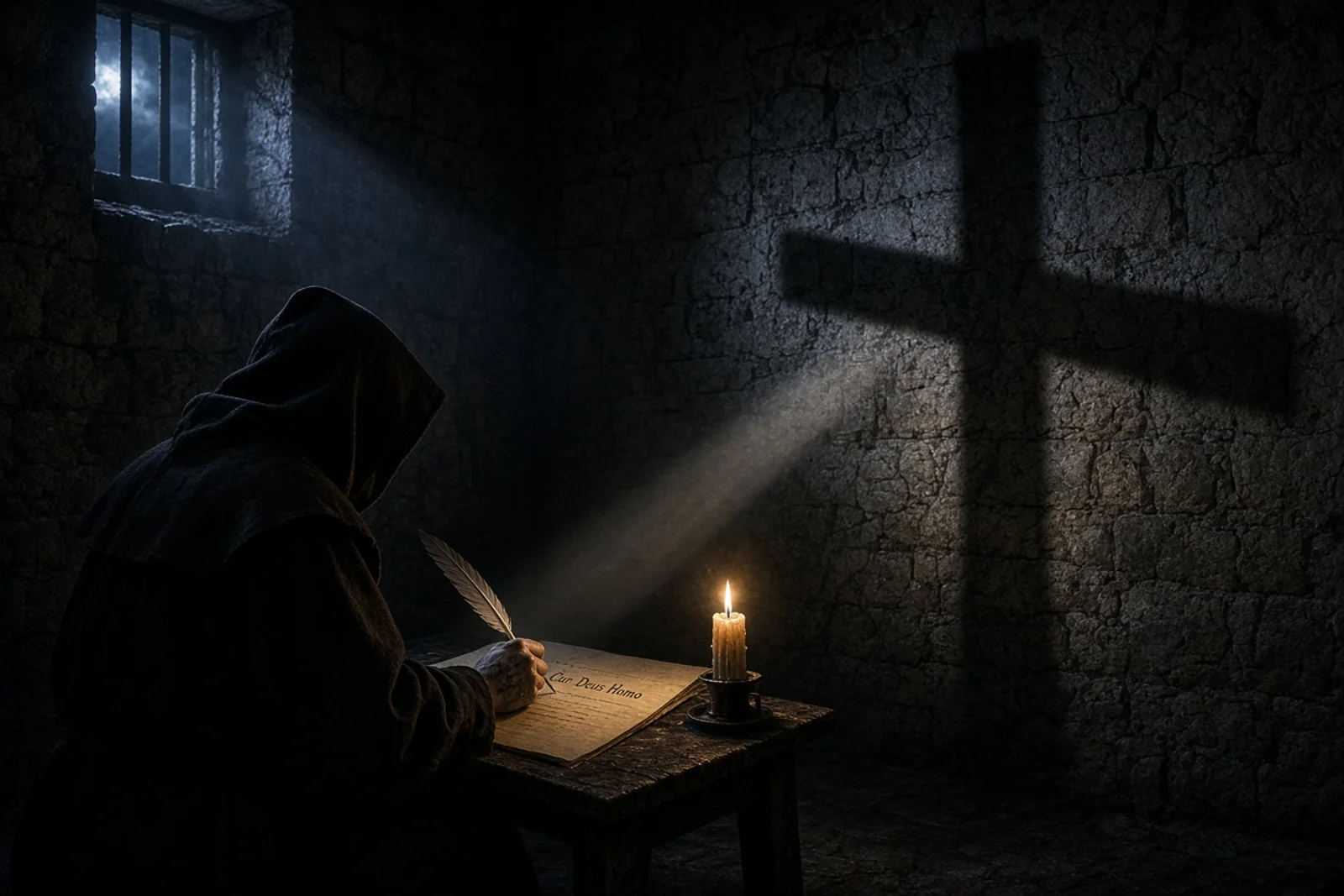
The path from the village well climbed steeply under the midday sun. I carried the fresh skins balanced on one arm, the ink pot swinging from the other, and the dust from the track worked into the creases of my palms. At the top the low stone house stood with its shutters half open. Anselm sat at the table inside, already bent over the first sheet.
He did not look up when I set the skins down. His fingers moved across the surface as though he were reading something already written there. Outside, the cicadas kept up their steady rasp. Eadmer stood in the doorway with a bowl of water, waiting to see whether Anselm would drink. The archbishop’s shoulders were narrower than they had been two years before, the cloth of his habit loose at the neck.
For days the work had been only questions spoken aloud. Why must satisfaction be made at all? Why could no angel or man offer what was owed? Anselm answered each question with another, testing the shape of the answer before he let it settle on the page. I trimmed the quills and listened. When he paused, the only sound was the scrape of Eadmer’s sandal against the threshold stone.
On the fifth morning Anselm asked for the title to be written at the head of the first gathering. He spoke it once, then again more slowly so the letters would stand clear: Cur Deus homo. The ink dried darker than the skin. He ran one finger along the words without touching them, then nodded for the next sheet.
The heat pressed harder each afternoon. We moved the table nearer the open shutters so the air could cross the room. Anselm’s voice grew hoarse from speaking the arguments through. He would stop, drink, and begin again from the beginning of the same section, changing only a single phrase. Eadmer copied the revised lines onto a separate roll so nothing would be lost. I held the roll flat with both hands while the ink set.
One evening a messenger arrived from the coast. He brought news that the king’s men still held the ports. Anselm listened without lifting his eyes from the sheet in front of him. When the messenger left, Anselm returned to the same sentence he had been shaping. The argument moved forward as though the interruption had never occurred.
By the middle of the following week the sections on satisfaction and necessity lay finished. Anselm read the last page aloud to Eadmer and to me. The words did not sound like a conclusion. They sounded like a door that had been tested until the latch gave. Eadmer asked whether any further change was needed. Anselm said the form was enough.
We began the fair copy on a new set of skins. I ruled the lines each morning while Anselm walked the short distance to the church and back. He returned with dust on the hem of his habit and sat at once. His hand moved steadily now, less often lifting the pen to reconsider. The cicadas had grown louder with the advancing season; their sound filled the pauses between sentences.
Eadmer kept a separate record of the days. He noted the place, the month, the fact that the archbishop had completed the work while still barred from his see. He did not ask Anselm to confirm the entries. Anselm offered no comment on them.