




Anskar Preaches in Scandinavia
Missionary brings gospel north
FaithTap · Sep 26, 2026 · 11 min read
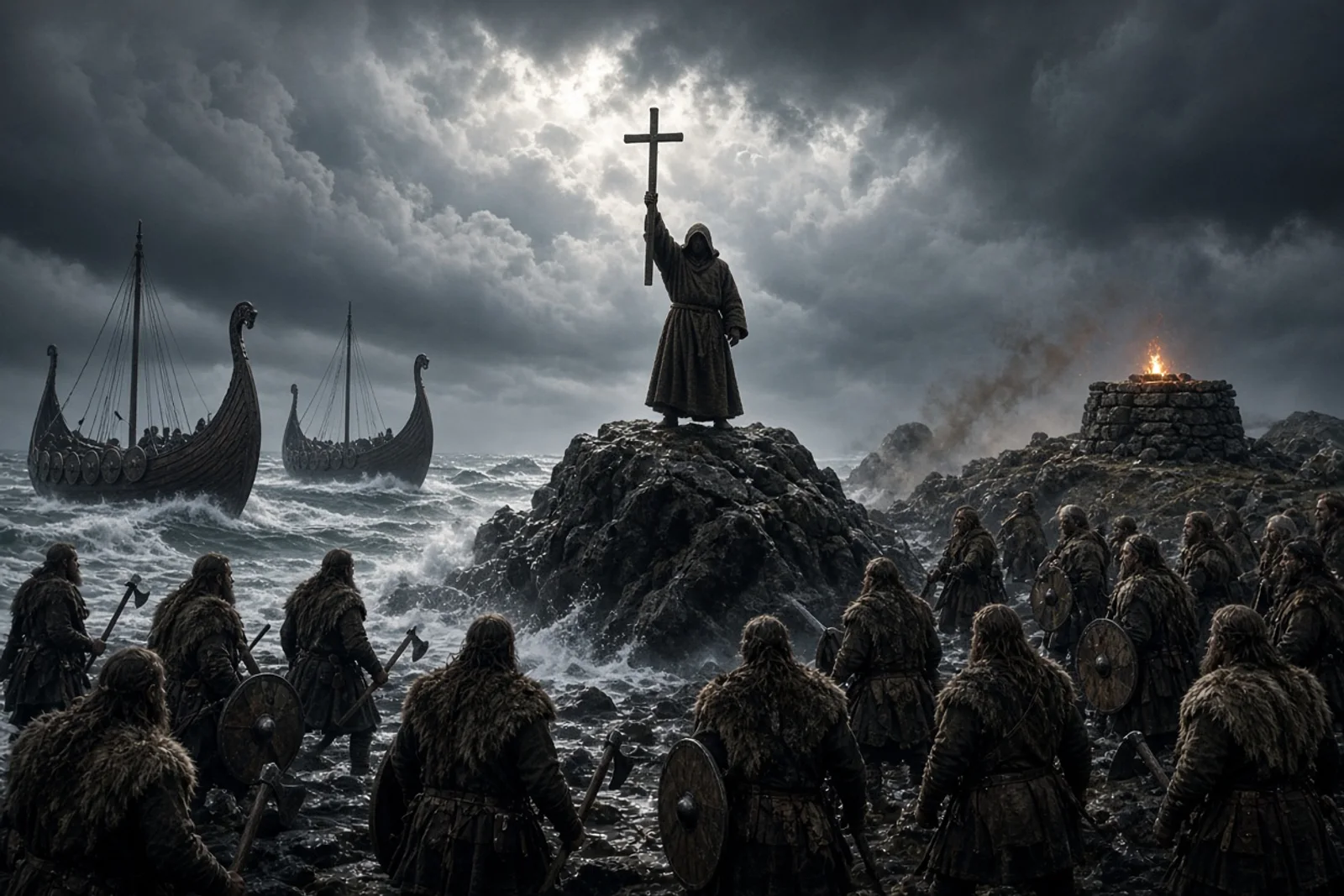
The oars bit into the black water of the lake just after dawn, and the spray stung like salt even though we were days from any true sea. I pulled with the others, my wrists raw from the ropes, and watched the low island rise through the mist. Birca sat there like a scar on the water, its wooden wharves already crowded with the long ships of traders. We had come from the south with the missionary and his few companions, and the men around me muttered that the king would decide our fate before the sun set.
Anskar stood in the bow without cloak or staff, his eyes fixed on the shore. He had spoken little on the crossing, only that the captives here had sent word and that the king had given leave. I had been one of those captives for three winters, taken from a Frankish river village when I was still a boy. The others in the boat knew my story but said nothing of it. We shipped the oars when the keel scraped the gravel.
King Björn waited on the jetty with his guards and his councillor Hergeir. The king was broad in the chest and wore a cloak fastened with a silver brooch the size of a man’s palm. He looked at Anskar without smiling and asked how many days the journey had taken. Anskar answered that the lakes had been kind and that no storm had turned them back. Hergeir stepped forward then and offered his hand to the missionary. The councillor’s beard was already streaked with grey, though he was not yet old.
That first evening we slept in a storehouse near the shore. I lay awake listening to the traders argue over prices for furs and amber. Anskar rose before the others and walked the narrow paths between the houses. I followed at a distance because the guards had not yet decided whether we captives could move freely again. He stopped at the edge of a small clearing where the wind off the lake cut through the trees. There he knelt and remained still for a long time.
Hergeir found him there the next morning. The councillor brought bread and a skin of sour ale. They spoke of the captives who had asked for a teacher, and Hergeir said that some of the merchants’ wives had begun to listen when the captives spoke of their own god. Anskar asked if the king would allow a place to be set aside. Hergeir answered that the king had already given his word on the matter of the captives, but the question of a building would need another day.
By the third morning the air had turned colder and the traders began to pack their goods for the winter roads. Anskar stood in the open space between the warehouses and spoke to anyone who would stop. His voice carried without shouting. He told of a man who had died and risen, and he spoke of forgiveness that did not require payment in silver or blood. Most of the men passed by, but a few of the captives came and stood at the edge of the circle. One of them, a woman from the Rhine, began to weep when he mentioned the name of the god she had not heard spoken aloud in four years.
Hergeir returned at midday with timber and tools. He set the first post himself in the ground where Anskar had knelt two days earlier. The work drew a crowd because nothing like it had been raised in Birca before. The posts were lashed with rope and the roof was thatched with reeds from the shore. It was not large enough for more than twenty people, yet when it was finished Hergeir called it the church and invited the captives inside.
Anskar preached there on the fourth evening as the lamps were lit. He did not raise his hands or call on any spirit of the place. He simply told the story again, slower this time, and let the captives ask their questions. One man wanted to know whether the god would protect his children if they were taken in the next raid. Anskar said the protection was not of the body but of something that could not be carried away. The man nodded and stayed until the lamps burned low.
King Björn came on the fifth day. He stood outside the low doorway and listened without entering. When Anskar finished he asked whether the new teaching required men to lay down their weapons. Anskar answered that it required them to lay down hatred first. The king made no reply, but he did not order the building pulled down.