




Bartolomé de las Casas Defends Native Rights
Priest fights for mercy
FaithTap · Sep 30, 2026 · 10 min read
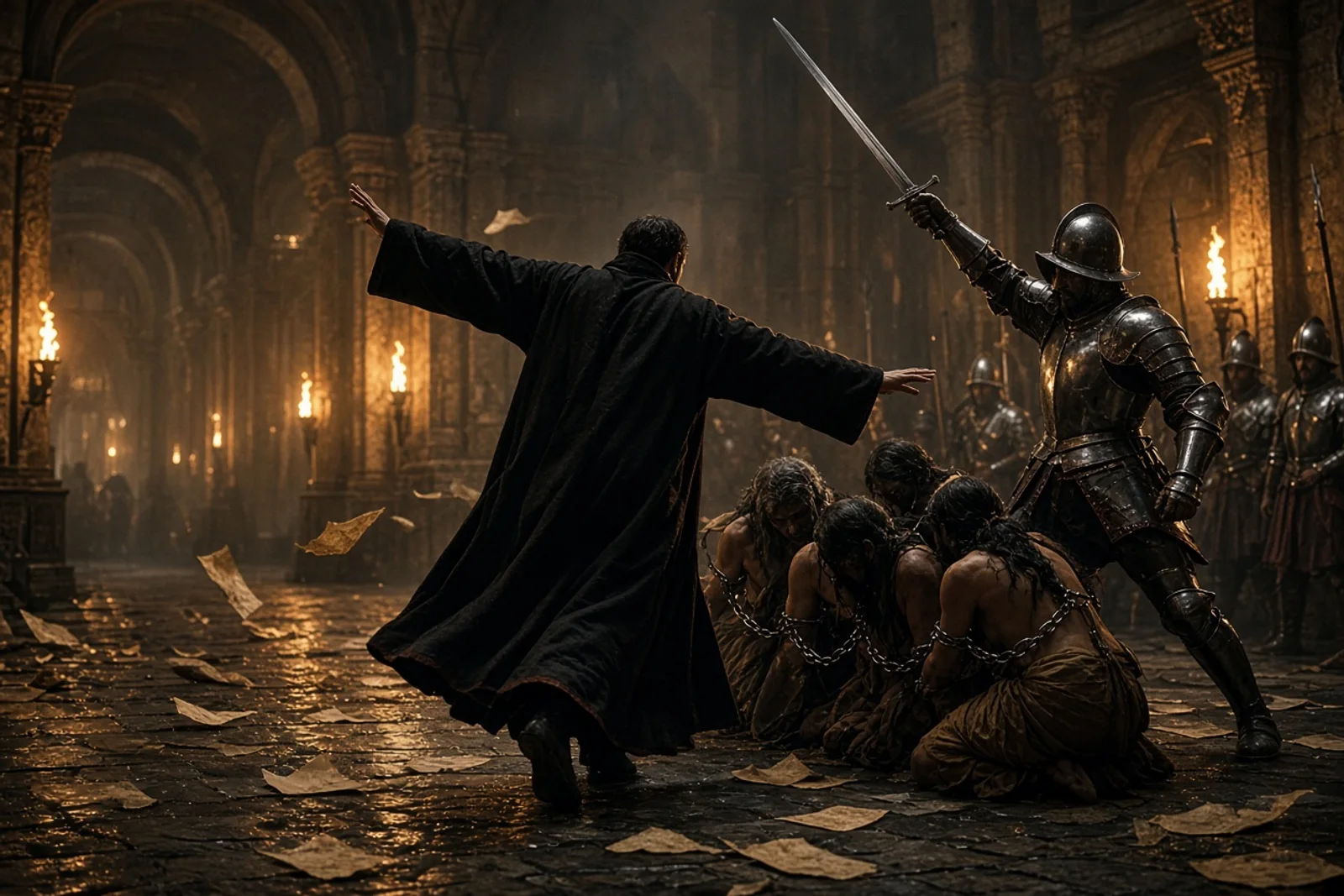
The hall smelled of wet wool and ink. I shifted on the bench, the wood biting into my spine, and watched the two men face each other across the long table. Sepúlveda had already begun, his voice carrying the even tone of a man who had rehearsed every line before a mirror. He spoke of natural slaves and the right of the stronger to lift the weaker. I had heard the same phrases in taverns in Santo Domingo years earlier, spoken by men who never left their estates.
Las Casas sat with his hands folded inside his sleeves. He was older than I remembered, the skin around his eyes loose, but his back stayed straight. When Sepúlveda paused for breath, Las Casas leaned forward and asked one question about the meaning of the word “barbarian.” The room went still. Sepúlveda answered with Aristotle. Las Casas answered with the faces of men he had baptized on the Arimao River.
I had come to Valladolid as a clerk attached to one of the Hieronymite commissioners who had once been sent to inspect the islands. That commission had failed, and I had returned to Spain carrying reports no one wanted to read. Now I sat among the theologians and lawyers, charged with noting the arguments, though my hand had stopped moving after the first hour. The candle wax ran in thin streams down the iron holders. Outside, rain struck the shutters in steady bursts.
Sepúlveda brought up the sacrifices the Indians were said to practice. He described children thrown into pits. Las Casas waited, then spoke of the pits the Spaniards had dug for the same children when they refused to carry ore. He did not raise his voice. He simply listed the villages he had seen emptied between Bayamo and Camagüey. A jurist on my left shifted and coughed into his sleeve.
The afternoon light faded. Servants brought lamps. Las Casas stood and walked to the window, opened the shutter a hand’s width, and let the cold air in. He returned to his place and continued. He said the Indians governed themselves with laws older than any crown in Europe. Sepúlveda countered that those laws permitted idolatry. Las Casas answered that idolatry had once been the common condition of every nation, including Spain.
I remembered the day in 1514 when Las Casas had stood in a church on Cuba and told the congregation he was returning his own Indians. I had been among the soldiers who heard him. Some laughed. Others left the building. He had left the island soon after, carrying letters to the court. Now the same man stood before another court, and the laughter was gone, replaced by careful silence.
Night came. The debate did not end. They agreed to continue the next morning. I walked back to my lodging through streets already emptying. A woman selling chestnuts kept her brazier lit under an awning. I bought two and ate them while the shells burned my fingers. The taste stayed with me when I lay down.
At dawn the hall was colder. Sepúlveda arrived first, surrounded by clerks carrying books. Las Casas arrived alone. He carried only a small bundle of papers tied with cord. When he spoke again, he turned to the question of just war. He asked what act of aggression the people of Hispaniola had committed against the ships that first appeared off their coast. No one in the room supplied an answer.
The third day brought a new argument from Sepúlveda: the duty to rescue innocent victims from tyranny. Las Casas granted the duty but asked who had appointed the Spaniards as rescuers when the only victims visible to him were the Indians themselves. He described the chains forged in the workshops of Seville and shipped across the ocean. He described the brand marks on the shoulders of men who had never lifted a weapon.