




Bartolomé de las Casas Defends Native Rights in Hispaniola
Las Casas renounces his encomienda and becomes an advocate.
FaithTap · Sep 24, 2026 · 9 min read
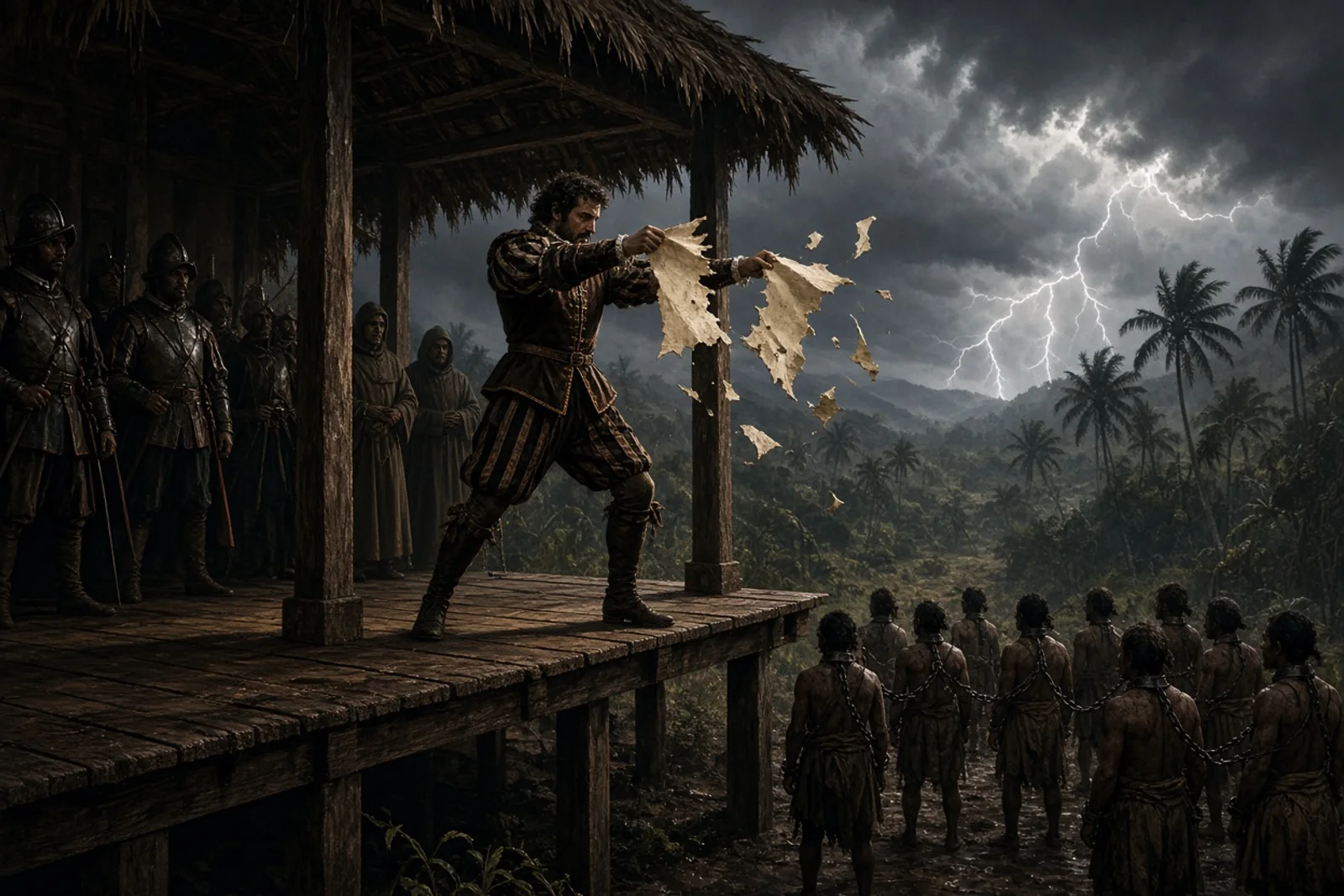
The benches groaned as more men pressed inside, boots scraping the packed earth floor. Dust hung in the shafts of light from the high windows. I had come early enough to claim a spot near the side wall, close enough to hear but far enough that no one would notice if I slipped out before the final blessing. Las Casas stood a few rows ahead, his priest’s robe already dark at the shoulders from the heat. He turned once and nodded at me the way a man nods at someone who has shared a meal and a night watch. We both knew the price of Indian labor in the mines that week.
Montesinos climbed the steps to the pulpit without hurry. He waited until the last cough died. Then his voice filled the nave, sharp and steady, asking what right any man held to keep other men in chains and under whips. He named the wars we had fought on this island and the villages emptied to feed our tables. He asked if those people were not men like ourselves. No one answered at first. Then a landowner near the front stood, face red, and shouted that the friar had lost his mind. Another called for the governor. Montesinos stayed where he was, hands resting on the rail, until the shouting rolled over him and the doors banged open.
I watched Las Casas. He did not move with the men heading for the street. He stayed on his feet, one hand gripping the back of the bench in front of him. When the church had half emptied he sat again, slowly, as if the wood had grown hot. Outside, voices carried across the square, some already promising to write the king. Inside, the remaining worshippers spoke in low clusters, glancing toward the pulpit where Montesinos still stood.
That evening the settlement felt smaller. Men who had arrived together on the same ships now measured one another across doorways. Las Casas did not preach the next Sunday. He said mass in a low voice and left the altar without looking at the congregation. I saw him later near the harbor, speaking with two of the Dominicans who had come on the same ship as Montesinos. They kept their backs to the town.
Three years later word reached us that Las Casas had gone with Velázquez to Cuba. Men who returned told of villages burned and fields trampled under the horses. They spoke of the gold they carried and the Indians they left behind. When Las Casas came back to Hispaniola he still held his own grant of labor. He said little about Cuba in public. At night, though, he walked the edges of the settlement alone.
One afternoon I found him sitting on the steps of the small chapel with a book open on his knees. He read the same lines again and again, finger tracing the page. He looked up once, saw me, and closed the book without marking the place. Two days later he stood before Velázquez and said he would give up the Indians assigned to him. Velázquez stared at him as if he had spoken in another tongue. Las Casas repeated the decision and walked out before any answer came.
He freed the people who had worked his land and told them they could return to their own villages if any still stood. Some stayed near the settlement anyway, unsure where else to go. Las Casas sold what tools and stock he owned and divided the money among them. He began to preach in the same church where Montesinos had spoken years before. This time the crowd was thinner. Those who remained left early or stayed to argue.
When he decided to sail for Spain he asked Montesinos to go with him. They carried letters from the other Dominicans and a few pages Las Casas had written himself. I watched them load a small chest onto the ship at first light. The wind came off the land, carrying the smell of the cane fields and the smoke from the smelters. Las Casas stood at the rail until the anchor was raised. He did not wave.
Years passed. Ships brought news that he had reached the court and spoken to the king’s council. Some letters said the council listened. Others said the grants continued as before. In Hispaniola the mines still ran and the fields still needed hands. Men who had once cursed Montesinos now cursed Las Casas by the same names.