




Bede Griffiths Discovery of Bible
Anglican monk finds Catholic path
FaithTap · Sep 23, 2026 · 11 min read
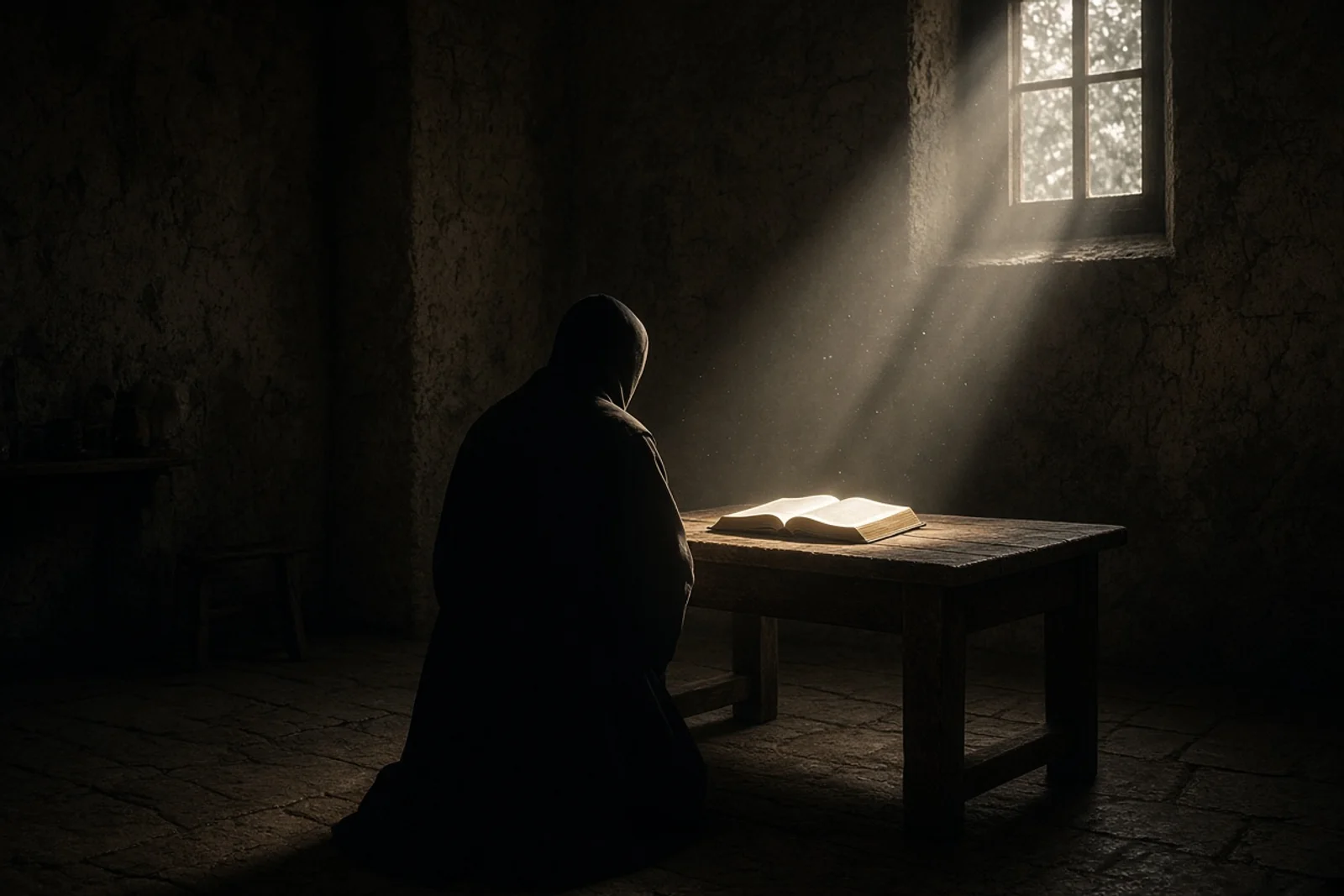
We had been three weeks without proper bread when the books arrived. The cart from the village stopped at the gate and the driver heaved the crate onto the grass. Alan lifted the lid with a crowbar and we stood looking at the spines in the late light. Newman’s Grammar of Assent lay on top. Below it were volumes of the Fathers and a battered King James Bible with a broken spine.
We carried everything inside and set the table for the evening. The cottage had no electricity. We read by oil lamp after the sun dropped behind the ridge. Alan opened the Bible first that night. He read slowly, stopping at the end of each paragraph, and none of us spoke. The wind moved the ash trees outside. When he closed the book the flame in the lamp had sunk low.
Morning brought the same routine we had kept since spring. We drew water from the well, split wood, and ate porridge without milk. After the meal Alan carried the Bible to the bench under the pear tree. He read aloud again while the rest of us worked. Martyn came out from the shed with an axe in his hand and stood listening. Hugh, who had been mending a shirt, put the needle down. The words carried across the grass without effort.
By the third day the pattern had shifted. Alan stopped mentioning the Eastern texts we had brought with us. He kept the Bible open on the windowsill even when rain blew in under the eaves. One afternoon he asked whether any of us had noticed how the prophets spoke of a single voice behind the many. None of us answered. He closed the book and walked down the lane alone.
The experiment had already begun to fray. Martyn wanted to return to his family’s farm. Hugh spoke of finding work in Gloucester. Alan said little. He spent longer hours with the Bible and with the small stack of Newman we had carried from Oxford. At night the lamp burned past midnight. I heard the pages turn.
When the first frost came we packed what we could carry and walked to the station. Alan bought a single ticket for London. He told us he had written to the bishop about ordination. The train left at noon. We watched the smoke disappear beyond the cutting.
I returned to the cottage alone for the winter. The place felt larger without the three of us. Alan’s letters arrived every fortnight. He described the mission house in Stepney, the queues for soup, the children sleeping in doorways. He wrote that the Bible he carried in his pocket had become heavier than the coat on his back. In March he came back for a week. His face had thinned. He ate little and spent the days walking the fields with the same Bible under his arm.
Spring brought another change. He moved into a farmhouse two miles away and began to fast. I visited once and found him thinner still, sitting at a scrubbed table with Newman open beside the Bible. He spoke of the Church of England as a house whose roof had already fallen in. I left before dark.
In early summer a priest from the nearby parish arranged a retreat for him at a house in the Cotswolds. Alan returned from that week thinner yet, but steady. He told me he had been received into the Roman Church at a small chapel near the abbey. The decision had been made in the space of three days. He showed me the letter confirming his visit to Prinknash. The envelope lay on the table between us for a long time before either of us touched it.