




Bede Griffiths' Discovery of the Bible
Bede Griffiths reads the Bible and converts while at Oxford, later becoming a Benedictine monk.
FaithTap · Sep 22, 2026 · 10 min read
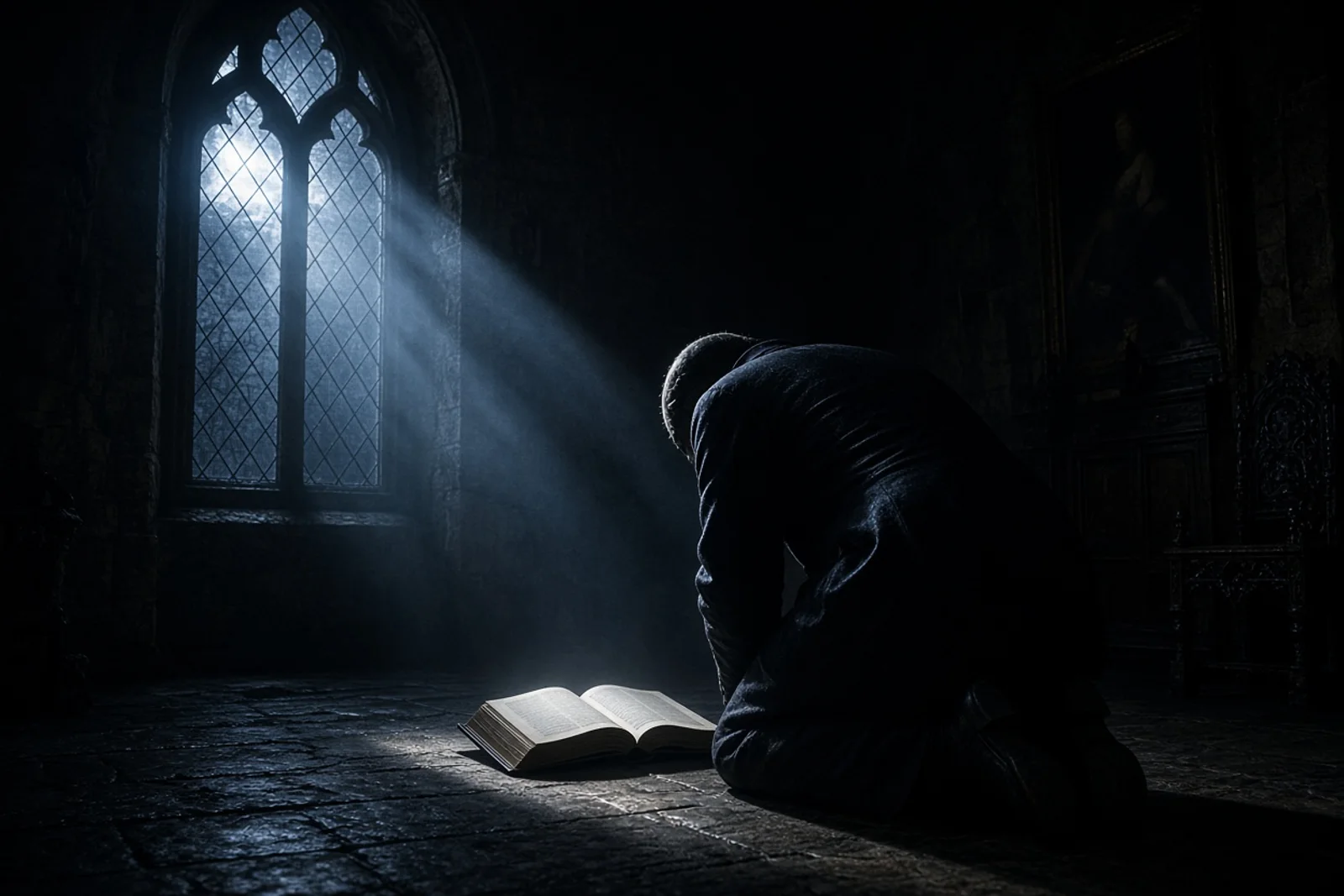
We pulled the cart up the last rise just as the light went flat. Martyn took the left shaft and I took the right. Alan walked ahead with the sack of books balanced on his shoulder. The cottage stood low against the hedge, its thatch already dark from the morning rain. We set the wheels on the stones and stood a moment with our hands on our hips, listening to the rooks in the elms.
Inside, the single room smelled of cold stone and old soot. We swept it out and set the table under the window. Alan unpacked the books first, laying them in two stacks, one for each end of the bench. He had brought the Bible among them without saying why. When we asked he only shrugged and said it belonged with the rest.
We kept no clock. Meals came when someone put the kettle on the range. In the afternoons we walked the lanes or sat on the bench outside with the door open. Alan read aloud after supper. At first it was the poems he knew from Oxford. Then one evening he opened the Bible at random and read the first lines that caught his eye. His voice stayed level, the same tone he used for anything else, but he did not close the book when he finished the page.
Martyn noticed it first. He said Alan had begun to leave the pages marked with slips of paper. I saw them too, small torn edges sticking out along the fore-edge. We did not speak of it at the table. The reading continued, sometimes for an hour, sometimes only until the lamp needed trimming. Alan’s hands rested on the open book as if he were checking its weight.
The experiment lasted through the winter. We cut wood, carried water, and kept the range going. Alan grew quieter. He still walked with us, but his answers came slower and he looked past us when he spoke. One morning he stayed at the table after we had cleared the plates and read the same chapter twice. When Martyn asked what he was looking for, Alan said nothing and turned the page again.
Spring brought visitors. A letter came from Lewis, forwarded from Oxford. Alan read it twice, folded it, and put it under the Bible. He did not answer it that week. The next letter stayed unopened for three days. We watched him carry both letters to the hedge and stand there until the light failed.
When the year turned we sold what we could and left the cottage. Martyn went north. I took work in the next county. Alan went to London. He wrote once that the slums had left him emptied. The letter ended without a date or a plan. Months passed before another came, this one from the Cotswolds again. He was living with a farm family, fasting some days and reading Newman the others.
I saw him in the summer of 1931. He had written to say he was going to Prinknash. We met at the station and walked the last miles together. He carried only a small case. At the abbey gate he stopped and looked back along the lane as if he had forgotten something. Then he set the case down and waited for the porter.
The reception took place in the afternoon. Alan stood in the chapel with his hands at his sides while the priest read the questions. He answered each one without lifting his eyes. When the priest placed the stole across his shoulders Alan’s face stayed still, but his fingers closed on the fabric for a moment before he let it go.