




Blaise Pascal's Memorial Night
Mathematician records mystical encounter in sewn note.
FaithTap · Sep 26, 2026 · 9 min read
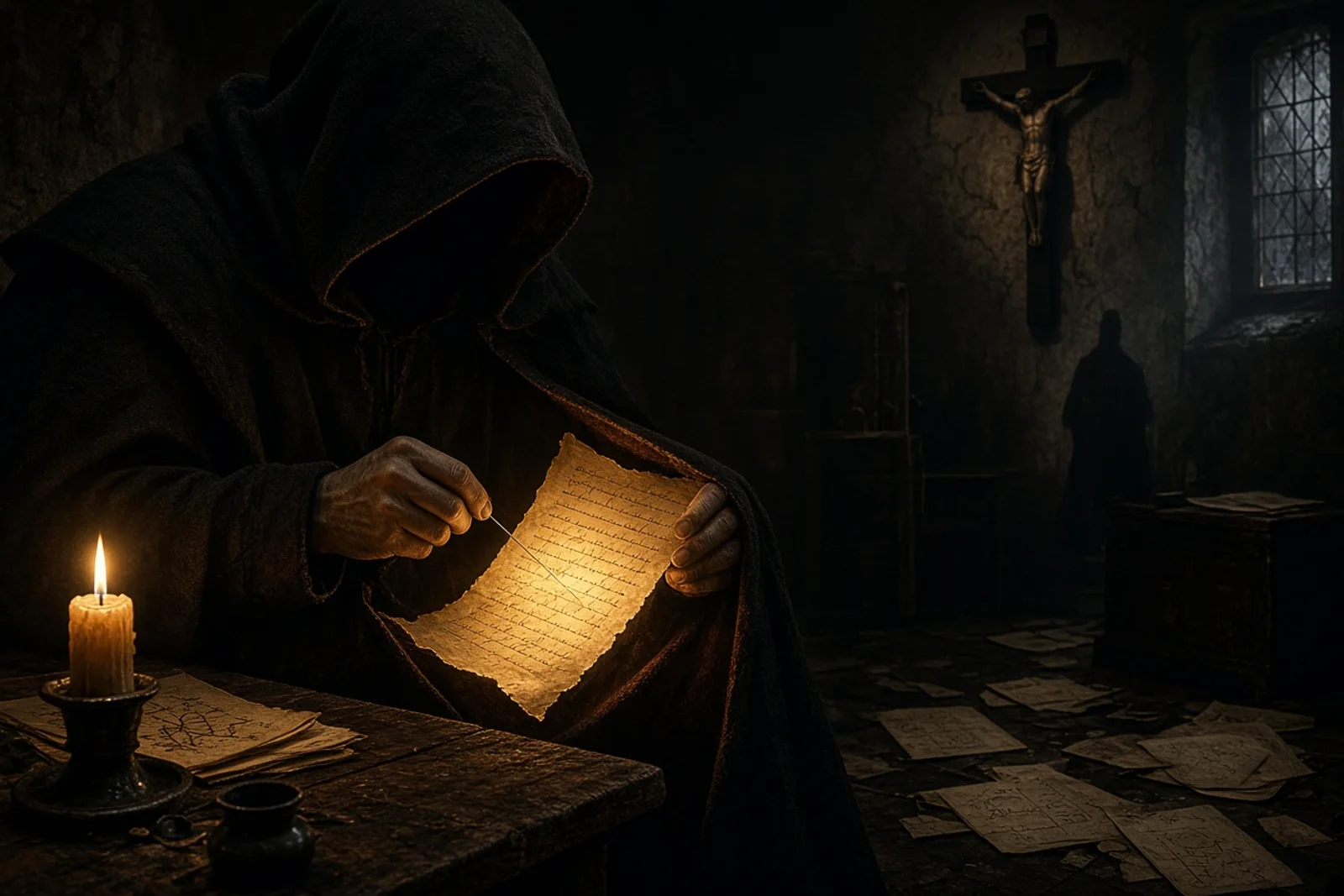
The lamp had burned low in the outer room when I set the kettle back on its hook. Pascal had asked for nothing more than hot water and the plain chair by the window, the one he used when the night air pressed against the glass. He closed the inner door without a word, the latch catching with its usual soft click. I heard the scrape of wood on boards as he moved the chair, then nothing.
I stayed awake on the pallet near the stove because the building was cold and the street outside had already gone quiet. From half past ten the only sounds were the occasional cart wheel on the stones below and the faint creak of the roof beams settling. Twice I thought I heard his voice, low and steady, but the words did not carry through the door. The third time the sound stopped short, as if cut off. I waited for the chair to move again. It did not.
Near midnight the cold deepened enough that I added another log without striking a light. The room stayed dark except for the thin line of fire under the kettle. I kept my eyes on that line and tried not to count the minutes. When the clock in the next street struck the half hour, I stood and listened at the door. No movement. No cough. I told myself a man could pray that long without harm and went back to the pallet.
He came out just after one. The door opened and he stood there with both hands on the frame as if the floor might shift. His face was wet, though the room behind him had no water. He looked at me without surprise, as if I had always been there, then walked past to the table and sat. The paper he had been writing on lay folded small in his palm. He did not open it. He asked only whether the street door was barred, then went to his own bed without undressing.
In the weeks that followed he kept the same hours for work and meals, yet the work itself changed. The instruments he had used for the air-pump experiments stayed in their cases. When visitors came to speak of calculations or the latest meeting at the academy, he listened, answered what was asked, and offered no new figures of his own. One evening a colleague asked whether he still meant to finish the treatise on the vacuum. Pascal said the vacuum would keep, then turned the talk to the cost of wood for the winter. The colleague left early.
He began to visit the house at Port-Royal more often, sometimes staying two nights. When he returned he brought no new books on geometry but carried instead a small volume of Augustine that he read at the table after supper. The pages were already marked. He read aloud once, a single sentence about the restlessness of the heart, then closed the book and sat with his hands flat on the cover until the candle guttered.
The coat he wore every day grew thin at the elbows. One morning I offered to take it for mending. He shook his head and said the lining was sound. I did not press him. Later that month he gave instructions that the same coat was to be kept for burial, and the request was written down so there would be no mistake.
Eight years later the same coat was brought to the table where the body lay. The servant who opened the lining found the folded paper, creased and darkened at the edges. The writing was in his hand, the date at the top still clear: the twenty-third of November, 1654. The words began with the hour and ended with a single repeated name. No one in the room had seen the paper before. The servant read it once, then folded it again and placed it with the other documents that would be sent to the family.
The coat itself was burned with the rest of the clothing, as was the custom. The paper remained.