




Blandina Endures Torture in Lyon Amphitheater
Slave girl outlasts repeated torments and inspires others.
FaithTap · Oct 1, 2026 · 11 min read
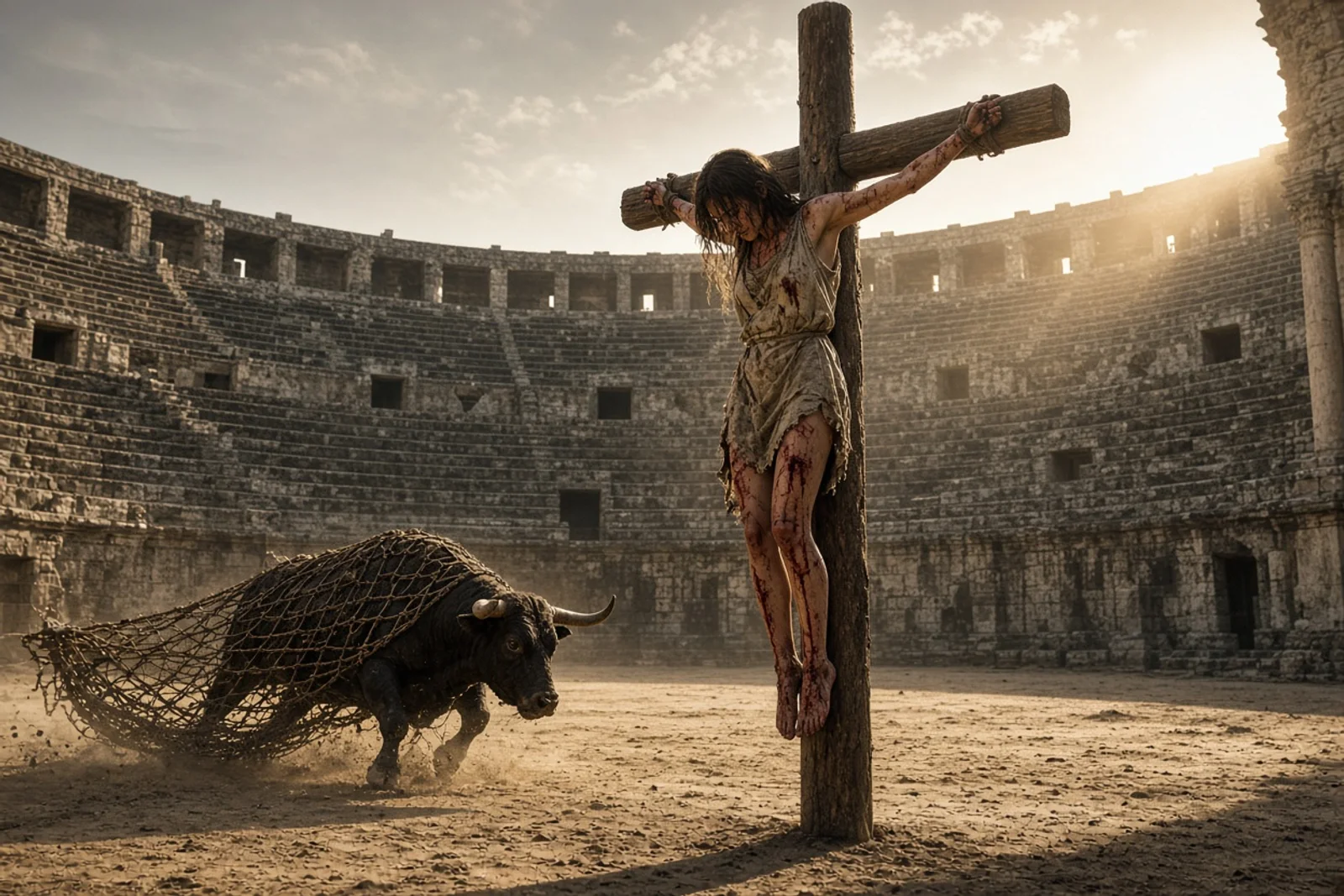
The sun hammered the upper tiers of the amphitheater and the stone still held the cold of the night before. I had come early, pushed along by neighbors who wanted a seat with a clear view of the sand. The first prisoners were already in the holding area beneath the stands. Their chains scraped against the wooden benches when the guards moved them. One of the women was small, thin in the arms, her tunic torn at the shoulder. She kept her eyes on the ground.
The legate sat under the awning on the eastern side. He had returned the day before and the orders were clear. Those who held to the name were to die in the open. The others could walk away. A line of soldiers brought the first group forward. The crowd shouted names and insults. Most of the prisoners answered only with silence until the iron was applied. Then some cried out. One man near the center post kept repeating the same short sentence until his voice broke.
By midday the heat had thickened. The small woman was brought out again. They tied her wrists to a post set in the middle of the arena. Two handlers opened the cages at the far end. The beasts came out low and restless. They circled once, then stopped. One lion turned its head aside and lay down in the shade of the wall. The handlers prodded and shouted. Nothing moved toward the post. After a while the legate waved them back. The woman was untied and led away. She walked without stumbling.
The next morning the same woman was made to stand at the edge of the arena while others were brought in. She watched each one. When a man named Sanctus was placed on the chair of iron, she turned her face toward him but did not look away. The smell of burning flesh reached the lower seats. Some in the crowd covered their noses with cloth. She stayed where the guards had left her until the session ended.
On the third day the legate ordered the remaining prisoners brought together. The small woman was among them. They stripped her and struck her across the back with rods until the skin split. Then they laid her on a grating that had been heated in a brazier. The metal hissed when her body touched it. She spoke the same words she had used every time they asked her name and her allegiance. The executioners changed places twice before the legate signaled to stop. One of them wiped sweat from his face and said he had no more strength in his arm.
They placed a net around her and dragged her to the center again. A bull had been brought in earlier and kept in a pen. The handlers released it. The animal lowered its head and caught the net on its horns. She rose and fell twice before the rope tore. When she lay still on the sand a soldier stepped forward with a short blade and finished it. The crowd had grown quieter by then. A few voices still called out, but the sound did not carry the same way it had on the first morning.
Her master had been taken with her at the beginning. He was already dead two days earlier. The body of the woman was left where it fell until the games closed for the day. Guards came with hooks and dragged it through the gate that led under the stands. The sand was raked afterward. By the time the last spectators left, the light had shifted and the western wall cast a long shadow across the empty circle.
I walked down the steps with the others. At the bottom gate a woman selling water asked if I had seen the end. I told her what I had seen. She nodded once and turned away. The street outside still smelled of the arena, of iron and dust and the animals that had been brought in and taken out again.
The water seller turned her back before I could ask her name, and the street led past the warehouses where the grain barges unloaded each week from the upper reaches of the Rhone. Soldiers with hooks had already pulled the bodies through the tunnel beneath the western vomitorium and left them on the open ground outside the city wall near the road that ran to Vienna. The letter later copied by the churches of Asia recorded that the corpses remained there six full days while detachments from the Twenty-second Legion kept watch in shifts of four hours, and that on the seventh day the legate ordered them burned on a pyre built from the same pine timbers used for the arena seats. The ashes were then gathered into sacks and thrown from the stone bridge that crossed to the island, where the current ran fastest at the point opposite the temple of Cybele; the same account named forty-eight persons who died in those three days, among them the deacon Sanctus from the church at Vienne and the physician Alexander, both of whom had been brought from the prison on the morning the legate returned from his inspection of the Rhine forts.