




Bob Dylan Embraces Messiah
Singer records gospel album after conversion.
FaithTap · Sep 28, 2026 · 12 min read
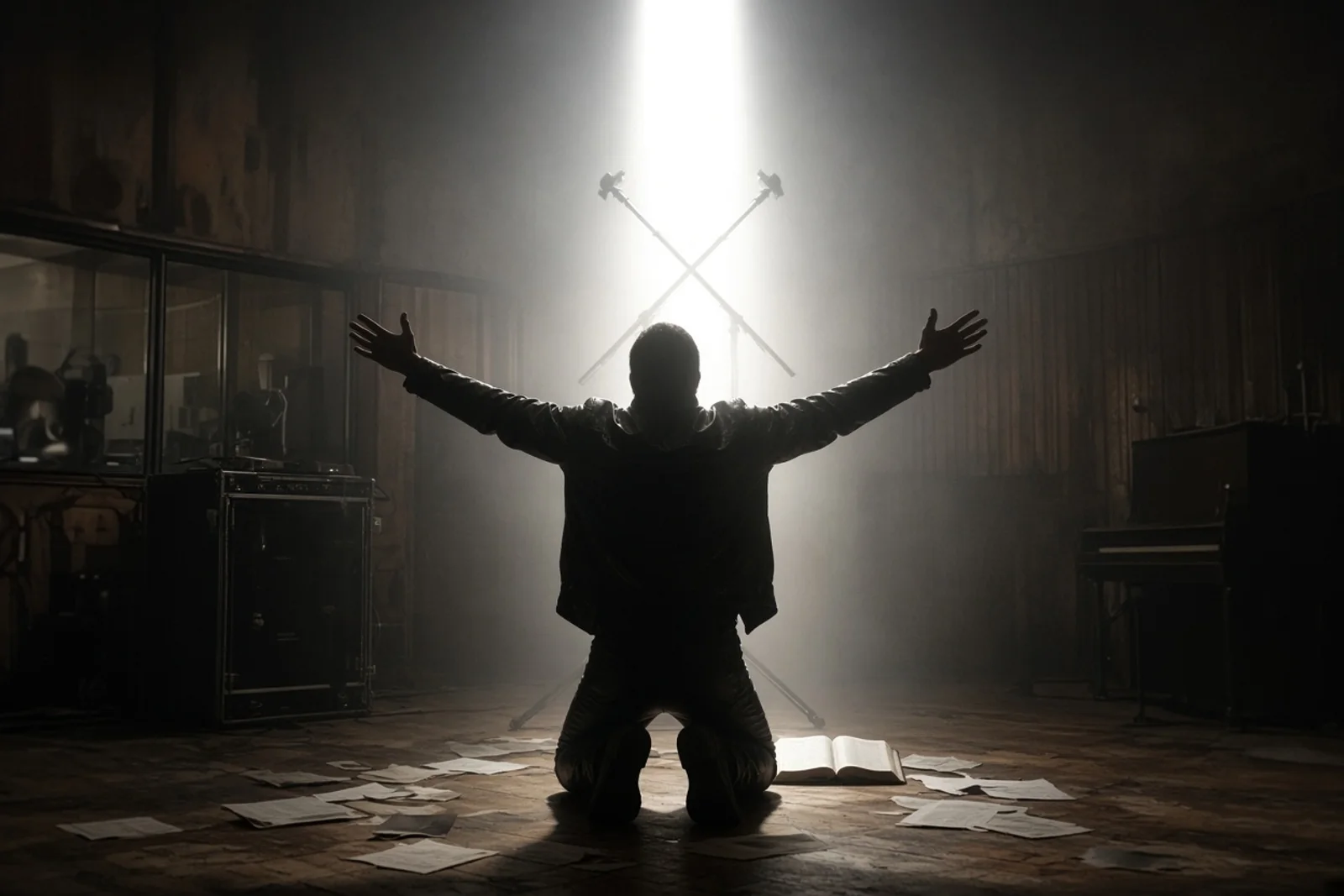
The lights hit the stage like they always did, white and hard enough to bleach the color from everything. I stood off to the side with the monitors, watching the set run long again, the way it had for weeks. Dylan moved through the songs without looking at anyone. Sweat darkened the collar of his shirt. The crowd in San Diego kept calling out requests he ignored. Near the end of the night someone in the front rows stood and flung something small and bright. It landed near his feet with a soft metallic sound. He bent, picked it up, and slipped it into his pocket without breaking the line he was singing.
We packed the gear in the usual rush. No one mentioned the cross. Dylan stayed quiet through the load-out, one hand pressed to his side like the fever had settled there. The next morning the bus rolled east toward Tucson. He rode with the collar of his jacket pulled up, eyes closed, saying little beyond what the set list required. By the time we reached the motel he was running a temperature that made his voice rough. I carried his bag to the room and left him there with the door cracked so the air could move.
That evening I came back to check the schedule. The door was still open a few inches. Inside the room the bedside lamp threw a low circle on the carpet. Dylan sat on the edge of the bed with the silver cross now hanging from a chain around his neck. His hands rested on his knees. He did not turn when I stepped in. For a moment the only sound was the air conditioner laboring against the desert heat. Then his shoulders tightened and he drew a long breath that seemed to catch halfway. He said nothing, but the tremor ran through him once, hard enough that the bed frame shifted. I stayed where I was, one hand on the doorframe, until the shaking passed and he lowered his head.
Later he told the band what had happened in that room. The presence was not a voice or a vision but a weight that pressed down and then lifted him. He said it felt physical, the way a hand might rest across the chest and back at the same time. Mary Alice Artes had already spoken to him about the church in Tarzana. Steven Soles and T-Bone Burnett had been reading scripture with him on the bus between shows. The pastors from Vineyard arrived a few days after we left Arizona. They sat with him in the living room of the Malibu house while the Pacific rolled in below the windows. He listened, then asked them to pray.
The songs changed first. At the sound check in early December the band ran the new chorus twice before anyone realized the words were different. The rhythm stayed the same but the language had turned. Dylan stood at the microphone with his eyes on the floor, testing the lines until they locked into place. The rest of the tour carried on as scheduled, but the conversations after the shows moved to the Bible passages he had marked in a small notebook. He no longer walked out into the street afterward to look at the sky the way he once had.
By the time Slow Train Coming was recorded the following spring the set lists had narrowed. The old songs stayed in the cases. The new ones carried the same urgency he had described in the motel, only now they were written down and handed to the band before each rehearsal. Onstage he spoke between numbers about the return he believed was coming. The audiences divided quickly. Some nights people left before the encore. Others stayed and waited for the final verse.
I stayed with the crew through the gospel tours that followed. The buses were quieter. Dylan kept the cross on a chain under his shirt. When the pastors visited again they brought study books that he left open on the console during sound check. The fever never returned, but the sense that time was short stayed with him. He spoke of it in the same plain way he had described the hand in Tucson, as something that had happened and could not be taken back.
Years later the bootlegs carried the outtakes from those sessions. The takes where his voice cracked on the word “returns” were left in because they matched what the songs were trying to say. The silver cross stayed in his pocket through the recordings and the long drives between cities. No one asked him to explain it again. The record itself had already done that.
The silver cross stayed in his pocket through the recordings and the long drives between cities. No one asked him to explain it again. The record itself had already done that. Muscle Shoals Sound Studio in Sheffield logged the basic tracks for Slow Train Coming between April 30 and May 4 of 1979, with Jerry Wexler and Barry Beckett listed as producers on the session sheets. Dylan cut “Gotta Serve Somebody” in three takes on the second day, the final one kept because the vocal caught on the word “somebody” exactly as it sat in the lyric sheet he had taped to the music stand. Mark Knopfler added the guitar solo after the vocal was already down, and the horn section from Muscle Shoals brought in on May 3 supplied the brass that Wexler later described in a 1981 Guitar Player interview as “the only thing that kept the track from sounding like a sermon.” The album entered the Billboard chart at number twenty-eight the week of August 20 and climbed to number three by October.