




Brother Andrew Smuggles Bibles Behind Iron Curtain
Dutch missionary drives Bibles into communist countries
FaithTap · Sep 25, 2026 · 11 min read
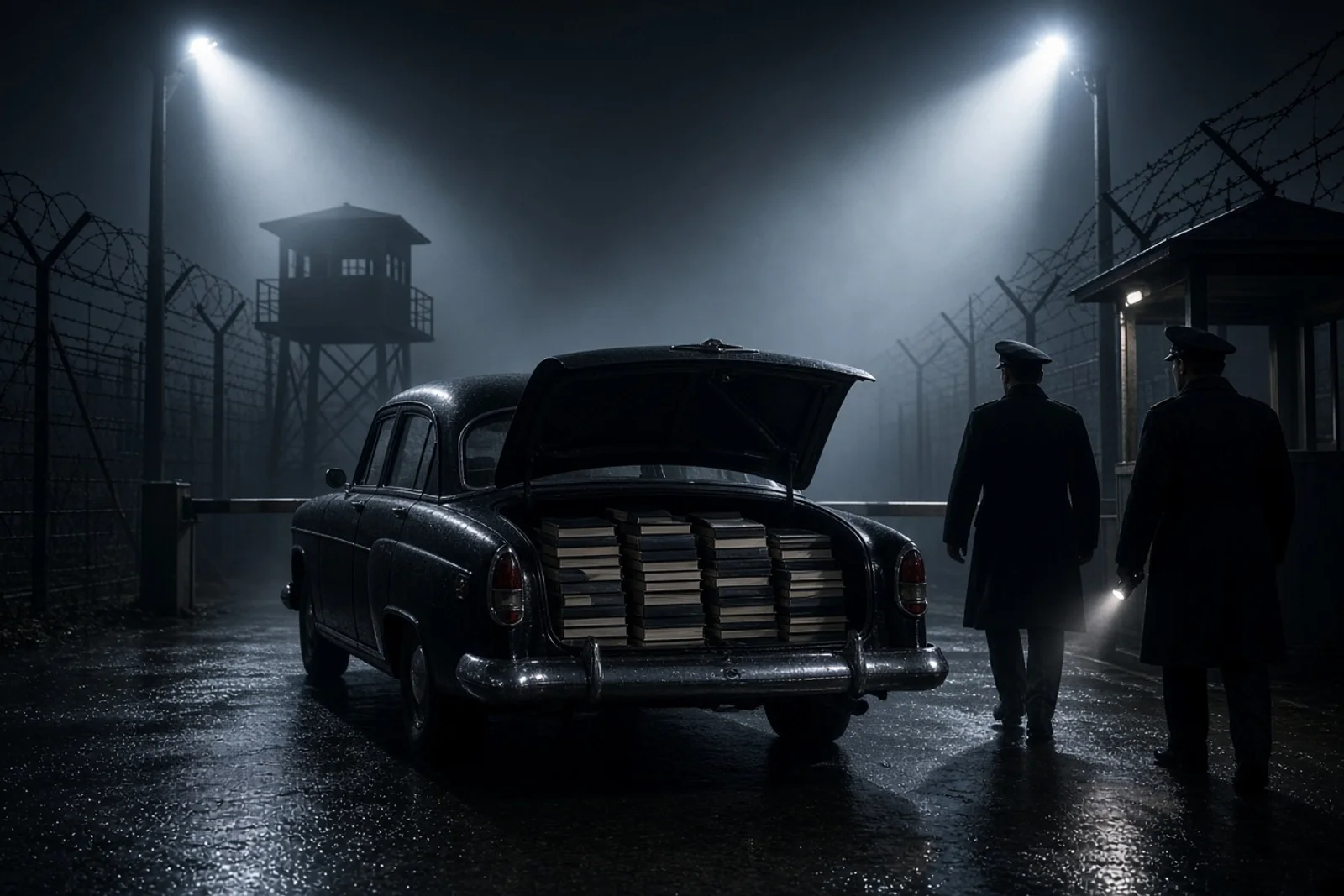
The train from the border rattled into Warsaw under a low sky that smelled of coal smoke and wet stone. I sat on the hard bench with my coat pulled tight, watching the other delegates in their red scarves and pressed jackets. One man near the front kept his suitcase on his lap instead of the rack above. He was thin, maybe thirty, with a Dutch look about the cut of his hair. When the carriage lurched he steadied the case with both hands and did not let it touch the floor.
At the congress hall the lights were bright and the speeches ran long. I slipped out during a break and found him standing near the side doors, the same case at his feet. He offered me a leaflet without asking my name. The paper was thin and the title read The Way of Salvation. I folded it once and put it inside my sleeve before anyone could see.
That evening the pastor at the Baptist church on the far side of the river sent word that a visitor from the West had come. The hall was small and the windows were covered with heavy curtains. People arrived in ones and twos, shoes quiet on the wooden steps. I took a seat near the back and kept my hands in my pockets. The stranger stood at the front with the same case open on a chair beside him. Inside I could see stacks of the same leaflets and what looked like several Bibles wrapped in plain cloth.
He spoke for less than ten minutes. His Polish was careful but the words reached the last row. When he finished the pastor rose and said the rest of us had already heard enough speeches that week. He thanked the visitor simply for standing there in the room. The pastor’s voice shook once when he added that some nights they had felt the whole world had forgotten the address of their street.
After the service the visitor stayed while the others left. He gave out the leaflets one by one and asked each person to write down a name and a street if they needed more. I waited until the line thinned. When it was my turn he handed me three extra copies without speaking. The paper felt heavier than it should have.
Outside the air had turned colder. We walked together toward the tram stop. He told me he had come with a Dutch group but had left their hotel after the first day. The case had traveled under his seat on every train since the border. He did not say how he had passed the guards. He only said the case had stayed closed when they asked to look inside.
Two days later the congress ended with a long parade through the main square. Thousands marched in ordered blocks beneath banners. I stood on the steps of the post office and watched the Dutch group pass. The man with the case was not among them. Later I learned he had stayed behind to meet one more family on the edge of the city.
That night the streets were nearly empty. I returned to the church and found the pastor and two others already dividing the remaining leaflets into smaller bundles. The visitor had left before dawn. He took only his change of clothes and the empty case. One of the Bibles stayed behind on the table, its cover still wrapped in the cloth.
In the weeks that followed the bundles moved through the city in coat pockets and market bags. No one kept count out loud. When the first snow came the pastor read from a letter that had reached him from another church farther east. The letter asked whether anyone had seen a Dutch visitor with a blue suitcase. The pastor folded the paper and placed it inside the remaining Bible.