




Canute the Great Ends Sea Tide Claim
King demonstrates humility
FaithTap · Sep 26, 2026 · 10 min read
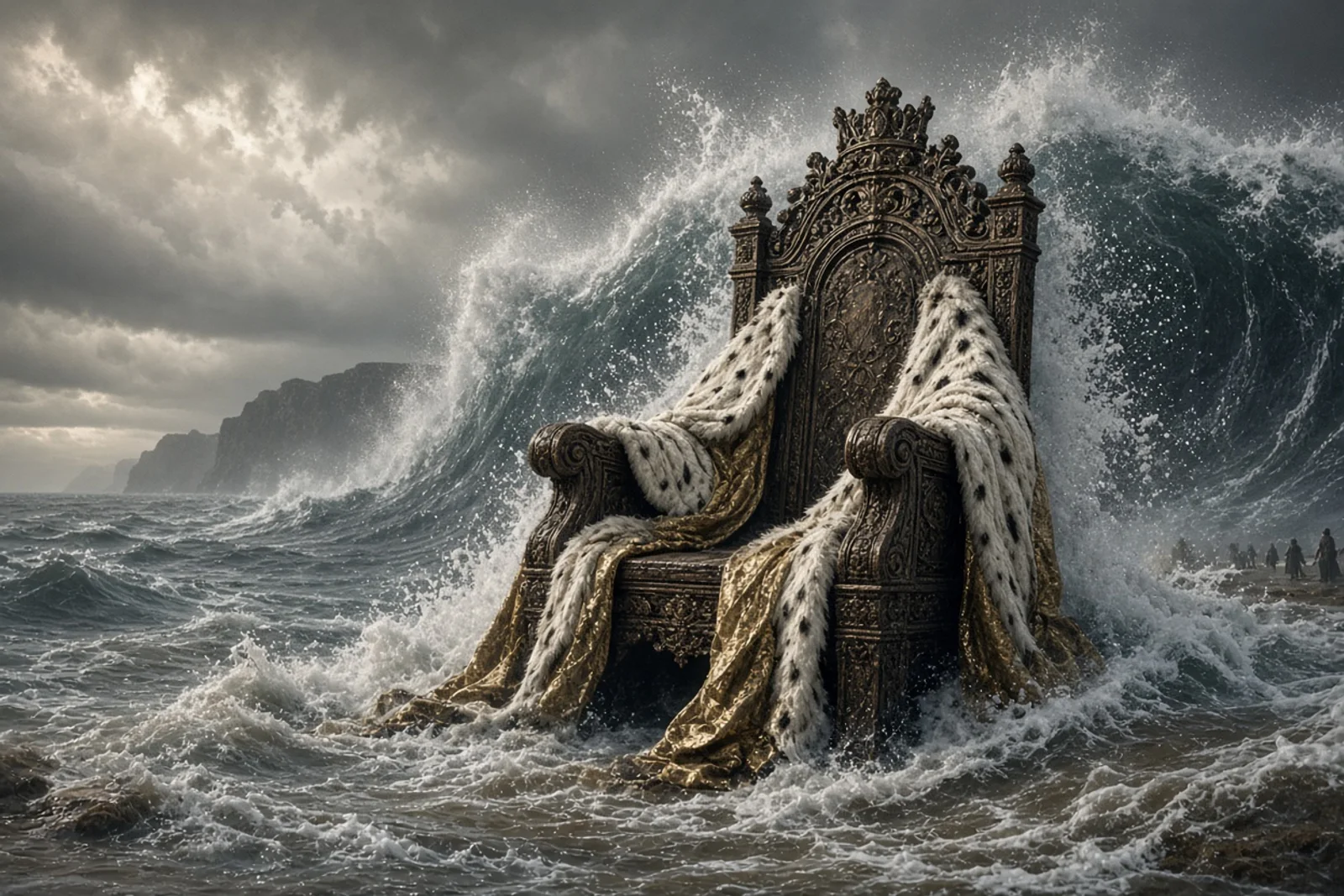
The chair legs bit into the wet sand as we set it down. Salt wind pulled at my cloak and the hem of the king’s robe. He had chosen this stretch of shore because the tide ran fast here, the water cutting channels between the shingle banks. I had carried one end of the chair from the track above the dunes. The wood was still warm from his hands.
Cnut sat without hurry. He wore the heavy crown that morning, the one set with the red stones that caught the light even under cloud. Around him stood the men who had come with us from Winchester: thegns whose names I knew only by their faces, a priest whose sandals already carried sand inside them, and two boys who held the king’s outer cloak so it would not drag. No one spoke yet. The sea made its own sound, a low rush that grew louder each time a wave broke farther up the slope.
He lifted one hand. The gesture was small, the same motion he used to call for silence in the hall. The water kept coming. It reached the first line of darker sand, the mark of the last high tide, then passed it. Cnut leaned forward in the chair.
“You are subject to me,” he said. His voice carried over the wind without strain. “As the land on which I sit is mine, and no one has resisted my overlordship with impunity. I command you therefore not to rise onto my land, nor to presume to wet the clothing or limbs of your master.”
The next wave did not slow. It curled, broke, and spread across the shingle in a sheet that reached the front legs of the chair. Water soaked the leather of my boots. I stepped back without thinking. Cnut stayed seated. The wave withdrew, but only far enough to gather for the next. It returned higher, sliding under the chair and around his ankles. The hem of his robe darkened. He did not move his feet.
A second wave followed before the first had fully gone. It reached his shins. The priest made a small sound in his throat. One of the boys let the cloak slip from his hands. Cnut rose then, not quickly, but with the same measured motion he used when leaving the throne. Water streamed from the folds of his robe and from the edges of the crown as he stepped clear of the chair. He turned to face the men who had watched.
“Let all the world know,” he said, “that the power of kings is empty and worthless, and there is no king worthy of the name save Him by whose will heaven, earth and sea obey eternal laws.”
He lifted the crown from his head. The metal had left a mark across his hair. He held it for a moment, then placed it on the wet sand at the edge of the next wave. The water took it, rolled it once, and left it half buried. Cnut walked up the beach without looking back at it. The priest followed, then the thegns. The boys gathered the cloak and hurried after them.
I stayed long enough to pull the chair free before the next wave could claim it. The wood was heavier now, dark with water. When I reached the track above the dunes, Cnut was already mounted. He rode without the crown. The sun had moved past noon and the shadows of the riders stretched long across the grass.