




Catherine of Siena Mediates Papal Return to Rome
Mystic persuades Gregory XI to leave Avignon.
FaithTap · Sep 26, 2026 · 10 min read
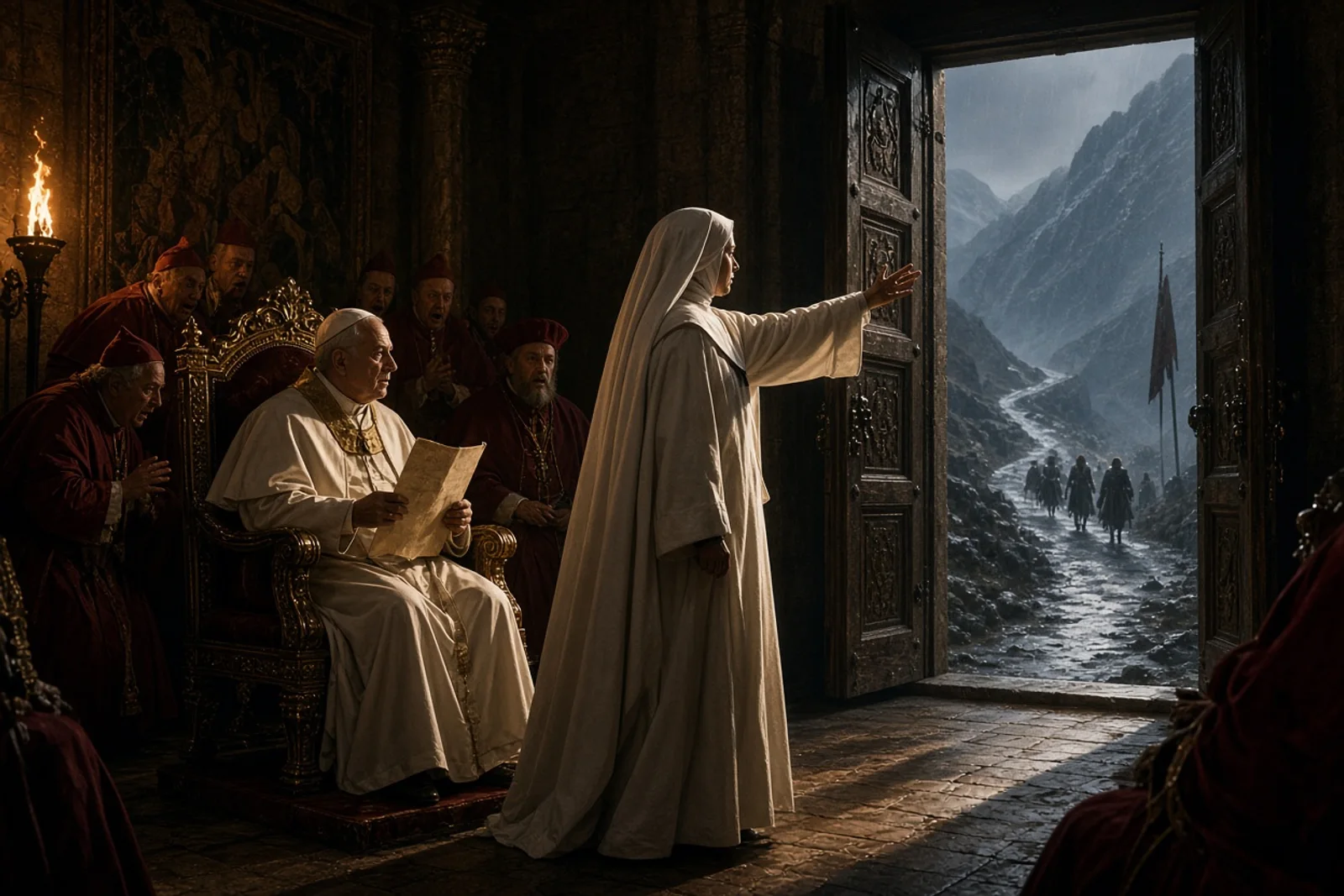
The dust clung to my sleeves as I stood inside the audience chamber, the shutters half-drawn against the Avignon glare. Catherine knelt on the stone without a cushion, her face turned up to the Pope. Gregory XI sat forward on the carved chair, fingers tight on the armrests. The room smelled of ink and the river mud that never quite left the palace walls.
She spoke plainly about Rome. The city waited empty, she said, its churches falling into silence while the cardinals kept their households in France. Gregory listened without interrupting. Two French cardinals waited in the corridor outside; I heard their low voices when the door opened for more wine. Catherine did not raise her voice. She simply repeated that the true seat of Peter stood on the other side of the Alps.
Days passed in the same pattern. She came each morning after Prime. I carried the letters she dictated to the Florentines and to the Roman senate, copying them in the small scriptorium above the cloister. Her words urged the Pope to break with the French court. One afternoon Gregory asked her directly what sign she would give if he agreed to leave. She answered that obedience itself would be the sign. He did not reply that day.
The heat broke in early September. The Pope ordered the household to begin packing the archives. Cardinals protested in open consistory. One of them reminded Gregory that his own family estates lay near Avignon and that travel through Italy meant risk of war. Gregory answered that he had already written to the Romans announcing his return. The letter left that night by courier.
I rode in the second wagon of the train when we departed. Catherine traveled ahead with a small group of her followers. The roads north of Avignon were rutted from autumn rain. At one ford the wagons stuck and we lost a day hauling them free. Gregory rode a white mule most mornings, stopping often to speak with the bishops who met us at each town. He looked older than his years, the lines around his mouth deeper than they had been in the palace.
We reached Viterbo before Christmas. News came that the Romans had prepared the Lateran Palace but feared the French cardinals would turn the Pope back at the last pass. Catherine sent a message from her lodging outside the walls. She wrote that delay only lengthened the scandal. Gregory read the note in the presence of his chamberlain and said nothing, yet the order to continue was given the next dawn.
On the seventeenth of January we entered Rome through the Porta del Popolo. The winter light was thin. Crowds lined the streets but stayed quiet until the Pope’s mule passed the first church. Then the bells began. Gregory dismounted at Santa Maria del Popolo and walked the remaining distance to St. Peter’s. Catherine did not join the procession; she stayed at the house of a Roman noblewoman near the Tiber.
In the weeks that followed the Pope held audiences in the Vatican. I copied bulls restoring certain offices to Roman families. The French cardinals kept their own counsel and sent reports north. One of them asked me privately whether Catherine still wrote to the Pope. I said she did. He turned away without further question.
Catherine remained in the city through the spring. She met with the Florentine envoys who had come to negotiate peace after the war with the Church. Her letters now urged both sides to lay down arms so the crusade could begin. The Pope listened to her reports on the mercenary companies still roaming the countryside. He issued orders for their dispersal, though the companies ignored most of them.